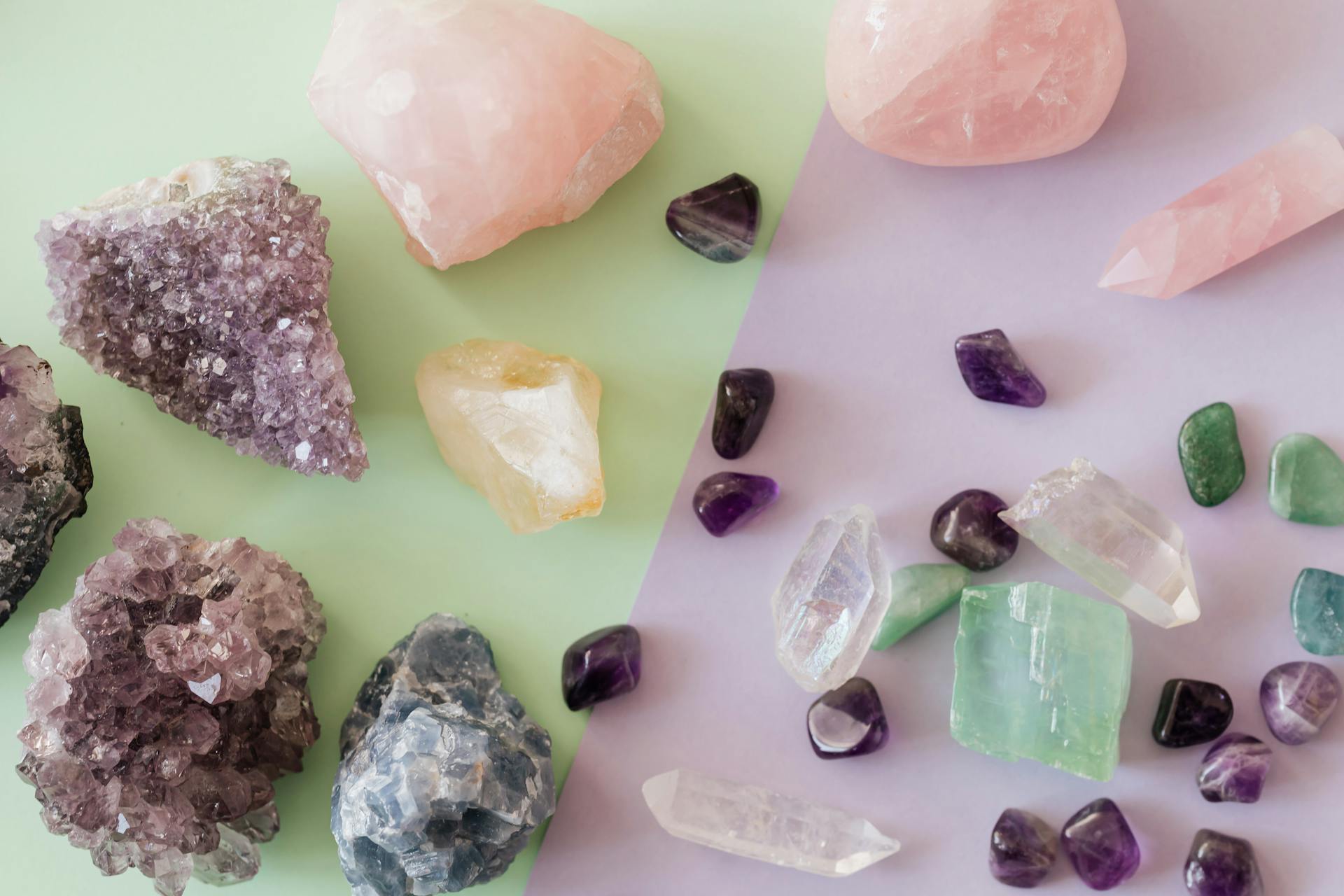
Birthstones and Astrology: The Complete Guide to Zodiac Gemstones and Their Meanings
Walk into any jewelry store and you'll find a birthstone chart hanging somewhere near the display cases. January gets garnet, February gets amethyst, and so on through the year. The chart looks clean and official, as if some ancient authority decided long ago which stone belonged to which month and the matter was settled forever.
The reality is messier and far more interesting. Birthstone traditions are layered, contradictory, and tangled up with astrology, religion, trade economics, and cultural symbolism spanning thousands of years. The modern monthly birthstone list was standardized in 1912 by the National Association of Jewelers in the United States, and it was a commercial decision as much as a traditional one. The older system, the one that connects gemstones to zodiac signs rather than calendar months, draws on astrological associations that predate the modern list by centuries.
If you've ever felt that your monthly birthstone doesn't quite resonate with you, the zodiac stone system might explain why. Your Sun sign doesn't align perfectly with calendar months. Aquarius straddles January and February. Pisces spans February and March. Your astrological birthstone matches the sign you were born under, which connects to something deeper than the arbitrary boundary of a month: your planetary ruler, your elemental nature, and the qualities your chart says you're here to develop.
What You'll Learn
Monthly Birthstones vs Zodiac Birthstones
The confusion between monthly and zodiac birthstones trips up nearly everyone. Here's the straightforward distinction.
Monthly birthstones follow the Gregorian calendar. January gets garnet, February amethyst, March aquamarine, April diamond, May emerald, June pearl or alexandrite, July ruby, August peridot, September sapphire, October opal or tourmaline, November topaz or citrine, December tanzanite, turquoise, or zircon. This list was formalized by jewelers' associations in the 20th century and updated periodically (tanzanite was added in 2002). It's primarily a commercial framework designed to give every month a marketable stone.
Zodiac birthstones follow the astrological calendar. They're assigned based on your Sun sign, which means they're connected to the position of the Sun at your birth rather than the month on the wall calendar. Because zodiac signs span parts of two months (Scorpio runs from October 23 to November 21, for example), zodiac stones don't map neatly onto monthly stones.
The zodiac system is older than the monthly system. Ancient Babylonian, Greek, and Hindu traditions all assigned specific gemstones to celestial bodies and the signs they ruled. These assignments were based on correspondences between a stone's color, properties, and the qualities associated with the relevant planet or sign. A blood-red ruby connects to Mars and the fierce energy of Aries. A calming blue sapphire connects to Saturn's discipline and Capricorn's ambition. The associations weren't arbitrary. They were part of a symbolic system where the mineral, celestial, and human realms mirrored each other.
If your monthly birthstone has never felt like yours, check your zodiac stone. People born in late January, for example, get garnet from the monthly system but might resonate more with amethyst (the zodiac stone for Aquarius, which begins January 20). The zodiac system often feels more personal because it's tied to the astrological profile that shapes your personality, not just the arbitrary month when you happened to arrive.
How Gemstones Connect to Planetary Rulers
The deeper layer of the zodiac birthstone system runs through planetary rulership. In astrology, each zodiac sign is governed by a planet, and that planet has gemstone associations of its own. Understanding the planetary connection explains why specific stones align with specific signs.
The Sun rules Leo and is associated with stones that radiate warmth and brilliance: ruby, sunstone, and amber. These stones carry the Sun's qualities of vitality, self-expression, and creative fire.
The Moon rules Cancer and connects to stones with a luminous, opalescent quality: moonstone, pearl, and selenite. These reflect the Moon's association with intuition, emotional cycles, and the inner life.
Mercury rules Gemini and Virgo and links to stones that support mental clarity and communication: agate, citrine, and emerald. Mercury's quicksilver nature finds expression in stones that sharpen thought and facilitate expression.
Venus rules Taurus and Libra and connects to stones of beauty, harmony, and love: rose quartz, emerald, sapphire, and lapis lazuli. These stones carry Venus's signature of aesthetic sensitivity and relational warmth.
Mars rules Aries (and traditionally co-rules Scorpio) and aligns with stones of fiery intensity: red jasper, bloodstone, garnet, and carnelian. Mars stones carry forward momentum and courage.
Jupiter rules Sagittarius (and traditionally Pisces) and associates with expansive, abundant stones: turquoise, amethyst, and topaz. Jupiter's generosity and philosophical bent express through stones that inspire wisdom and good fortune.
Saturn rules Capricorn (and traditionally Aquarius) and connects to stones of discipline and protection: onyx, obsidian, and garnet. Saturn stones tend toward darker colors and grounding energy, reflecting the planet's association with boundaries and structure.
The outer planets (Uranus, Neptune, Pluto) weren't known to the ancients who originally built the gemstone correspondence system, but modern astrologers have assigned them stones as well. Uranus (modern ruler of Aquarius) connects to labradorite and aquamarine. Neptune (modern ruler of Pisces) aligns with amethyst, fluorite, and aquamarine. Pluto (modern ruler of Scorpio) connects to obsidian, malachite, and black tourmaline.
To find your planetary ruler and understand how it shapes your chart, the natal chart calculator shows all your placements and the planets that govern them.
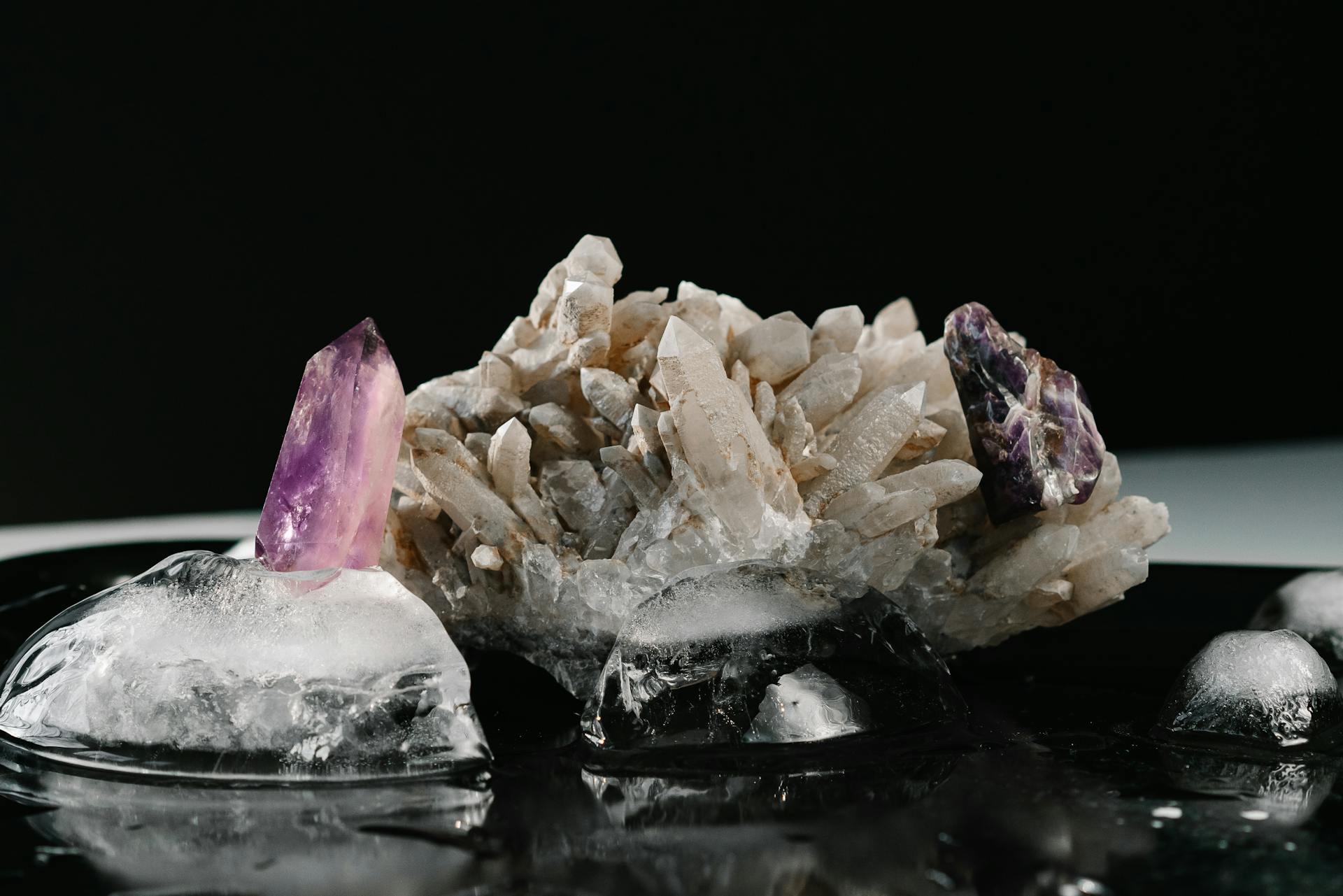
Amethyst and clear quartz crystals resting on ice against a dark reflective surface capturing the mysterious beauty of zodiac gemstones
Birthstones for Every Zodiac Sign
Here's each sign with its primary zodiac birthstone, supporting stones, and the astrological logic behind the assignment.
Aries (March 21 to April 19)
Primary stone: Diamond. The hardest natural substance on Earth matches the sign known for being unstoppable. Diamond amplifies Aries's natural clarity of purpose and fearless directness. It's a stone of invincibility, which appeals to the sign that approaches life as a conquest.
Supporting stones: Bloodstone, red jasper, carnelian. All three carry Mars energy: courage, physical vitality, and the will to act. Bloodstone has the oldest astrological connection to Aries, predating diamond's association by centuries.
Taurus (April 20 to May 20)
Primary stone: Emerald. Green, lush, and associated with Venus, the emerald reflects Taurus's deep connection to natural beauty, material abundance, and sensory pleasure. Emeralds were sacred to Venus in the classical world, and their green mirrors the fertility and earthiness of this fixed earth sign.
Supporting stones: Rose quartz, lapis lazuli, sapphire. Rose quartz amplifies Taurus's capacity for devotion and physical affection. Lapis lazuli, with its deep blue flecked with gold, connects to the Venusian appreciation for rare and beautiful things.
Gemini (May 21 to June 20)
Primary stone: Agate. Agate comes in dozens of varieties and colors, which suits the most versatile sign in the zodiac. Its banded layers represent Gemini's many facets. Agate has been associated with Mercury since antiquity, prized for its ability to enhance communication and mental agility.
Supporting stones: Citrine, tiger's eye, pearl. Citrine carries Mercury's brightness and mental energy. Tiger's eye helps ground Gemini's scattered tendencies without suppressing their natural curiosity.
Cancer (June 21 to July 22)
Primary stone: Moonstone. The connection is almost too perfect. Cancer is ruled by the Moon, and moonstone literally glows with an internal light that shifts as you turn it, mimicking the Moon's phases. Moonstone enhances intuition, emotional receptivity, and the nurturing instincts that Cancer embodies.
Supporting stones: Pearl, selenite, ruby. Pearl, formed inside a living organism in water, resonates with Cancer's association with both the ocean and the protective shell. Ruby (the July monthly birthstone) adds warmth and heart energy that supports Cancer's fierce devotion to loved ones.
Leo (July 23 to August 22)
Primary stone: Ruby. The king of gemstones for the king of the zodiac. Ruby's deep red carries the Sun's fire, and its rarity and value match Leo's taste for the dramatic and exceptional. In Vedic astrology, ruby is the primary stone prescribed for strengthening the Sun in one's chart.
Supporting stones: Sunstone, carnelian, peridot. Sunstone literally contains tiny platelets of copper or hematite that catch light, creating a warm shimmer. Peridot (the August monthly birthstone) offers Leo a lighter, more playful solar energy.
Virgo (August 23 to September 22)
Primary stone: Sapphire. Blue sapphire's association with wisdom, discernment, and mental clarity aligns perfectly with Mercury-ruled Virgo. Where Gemini expresses Mercury's curiosity and communication, Virgo channels Mercury's analytical precision and attention to detail. Sapphire has been linked to truth-telling and clear thinking since medieval times.
Supporting stones: Peridot, carnelian, citrine. Peridot, which bridges the Leo-Virgo cusp in the monthly system, has a cleansing quality that appeals to Virgo's desire for purity and order. Citrine supports Mercury's mental energy without overstimulating Virgo's tendency to overthink.
Libra (September 23 to October 22)
Primary stone: Opal. Opal displays every color in the spectrum simultaneously, a fitting stone for the sign that sees every side of every question. Its iridescence reflects Libra's Venusian love of beauty and its gift for finding harmony among diverse elements. Opal has been called the "artist's stone" for its ability to inspire creative vision.
Supporting stones: Rose quartz, lapis lazuli, tourmaline. Rose quartz connects to Libra's Venusian rulership and its deep orientation toward partnership. Pink tourmaline carries a gentler version of the same relational energy, supporting Libra's natural diplomacy.
Scorpio (October 23 to November 21)
Primary stone: Topaz. Deep, intense topaz (particularly in its imperial orange and sherry varieties) matches Scorpio's emotional depth and transformative power. Topaz has been associated with strength, protection, and the ability to see through deception, all qualities that Scorpio values.
Supporting stones: Obsidian, malachite, citrine. Obsidian, volcanic glass formed from rapid cooling, mirrors Scorpio's Plutonian connection to destruction and regeneration. Malachite, with its layered green bands, has been used as a protection stone for millennia and resonates with Scorpio's awareness of hidden dangers and hidden gifts.
Sagittarius (November 22 to December 21)
Primary stone: Turquoise. One of the oldest known gemstones, turquoise has been carried by travelers for protection since before recorded history. This aligns with Sagittarius's restless need to explore, both geographically and philosophically. Turquoise connects to Jupiter's expansive, optimistic energy and the belief that the world is fundamentally generous.
Supporting stones: Tanzanite, lapis lazuli, amethyst. Tanzanite, a relatively recently discovered stone found only in Tanzania, carries the adventurer's thrill of discovery. Lapis lazuli, with its connection to wisdom and truth, supports the philosophical side of Sagittarius that wants to understand the meaning behind the adventure.
Capricorn (December 22 to January 19)
Primary stone: Garnet. Deep red garnet has been associated with ambition, perseverance, and grounding since ancient Egypt. Capricorn's Saturn rulership gives the sign a natural affinity for stones that are dense, enduring, and serious. Garnet carries a quiet power that doesn't need to be flashy, much like Capricorn itself.
Supporting stones: Onyx, obsidian, jet. All three are dark, protective, and associated with Saturn's energy of boundaries, discipline, and mastery. Black onyx in particular has been used as a stone of self-control and focused will, qualities Capricorn prizes above almost everything else.
Aquarius (January 20 to February 18)
Primary stone: Amethyst. The purple stone of intuition and higher consciousness matches Aquarius's orientation toward the future, the unconventional, and the visionary. Amethyst has historically been associated with sobriety and clear thinking, which connects to Aquarius's ability to detach emotionally and analyze situations with objectivity.
Supporting stones: Labradorite, aquamarine, garnet. Labradorite, with its flashing play of color visible only at certain angles, mirrors Aquarius's hidden depths and sudden flashes of insight. Aquamarine connects to Uranus's electric, innovative energy.
Pisces (February 19 to March 20)
Primary stone: Aquamarine. The pale blue stone of the sea matches the water sign most connected to the ocean of consciousness. Aquamarine has been carried by sailors for protection and is associated with calm, courage, and the ability to navigate emotional depths without drowning. For Neptune-ruled Pisces, it offers clarity within the mist.
Supporting stones: Amethyst, fluorite, bloodstone. Amethyst bridges the Aquarius-Pisces boundary and supports Pisces's spiritual and intuitive nature. Fluorite, with its extraordinary range of colors and its reputation for clearing mental fog, helps Pisces maintain focus when the boundary between inner and outer reality gets thin.
The Ancient Origins of Birthstone Traditions
The practice of associating specific gemstones with celestial bodies stretches back to the very beginnings of organized civilization.
The earliest documented connection appears in the Book of Exodus, which describes the breastplate of Aaron, the Jewish high priest, set with twelve gemstones representing the twelve tribes of Israel. Early scholars later connected these twelve stones to the twelve zodiac signs, creating a framework that influenced both Jewish and early Christian gemstone traditions. The Roman-Jewish historian Josephus (1st century CE) explicitly made this zodiac connection in his writings.
In the Vedic tradition, the Navaratna (nine gems) system assigns specific gemstones to the nine celestial bodies recognized in Hindu astrology. Ruby for the Sun, pearl for the Moon, red coral for Mars, emerald for Mercury, yellow sapphire for Jupiter, diamond for Venus, blue sapphire for Saturn, hessonite garnet for Rahu (the North Node), and cat's eye chrysoberyl for Ketu (the South Node). This system remains active and widely practiced in India today, where Vedic astrologers prescribe specific gemstones to strengthen or balance planetary influences in a person's chart.
The Western tradition evolved through Greek and Roman associations of gemstones with planetary deities, through medieval and Renaissance lapidaries (books cataloging the properties of stones), and eventually into the standardized monthly lists created by jewelers' associations in the modern era. At each stage, the older astrological associations were preserved, adapted, or sometimes overwritten by commercial considerations.
Understanding this history matters because it shows that gemstone associations aren't static or singular. They're layered. If you want to connect with the tradition that predates modern commercialization, the zodiac system offers a more historically grounded and personally resonant alternative to the monthly list.
How to Choose the Right Stone for You
With multiple systems offering different stone assignments, how do you pick the one that's actually right for you?
Start with your Sun sign stone. This is the most straightforward match and the one most directly connected to your core identity. If you're a Scorpio, try topaz. If you're a Leo, try ruby. Wear it or carry it for a week and notice whether you feel a resonance.
Consider your Moon sign. Your Moon sign governs your emotional nature, and its associated stone can support your inner life in ways your Sun sign stone won't. You can find your Moon sign through the natal chart calculator. If your Sun is in Capricorn but your Moon is in Pisces, you might find that aquamarine (Pisces's stone) feels more emotionally soothing than garnet (Capricorn's stone), even though garnet aligns with your outward identity.
Check your rising sign. Your rising sign governs how you present yourself and how others perceive you. Its associated stone can support the image and energy you project. Wearing your rising sign's stone can feel like putting on armor that fits perfectly.
Follow your instinct. If you're drawn to a stone that doesn't match any of your chart placements, pay attention to that pull. You might have significant planets in the sign that stone represents. A person with no Scorpio placements who's drawn to obsidian might discover they have Pluto prominently placed in their chart. The attraction to a stone can reveal chart dynamics you haven't explored yet.
Layer your stones. There's no rule that says you can only work with one birthstone. Many people wear or carry stones for their Big Three: Sun sign, Moon sign, and rising sign. Others choose stones based on current planetary transits, wearing a Saturn stone during a challenging Saturn period or a Venus stone when they want to invite more beauty and connection into their life.
Frequently Asked Questions
Are zodiac birthstones different from monthly birthstones?
Yes. Monthly birthstones follow the calendar (January, February, March) and were standardized by jewelers' associations in the 20th century. Zodiac birthstones follow the astrological calendar and are assigned based on your Sun sign. Since zodiac signs span parts of two calendar months, the two systems produce different stone assignments for many people. Someone born January 25th gets garnet from the monthly system but amethyst from the zodiac system (because January 25th falls in Aquarius). The zodiac system is older and more closely tied to the astrological traditions that originally gave gemstones their symbolic meaning.
Can I wear a birthstone that isn't my sign?
Absolutely. Gemstone traditions are guidelines, not rules. If you're drawn to a stone that belongs to a different sign, it may connect to other placements in your chart (your Moon sign, rising sign, or a planet that's especially prominent). You might also be instinctively seeking the qualities that stone represents. A Virgo drawn to moonstone might be craving more emotional openness and intuition. There are no negative consequences to wearing any gemstone regardless of your sign.
Do birthstones actually have astrological power?
This depends on what framework you're working within. In Vedic astrology, gemstone prescription is a serious practice with specific guidelines about weight, quality, and which finger to wear a stone on, all based on the belief that gemstones amplify or balance planetary energies in the chart. In Western astrology, the approach is generally less prescriptive but still recognizes symbolic resonance between stones and celestial bodies. From a purely psychological perspective, wearing a stone that connects to your astrological identity can serve as a meaningful personal symbol that strengthens your awareness of the qualities you want to embody. Whether the effect is energetic, symbolic, or psychological, many people report that working with their zodiac stone feels meaningful and grounding.
Should I use my Sun sign, Moon sign, or rising sign for choosing a birthstone?
All three are valid, and each serves a different purpose. Your Sun sign stone connects to your core identity and life purpose. Your Moon sign stone supports your emotional and inner life. Your rising sign stone aligns with how you present yourself to the world. For everyday wear, most people start with their Sun sign stone. For emotional support, the Moon sign stone often resonates more deeply. For social situations and first impressions, the rising sign stone can feel most appropriate. Many practitioners wear all three, combining them in jewelry or keeping them together. Check all three of your placements with the natal chart calculator.
What's the oldest birthstone tradition?
The oldest documented gemstone-zodiac connection comes from the Babylonian civilization (roughly 1500 BCE), where astrologer-priests associated specific stones with celestial bodies as part of their broader system of correspondences between heaven and earth. The twelve-stone breastplate of Aaron described in the Book of Exodus (roughly 7th to 5th century BCE) is the most famous ancient gemstone list in the Western tradition, and scholars have connected its twelve stones to the twelve zodiac signs since at least the 1st century CE. The Vedic Navaratna system in India has similarly ancient roots. All three traditions developed independently but arrived at remarkably similar conclusions: that specific stones resonate with specific celestial energies, and wearing the right stone strengthens your connection to the cosmic forces that shaped you.
The relationship between gemstones and the zodiac isn't a modern invention or a marketing strategy. It's one of the oldest symbolic systems in human civilization, a tradition that says the same forces that arranged the stars also crystallized inside the Earth, and that wearing the right stone brings something above and something below into alignment within you. To discover which signs govern your chart and which stones might resonate with your unique cosmic blueprint, start with the natal chart calculator. For a deeper understanding of the planetary rulers that connect your sign to its gemstone, explore planetary transits and the Big Three that define your astrological identity.