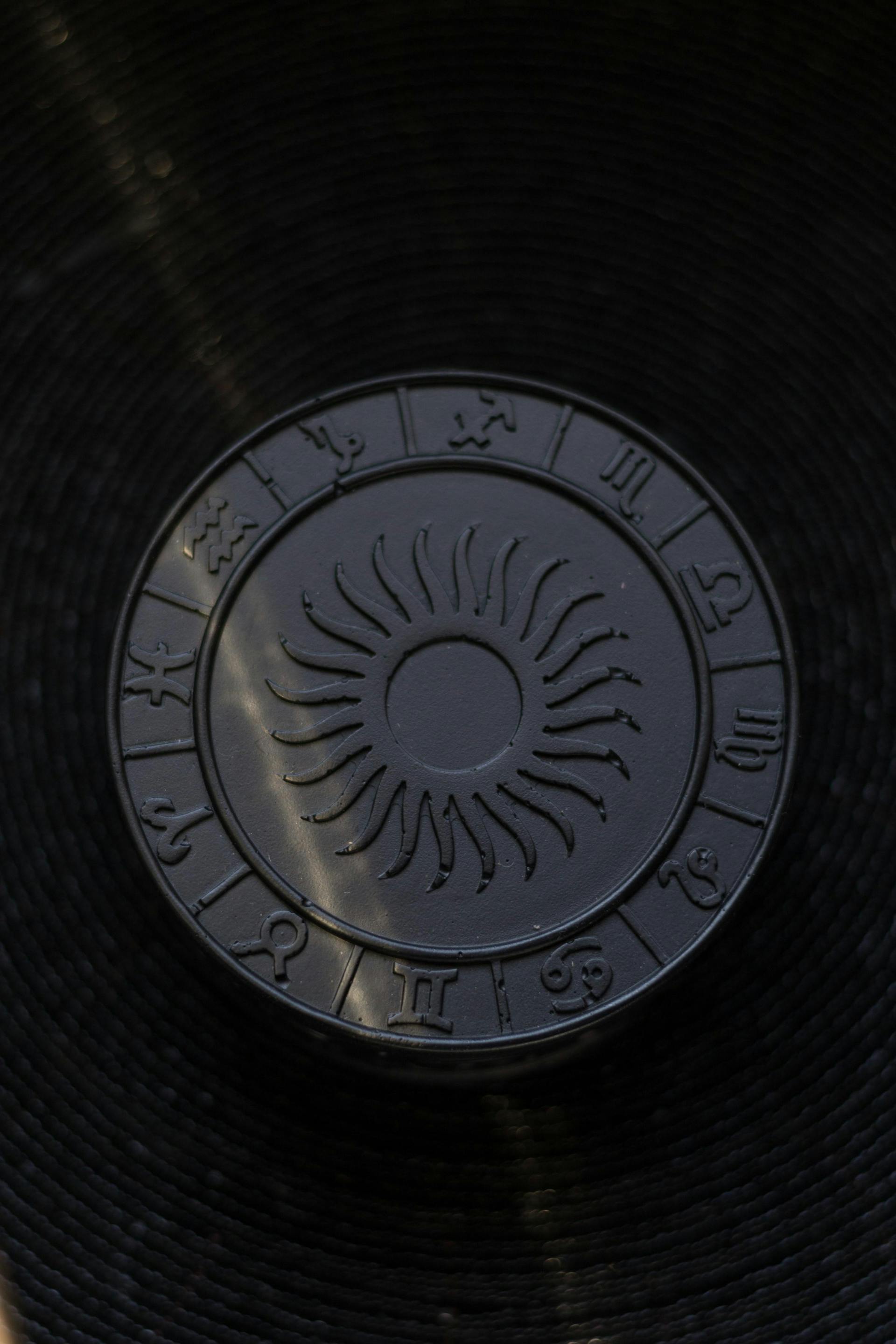
Zodiac Cusp Signs: What It Really Means to Be Born Between Two Signs
You've probably heard someone say it: "I'm on the cusp of Leo and Virgo, so I'm a mix of both." Maybe you've said it yourself. If your birthday falls within a day or two of the Sun changing signs, you've likely felt a pull toward two different zodiac descriptions, finding yourself in one but recognizing the other in your habits, your personality quirks, or the way you handle conflict.
The idea of cusp signs is one of the most popular concepts in casual astrology. It's also one of the most misunderstood. The truth is both simpler and more interesting than the common explanation suggests. You aren't two Sun signs blended together. The Sun can only occupy one zodiac sign at any given moment. But if you were born near the transition point between signs, there's a real astrological reason you might resonate with the neighboring sign, and it has nothing to do with being "half and half."
Understanding what actually happens when someone is born on the cusp requires looking beyond Sun sign astrology and into the full natal chart. Once you do, the mystery resolves itself, and you end up with a more accurate and more useful picture of why you are the way you are.
What You'll Learn
What Is a Zodiac Cusp?
In astrology, a cusp is the dividing line between two zodiac signs. The zodiac is a 360-degree circle divided into twelve equal segments of 30 degrees each. The cusp is the exact point where one sign ends and the next begins: 0 degrees of the new sign. When people talk about being "born on the cusp," they mean their birthday falls close to one of these transition points, typically within two or three days on either side.
The Sun moves through the zodiac at roughly one degree per day, spending about 30 days in each sign. The exact moment the Sun crosses from one sign to the next varies from year to year by a day or sometimes two, because our calendar doesn't perfectly align with the solar year (that's why we have leap years). This is why birthday-based zodiac lists in magazines and websites often disagree about what sign rules the 19th, 20th, or 21st of a given month. The transition date isn't fixed. It shifts.
For someone born on one of these transition dates, the Sun might have been in the last degree of one sign or the first degree of the next, depending on the exact time they were born. The only way to know for certain is to calculate the chart for the precise birth time, not just the date.
Are Cusp Signs Real?
Here's the direct answer: no, not in the way most people mean it.
You can't be two Sun signs. The Sun occupies one sign at a time, and the transition between signs is instantaneous, not gradual. At 29 degrees and 59 minutes of Cancer, the Sun is in Cancer. One minute later, at 0 degrees and 0 minutes of Leo, it's in Leo. There's no blending zone, no overlap period, no fuzzy boundary where two signs mix together.
This means that every person has exactly one Sun sign. If you were born on July 22nd and the Sun entered Leo at 3:47 PM that year, and you were born at 1:00 PM, you're a Cancer. If you were born at 5:00 PM, you're a Leo. Not both. Not a blend. One or the other.
Pop astrology created the "cusp sign" concept to explain why people born near sign transitions sometimes don't fully identify with their Sun sign. It's a reasonable observation wrapped in an inaccurate explanation. The observation (that some people feel like two signs) is real. The explanation (that they're somehow both) isn't how the zodiac works.
But here's where it gets interesting: there are legitimate astrological reasons why someone born near a cusp might feel strong connections to the neighboring sign. They just have nothing to do with being a "cusp sign."
Why You Might Feel Like Two Signs
If you were born near the cusp and you resonate with the adjacent sign, one or more of these explanations almost certainly applies.
Your Sun is in the late or early degrees. A Sun at 28 degrees Aries has spent almost the entire Aries season building momentum toward the transition into Taurus. Some astrologers observe that late-degree placements carry a quality of completion, culmination, or urgency, a feeling of wrapping something up before the energy shifts. Similarly, a Sun at 1 degree Taurus is just arriving, still carrying echoes of the Aries energy that preceded it. While you're definitively in one sign, the proximity to the boundary can give the placement a transitional quality that makes the neighboring sign's description feel partially familiar.
Mercury or Venus is in the neighboring sign. This is the most common and most important reason cusp-born people feel like two signs. Mercury (how you think and communicate) and Venus (what you value and how you love) are never far from the Sun. Mercury can be at most about 28 degrees from the Sun, and Venus can be at most about 46 degrees away. If your Sun is at the end of Libra, your Mercury might already be in Scorpio. If your Sun is at the beginning of Pisces, your Venus might still be in Aquarius.
Because Mercury and Venus are so personal, so integral to daily personality, having them in the sign next to your Sun creates a genuine experience of two different zodiac energies operating simultaneously. You aren't two Sun signs. You're one Sun sign with a Mercury or Venus in the neighboring sign, and that combination produces exactly the "I feel like both" sensation that cusp mythology tries to explain.
Your Moon or Rising sign is in the adjacent sign. Your Moon sign shapes your emotional nature, and your Rising sign shapes your outward personality. If either of these falls in the sign next to your Sun, you'll naturally feel a strong connection to that sign. Someone with a late-Gemini Sun and a Cancer Moon, for instance, will feel deeply Cancerian in their emotional life while being unmistakably Gemini in their intellect. That's not a cusp effect. That's the Big Three doing exactly what they're designed to do.
Golden sunset with dramatic cloud formations on a serene sky at the horizon
The Role of Mercury and Venus
Mercury and Venus deserve special attention in the cusp conversation because they're responsible for most of the "I feel like the neighboring sign" experience.
Mercury governs your thinking style, your communication, how you process information, and how you express ideas. It's the planet behind your sense of humor, your texting style, the way you argue, and the subjects that fascinate you. If someone describes your personality and you think "that's not quite right," there's a decent chance they're describing your Sun sign while your Mercury is operating from a completely different sign.
Venus governs your values, your aesthetic preferences, how you relate in love, what brings you pleasure, and how you handle money. It's the planet behind your relationship style, your taste in music, the way you decorate your living space, and what you find attractive. Venus in a different sign from the Sun creates a visible split between who you are (Sun) and what you want (Venus).
For cusp-born people specifically, the math works in their favor for having Mercury or Venus in the adjacent sign. If your Sun is at 29 degrees Virgo, Mercury is statistically likely to be within a few degrees, which means it could easily be at 2 or 3 degrees Libra. The closer your Sun is to the boundary, the higher the probability that Mercury or Venus has already crossed it (or hasn't crossed it yet, if your Sun just entered a new sign).
This isn't a cusp effect. It's planetary proximity doing exactly what it always does. But because most people only know their Sun sign, they attribute the Mercury or Venus influence to "being on the cusp" rather than to the planet that's actually responsible.
The fix is simple: look up your Mercury and Venus signs. You can find them in your natal chart. If one or both of them is in the sign next to your Sun, you've found the real source of your "cusp" experience.
All Twelve Zodiac Cusps and Their Dates
These are the approximate date ranges when the Sun transitions between signs. The exact transition time varies by year, so if your birthday falls on one of these dates, you'll need your birth time to confirm your Sun sign.
Aries-Taurus Cusp (April 19-21). The shift from cardinal fire to fixed earth. Aries initiative meets Taurus staying power. People born here with Mercury or Venus in the opposing sign often combine boldness with patience in unusual ways.
Taurus-Gemini Cusp (May 19-21). Fixed earth to mutable air. Taurus groundedness meets Gemini curiosity. The tension between wanting stability and craving variety is a hallmark of people born near this transition, usually explained by a Mercury already in Gemini while the Sun finishes its Taurus run.
Gemini-Cancer Cusp (June 19-22). Mutable air to cardinal water. Intellectual Gemini meets emotional Cancer. People born here often have rich inner lives that combine analytical thinking with deep feeling, frequently because Venus or Mercury bridges the two signs.
Cancer-Leo Cusp (July 21-23). Cardinal water to fixed fire. Cancer's nurturing sensitivity meets Leo's expressive confidence. This transition often produces people who are fiercely protective and unapologetically dramatic, especially when personal planets span both signs.
Leo-Virgo Cusp (August 21-23). Fixed fire to mutable earth. Leo's creative flair meets Virgo's precision. People born here are often simultaneously ambitious and self-critical, a combination that makes more sense when you check whether Mercury (Virgo's ruler) is in the sign opposite the Sun.
Virgo-Libra Cusp (September 21-23). Mutable earth to cardinal air. Virgo's analytical nature meets Libra's social grace. This coincides with the autumn equinox, and people born here often balance practicality with a strong aesthetic sensibility.
Libra-Scorpio Cusp (October 21-23). Cardinal air to fixed water. Libra's diplomacy meets Scorpio's intensity. People born near this boundary often feel pulled between harmony and honesty, wanting peace but refusing to accept shallow versions of it.
Scorpio-Sagittarius Cusp (November 20-22). Fixed water to mutable fire. Scorpio's depth meets Sagittarius's expansiveness. The shift from investigating what's hidden to proclaiming what's true makes this one of the most psychologically complex cusp zones.
Sagittarius-Capricorn Cusp (December 20-22). Mutable fire to cardinal earth. Sagittarius's idealism meets Capricorn's pragmatism. This coincides with the winter solstice, and people born here often carry both the philosopher's big-picture thinking and the builder's concrete discipline.
Capricorn-Aquarius Cusp (January 18-20). Cardinal earth to fixed air. Capricorn's structure meets Aquarius's innovation. People born here frequently combine respect for tradition with a genuine desire to change the systems they respect.
Aquarius-Pisces Cusp (February 17-19). Fixed air to mutable water. Aquarius's intellectual idealism meets Pisces's emotional intuition. The humanitarian meets the mystic, and people born near this boundary often have unusually strong compassion paired with unconventional thinking.
Pisces-Aries Cusp (March 19-21). Mutable water to cardinal fire. The final sign meets the first. Pisces's dreamy surrender meets Aries's decisive action. This coincides with the spring equinox and the start of the astrological new year. People born here are often simultaneously deeply sensitive and surprisingly assertive.
How to Find Your Exact Sun Sign
If your birthday falls on or near a cusp date, here's how to determine your actual Sun sign.
Step one: get your birth time. This is non-negotiable for cusp babies. The difference between a Sun in late Pisces and early Aries can come down to hours. Check your birth certificate, ask your parents, or request your records from the hospital where you were born.
Step two: generate your natal chart. Use the natal chart calculator with your exact birth date, time, and location. The chart will show your Sun's precise sign and degree, eliminating all guesswork.
Step three: note the degree. Your Sun will be listed as something like "Sun in Aries at 0 degrees 47 minutes" or "Sun in Pisces at 29 degrees 12 minutes." This tells you not only which sign you're in but how close you are to the boundary.
Step four: check Mercury and Venus. While you're looking at the chart, note which signs Mercury and Venus occupy. If either is in the sign adjacent to your Sun, you've found the real explanation for your cusp experience.
If you genuinely can't find your birth time, there's ambiguity that won't fully resolve. You can read descriptions of both possible Sun signs and see which resonates more strongly, but without the birth time, the chart can't give you a definitive answer. For most cusp-date births, the Sun changes signs sometime during that day, so morning and evening births can end up in different signs.
What Your Full Chart Reveals
The whole cusp conversation collapses once you look at a complete birth chart. Nobody is just their Sun sign. You have ten major celestial bodies, each in its own sign and house, plus the Ascendant, the Midheaven, the lunar nodes, and calculated points like Chiron and the Part of Fortune. Every person is a complex mix of multiple zodiac energies.
Someone born with the Sun in Capricorn, Moon in Sagittarius, Mercury in Aquarius, Venus in Scorpio, and Mars in Pisces isn't a "Capricorn." They're all of those signs working together. The Sun sign is the most important single factor, but it accounts for maybe 20-30% of the personality picture. The other 70-80% comes from everything else in the chart.
This is why Sun sign horoscopes feel hit-or-miss for everyone, not just cusp-born people. They're describing one-twelfth of the zodiac as if it were the whole story. When a cusp-born person says "I don't feel like my Sun sign," they're experiencing the same reality every person does: the Sun sign is one voice in a chorus, and sometimes the other voices are louder.
The solution isn't to invent a hybrid sign category. It's to read the full chart. Every "cusp" question is really a "what else is in my chart?" question in disguise.
The Degree Matters: Late and Early Sign Energy
While cusps as a blending concept don't hold up, the degree of your Sun within its sign does carry meaning. Astrologers working with decans divide each 30-degree sign into three 10-degree sections, each with its own sub-ruler and flavor. Your Sun at 2 degrees Leo has a different quality than your Sun at 22 degrees Leo, even though both are unambiguously Leo.
For cusp-born people specifically, there are two degree positions worth understanding:
The 29th degree (anaretic degree). The final degree of any sign is called the anaretic degree, and it carries a sense of urgency, culmination, and sometimes crisis. A Sun at 29 degrees Cancer has spent the entire Cancer season building toward a climax. There's a "last chance" quality to this degree, as if the energy of the sign is being concentrated and expressed with maximum intensity before the transition. People with an anaretic Sun often feel the themes of their sign more intensely, not less, precisely because they're at the edge.
The 0th degree (critical degree). The first degree of a sign carries the energy of a fresh start, a new beginning, an initiation into unfamiliar territory. A Sun at 0 degrees Leo is just arriving. It's pure, undiluted Leo energy, but it hasn't had time to develop or mature. People with a 0-degree Sun sometimes feel like they're still figuring out how to be their sign, as if the identity is clear but the confidence in it is still building.
Neither of these degree positions makes you "part of" the neighboring sign. But they do create a quality of experience at the boundary that differs from having your Sun comfortably in the middle of a sign at 15 degrees. Understanding the degree adds nuance without requiring the cusp myth.
Cusp Babies and the Big Three
If you were born on the cusp and you want to understand why you feel pulled toward two signs, the most productive step is to look at your Big Three: your Sun sign, Moon sign, and Rising sign.
The Big Three are the three most influential factors in your personality, and they're frequently in different signs from each other. A cusp-born person with their Sun in late Sagittarius, Moon in Capricorn, and Ascendant in Scorpio is experiencing three completely different zodiac energies as the core of their identity. They'll feel Sagittarian in their purpose, Capricornian in their emotional needs, and Scorpionic in how they present to the world. That's not a cusp effect. That's just how astrology works for everyone.
The Big Three also explain why two people born on the same cusp date can feel very different. A person born at 7 AM on July 22nd and a person born at 11 PM on July 22nd might have the same Sun sign (or might not, depending on when the Sun changed signs that year), but they'll almost certainly have different Moon signs and Rising signs. Those differences matter far more than proximity to a cusp boundary.
To see how your Big Three interact, how the planetary energies in your chart create the specific blend of qualities that makes you who you are, generate your natal chart and read beyond the Sun sign. The chart won't tell you you're a cusp sign. It'll tell you something more valuable: exactly which combination of signs, planets, and houses makes you, specifically, tick.
Frequently Asked Questions
Can you really be two zodiac signs at once?
No. The Sun occupies one sign at a time, and the transition between signs happens at a precise moment, not over a period of days. If you were born on a day when the Sun changed signs, you're one sign or the other depending on what time you were born. However, your chart contains multiple planets in multiple signs, so everyone expresses more than one zodiac energy. The feeling of being "two signs" almost always comes from having Mercury, Venus, the Moon, or your Rising sign in the sign next to your Sun, not from the Sun itself straddling a boundary.
What if I don't know my birth time and my birthday is on a cusp date?
Without a birth time, you can't be 100% certain which sign your Sun occupies if it changed signs during your birth date. Your best option is to read descriptions of both possible Sun signs and honestly assess which feels more accurate. You can also look at the general personality descriptions, paying attention to the traits that match your actual behavior rather than the traits you wish you had. For a definitive answer, finding your birth time through hospital records, birth certificates, or family members is the only reliable path.
Do professional astrologers believe in cusp signs?
Most professional astrologers don't use the "cusp sign" concept as it's popularly understood. The idea that someone is a blend of two Sun signs isn't supported by any traditional or modern astrological framework. What professional astrologers do recognize is that people born near sign transitions often have personal planets (especially Mercury and Venus) in the adjacent sign, which creates a genuine experience of dual sign energy. The explanation is different, but the observation it's based on is valid.
Why do horoscopes for my Sun sign sometimes not resonate?
Sun sign horoscopes describe general trends based on one-twelfth of the zodiac. They don't account for your Moon sign, Rising sign, Mercury, Venus, Mars, or any other chart factor. This means they'll feel incomplete for everyone, not just cusp-born people. Reading horoscopes for your Rising sign (which governs the house system used in transit-based horoscopes) often produces more accurate results. Even better, understanding your full natal chart lets you track planetary transits relevant to all your placements, not just the Sun.
Is there any significance to being born close to a sign boundary?
Yes, but it's not what cusp mythology claims. Being born at a late degree (28-29) of a sign gives your Sun an anaretic quality: intense, urgent, and concentrated. Being born at an early degree (0-1) of a sign gives your Sun an initiatory quality: fresh, raw, and still developing its expression. Both are meaningful interpretive details. Additionally, the statistical likelihood of having Mercury or Venus in the adjacent sign increases when your Sun is near the boundary. These are real astrological factors, and they produce real effects on personality. They just don't require the concept of a "cusp sign" to explain them.
The zodiac doesn't blur at its boundaries. The lines between signs are as sharp as the line between Tuesday and Wednesday: the moment one ends, the other begins. But you are more than your Sun sign, and the reasons you feel connected to multiple zodiac energies are real. They're just hiding in the parts of your chart you haven't looked at yet. Generate your natal chart, find your Mercury and Venus signs, check your Moon sign and Rising sign, and let the chart explain what "cusp" mythology never could. The answer isn't that you're between two signs. The answer is that you contain multitudes, and astrology was designed to map all of them.