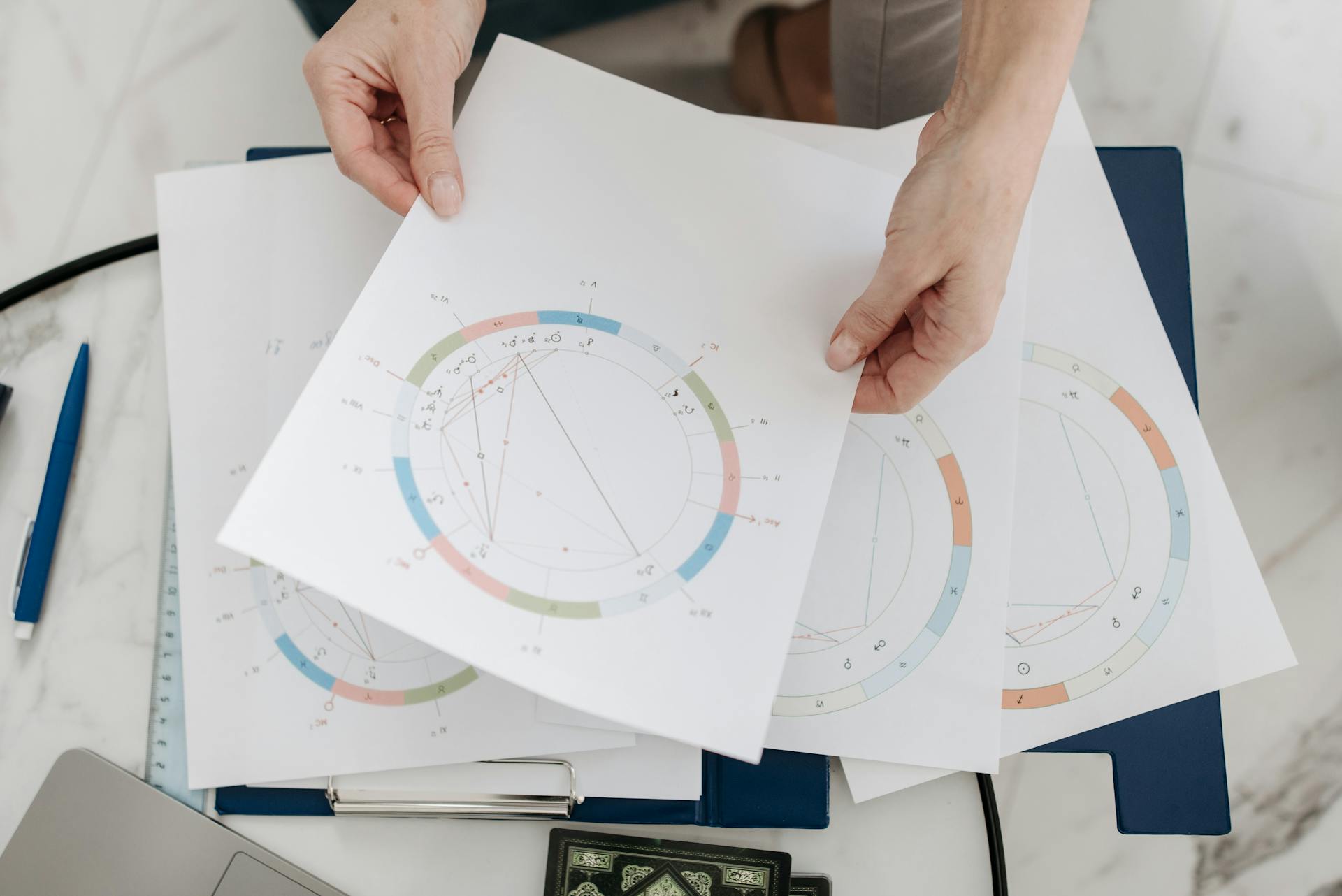
Annual Profections Explained: How to Find Your Year Lord and What It Means
Every year on your birthday, the cosmic spotlight shifts. A different house in your natal chart takes center stage, and the planet that rules that house becomes the most important player in your life for the next twelve months. This isn't a transit. It isn't a progression. It's a technique called annual profections, and it's one of the oldest predictive tools in astrology, dating back over two thousand years to the Hellenistic astrologers of the ancient Mediterranean.
The beauty of annual profections is their simplicity. You don't need an ephemeris, a computer program, or a degree in advanced chart calculation. You need your age and your rising sign. That's it. From those two pieces of information, you can determine which house of your chart is activated this year and which planet is running the show. That planet is called your year lord (or time lord, in the original Greek terminology), and every transit that touches it becomes more significant than transits to any other planet in your chart.
If you've ever wondered why some years feel like they're entirely about relationships while other years revolve around career, money, or identity crises, annual profections provide the explanation. The technique maps the repeating twelve-year cycle that structures your life's themes, showing you not just what's happening astrologically but where to focus your attention for the most productive results.
What You'll Learn
What Are Annual Profections?
Annual profections are a Hellenistic timing technique that advances your Ascendant (rising sign) by one house per year, starting from the year you were born. At age zero, you're in a 1st house profection year. At age one, you shift to a 2nd house profection year. At age two, it's a 3rd house year. This continues through all twelve houses and then starts over. At age twelve, you're back in a 1st house year. At twenty-four, you're there again. The cycle repeats every twelve years for your entire life.
The profected house tells you which area of life takes the spotlight for that twelve-month period (birthday to birthday, not January to January). And the planet that rules the sign on the cusp of that house in your natal chart becomes your year lord, the planet whose condition, natal placement, and transits carry the most weight for the year.
This technique comes from the Hellenistic tradition, roughly spanning the 1st century BCE through the 7th century CE, and was used by foundational astrologers like Vettius Valens, Dorotheus of Sidon, and Abu Ma'shar. For centuries it was one of the primary tools astrologers used to forecast the themes and events of a given year. Modern astrology largely abandoned it in favor of transits and progressions, but the traditional astrology revival of the past two decades has brought annual profections back into wide practice, and for good reason. The technique works.
What makes profections different from transits or secondary progressions is that they don't require tracking the current sky. Profections are built entirely from your natal chart and your age. They tell you which natal themes are activated this year, and then transits fill in the specifics of how those themes manifest. The two systems work together: profections set the stage, and transits deliver the plot.
How to Calculate Your Profected Year
The calculation is simple enough to do in your head.
Step 1: Start with your current age (or the age you'll turn on your next birthday, depending on which year you want to assess).
Step 2: Divide your age by 12. The remainder tells you which house you're in.
So if you're 29 years old: 29 divided by 12 is 2 remainder 5. Remainder 5 means you're in a 6th house profection year. If you're 36: 36 divided by 12 is 3 remainder 0. Remainder 0 means you're in a 1st house profection year.
Here's a quick reference by age:
1st house years: 0, 12, 24, 36, 48, 60, 72, 84
2nd house years: 1, 13, 25, 37, 49, 61, 73, 85
3rd house years: 2, 14, 26, 38, 50, 62, 74, 86
4th house years: 3, 15, 27, 39, 51, 63, 75, 87
5th house years: 4, 16, 28, 40, 52, 64, 76, 88
6th house years: 5, 17, 29, 41, 53, 65, 77, 89
7th house years: 6, 18, 30, 42, 54, 66, 78, 90
8th house years: 7, 19, 31, 43, 55, 67, 79, 91
9th house years: 8, 20, 32, 44, 56, 68, 80, 92
10th house years: 9, 21, 33, 45, 57, 69, 81, 93
11th house years: 10, 22, 34, 46, 58, 70, 82, 94
12th house years: 11, 23, 35, 47, 59, 71, 83, 95
The profection year begins on your birthday and runs until your next birthday. If you turn 30 in June, your 7th house profection year starts that June and runs through the following May.
The Twelve Profection Years Explained
Each profected house brings a distinct set of themes into focus. Here's what you can expect from each.
1st house profection year. This is the year of self. Your identity, physical body, personal direction, and the way you present yourself to the world all take center stage. Major 1st house years (ages 0, 12, 24, 36) tend to coincide with periods of reinvention. You're reassessing who you are, often triggered by an event that forces you to show up differently. At 24, many people experience their first real post-college identity shift. At 36, there's often a recalibration at the boundary between youth and mature adulthood.
2nd house profection year. Money, possessions, personal resources, and self-worth become the primary focus. Financial situations change, for better or worse, and your relationship with material security gets examined. These years often bring new income streams, financial pressures, or a fundamental reassessment of what you value.
3rd house profection year. Communication, learning, siblings, neighbors, local travel, and daily interactions are highlighted. You might start a writing project, take a course, have a significant development with a sibling, or find that your daily environment shifts in meaningful ways. The mind is busy and hungry during 3rd house years.
4th house profection year. Home, family, roots, emotional foundations, and private life come to the foreground. Moves, renovations, family dynamics, parental relationships, and questions about where you belong are common themes. The 4th house is where you go to feel safe, and these years often involve making or remaking that foundation.
5th house profection year. Creativity, romance, children, pleasure, and self-expression are activated. These tend to be more enjoyable years, though "enjoyable" depends on what's in your natal 5th house. New romantic connections, creative projects, pregnancies, or a renewed relationship with joy and play are typical 5th house themes.
6th house profection year. Daily routines, work, health, and service become the focus. Health issues that have been building may surface and demand attention. Your job situation often shifts. The relationship between your daily habits and your overall wellbeing gets spotlighted. These aren't glamorous years, but they're productive ones if you engage with the themes honestly.
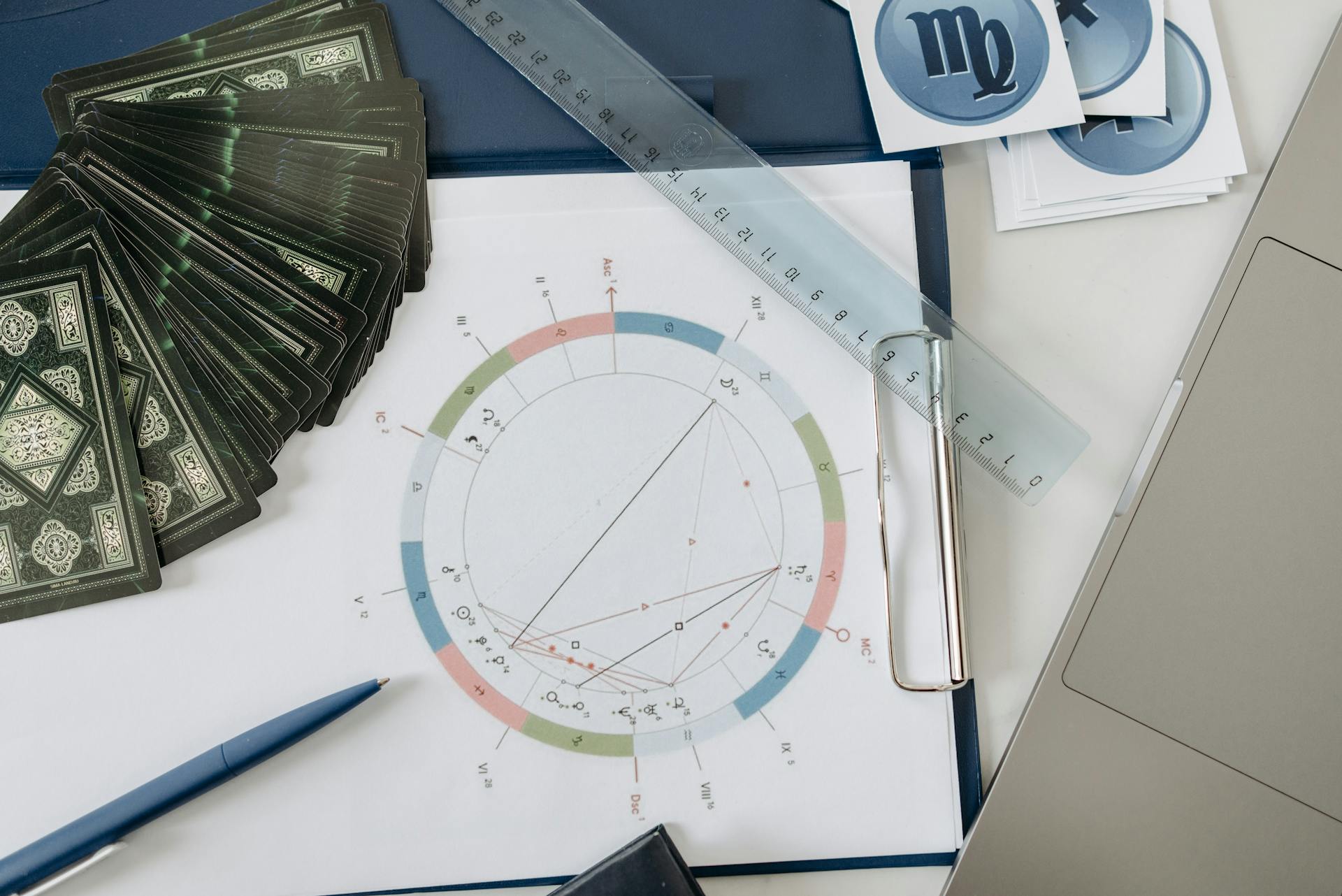
Flat lay of astrology tools including natal chart and cards on a desk for chart analysis
7th house profection year. Partnerships, marriage, committed relationships, open enemies, and one-on-one dynamics dominate. The 7th house year at age 30 is particularly significant, as it often coincides with major relationship milestones: commitments, breakups, or the arrival of a person who fundamentally changes your relational landscape. If you're already partnered, the relationship enters a year of heightened attention and potential renegotiation.
8th house profection year. Shared resources, other people's money, inheritance, debt, taxes, psychological transformation, intimacy, and endings are the territory. Eighth house years can feel heavy because they deal with the things most people avoid: financial entanglements, power dynamics, loss, and the kind of inner transformation that requires letting something die. They're also years of profound depth and intimacy for those willing to go there.
9th house profection year. Higher education, travel, philosophy, publishing, legal matters, and the expansion of your worldview are highlighted. These years often bring opportunities to learn, teach, or explore, whether through formal education, significant travel, or a philosophical shift that changes how you understand your life. The history of astrology itself often becomes fascinating to people during their 9th house years.
10th house profection year. Career, public reputation, authority, achievement, and your relationship with the broader world are activated. These are years of visible accomplishment or visible challenge. What happens in your professional life during a 10th house year tends to be seen by others. Promotions, career changes, public recognition, or professional setbacks all become more likely. Your Midheaven becomes particularly important to study during these years.
11th house profection year. Community, friendships, social networks, hopes, and group activities come into focus. Your social circle may shift. New friendships form. Old ones fade. The 11th house also governs your aspirations and ideals, so these years often involve revisiting what you hope for and whether your current community supports or hinders those hopes.
12th house profection year. Solitude, the unconscious, hidden matters, spiritual life, self-undoing, and endings of cycles are the themes. Twelfth house years are often the most misunderstood. They feel like nothing is happening externally while everything is shifting internally. Rest, retreat, therapy, spiritual practice, and processing are the appropriate activities. Trying to force external achievement during a 12th house year usually backfires. The year before a 1st house year is always a 12th house year, and it serves as a clearing period that prepares you for the next cycle of reinvention.
What Is a Year Lord and Why Does It Matter?
The year lord is the planet that rules the sign on the cusp of your profected house for the current year. It's the CEO of your year's astrological story, and every transit to that planet becomes amplified in significance.
Here's why this matters practically: in any given year, dozens of transits are happening to various points in your chart. Without a prioritization system, they all seem equally important, which makes astrological forecasting noisy and unfocused. The year lord cuts through that noise. It tells you which planet's transits matter most this year, giving you a filter for interpreting the constant stream of astrological weather.
When your year lord gets activated by a major transit (a conjunction, square, or opposition from a slow-moving planet like Saturn, Jupiter, or an eclipse), that transit becomes one of the defining events of your year. The same transit in a year when that planet isn't your year lord might register as a minor blip. Context changes everything, and the year lord provides the context.
The year lord also functions as a lens for the entire year. If Mars is your year lord, the year carries a Mars tone: energy, conflict, initiative, physical activity, and directness are the operating frequency. If Venus is your year lord, the year's tone shifts to relationships, beauty, finances, pleasure, and social connection. The planet's essential nature colors every area of your life for twelve months, not just the house it rules.
How to Find Your Year Lord
Finding your year lord requires two pieces of information: your profected house for the year and the sign on the cusp of that house in your natal chart.
Step 1: Calculate your profected house (use the method above).
Step 2: Look at your natal chart and find the sign on the cusp of that house. If you're in a 7th house profection year and Aries is on your 7th house cusp, Mars rules Aries, so Mars is your year lord. If Taurus is on your 7th house cusp, Venus is your year lord.
The traditional rulers are used in the Hellenistic system (since outer planets hadn't been discovered yet):
Traditional profections use the traditional rulerships (Mars for Scorpio, Saturn for Aquarius, Jupiter for Pisces) rather than modern rulers (Pluto, Uranus, Neptune). This isn't an arbitrary choice. The technique was developed using the traditional rulers, and practitioners consistently find it works more reliably with them. Modern rulers can still be considered as secondary significators, but the year lord is always the traditional ruler.
Step 3: Once you've identified your year lord, examine it in your natal chart. What sign is it in? What house? What aspects does it make? Is it in good or difficult condition? A well-placed year lord (in domicile, exalted, or making harmonious aspects) suggests a year where that planet's themes flow relatively smoothly. A challenged year lord (in detriment, fall, or under hard aspects) suggests a year where those themes require more effort and conscious navigation.
Generate your natal chart to identify the signs on each house cusp and find your year lord for any given year.
Using Your Year Lord with Transits
Once you know your year lord, transits to that planet become your primary forecasting tool. Here's how to use this in practice.
Jupiter transiting your year lord. Expansion, luck, and growth arrive in the area your year lord governs. If your year lord is Venus and Jupiter conjuncts your natal Venus, expect a significant boost in relationships, finances, or creative opportunities during that transit window.
Saturn transiting your year lord. Restriction, maturation, and structural challenge test the area your year lord governs. A Saturn transit to your year lord isn't punishment. It's a stress test that reveals what's solid and what's been held together with optimism and duct tape. What survives Saturn's scrutiny gets stronger.
Eclipses hitting your year lord. Eclipses that conjunct or oppose your year lord mark turning points in the year. These are the moments when the year's themes crystallize into events: a relationship begins or ends, a job offer arrives, a health issue demands attention, or a family situation reaches a resolution. The eclipse season guide covers how eclipses function in general, but in profection years, eclipses touching the year lord carry extra weight.
Mars transiting your year lord. Energy, conflict, and initiative arrive suddenly. Mars transits are brief (a few days) but sharp. If your year lord is Mercury and Mars conjuncts your natal Mercury, expect a period of heated communication, assertive thinking, or arguments that clear the air.
The year lord going retrograde. If your year lord is a planet that retrogrades during the year (Mercury, Venus, Mars, Jupiter, or Saturn), the retrograde period becomes a significant review phase for the year's themes. Things slow down, past issues resurface, and the year's direction undergoes recalibration. A Mercury retrograde when Mercury is your year lord hits differently than when it isn't.
The practical approach is straightforward: at the start of your profection year (your birthday), look up all the major transits to your year lord for the coming twelve months. Mark those dates. They're the structural pillars of your year's story. Everything else is supporting detail.
Annual Profections and Your Solar Return
Annual profections and solar returns are two techniques that cover the same time period (birthday to birthday) but operate on different principles. Using them together produces the most complete picture of any given year.
The profection tells you the theme and the year lord. The solar return fills in the details: the emotional climate, the specific life areas that get the most activity, and the quality of the events that unfold.
Here's the combination method that working traditional astrologers use:
First, determine your profected house and year lord. This sets the year's primary theme (which life area is activated) and primary planet (whose transits matter most).
Then, examine the solar return chart. Look specifically at where the year lord falls in the solar return chart. If your year lord is Venus and Venus is in the solar return's 10th house, the year's Venus themes (relationships, finances, pleasure) will manifest most visibly through your career and public life.
Check if the year lord is angular in the solar return. If the year lord falls in the 1st, 4th, 7th, or 10th house of the solar return chart, its themes will be prominent and externally visible. If it falls in a cadent house (3rd, 6th, 9th, 12th), its themes are more internal or require effort to activate.
Look at aspects to the year lord in the solar return. The solar return's aspects to the year lord describe how smoothly or challengingly the year's themes unfold. Jupiter trine the year lord in the solar return is one of the most fortunate indicators in traditional forecasting. Saturn square the year lord signals a year of effortful growth.
This layered approach, profections for the theme, solar return for the details, and transits for the timing, is how traditional astrologers build a comprehensive forecast. It's more precise than any single technique used alone.
Profections Through the Ages: Life Cycle Patterns
Because profections cycle every twelve years, you can look back at previous cycles of the same house to understand patterns in your life. Your 1st house profection years at ages 0, 12, 24, 36, 48, and 60 share a thematic connection even though the specific events differ wildly. The identity reinvention you experienced at 24 echoes the one at 12 and foreshadows the one at 36.
This backward-looking analysis is one of the most powerful uses of annual profections. You already have the data, because you've already lived through multiple cycles. Pull out your natal chart, identify the profected house for significant years in your past, and notice how consistently the house themes match what actually happened.
The Saturn return and profections. The Saturn return at ages 29 to 30 coincides with a 6th house profection year (age 29) and a 7th house profection year (age 30). This means Saturn's maturation process lands on houses associated with health, daily routine, work (6th), and committed partnership (7th). This explains why the first Saturn return so reliably involves both career/health restructuring and major relationship developments. The second Saturn return around age 58 to 59 hits the 11th and 12th house years: community reassessment and spiritual reckoning.
The Jupiter return and profections. Jupiter returns to its natal position roughly every twelve years (ages 12, 24, 36, 48, etc.), which always coincides with a 1st house profection year. Every Jupiter return happens during a year of identity renewal. This isn't a coincidence. It's a built-in resonance between the two cycles, and it's why Jupiter return years feel like major reset points.
Midlife profection patterns. The ages between 36 and 48 walk through the entire profection cycle during a period when most people experience significant life restructuring. The 7th house year at age 42 often brings the "midlife relationship reckoning," whether that's a deepening commitment, a separation, or the arrival of a relationship that fundamentally changes the second half of life.
Tracking your profection history isn't just intellectually interesting. It reveals the recurring patterns that your chart keeps activating. The same life areas come up every twelve years, but your response to them evolves. The 10th house career themes you encountered at 21 (just starting out) look very different from the 10th house themes at 33 (established enough to change direction) or 45 (securing a legacy).
Frequently Asked Questions
Do annual profections use whole sign houses or Placidus?
Traditional annual profections use whole sign houses, where the entire sign that contains the Ascendant is the 1st house, the next sign is the 2nd house, and so on. This is because the technique was developed in the Hellenistic period when whole sign houses were the standard system. Modern practitioners who use Placidus or other quadrant house systems for natal chart interpretation often still switch to whole sign houses specifically for profections, because the technique's accuracy depends on sign-based rulership. The house systems guide explains the differences between these approaches. For profections, look at which sign is on each house using whole sign houses, and use the ruler of that sign as your year lord.
Can annual profections predict specific events?
Profections identify the themes and life areas that will be most active during a given year, but they don't predict specific events on their own. They work best as a framework that makes transit interpretation more focused and accurate. Knowing that you're in a 7th house profection year doesn't tell you that you'll get married in October. But it tells you that partnership themes are front and center, and when Jupiter trines your year lord in October, you know exactly where to look for the manifestation. Profections set the stage. Transits deliver the script. The two together produce predictions that are significantly more accurate than either alone.
What if I have interceptions or empty houses in my profected house?
In whole sign houses, there are no interceptions, every house contains exactly one sign. This is one reason profections work with whole sign houses: the calculation stays clean and every house has a clear ruler. If you're using a quadrant house system and encounter an interception, the traditional solution is to default to whole sign houses for the profection calculation while using your preferred house system for natal interpretation. An "empty" house (one with no natal planets in it) doesn't weaken the profection. The year lord still governs the year's themes. An empty profected house simply means the year's themes manifest through the year lord's transits and natal condition rather than through natal planets in that house.
How do profections interact with the Saturn return?
The first Saturn return (ages 28 to 30) always overlaps with 5th, 6th, and 7th house profection years. This creates a predictable sequence: creative and romantic reassessment (5th), health and work restructuring (6th), and partnership reckoning (7th), all while Saturn is stress-testing your foundational life structures. The combination is why the late twenties feel so consequentially heavy. Both systems are saying the same thing through different mechanisms: this is a period of mandatory adulthood where the structures you built in your twenties get audited. Understanding both techniques together gives you a much clearer map of what each year within the Saturn return period will emphasize.
Do profections only work with the rising sign?
Traditional profections advance from the Ascendant (rising sign), and this is the primary and most widely practiced form. However, some Hellenistic astrologers also used profections from other points: from the Sun sign for career and public matters, from the Moon sign for health and daily life, and from the Lot of Fortune for financial and material matters. These secondary profections add layers of nuance, but they're considered an advanced technique. Start with Ascendant profections. Once you've worked with them for a few years and confirmed their reliability against your lived experience, you can explore profecting from other chart points for additional insight. Generate your chart with the natal chart calculator to find your Ascendant sign and begin working with this technique.
Annual profections give you something that most astrological techniques don't: a dead-simple entry point that produces genuinely useful results. You need your age and your rising sign. From there, you know which house runs the year and which planet is calling the shots. That planet becomes your filter for every transit, every lunation, and every decision of the next twelve months. The technique is two thousand years old, and people keep returning to it because it keeps being right. Calculate your profected year. Find your year lord. Then watch what happens when the sky touches it. The twelve-year cycle of your life is already in motion. Annual profections just give you the map. To find the signs on your house cusps and identify your year lord, generate your natal chart. For the solar return chart that pairs with your profections, read the solar return guide. And for the transit tracking that brings profections to life, explore the planetary transits overview.