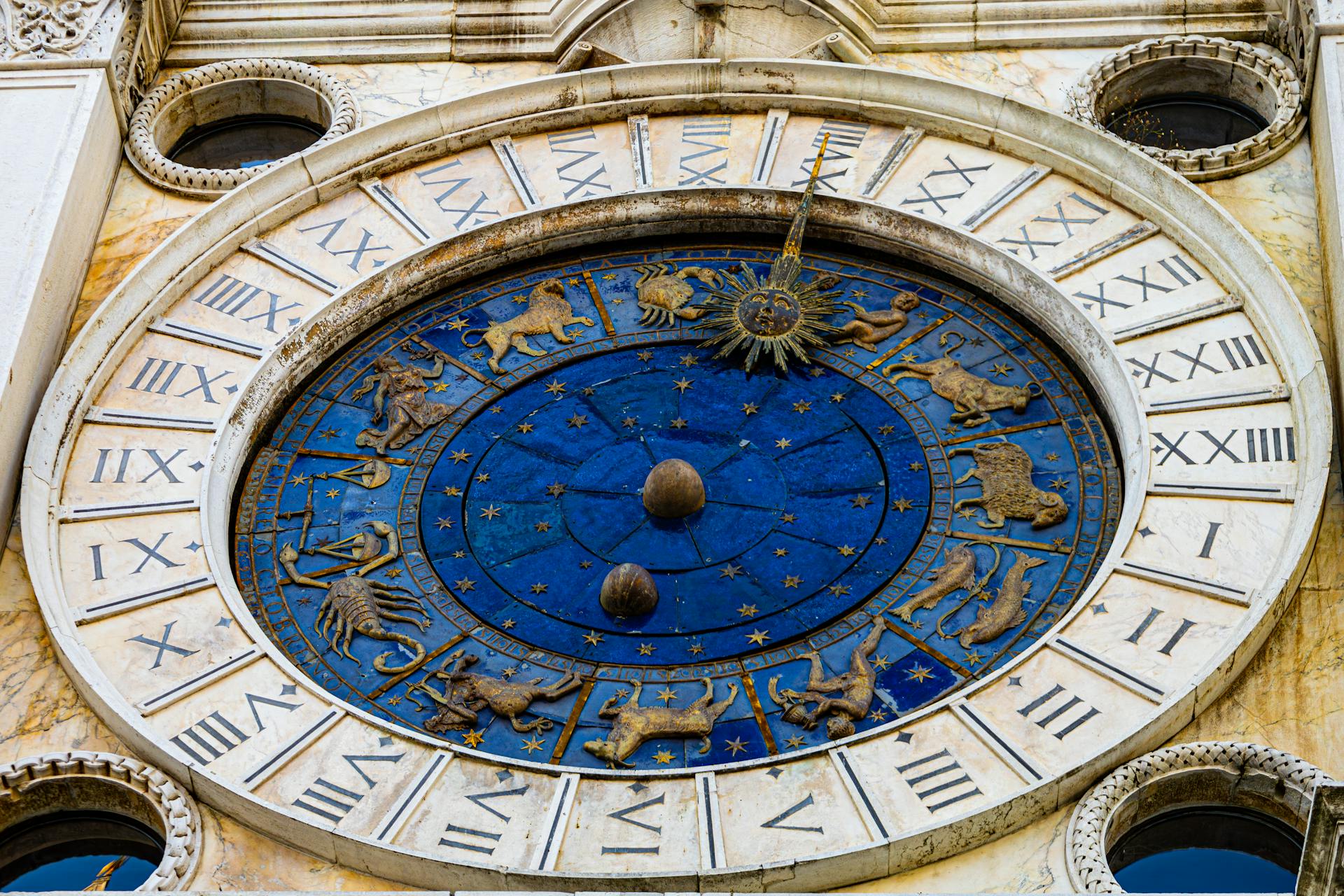
The Astrological Ages: What the Age of Aquarius Really Means for Humanity
The phrase "Age of Aquarius" has been floating through popular culture since the 1960s, when the musical *Hair* turned it into a countercultural anthem. But the concept behind it is far older than flower power and far more specific than a vague feeling that things are changing. Astrological ages are roughly 2,160-year periods defined by a real astronomical phenomenon called the precession of the equinoxes. Each age corresponds to one of the twelve zodiac signs, and the themes of that sign don't just show up in individual birth charts. They shape civilizations, religions, technologies, and the entire arc of human history.
You're probably in the Age of Pisces right now, or you're on the cusp of the Age of Aquarius. The exact transition point is one of astrology's longest-running debates, and the answer depends on which measurement system you use. But the mechanism behind the ages isn't debatable at all. It's observable astronomy that's been documented for over two thousand years.
Understanding astrological ages gives you a framework for seeing patterns in history that you won't find in any textbook. It's the macro lens of astrology: not what's happening in your chart this month, but what's happening to the entire human experiment across millennia.
What You'll Learn
What Causes the Astrological Ages?
Astrological ages are caused by a phenomenon called the precession of the equinoxes. Here's how it works in plain terms.
Earth doesn't spin perfectly upright. Its axis is tilted about 23.4 degrees relative to its orbital plane, and that tilted axis slowly wobbles in a circle, like a spinning top that's starting to slow down. One complete wobble takes approximately 25,772 years. Astronomers call this the precession cycle, and it's been observed since at least the 2nd century BCE, when the Greek astronomer Hipparchus first documented it.
This wobble matters because it shifts which constellation appears behind the Sun on the spring equinox. On the first day of spring (the vernal equinox), the Sun rises against the backdrop of a specific constellation. Two thousand years ago, that backdrop was Aries. Before that, it was Taurus. Right now, depending on how you draw the constellation boundaries, it's either late Pisces or early Aquarius.

Night sky filled with stars illustrating the slow rotation of constellations across thousands of years of precession
The constellation that serves as the Sun's equinox backdrop determines the current astrological age. As precession slowly shifts that backdrop from one constellation to the next, humanity transitions from one age to another. The key word is "slowly." The shift takes centuries, which is why pinpointing the exact year of a new age is so difficult and so contentious.
Precession is real, measurable physics. There's nothing speculative about Earth's axial wobble. The astrological interpretation, that the backdrop constellation influences humanity's collective themes, is where astrology and astronomy part ways. But the underlying mechanism is as solid as gravity.
How Long Does Each Astrological Age Last?
The full precession cycle of roughly 25,772 years divided by 12 zodiac signs gives each age an average duration of about 2,148 years. Most astrologers round this to 2,150 or 2,160 years for simplicity.
However, if you're using astronomical constellation boundaries rather than equal 30-degree zodiac signs, the ages aren't equal. The constellations vary dramatically in size. Virgo spans about 44 degrees of ecliptic longitude while Cancer covers only about 20 degrees. That means an "Age of Virgo" based on constellation boundaries would last roughly 50% longer than an "Age of Cancer."
Most astrological traditions use the equal-sign approach: twelve signs of 30 degrees each, twelve ages of approximately 2,160 years each. This is cleaner, more consistent, and avoids the messy boundaries of the astronomical constellations, which were formalized by the International Astronomical Union in 1930 for catalog purposes, not astrological ones.
The twelve ages together form what's called the Great Year, or the Platonic Year, named after Plato, who referenced the concept in his dialogues. One Great Year equals one full precession cycle: roughly 25,772 solar years. When the Great Year ends, the cycle starts over, and the ages repeat.
Why Do the Ages Move Backward Through the Zodiac?
Here's the detail that trips up most people new to this concept: the ages move backward through the zodiac. Normal astrological progression goes Aries, Taurus, Gemini, Cancer, and so on. The ages go the opposite direction: Aries, Pisces, Aquarius, Capricorn.
This backward motion is a direct consequence of how precession works. The wobble of Earth's axis causes the vernal equinox point to drift westward along the ecliptic, which means it moves against the natural order of the zodiac signs. Astronomers call this retrograde motion of the equinox, and it's the reason the ages proceed in reverse order.
So the sequence of recent and upcoming ages looks like this:
Each age transitions into the previous zodiac sign, not the next one. If you're used to thinking of the zodiac as a forward-moving cycle, the ages require you to flip that mental model.
The Milky Way stretching across a dark sky filled with thousands of visible stars representing the vast scale of cosmic time
What Happened During Each Astrological Age?
The most compelling argument for astrological ages comes from looking at how well each age's zodiac themes match the dominant cultural, religious, and technological patterns of its era. Here's a walk through the most well-documented ages.
The Age of Taurus (approximately 4300-2150 BCE)
Taurus is the sign of the bull, ruled by Venus, associated with agriculture, material wealth, sensory pleasure, fertility, and the earth itself. The Age of Taurus corresponds to the rise of agriculture-based civilizations, the construction of permanent settlements, and the worship of bull figures across multiple cultures.
The Egyptians worshipped the Apis bull. The Minoans on Crete built their entire culture around bull imagery and bull-leaping rituals. Mesopotamian civilizations featured the Bull of Heaven prominently in their mythology, including the Epic of Gilgamesh. The golden calf that appears in the Hebrew Bible reflects the lingering influence of Taurean worship during the transition to the next age.
This was also the era of massive earth-works and monument building. The Great Pyramids, Stonehenge, and the megalithic temples of Malta were all constructed during the Age of Taurus. Taurus builds things that last, and the monuments of this age have outlasted everything that came after them.
The Age of Aries (approximately 2150 BCE to 1 CE)
Aries is the sign of the ram, ruled by Mars, associated with war, conquest, individual heroism, iron, and fire. The Age of Aries brought the Iron Age, the rise of military empires, and a shift in religious symbolism from the bull to the ram.
The Hebrew tradition replaced bull worship with the ram. Abraham sacrificed a ram instead of his son. The shofar, a ram's horn, became a sacred instrument. Moses came down from Mount Sinai to find the Israelites worshipping a golden calf (the old Taurean symbol) and destroyed it, symbolically ending one age and beginning another.
Greek civilization, the defining culture of this age, was built on individual heroism and martial prowess. The Iliad and the Odyssey, the founding texts of Western literature, are war stories centered on individual warriors. Alexander the Great, the ultimate Aries archetype, conquered the known world through sheer personal will and military force.
Rome continued the Aries themes: a civilization built by conquest, governed by military power, and obsessed with individual glory. The Roman legions were the most effective fighting force the ancient world had ever seen, and Roman culture celebrated Mars, the god of war, as a central deity.
The Age of Pisces (approximately 1 CE to present)
Pisces is the sign of the fish, ruled by Jupiter (traditionally) and Neptune (in modern astrology), associated with faith, sacrifice, compassion, mysticism, illusion, and the dissolution of boundaries. The Age of Pisces began with the rise of Christianity, and the parallels between Piscean themes and the last two thousand years of history are striking.
Jesus's earliest symbol wasn't the cross. It was the fish. The ichthys, the simple fish outline that early Christians used as a secret identifier, is a direct Piscean symbol. Jesus was called a "fisher of men." He multiplied fish to feed the masses. He called fishermen as his first disciples. The entire symbolic language of early Christianity is soaked in Pisces imagery.
Piscean themes dominated the age's spiritual landscape: faith over reason, sacrifice as the highest virtue, compassion for the suffering, the promise of an unseen spiritual reality more real than the material world. Monasteries, cathedrals, religious art, and the structure of the medieval church all reflect Pisces' orientation toward the transcendent and the invisible.
The shadow side of Pisces also showed up: institutional deception, religious persecution, martyrdom as a cultural obsession, escapism, addiction, and the blurring of truth and fiction. The Age of Pisces gave us both the Sistine Chapel and the Inquisition, both mystical poetry and holy wars fought over competing versions of invisible truths.
Neptune's modern rulership of Pisces adds another layer. The last few centuries of the Piscean age brought photography, film, television, and the internet: technologies of illusion, image, and the dissolution of boundaries between real and virtual. Neptune dissolves whatever it touches, and the late Age of Pisces has dissolved the boundaries between nations, cultures, identities, and even consensus reality.

Stars scattered across a deep blue night sky representing the constellations that mark the boundaries between astrological ages
Are We in the Age of Aquarius Yet?
This is the question that's generated more debate among astrologers than almost any other topic in the field. The honest answer is: it depends on who you ask and which measurement system they use.
The challenge is that there's no universally agreed-upon starting point for any astrological age. The ages are determined by when the vernal equinox point crosses from one constellation (or sign) into the next, but where you draw those boundaries changes the answer dramatically.
The constellation boundary approach. If you use the International Astronomical Union's official constellation boundaries (established in 1930), the vernal equinox point won't leave Pisces and enter Aquarius until approximately 2597 CE. By this reckoning, the Age of Aquarius is still over 500 years away.
The equal-sign approach. If you divide the ecliptic into twelve equal 30-degree segments and anchor them to a specific historical starting point, the transition date changes based on your anchor. Many astrologers who use this method place the transition somewhere between 2060 and 2200 CE.
The "it's already started" camp. Some astrologers argue that the Age of Aquarius began in the 20th century, pointing to the rapid acceleration of Aquarian themes: technology, democracy, humanitarianism, networks, the breakdown of hierarchies, space exploration, and the internet. The conjunction of Jupiter and Saturn in Aquarius in December 2020 is often cited as a significant marker.
The cusp theory. Many practitioners take a middle position: we're in a transitional period between ages, a cusp that could last several hundred years. Just as dawn isn't a single moment but a gradual brightening, the shift between ages is a long, slow blending of one sign's themes fading while the next sign's themes intensify.
The strongest evidence that Aquarian themes are already active comes from the pace of change in the last century. Pluto's entry into Aquarius in 2024, where it'll stay until 2044, is accelerating these themes further. Whether that means the Age of Aquarius has officially begun or that we're simply experiencing its approaching influence is a matter of interpretation.
What Will the Age of Aquarius Look Like?
If the pattern holds, and every previous age's themes matched its sign's characteristics remarkably well, then the Age of Aquarius should bring approximately 2,160 years dominated by Aquarian themes.
Technology and innovation. Aquarius is associated with invention, progress, and the future. The Age of Aquarius should see technological advancement that makes our current era look primitive. If the Age of Pisces gave us the printing press and the internet, the Age of Aquarius might give us whatever comes after the internet.
Collective consciousness over individual faith. Pisces emphasized personal belief and individual salvation. Aquarius is a collective sign. The shift is from "what do I believe?" to "what do we know?" Science, data, and shared systems of understanding should increasingly replace faith-based frameworks as the organizing principle of society.
Decentralization. Aquarius resists hierarchy. The Age of Pisces was the age of the church, the monarchy, and the centralized institution. Aquarius favors networks, distributed systems, and flat structures. This trend is already visible in decentralized finance, open-source software, and the erosion of traditional institutional authority.
Humanitarianism. Aquarius is the sign of humanity as a whole. While Pisces produced compassion rooted in spiritual obligation, Aquarius produces humanitarian action rooted in the principle that all people belong to the same network. The motivation shifts from "help the suffering because God commands it" to "help the suffering because they're part of us."
The shadow side. Every sign has one. Aquarius at its worst is cold, detached, ideologically rigid, and willing to sacrifice individuals for the collective good. The Age of Aquarius could bring technocratic control, surveillance states, loss of privacy, and a devaluation of individual emotional experience in favor of data and efficiency. The sign that brings liberation can also bring the tools of its opposite.
How Do Astrological Ages Connect to Your Birth Chart?
Astrological ages operate at the collective level. They don't directly modify your natal chart or change your personal planetary transits. But they provide the backdrop against which your individual chart plays out.
Think of it this way: your natal chart is the script of your personal story, and the astrological age is the era in which that story is set. A person with a strong Aquarius emphasis in their chart (planets in Aquarius, an Aquarius Rising, Aquarius on the Midheaven) might find that their natural inclinations align with the incoming age's themes. They could feel like they were "born for this time."
Conversely, someone with a strong Pisces chart might feel increasingly out of step as the Piscean age fades. The skills and sensitivities that served them well in a Pisces-dominated world, deep faith, emotional intuition, comfort with ambiguity, may feel less valued in a culture that's shifting toward Aquarian rationality and collectivism.
The outer planets are the bridge between your individual chart and the collective ages. Pluto, Neptune, and Uranus move so slowly that their sign placements are generational, affecting everyone born within a certain span. Pluto in Aquarius (2024-2044) is a personal transit for everyone alive during that period, and its themes directly echo the larger Age of Aquarius transition.
Your Saturn return at 29, your Jupiter return at 12, and your personal solar returns each year are individual timing events. The astrological ages are the equivalent at the civilizational scale: timing events that take millennia instead of years, but follow the same zodiacal logic.
Frequently Asked Questions
When exactly does the Age of Aquarius start?
There's no single agreed-upon date. Estimates range from the early 20th century to as late as 2597 CE, depending on whether you use equal 30-degree signs or astronomical constellation boundaries. Most contemporary astrologers place the transition somewhere between 2000 and 2200 CE, with many pointing to the current era as a cusp period where Aquarian themes are intensifying but Piscean themes haven't fully faded.
How is an astrological age different from a zodiac sign?
Your zodiac sign (Sun sign) is based on where the Sun was positioned relative to the tropical zodiac on your birthday. An astrological age is based on which constellation appears behind the Sun at the vernal equinox due to Earth's precession. Your Sun sign changes monthly; an astrological age lasts roughly 2,160 years. They use the same twelve symbols but operate on completely different scales and mechanisms.
Do astrological ages affect my personal horoscope?
Not directly. Astrological ages describe collective themes that shape civilizations over millennia. Your personal natal chart, transits, and progressions describe your individual life. However, the age sets the cultural backdrop for your life, and if your chart strongly features the sign of the current or incoming age, you may feel more aligned with the prevailing collective energy.
What was the Age of Aquarius song about?
The 1967 song from the musical *Hair* used the astrological concept as a metaphor for the counterculture's hope that humanity was entering a new era of peace, harmony, and understanding. The lyrics reference Jupiter aligning with Mars and the Moon being in the 7th house, which are transit conditions, not age markers. The song popularized the term but simplified the astrology significantly.
Will the Age of Aquarius bring world peace?
Aquarius values equality, innovation, and collective progress, but it also has a shadow side that includes detachment, ideological extremism, and technocratic control. Previous ages weren't uniformly positive: the Age of Pisces brought both profound spiritual insight and religious persecution. The Age of Aquarius will likely bring significant progress in technology and humanitarian systems alongside new challenges that reflect Aquarius's harder edges. No astrological age is a utopia.
The astrological ages are astrology's widest lens. While your natal chart reveals the patterns of your individual life, and techniques like annual profections and zodiacal releasing time your personal chapters, the ages reveal the patterns of humanity's collective story. Each age brings its sign's highest potential and its deepest shadow. The Age of Pisces gave humanity transcendent art and institutional corruption. The Age of Aquarius, whenever it fully arrives, will bring its own gifts and its own tests. What you can do is understand the current, notice which way it's flowing, and use your own chart to navigate it with intention. Pull up your natal chart and see where Aquarius falls in your houses. That's where the incoming age will make its presence felt first in your life.