
Sidereal vs Tropical Astrology: What's the Difference and Which Should You Use?
Your zodiac sign might not be what you think it is. If you've only ever used Western astrology, you're working with the tropical zodiac, a system that anchors the signs to the seasons rather than the stars. Switch to the sidereal zodiac, the system used in Vedic (Jyotish) astrology, and there's roughly a 75% chance your Sun sign shifts back by one sign. That Aries identity you've carried your whole life? In sidereal terms, you might be a Pisces.
This isn't a glitch. It's a 2,000-year-old divergence between two legitimate approaches to mapping the sky, and it's one of the most debated topics in astrology. Both systems produce accurate readings. Both have long track records of practical use. But they define the zodiac differently, and understanding why helps you make a more informed choice about which framework to trust with your natal chart.
What You'll Learn
What Are the Tropical and Sidereal Zodiacs?
Both systems divide the ecliptic (the Sun's apparent path through the sky) into twelve 30-degree segments and assign them the familiar zodiac sign names. The critical difference is where they start counting.
The tropical zodiac fixes 0 degrees Aries to the vernal equinox, the moment each spring when the Sun crosses the celestial equator heading north. This happens around March 20-21 every year. The signs then follow in 30-degree segments from that starting point. Because the equinox is defined by Earth's relationship to the Sun, the tropical zodiac is really a seasonal system. Aries always begins at the start of spring in the Northern Hemisphere, Cancer at the start of summer, Libra at fall, Capricorn at winter.
The sidereal zodiac fixes 0 degrees Aries to a specific point among the fixed stars, typically near the star Spica or the beginning of the Ashvini nakshatra, depending on which ayanamsa (correction factor) is used. The signs then follow in 30-degree segments from that stellar reference point. Because it's anchored to the stars, the sidereal zodiac tracks the actual background constellations more closely than the tropical system does.
Around 2,000 years ago, these two starting points were roughly aligned. The vernal equinox fell near the same degree as the sidereal starting point, which means both zodiacs produced the same sign placements. Everyone was working from the same map. That alignment didn't last.

Ancient celestial globe with constellation markings showing how different cultures mapped the zodiac against the fixed stars
Why Do the Two Systems Disagree?
The disagreement comes down to a single astronomical phenomenon: the precession of the equinoxes. Earth doesn't spin perfectly upright. Its axis wobbles slowly, like a top that's starting to slow down, completing one full wobble every 25,772 years. This wobble gradually shifts the position of the vernal equinox against the backdrop of the fixed stars.
The rate is about 1 degree every 72 years. That sounds small, but over two millennia it adds up to roughly 24 degrees, nearly an entire zodiac sign. This means the tropical zodiac has slowly drifted away from the constellations whose names it still uses.
When a tropical astrologer says you're an Aries (Sun between 0 and 30 degrees of tropical Aries), the Sun is actually sitting in front of the constellation Pisces for most of that range. The sign name and the constellation name no longer match. For the sidereal system, they still do, because sidereal calculations apply a correction (the ayanamsa) to account for precession and keep the zodiac aligned with the stars.
This is the core tension. Tropical astrology kept the names and seasonal anchoring but let go of the stellar alignment. Sidereal astrology kept the stellar alignment but let go of the seasonal anchoring. Neither system is "wrong" in the way that a broken clock is wrong. They're measuring different things and calling them by the same names.
How Precession Created the Split
The history of this divergence matters for understanding why both systems survive and thrive. In the early centuries of horoscopic astrology (roughly 200 BCE to 200 CE), Hellenistic astrologers in the Mediterranean developed the foundational techniques that Western astrology still uses. At that time, the tropical and sidereal zodiacs were nearly identical, so there was no practical reason to choose between them.
Claudius Ptolemy, whose 2nd-century work "Tetrabiblos" became the foundational text of Western astrology for over a thousand years, explicitly argued for the tropical zodiac. He reasoned that the zodiac signs derive their qualities from the seasons, not from the constellations. Aries is cardinal and initiating because it marks the beginning of spring, not because the stars in the constellation Aries emit some kind of Aries energy. This seasonal logic became the default in the Western tradition.
Meanwhile, the Indian astrological tradition (Jyotish), which developed from shared Hellenistic roots but evolved independently, chose the sidereal path. Indian astronomers were well aware of precession and developed sophisticated correction systems to keep their zodiac aligned with specific fixed stars. The nakshatra system, which divides the ecliptic into 27 lunar mansions defined by prominent stars, made stellar alignment essential to the framework.
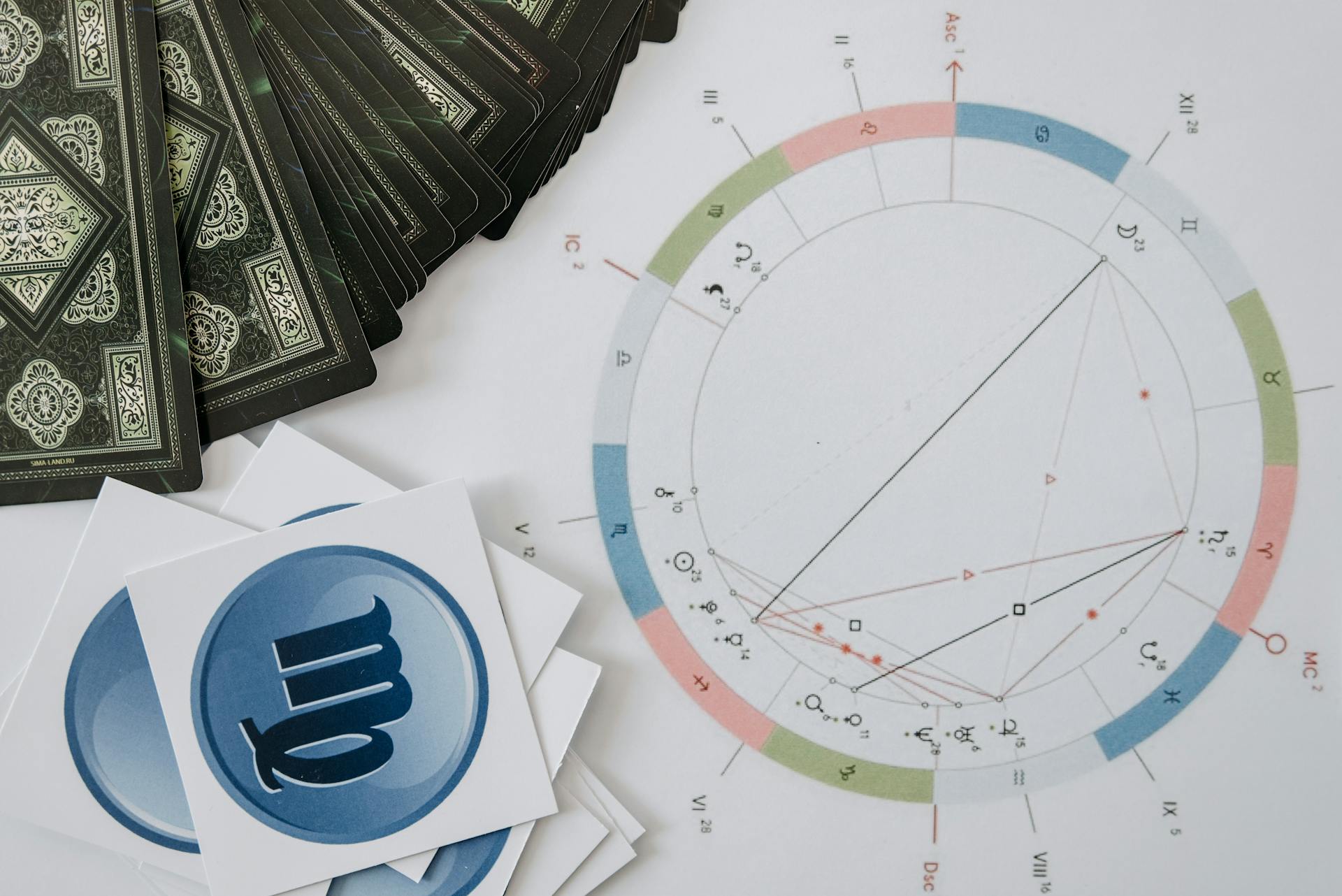
Close-up of an astrological chart wheel with zodiac symbols arranged in traditional divisions
By the time European astrology experienced its medieval revival through Arabic translations, the tropical framework was firmly established in the West, while the sidereal framework was equally established in India. The two traditions developed in parallel for centuries, each producing effective practitioners and coherent interpretive systems, each working from a zodiac that disagreed with the other by an ever-widening margin.
What's My Sign in Sidereal Astrology?
If you know your tropical Sun sign, you can estimate your sidereal Sun sign. Because the current difference between the two systems is about 24 degrees, most people's sidereal Sun sign is the sign before their tropical Sun sign. Here's the approximate mapping (dates are approximate and vary slightly by year and ayanamsa):
The shift doesn't just affect your Sun sign. Your Moon sign, rising sign, Venus, Mars, and every other planet in your chart may also shift back by one sign. The house placements can change too, depending on the house system used.
If you want exact sidereal placements rather than estimates, generate your natal chart and apply the Lahiri ayanamsa (the most commonly used correction factor in Vedic astrology), which currently subtracts about 24 degrees from all tropical positions.
Is Sidereal Astrology More Accurate Than Tropical?
This is the question everyone asks, and the honest answer is that accuracy depends on what you're measuring and which interpretive tradition you're using. Both systems produce verifiable results when applied within their own frameworks.
Sidereal advocates point out that their zodiac reflects the actual positions of the stars. When a sidereal astrologer says your Sun is in Taurus, the Sun really is in front of the stars of Taurus. There's an astronomical correctness to this that tropical astrology can't claim, and for practitioners who see the zodiac as fundamentally connected to the energies of the fixed stars, this matters.
Tropical advocates counter that the zodiac signs were never really about the constellations. The constellations are unequal in size (Virgo spans about 44 degrees, Scorpio only about 7 degrees), and the 12-sign zodiac of equal 30-degree segments was always an abstraction. The tropical system grounds that abstraction in something physically measurable and astronomically precise: the relationship between Earth and the Sun as expressed through the seasons. The equinoxes and solstices are exact astronomical events, not approximations.

Astrologer reviewing a detailed birth chart with planetary positions and zodiac divisions
The reality is that thousands of competent astrologers practice each system and produce readings that resonate deeply with their clients. The techniques, house systems, and interpretive methods differ enough between traditions that switching the zodiac without switching the entire framework doesn't work well. You can't simply take your tropical chart, subtract 24 degrees, and read it with tropical interpretive methods. The sidereal zodiac belongs to a different interpretive ecosystem.
The Case for Tropical Astrology
Tropical astrology has several strengths that explain its dominance in the Western world:
Seasonal logic is intuitive. The cardinal signs (Aries, Cancer, Libra, Capricorn) begin at the equinoxes and solstices, the four turning points of the year. This gives the cardinal quality a visceral meaning: these signs initiate because they arrive when the seasons change. The entire modal system (cardinal, fixed, mutable) maps cleanly onto the seasonal cycle.
It's self-correcting. Because the tropical zodiac is tied to the equinox, it doesn't drift over time. A chart cast today uses the same framework as a chart cast 500 years from now. There's no need for correction factors, and no debate about which correction factor to use.
The interpretive tradition is enormous. Western astrology has developed sophisticated techniques like secondary progressions, solar returns, and zodiacal releasing within the tropical framework. These techniques have been tested and refined over centuries and produce consistent, verifiable results.
Psychological astrology thrives in it. The seasonal metaphor supports the psychological approach to astrology that dominates Western practice. Signs as archetypes, planets as psychological drives, aspects as internal tensions. This framework doesn't need stellar alignment to function.
The Case for Sidereal Astrology
Sidereal astrology has its own compelling advantages:
Astronomical alignment. Your chart reflects what was actually in the sky when you were born. For practitioners who believe the zodiac derives its power from the fixed stars and their observable positions, this is non-negotiable. The tropical zodiac's disconnect from the visible sky is, in this view, a fundamental problem regardless of how well tropical interpretations seem to work.
The nakshatra system. Vedic astrology divides the zodiac into 27 nakshatras (lunar mansions), each spanning 13 degrees and 20 minutes. This system, which predates the 12-sign zodiac, provides a layer of detail that has no tropical equivalent. Each nakshatra has its own deity, symbol, motivation, and behavioral characteristics, creating a granularity that 12 signs alone can't achieve.
Predictive power. Vedic astrology's dasha systems (planetary period systems, particularly Vimshottari dasha) are widely regarded as some of the most precise timing tools in astrology. These systems were designed for and calibrated within the sidereal framework. The timing of major life events, career changes, relationship beginnings and endings, health issues, can be pinpointed with specificity that impresses even skeptics.
Remedial measures. Jyotish includes a structured system of remedies (gemstones, mantras, rituals, charitable acts) designed to strengthen weak placements or mitigate difficult ones. Whether or not you believe in their efficacy, the existence of a prescriptive framework means Vedic astrology doesn't just describe your chart; it offers specific actions to work with it.
Can You Use Both Systems?
Yes, and some practitioners do. The two zodiacs don't have to be enemies. They can be understood as different lenses on the same reality, each revealing patterns the other misses.
One useful framework: the tropical zodiac describes your psychological orientation (who you are on the inside, how you process experience), while the sidereal zodiac describes your karmic orientation (the soul's trajectory, the lessons carried from past lives, the dharmic purpose of this incarnation). Some practitioners read the tropical chart for self-understanding and the sidereal chart for life-path questions.
Another approach uses tropical for natal work and sidereal for mundane astrology (the astrology of world events, nations, and collective cycles). The precession cycle itself, the roughly 26,000-year wobble that creates the drift between the two zodiacs, defines the astrological ages (the Age of Pisces, the Age of Aquarius), which are inherently sidereal phenomena.
The one thing that doesn't work is mixing the systems without awareness. If you're using tropical sign interpretations, use tropical positions. If you're using Vedic interpretive techniques, use sidereal positions. Each system's interpretive layer was developed for its own zodiac, and forcing one system's meanings onto the other's positions produces confused, unreliable results.
How This Affects Your Birth Chart
If you've been studying your natal chart using tropical astrology and you're now curious about your sidereal placements, here's what to expect:
Most planets shift back one sign. Your Sun, Moon, Mercury, Venus, and Mars will likely move to the previous sign. If you're a tropical Gemini Sun, you're probably a sidereal Taurus Sun. This can feel destabilizing at first, especially if you've identified strongly with your tropical signs.
Some planets might stay the same. If a planet is in the late degrees of a tropical sign (roughly 25-30 degrees), it may remain in the same sign after the sidereal correction. Check your exact degree positions to know for sure.
The houses may shift. If your Ascendant changes sign, all twelve houses rotate, which changes which planets fall in which houses and alters the entire thematic landscape of your chart.
Aspects don't change. Because all positions shift by the same amount, the angular relationships between planets (conjunctions, squares, trines, and other aspects) remain identical in both systems. A Sun-Saturn square is a Sun-Saturn square regardless of which zodiac you use.
Retrogrades don't change. Whether a planet was retrograde at your birth is an astronomical fact independent of the zodiac system. Your Saturn return timing doesn't change either, because returns are based on planetary cycles, not zodiac measurement.
The most productive approach is to read your chart in both systems and notice which one resonates more deeply. If your tropical chart has always felt accurate, trust that. If something about your sidereal placements clicks in a way the tropical ones didn't, explore that. Astrology is ultimately a tool for self-understanding, and the system that produces the deepest understanding for you is the right one to use.
Frequently Asked Questions
Did NASA change the zodiac signs?
No. In 2016, NASA published an educational article about the astronomical constellations, which are different from the astrological zodiac signs. The article noted that the constellations don't align with the tropical zodiac, which astronomers and astrologers already knew. NASA didn't change anything; they described the precession-driven discrepancy that has existed for centuries. The tropical zodiac was never meant to track the constellations, so the "mismatch" isn't news to astrologers.
Why do Vedic and Western astrology give me different signs?
Vedic astrology uses the sidereal zodiac (aligned with the fixed stars) while Western astrology uses the tropical zodiac (aligned with the seasons). Because of precession, these systems have drifted about 24 degrees apart. This means your Vedic Sun sign is usually one sign behind your Western Sun sign. Both are valid within their own interpretive traditions, and neither is "your real sign" while the other is wrong.
Which zodiac system is older?
Both zodiacs have ancient roots, and the question is more complex than it appears. The earliest horoscopic astrology (Hellenistic, around 200 BCE) likely used a zodiac that was functionally both tropical and sidereal, since the two were aligned at that time. The explicit tropical framework was codified by Ptolemy in the 2nd century CE. The explicit sidereal framework, with precession correction, was developed by Indian astronomers around the same period. Neither system in its current form is the "original" because the original didn't need to choose.
Should I identify with my tropical or sidereal sign?
Identify with whichever system you've been studying and whichever resonates with your lived experience. If you've spent years working with tropical astrology and your tropical chart feels accurate, there's no reason to abandon it because sidereal placements exist. If you discover Vedic astrology and your sidereal chart clicks more deeply, follow that path. The most productive approach is to learn one system well rather than bouncing between both without depth in either.
Does the zodiac sign shift affect compatibility?
Compatibility analysis works within whichever system you're using. If you compare your tropical Sun with your partner's sidereal Sun, you'll get meaningless results. Compare tropical to tropical or sidereal to sidereal. Within each system, the synastry techniques and interpretive methods account for the zodiac they use. A relationship chart cast entirely in one system will produce consistent, useful insights.
The zodiac debate isn't going to be settled by an article, a podcast, or a social media argument. It's been running for nearly two thousand years, and it will keep running because both systems work. The stars haven't moved from the perspective of the sidereal zodiac. The seasons haven't changed from the perspective of the tropical zodiac. What shifts is your understanding of why both claims can be true at the same time, and what that says about the nature of astrology itself. Generate your natal chart in both systems. Read the descriptions. Notice which one makes you say "that's me." Then go deeper into that system and learn what it's really capable of showing you.