
The 55x5 Manifestation Method: How to Write Your Goal in 5 Days
The 55x5 manifestation method is a writing practice where you pick one affirmation and write it out 55 times a day for 5 days in a row. That's the whole thing. Same line, same count, five straight days, ideally at the same time each day. The repetition keeps a single goal parked at the front of your mind, and a goal you keep looking at is one you're far more likely to act on. You'll also see it called the 5x55 method or the 555 method, but the recipe never changes: 55 repetitions, 5 days, one focused desire.
If longer techniques have worn you out, the appeal here is the finish line. You're not journaling forever or waiting for a full moon to line up. You commit to five deliberate sessions and then you're done. This guide covers where the number five comes from, exactly how to run the five days, what to put on that first line, how it stacks up against methods like the 369, and the honest version of whether it works. For the calmer, spread-out cousin of this practice, our 369 manifestation method guide pairs well with everything below.
What You'll Learn
An open journal filled with handwritten cursive beside a lit candle and a vintage radio, set up for a daily 55x5 manifestation writing session
What is the 55x5 manifestation method?
The 55x5 manifestation method is a short, intense journaling technique. You choose one affirmation that captures what you want, then write that exact line 55 times in a single sitting, once a day, for five consecutive days. By the end you've written the same statement 275 times. The count and the timeframe stay locked, and so does the wording. You don't tweak the affirmation halfway through or split the 55 reps across the day. It's one goal, one line, five sittings.
Most people do their session in the morning before the day gets loud, though the tradition doesn't demand a set hour. What it does ask for is consistency: same time, same place, same line, five days running. That rigidity is the point. Writing a sentence 55 times isn't quick, and finishing five days of it takes real commitment. The method uses that effort as a signal to yourself that the goal matters, while the sheer repetition drills the statement into your daily awareness. Think of it as a five-day sprint rather than a long-haul routine.
Why 55 times for 5 days?
The fives aren't random. In numerology, the number 5 carries the energy of change, freedom, and forward movement, which fits a method built around shaking something loose in your life. Doubling the five into 55 and then repeating across five days stacks that symbolism, and fans of the practice read the pattern as amplifying the intention. If you've spent time with angel number 555, the association is the same: 5 shows up when something is shifting.
There's a more grounded reason the numbers work, too. Fifty-five is a large enough count that you can't rush it or do it on autopilot without noticing. Five days is short enough to actually finish but long enough to feel like a genuine commitment rather than a one-off. Some practitioners believe the practice needs to happen without interruption, so a missed day means starting the count over. Others treat that as superstition and simply pick the run back up. There's no authority that settles it, so read the fives as a memorable structure that keeps you honest, not as a cosmic law. The frame is what makes the habit stick.
How does the 55x5 method work?
The honest answer is that the 55x5 method works mostly through attention, not magic. Writing the same intention 55 times a day keeps your goal loud in your mind, and your brain starts filtering the world for anything that matches it. Psychologists call this selective attention, sometimes tied to the reticular activating system, and it's why you suddenly spot a car everywhere the moment you decide you want one. Manifestation frames that as the universe answering. The mechanism underneath is that you've primed your mind to notice openings you used to walk straight past.
Repetition also nudges belief. Writing "I am confident speaking in front of a room" 275 times over five days slowly changes how you talk to yourself and how possible the goal starts to feel. When a goal feels reachable, you behave differently. You raise your hand, send the message, book the audition, show up ready. That behavior is what produces the outcome. The law of attraction reads the writing as sending a signal out; the practical view is that the writing changes you, and a changed you takes different action. Either way, the method isn't a swap for effort. It's a tool that makes effort more likely by keeping your intention specific, emotional, and hard to ignore.
How to do the 55x5 method step by step
You need nothing but a notebook, a pen, and about ten to fifteen minutes a day. Here's the full run from your first session through day five.
1. Pick one clear desire. Choose a single goal, not a wish list. The whole method points your energy in one direction, and a scattered list dilutes the focus that makes it work.
2. Write it as a present-tense affirmation. Phrase it as if it's already true. "I am grateful for the job offer I accepted" beats "I want a new job." Present tense tells your brain the outcome is current, not someday.
3. Set a consistent time and place. Pick a moment you can protect for five days straight, mornings work well, and a spot with no distractions. The routine matters as much as the writing.
4. Write your affirmation 55 times in one sitting. Do all 55 reps in a single session, not spread across the day. Read each line as you write it and try to feel it rather than scribbling on autopilot.
5. Feel the line, don't just copy it. The emotion carries more weight than neat handwriting. As you write, picture the relief or pride you'd feel if the goal were already yours.
6. Repeat for five consecutive days. Same affirmation, same 55 count, five days running. Keep the wording identical each day so the message stays clean.
7. Let it go and take aligned action. After day five, release the outcome and stop obsessing over it. Then act on the openings that show up, because the writing primes you to notice them, but you still have to move.
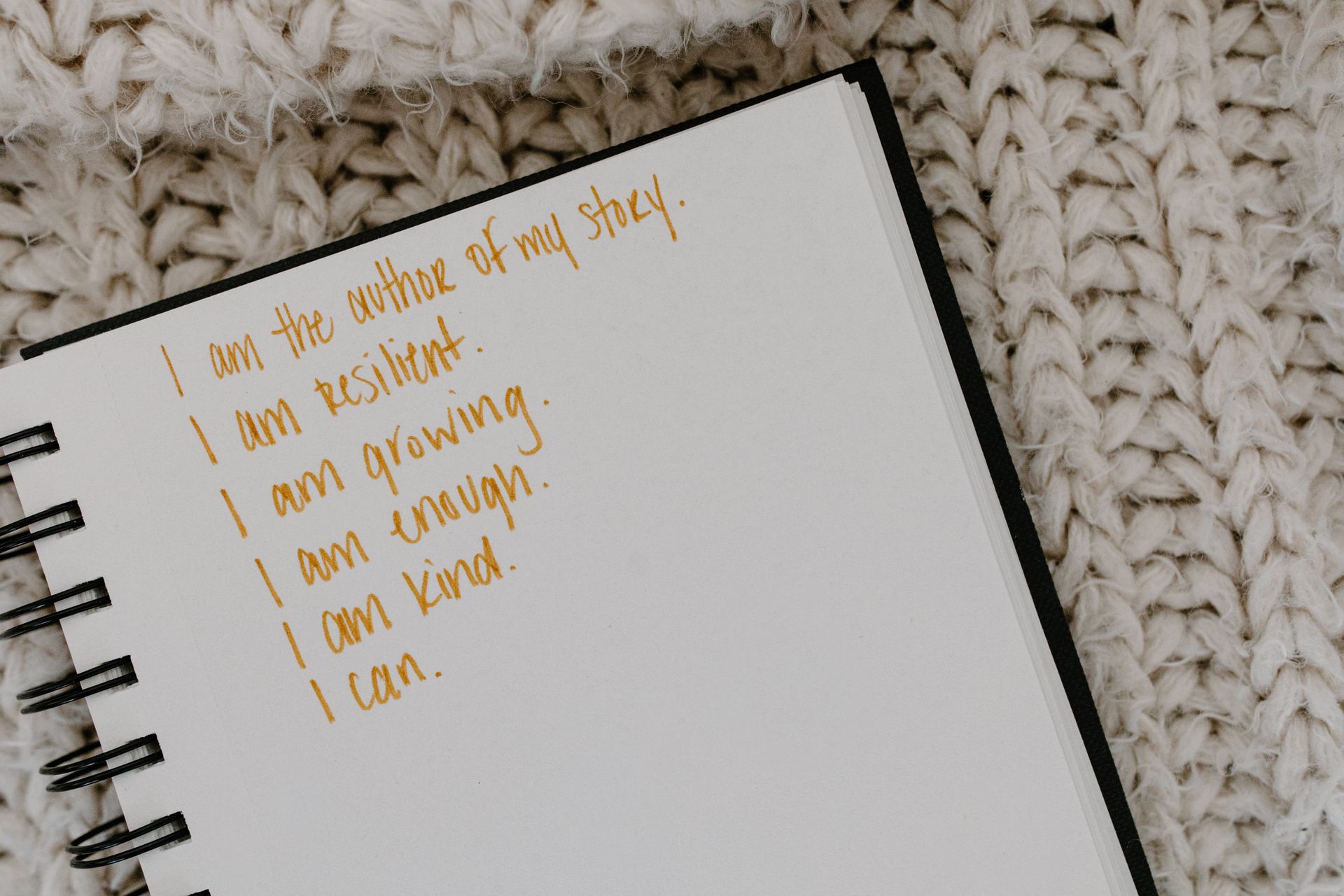
A spiral notebook on a knit blanket with handwritten affirmations in gold ink, the kind of positive statements written during the 55x5 method
What should you write for the 55x5 method?
Since you're writing the same line 55 times, keep it short. A single clean sentence is far easier to repeat than a paragraph, and it stays sharp through the whole session. A few rules make your affirmation land harder:
Quick examples by goal. For love: "I'm so grateful for the caring, honest relationship I'm in." For money: "Money comes to me easily and I have more than enough." For a specific ask: "I'm grateful I passed my exam with room to spare." Keep the wording steady across all five days, because switching the phrasing resets the momentum you're building. If you want a longer, story-style approach instead of a repeated line, scripting is the better fit for that.
55x5 method vs the 369 and other techniques
The 55x5 is one of several number-based writing practices, and they differ mostly in how much you write and how long you keep it up. Knowing the field helps you match a method to your goal and your patience.
None of these wins on paper. The 55x5 shines when you want intensity and a finish line, since five days of hard focus can feel more motivating than a month of light check-ins. The 369 tends to win on sustainability. Pick the one that matches how you actually work, and feel free to rotate between them as your goals change.
What if you miss a day or make a mistake?
This is the most argued point in the whole practice, and there's no official ruling. One camp says the five days must run unbroken, so a skipped day means restarting the count from day one. The logic is that the momentum and focus depend on continuity. The other camp treats that as needless pressure and just resumes the next day, figuring a single gap won't undo four days of intention.
Here's a practical read. If the strict version keeps you accountable and you don't mind restarting, use it, because the discipline itself has value. If a missed day would make you quit entirely, give yourself the grace to continue and don't let perfectionism sink the whole thing. As for slips of the pen, a crossed-out word or a messy line won't ruin anything. The method runs on repetition and feeling, not flawless handwriting. Finish the 55 reps, keep the emotion in, and move on. What matters far more than a perfect page is that you show up all five days and act on what the practice surfaces.
How long does the 55x5 method take to work?
There's no guaranteed timeline, and anyone promising a date is selling certainty that doesn't exist. The writing itself takes five days, but the outcome runs on its own clock. What drives that clock is the size of your goal and how much real-world action it needs. A mostly internal shift, like feeling calmer or more confident, can move within days because the work happens inside you. A goal that depends on other people or outside events, like a specific job or a new relationship, takes as long as those real steps take.
Some people report a quick sign within the five days or shortly after, often a small nudge, an unexpected message, or an opening they'd have missed before. Treat those as encouragement to keep acting, not proof the work is finished. The method speeds things up by keeping you focused and ready to move, but it can't compress the time it takes to interview, build a skill, or meet someone new. After day five, the usual advice is to release the goal, stop checking for it hourly, and let your primed attention do its quiet work while you get on with the practical steps. Pairing the run with a new moon intention is a common way to give it a fresh starting point.
Does the 55x5 method actually work?
It depends on what you mean by work. There's no scientific evidence that writing a sentence 275 times bends reality or summons outcomes on its own. If you're expecting the pen to do the work while you wait, you'll likely be let down. What does have real footing is the psychology underneath it. Focused repetition sharpens attention, repeated affirmations can shift self-talk, and a clear written goal makes you more likely to notice chances and follow through. Those effects are modest and they're real.
So the fair verdict is that the 55x5 method works as a focus-and-motivation tool, not as a magic spell. The people who see results tend to treat the writing as the opening move, then pair it with genuine action toward the goal. The people who see nothing usually expected the ritual to carry the whole load. Go in with honest expectations, use the five days to lock onto one desire, and let the practice push you toward the steps you'd otherwise put off. Read that way, it's a low-cost habit with a real upside and no real downside beyond a sore writing hand.
Common 55x5 method mistakes to avoid
A few slip-ups quietly drain the practice of its power. Watch for these:
Frequently asked questions
How do you do the 55x5 method?
Pick one affirmation, then write it 55 times in a single sitting, once a day, for five days in a row. Keep the wording identical each day, write in present tense as if it's already true, and feel the line as you write it. After day five, release the goal and act on the openings that show up.
Do you have to write 55 times all at once?
Yes, the traditional method has you write all 55 repetitions in one continuous session rather than spread across the day. The single sitting is part of what builds the focus and momentum. If you physically can't finish in one go, do as much as you can in a block, but aim for the full 55 at once.
What happens if you miss a day of the 55x5 method?
There's no official rule. Strict practitioners restart the five-day count from day one, believing the run needs to be unbroken. Others simply continue the next day. Choose whichever version keeps you consistent, and don't let a single missed day become a reason to quit the whole thing.
Is the 55x5 method better than the 369 method?
Neither is objectively better. The 55x5 is a short, intense sprint with a five-day finish line, while the 369 is a lighter practice spread across the day over several weeks. Pick the 55x5 if you want a fast, all-in push, and the 369 if you prefer a steady rhythm you can sustain.
How long after the 55x5 method will I see results?
There's no fixed timeline. Internal goals like confidence can shift within days, while goals that depend on outside events take as long as the real-world steps require. The method speeds things up by keeping you focused and ready to act, but it can't rush circumstances beyond your control.
The Takeaway
The 55x5 manifestation method is a five-day writing sprint: one affirmation, 55 times a day, five days running. It works less through cosmic force than through focus, belief, and the follow-through that focus makes possible. Write one clear line, mean it, keep the run consistent, then release the goal and act on what you notice. Handled that way, it's a cheap, quick habit with a real upside. If you want to keep going, try the gentler 369 method for daily structure, build a vision board to see your goal every morning, or pull your free natal chart to understand the drives and blocks shaping what you're reaching for.