
Horary Astrology: How to Ask the Stars a Question and Get a Clear Answer
Most astrology looks at the sky as it was when you were born. Your natal chart maps the planets at your first breath and uses that snapshot to describe your personality, your tendencies, and the broad patterns of your life. It's powerful, personal, and permanent. But it's also general. When you need an answer to a specific question, right now, today, your birth chart can offer context, but it can't tell you whether you'll get the job, whether your ex is coming back, or where you lost your keys.
Horary astrology can.
Horary (from the Latin "hora," meaning hour) is the branch of astrology that casts a chart not for a person's birth but for the birth of a question. The moment a question fully forms in your mind and you bring it to an astrologer, the sky at that instant becomes the chart. The planets' positions at the moment of asking describe the situation, reveal the answer, and even indicate timing. It's astrology at its most practical, its most ancient, and its most strange. Because it implies something most modern people find uncomfortable: that the universe is listening when you ask, and that the moment you ask is not random.
Horary astrology predates modern psychological astrology by centuries. It was the bread and butter of practicing astrologers from the Hellenistic era through the Renaissance. William Lilly, the most famous English astrologer of the 17th century, used horary to predict the Great Fire of London and to find stolen goods. Arabic astrologers like Masha'allah and Sahl ibn Bishr built elaborate horary systems that influenced European astrology for five hundred years. Before anyone used astrology for self-discovery, they used it for answers. Will my ship return safely? Will the king survive the illness? Is the servant who stole my horse heading north or south?
The technique fell out of fashion during the Enlightenment and the subsequent rise of psychological astrology in the 20th century. But it never disappeared. Horary has experienced a significant revival in recent decades, driven by astrologers who appreciate its precision, its testability, and its refusal to deal in vague, unfalsifiable platitudes. A horary chart gives you a yes or a no. It can be wrong. And because it can be wrong, it can also be verified, which makes it one of the few astrological techniques that submits to real-world feedback.
What You'll Learn
What Is Horary Astrology?
Horary astrology is a divinatory technique that uses a chart cast for the moment a question is sincerely asked to determine the answer. Unlike natal astrology, which requires your birth data, horary requires nothing about you except the question itself and the moment you ask it. The chart is calculated for the exact time and place the question is understood and received, typically by the astrologer, and the answer is read from the relationships between planets, signs, and houses in that chart.
The fundamental premise is that the question and the moment of its asking are connected. This isn't a metaphysical accident. Horary practitioners argue that a genuine question arises when the conditions for its answer are already present in the sky. You don't ask "will I get married?" at a random moment. You ask it when the question has ripened in your life, when the tension has built to the point where you need resolution. That ripening and the sky's configuration are, according to horary theory, expressions of the same underlying moment.
This makes horary a form of divination, closer in spirit to the I Ching or tarot reading than to modern psychological natal chart interpretation. The practitioner reads an objective chart against a specific question and delivers a verdict. There's less room for projection, less room for "it depends on how you feel about it," and more commitment to a concrete answer.
Horary charts look identical to natal charts. They have twelve houses, planetary placements, aspects, and angles. But the interpretation rules are different. In natal astrology, every planet tells you something about the person. In horary, most planets are irrelevant. You identify only the planets that represent the specific parties and themes in the question, and then you read the relationship between those planets to determine the outcome.
How Horary Astrology Works
The mechanics of horary are precise and rule-based. Here's the process from question to answer.
1. A question is sincerely asked. The question must be genuine. You need to actually care about the answer. Horary doesn't work for testing, for idle curiosity, or for asking the same question repeatedly to see if you get a different result. The sincerity of the question is the energetic seed that makes the chart meaningful. Traditional astrologers call this the "radical" quality of a chart: a genuine horary chart is radical (from the Latin "radix," meaning root) because the question has real roots in the querent's life.
2. The chart is cast. The astrologer records the exact time and place the question is received and understood. Some astrologers use the moment the querent asks. Others use the moment the astrologer understands the question. Both schools have their reasoning, and both produce working charts. The chart is calculated using the same ephemeris and house system as any other chart, though most horary practitioners prefer Regiomontanus houses, the system William Lilly used, or Alcabitius, which was standard in Arabic-era horary.
3. Strictures are checked. Before reading the chart, the astrologer checks for conditions that suggest the chart shouldn't be read. These are called "strictures against judgment," and they're unique to horary. More on these below.
4. Significators are assigned. The astrologer identifies which planets represent the querent (the person asking), the quesited (the thing being asked about), and any other relevant parties. Each house of the chart governs a domain of life, and the ruler of the house relevant to the question becomes that thing's significator.
5. The chart is read. The astrologer examines the relationship between the significators. Are they applying to an aspect? Separating from one? Is one planet strong in its sign? Weak? Is the Moon (always a co-significator of the querent) connecting the significators through a series of aspects? These relationships tell the story, and the story contains the answer.
6. Timing is extracted. If the answer is yes, the chart often indicates when. The degrees between the applying aspect and the signs and houses involved suggest a timeline measured in days, weeks, months, or years, depending on the sign type (cardinal, fixed, mutable) and the houses involved.
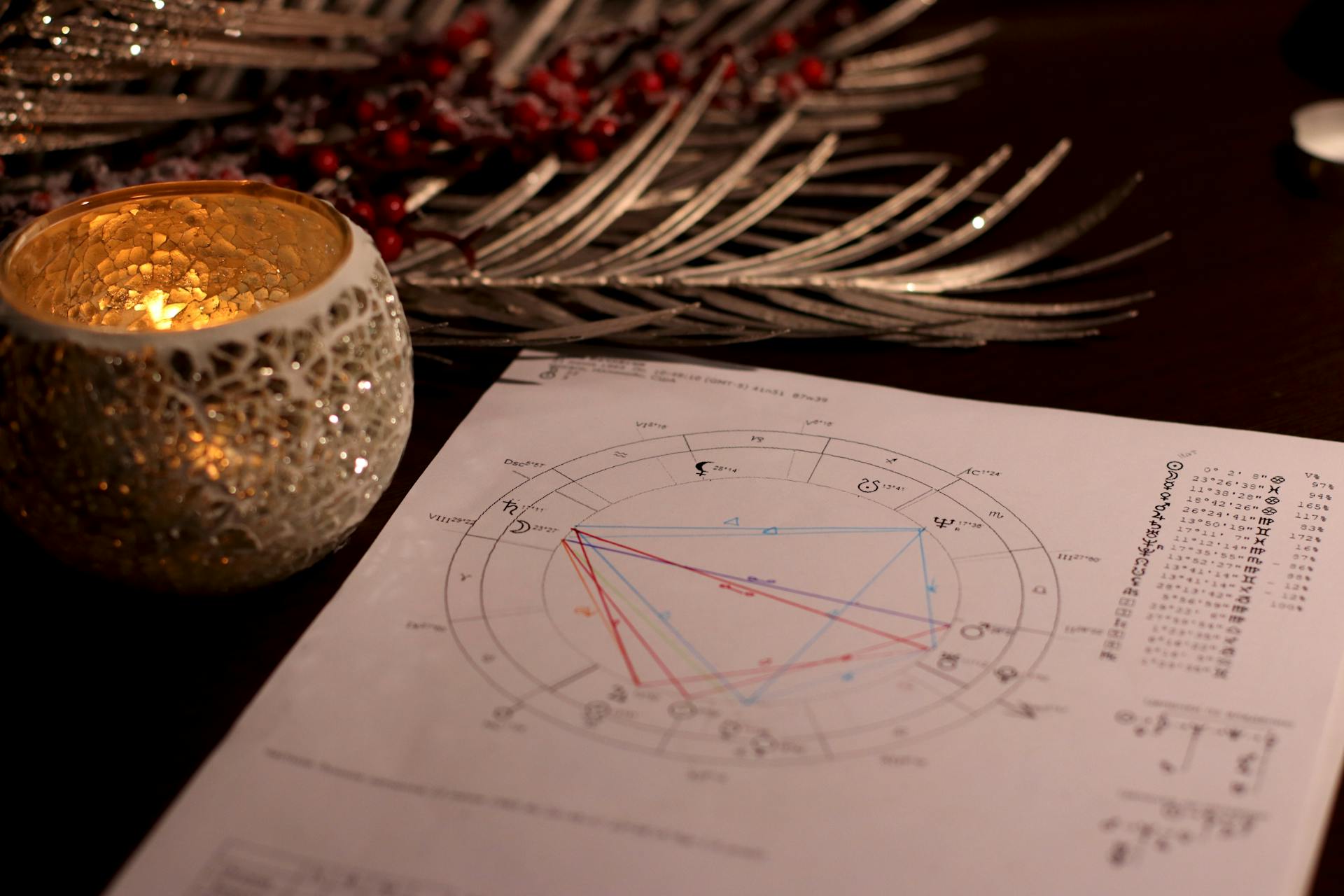
A warm candlelit setting featuring an astrology natal chart creating an atmosphere of divination and contemplation
The Rules of Horary: Strictures Against Judgment
Horary has built-in safety checks that no other branch of astrology uses. These are conditions in the chart that signal to the astrologer: this chart may not be reliable, or the question isn't ripe for answering. Traditional practitioners take them seriously. Ignoring strictures is like ignoring a check engine light; the car might be fine, but you're proceeding without warranty.
Early Ascendant. If the Ascendant (the degree rising in the east) is in the first three degrees of a sign, the situation is too new. The question hasn't fully formed. The querent may not have all the information needed to frame the question properly, or the matter is too premature for judgment. Some practitioners consider any Ascendant degree below 3 as a warning that the chart has come too early.
Late Ascendant. If the Ascendant is in the last three degrees of a sign (27 to 30), the matter is already decided. Events are in motion that the querent doesn't yet know about, or the question is moot because the answer is already unfolding. The astrologer can note this and wait for the querent to catch up with reality.
Seventh house Ascendant. If the sign on the Ascendant is the same sign as the astrologer's natal Ascendant, some practitioners see this as the chart describing the astrologer rather than the querent. This stricture is debated, and many modern horary practitioners ignore it.
Saturn in the 7th house. The 7th house represents the astrologer in horary. Saturn placed there traditionally suggests an error in the reading, a limitation on the astrologer's ability to judge correctly, or a situation where the querent doesn't truly want an honest answer. Again, this stricture is debated, with some practitioners treating it as a strong warning and others as contextual information.
Void of course Moon. If the Moon makes no further applying aspects before leaving its current sign, the chart is said to have a void of course Moon. In horary, this traditionally means "nothing will come of the matter." The situation won't develop in the way the querent hopes. It's one of the strongest indicators that the answer is no, or that the question will become irrelevant before events resolve. The exception is a void Moon in Taurus, Cancer, Sagittarius, or Pisces, where some traditions argue the Moon has enough dignified strength to produce results despite being void.
Moon in the Via Combusta. The Via Combusta ("burned way") is the stretch of the zodiac from 15 degrees Libra to 15 degrees Scorpio. A Moon in this zone was traditionally considered unreliable, suggesting confusion, danger, or a situation where things aren't as they appear. Modern practitioners vary in how strictly they apply this.
Not every practitioner treats strictures as absolute prohibitions. Some use them as caution flags that add nuance rather than shut down the reading. The consensus view is: respect the strictures, note them, and proceed with appropriate caution if the rest of the chart is clear.
Significators: Who Represents What
The assignment of significators is where horary becomes precise. Every horary question involves at least two parties: the querent (the one asking) and the quesited (the thing being asked about). Each is represented by a planet, and that planet's condition, position, and aspects tell the story.
The querent is always represented by the ruler of the 1st house (the Ascendant). If Gemini is rising, Mercury rules the querent. If Leo is rising, the Sun rules the querent. The querent's planet shows their condition: strong, weak, motivated, indifferent, afraid, hopeful. The Moon is always the querent's co-significator, providing additional information about the querent's emotional state and the flow of events.
The quesited is represented by the ruler of the house that governs the question's subject matter. The house assignments follow the same logic as natal astrology but are applied more literally:
Once the significators are identified, the entire reading revolves around their relationship. If the querent's planet and the quesited's planet are applying to a conjunction or favorable aspect, the answer tends toward yes. If they're separating, or applying to a difficult aspect, the answer leans toward no. If they make no aspect at all, the matter likely won't materialize.
How to Read a Horary Chart Step by Step
Reading a horary chart follows a structured sequence. Here's how practitioners move from chart to verdict.
Step 1: Identify the question's house. "Will I get the job?" involves the 10th house (career). "Will my relationship survive?" involves the 7th house (partner). "Should I move to another city?" involves the 4th house (home) and possibly the 9th (long-distance relocation). Get the house right, or the entire reading will be off.
Step 2: Find the significators. The querent is the ruler of the 1st house. The quesited is the ruler of the relevant house. For a relationship question with Leo rising and Aquarius on the 7th cusp, the querent is the Sun and the partner is Saturn (traditional ruler of Aquarius). The Moon is always the querent's co-significator.
Step 3: Assess dignity. Is each significator in a sign where it's strong (essential dignity) or weak (detriment, fall)? A querent's significator in its domicile or exaltation is in a strong position. In detriment or fall, the querent is at a disadvantage. The same applies to the quesited's planet. Essential dignity tells you each party's strength, resources, and genuine interest in the matter.
Step 4: Look for aspects between significators. This is the crux of horary judgment. If the querent's planet and the quesited's planet are applying to a major aspect (conjunction, sextile, square, trine, opposition), the matter will come to completion, for better or worse depending on the aspect type.
If the significators make no aspect at all, the matter typically won't happen. The parties won't connect. The job won't materialize. The relationship won't reconcile.
Step 5: Check for translation and collection of light. If the two significators don't aspect each other directly, a third planet might connect them. If a faster planet separates from one significator and applies to the other, it "translates light" between them, acting as a go-between. If a slow planet receives aspects from both significators, it "collects light," bringing the parties together through a third-party intermediary. These techniques often describe the role of a friend, colleague, or external event in producing the outcome.
Step 6: Read the Moon. The Moon's aspects tell the story's sequence. Each aspect the Moon makes (in order) before leaving its sign describes a step in the unfolding narrative. The Moon separating from Mars and applying to Venus might indicate that the querent is leaving a conflict behind and moving toward a harmonious resolution. The Moon's last aspect before going void is often the final word on the matter.
Step 7: Check the 4th house. The 4th house in horary represents "the end of the matter." The planet ruling the 4th, its condition, and its aspects often provide final confirmation of the outcome. A well-dignified benefic (Venus or Jupiter) ruling the 4th suggests a positive conclusion. A malefic in poor condition ruling the 4th suggests the matter ends badly.
Step 8: Synthesize and deliver. Combine all the indicators into a coherent answer. Experienced horary practitioners know that the chart speaks with one voice when you listen correctly. If most indicators point yes but the Moon is void, the "yes" may not materialize. If the significators aspect favorably but the querent's planet is in its fall, the querent may not be in a position to receive what's coming. Contradictions in the chart are themselves informative; they describe a complicated situation rather than a simple outcome.
Common Horary Questions and How They Work
"Will I get the job?"
The querent is the 1st house ruler. The job is the 10th house ruler. If the querent's planet applies to the 10th house ruler by conjunction, trine, or sextile, the outlook is favorable. If the 10th house ruler is retrograde, the employer may change their mind or the position may be rescinded. The Moon's aspects describe the sequence of events: interviews, callbacks, negotiations. If the Moon applies to the 10th house ruler, the querent's actions (following up, interviewing well) contribute to the outcome.
A common wrinkle: if someone else is also being considered for the job, that competitor might be the 7th house ruler (as a rival). The chart then becomes a comparison between the querent's planet and the competitor's planet, with the 10th house ruler choosing between them based on reception (which planet it dignifies more).
"Will my ex come back?"
The querent is the 1st house ruler. The ex-partner is the 7th house ruler. If the 7th house ruler applies to the querent's planet, the ex is moving toward the querent. If the querent's planet applies to the 7th ruler, the querent is pursuing the ex. If neither applies, no reconciliation is likely. The Moon's role is critical here because it describes the emotional flow. A Moon applying to the 7th ruler suggests the querent will reach out. A Moon separating from the 7th ruler suggests the emotional connection is waning.
Reception matters enormously in relationship horaries. If the ex's significator is in the querent's sign, the ex still has the querent "on their mind." If the querent's significator is in the ex's detriment, the querent may be fooling themselves about the relationship's viability.
"Where did I lose my keys?"
Lost object horary is one of the oldest applications. The keys (movable possessions) are the 2nd house ruler. The sign the 2nd ruler is in describes the direction and type of location. Fire signs indicate warm, dry places (near fireplaces, heaters, south-facing rooms). Earth signs indicate low, dark, practical spaces (closets, drawers, on the floor). Air signs indicate elevated or communal areas (shelves, living rooms, near windows). Water signs indicate damp or hidden spots (bathrooms, kitchens, under things).
The house the 2nd ruler falls in describes the room. In the 3rd house: near communication devices, in the car, near a doorway. In the 4th house: at home, in a foundational area. In the 10th house: at work, in a public area. Lost object horary is remarkably specific and one of the most testable applications.
"Should I buy this house?"
The querent is the 1st house. The house (property) is the 4th house ruler. The seller is the 7th house ruler (as the "other party" in a transaction). The price is the 10th house (the 4th from the 7th: the seller's property/possessions). If the 4th ruler applies favorably to the querent's planet, the property suits the querent. If the 4th ruler is afflicted (conjunct malefics, in detriment), the property may have hidden problems. Saturn on the 4th cusp is a classic warning about structural issues. Neptune on the 4th can indicate water damage, mold, or deception about the property's condition.
Timing in Horary Astrology
One of horary's most impressive features is its ability to indicate when an event will occur. The timing technique is elegant in its simplicity but requires judgment in its application.
The basic principle: the number of degrees between the applying aspect of the two significators gives you the unit count. The signs and houses those planets occupy determine whether the units are hours, days, weeks, months, or years.
Cardinal signs (Aries, Cancer, Libra, Capricorn): Fast. Days or weeks.
Fixed signs (Taurus, Leo, Scorpio, Aquarius): Slow. Months or years.
Mutable signs (Gemini, Virgo, Sagittarius, Pisces): Medium. Weeks or months.
Angular houses (1st, 4th, 7th, 10th): Speed things up. Events happen sooner.
Succedent houses (2nd, 5th, 8th, 11th): Medium pace.
Cadent houses (3rd, 6th, 9th, 12th): Slow things down. Events take longer.
So if the querent's significator is at 10 degrees Aries (cardinal sign) in the 1st house (angular) and is applying to the quesited's significator at 15 degrees Aries, the aspect perfects in 5 degrees. With cardinal signs and angular houses, you'd expect the outcome in approximately 5 days.
If the same aspect occurred in Taurus (fixed) in a cadent house, those 5 degrees might translate to 5 months or more.
Context matters too. A question about tomorrow's meeting doesn't produce a timing of 5 years. The question's inherent timeframe constrains the interpretation. Questions about immediate events use shorter units. Questions about life-changing decisions use longer ones. The astrologer's judgment bridges the gap between the mechanical calculation and the practical context.
Horary vs Natal Astrology: Key Differences
If you're coming to horary from natal astrology, several conceptual shifts are required.
Scope. Natal astrology describes a person's entire life potential. Horary describes a single question's outcome. A natal chart is a novel. A horary chart is a text message: specific, time-bound, and direct.
Planets used. In natal astrology, you interpret all ten planets plus the nodes, asteroids, and sometimes fixed stars. In horary, you focus only on the two or three significators relevant to the question. The other planets are either irrelevant or serve specific technical roles (the Moon as co-significator, the Part of Fortune for financial questions).
Outer planets. Traditional horary uses only the seven visible planets: Sun, Moon, Mercury, Venus, Mars, Jupiter, and Saturn. Uranus, Neptune, and Pluto are either excluded or treated as background influences rather than significators. This is one of the sharpest divides between horary and modern natal astrology. Horary practitioners argue that the traditional rulership scheme (Mars rules Scorpio, Saturn rules Aquarius, Jupiter rules Pisces) produces more reliable results in horary than modern rulerships.
Houses. In natal astrology, houses describe life areas in a general, ongoing sense. In horary, houses are assigned to specific parties and things in the question. The 7th house isn't "relationships in general." It's "this specific partner, opponent, or other party in this specific question."
Dignity matters more. In modern natal astrology, planetary dignities are often treated as optional information. In horary, essential dignity is critical. A querent's significator in its domicile is in a fundamentally different situation than one in its detriment. Dignity describes strength, resources, and the ability to act. Ignoring it in horary is like ignoring half the chart.
Yes or no answers. Natal astrology rarely deals in absolutes. "Your Venus is in Scorpio" doesn't produce a yes or no. Horary produces verdicts. Will this happen? Yes or no. When? How? Through whom? The specificity is what makes horary both useful and unnerving. It commits to an answer that can be verified.
Repeatability. You can cast your natal chart a thousand times and it won't change. Horary charts are one-time events. You ask one question, you get one chart, and that chart answers that question. Asking the same question again doesn't generate a valid second chart. The first chart already answered. Re-asking is like demanding a recount before the votes have been tallied. If you're genuinely dissatisfied with a horary answer, the correct response is to wait and see whether the prediction holds, not to ask again.
How to Ask a Horary Question
The quality of your question determines the quality of your chart. Horary is ruthlessly literal. It answers exactly what you ask, which means a poorly framed question produces a technically accurate but practically useless answer. Here's how to ask well.
Be specific. "What's going to happen in my love life?" is too broad. "Will I enter a committed relationship within the next year?" is horary-ready. The more precise the question, the more precise the answer. Horary doesn't deal in themes. It deals in events.
Ask about one thing. "Will I get the job and should I move to Chicago for it?" is two questions. Each needs its own chart. Combining questions produces a chart that tries to answer both and answers neither clearly. Split compound questions into their components and ask each one separately.
Have genuine concern. Horary works when the question matters to you. Testing the system with questions you don't care about produces unreliable charts because the fundamental condition, a sincere question arising at a meaningful moment, isn't met. You don't need to be desperate. But you need to be genuinely interested in the answer.
Don't repeat questions. The first chart answers the question. If you don't like the answer, asking again doesn't change it. Repeat questions violate the foundational principle that the question arises at a specific, meaningful moment. The second asking is a different moment with a different chart, but it's not a new question. It's an attempt to override the first answer. Most horary practitioners refuse to read repeated questions for the same client on the same topic.
Use clear language. "Should I..." questions can be tricky because they ask for advice rather than prediction. Horary describes what will happen more reliably than what should happen. Reframe "should" questions into "will" or "what will happen if" questions. "Should I take the job?" becomes "Will taking the job lead to a positive outcome for me?" The chart then describes the job's likely trajectory rather than making a moral judgment.
Include a timeframe when relevant. "Will I meet someone?" is eternally true if you live long enough. "Will I meet a romantic partner within the next six months?" gives the chart a boundary to work within and makes the answer practically useful.
Ask when you feel ready. Don't force a question before it's ripe. If you're still processing your feelings about a situation, you may not be ready to hear the answer. The question should feel complete and urgent enough that you need to know, not wish you knew, not vaguely wonder, but genuinely need resolution. That readiness is what produces a radical chart.
For exploring your question through a different lens, the Celesian tarot reader can provide complementary insight, especially for questions about timing and emotional dynamics. And understanding your natal chart provides valuable context for any horary reading, since the horary chart often activates themes already present in your birth chart.
Frequently Asked Questions
Can I cast a horary chart for myself?
Yes, but with important caveats. Professional horary astrologers typically cast charts for questions asked by clients, which creates a clean separation between the questioner and the interpreter. When you ask and interpret your own horary chart, you risk projecting your hopes and fears onto the interpretation. You see what you want to see. Experienced astrologers who do self-horary develop discipline around reading the chart objectively, treating it as if it belongs to a stranger. If you're new to horary, practice with questions where you can verify the answer independently. "Will the package arrive by Friday?" is a better training question than "Does my partner love me?" because you can check the first answer without emotional interference.
Is horary astrology accurate?
Horary astrology produces verifiable predictions, which means it can be tested against outcomes. Experienced practitioners report accuracy rates that vary, but many seasoned horary astrologers point to track records that exceed what chance would predict, particularly for concrete, well-defined questions. That said, horary isn't infallible. Poor question framing, ignored strictures, and interpreter error all reduce accuracy. The technique is also better suited to certain question types (will X happen, where is the lost object, what's the timing) than to others (complex emotional dynamics, questions without clear binary outcomes). The best evidence for horary's value is pragmatic: the technique has survived and been actively practiced for over two thousand years because practitioners kept finding that it worked.
What house system should I use for horary?
Most traditional horary practitioners use Regiomontanus houses, following William Lilly's practice, or Alcabitius houses, following the Arabic tradition. Whole sign houses, which are standard in Hellenistic natal astrology, are used by some horary astrologers but are less common in the horary-specific literature. Placidus, the most popular system in modern natal astrology, is generally not preferred for horary. The house system matters in horary because house cusps determine which planet rules each house, and in horary the house ruler assignments drive the entire reading. Different house systems can place cusps in different signs, which changes the significators. Stick with the system used by the tradition you're studying until you have enough experience to evaluate the alternatives yourself.
Can horary astrology predict death?
Traditional horary astrology included questions about death, and the classical texts contain detailed instructions for judging such questions. Most modern horary practitioners decline to answer death-related questions for ethical reasons. Even practitioners who are technically capable of reading such charts generally consider it irresponsible to provide death predictions, both because of the psychological impact on the querent and because horary, like all divinatory methods, carries a meaningful error rate. Being wrong about a financial question is inconvenient. Being wrong about a death prediction can cause genuine psychological harm. The modern consensus among practicing horary astrologers is to redirect death-related questions toward medical professionals.
How is horary different from electional astrology?
Horary and electional astrology are mirror images. Horary reads a chart that already exists (the moment of the question) to determine what will happen. Electional astrology designs a chart that doesn't yet exist, selecting a future moment that will produce the desired outcome. Horary is diagnostic: what does this moment say? Electional is prescriptive: what moment should I choose? Both use the same technical toolkit (house rulers, dignities, aspects, timing), but they apply it in opposite directions. Many horary practitioners also practice electional astrology, using the horary chart to determine if an event is likely and then using electional techniques to optimize the timing if it is.
Do I need to know astrology to benefit from a horary reading?
No. Unlike natal chart interpretation, which benefits from understanding your placements, horary is entirely practitioner-driven. You bring the question. The astrologer reads the chart and delivers the answer. You don't need to know your birth time, your rising sign, or anything about planetary dignities. The only requirement from the querent's side is a sincere question asked at a genuine moment. That said, understanding the basics of horary makes you a better client. You'll ask sharper questions, frame them more effectively, and understand the astrologer's reasoning, which lets you evaluate the reading's quality rather than taking it on pure faith.
Horary astrology is the oldest practical application of the sky's language. It doesn't describe who you are. It answers what you want to know. For two thousand years, people have brought their most urgent questions to astrologers who cast charts for the moment of asking and read the planets' response. The tradition survives because it delivers, not always, not perfectly, but often enough and specifically enough that people keep coming back. If you've got a question that won't leave you alone, a decision that's eating at you, or a situation where you need clarity more than comfort, horary is the branch of astrology that was built for exactly that moment. Generate your natal chart to understand the foundation your questions arise from. Explore the tarot reader for complementary insight. And the next time a question fully forms in your mind, pay attention to the clock. The chart is already being cast.