House Dream Meaning: Rooms, Childhood Homes, and What It Reveals
Dream about a house and the simplest reading is this: the house is you. Not your actual address or a hint that you're about to move, but a picture of your own mind and sense of self. Dream interpreters going back to Carl Jung have treated the house as a map of the person, with each floor and room tied to a different part of who you are. The front rooms are the face you show the world. The basement is what you keep out of sight. The attic holds old memories and ideas.
That's why the details matter so much. A bright, familiar house reads differently than a crumbling one, and finding a new room in a home you thought you knew carries its own message. Here's what a house dream tends to mean, what the rooms and scenarios point to, and why it's a reflection of your inner life rather than a forecast about real estate.
What You'll Learn
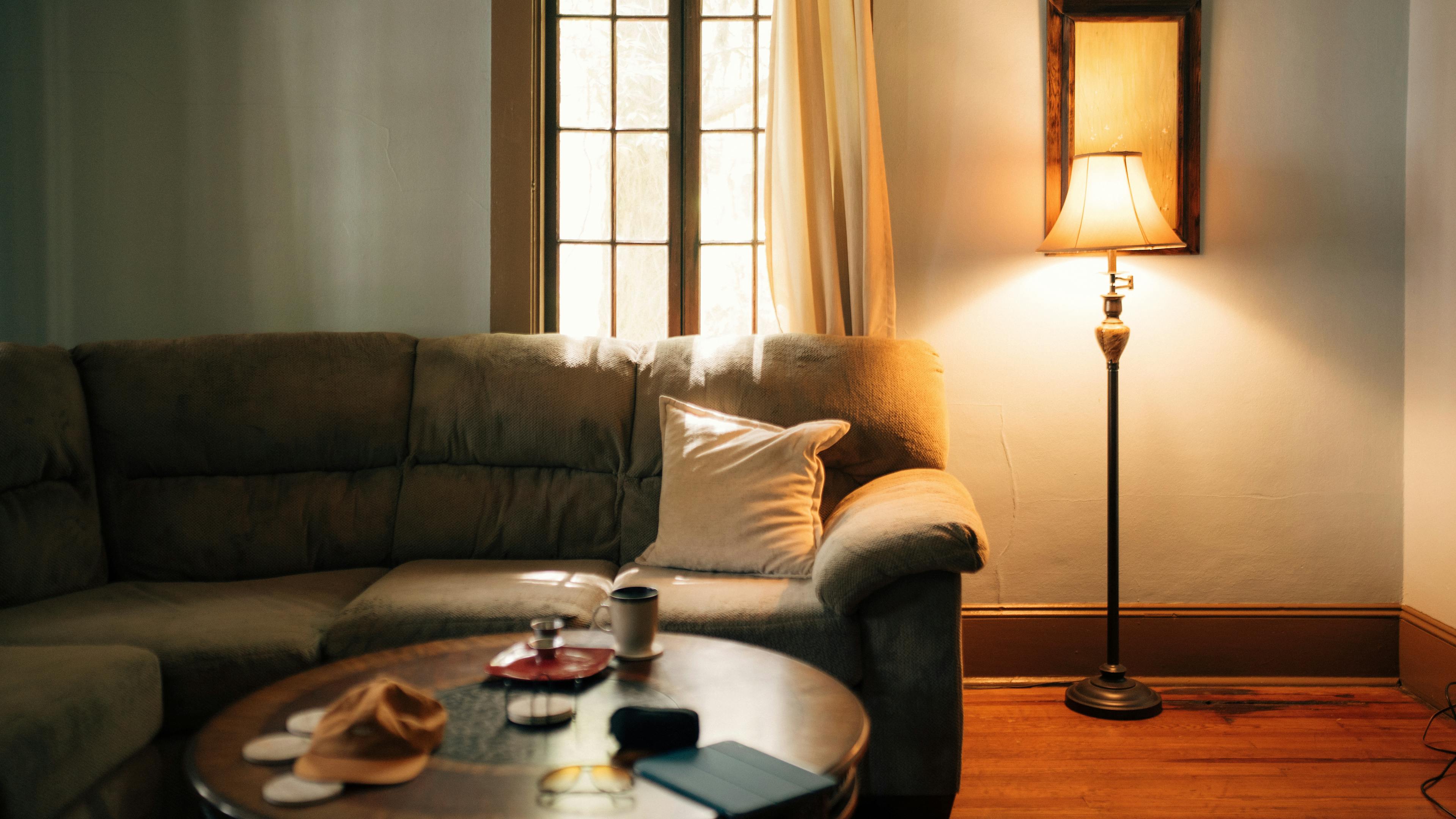
A warm, sunlit living room with a soft couch, a glowing floor lamp, and a tall paned window, the kind of familiar interior a house dream often puts you inside
What does it mean to dream about a house?
A house in a dream usually points to your self and your current state of mind. The building is the container you live inside every day, so the sleeping mind borrows it to talk about the one container you never leave, which is you. When the house feels safe and warm, the dream tends to reflect a settled sense of self. When it's dark, damaged, or strange, it often mirrors something unsettled you're working through while awake.
The condition of the house carries most of the meaning. A home in good repair suggests you feel steady. A house falling apart can point to stress, burnout, or a part of your life you've let slide. A house under renovation is one of the more hopeful versions, since it reads as growth, the slow work of becoming a slightly different person. None of this is fixed, though. The best clue is always how the dream felt, which matters more than any symbol lookup. For the wider picture of how settings and objects work in dreams, the guide to common dream symbols is a good place to start.
Why the house is a symbol of you
The idea that a house equals the self is old, and Jung gave it its most famous form. He described a dream of his own in which he walked down through a house, and the deeper he went, the older the rooms became, from a modern upper floor to a medieval cellar to a cave cut into bedrock. He read it as a picture of the mind in layers: the conscious everyday self upstairs, personal memory below that, and the deep shared instincts of the species at the very bottom.
You don't need to buy the whole theory to use the shape of it. The vertical layout of a house maps neatly onto how we talk about the mind. Upstairs and the attic point to thought, memory, and the things you aspire to. The main floor is your waking, social self, the part you run the day from. The basement is the subconscious, where you store what you'd rather not look at. So moving up or down in a house dream often tracks where your attention is heading, toward higher ideas or down into buried material.
What the rooms in your dream mean
If the whole house is you, the rooms are areas of your life, and the one you spend the dream in is a hint about what's on your mind. These aren't rules, just the readings that come up most often:
A kitchen fire or a flooded bathroom blends two symbols, so it's worth reading the room and the event together. If water keeps showing up, the meaning of water in dreams covers the emotional side of that in more depth.
Common house dream scenarios
The storyline changes the message. Here are the versions people search for most.
Finding a new or hidden room. One of the most common and most encouraging house dreams. Discovering a room you didn't know your house had usually points to untapped potential, a talent, a feeling, or a possibility you haven't explored yet. Sometimes the new room is a pleasant surprise and sometimes it's unsettling, but either way the dream is showing you there's more to you than you've been using.
Your childhood home. Dreaming of the house you grew up in tends to pull you back toward your formative self or an issue with roots in the past. It can surface when something in the present quietly echoes an old situation. Pay attention to the feeling, since the same house can carry warmth, safety, or old tension depending on what you lived there.
A house falling apart. Cracks, leaks, a sagging roof, or crumbling walls often mirror neglected self-care or a part of your life that needs attention. It's rarely a literal warning about your building. More often it's the dream pointing at stress, or at something you've been patching instead of repairing.
An empty house. A home with no furniture or no people can reflect loneliness, a fresh start, or a sense that a chapter has emptied out. The mood decides which. An empty house can feel desolate, or it can feel like a clean slate waiting for you to move in.
A haunted or scary house. Ghosts and dread in a house dream usually point to unresolved feelings or memories that still have a hold on you, the past refusing to stay in the past. If a deceased relative appears, the meaning of dreams about loved ones who have passed looks at that specific experience.
Buying or moving into a new house. New houses lean toward change, growth, and a new phase of life. Moving in can mirror a real transition you're making or one you wish you could make. It often shows up during actual life changes, a relationship, a job, or a shift in how you see yourself.
A house on fire. Fire in a house dream can read as anger, burnout, or a forceful clearing away of the old. It's intense but not always negative, since fire also transforms. The meaning of fire in dreams unpacks that double edge.
Being locked out or lost in the house. Can't find your way in, or can't find a room you know is there? That often mirrors feeling shut out of a part of yourself, or searching for something in your life you can't quite reach. A house that keeps growing new hallways can echo the sense of a problem that won't resolve, a cousin of the being chased dream.
Is a house dream good or bad?
Neither on its own. A house dream is a snapshot, and the same symbol swings positive or negative depending on the details. A sturdy, sunlit home and a flooded basement both tell you something useful, they just tell you different things. A better question than good-or-bad: what state was the house in, and how did you feel inside it?
As a rough guide, dreams of repair, new rooms, and bright spaces tend to track growth and possibility. Dreams of decay, locked doors, and dark basements tend to track stress or something you've been avoiding. Even the hard ones are worth having, since they point straight at what needs care. A house that scares you is often just showing you where to look.
The spiritual meaning of a house dream
Spiritually, many traditions read the house as the soul's home, the state of your inner life rather than your outer one. A peaceful house suggests you're at home with yourself. A house in chaos suggests inner work waiting to be done. Climbing to a higher floor or a rooftop is sometimes read as rising awareness or a wish to see your life from above, while the basement points the other way, toward the deep and the hidden.
Sources don't fully agree here, and it's fair to hold these readings loosely. Some see a recurring house dream as a spiritual nudge to tend your foundations before building anything new. Others treat it as the psyche sorting itself out, no message required. Both can be true on different nights. If house dreams are arriving alongside other big internal shifts, the signs of a spiritual awakening may give the pattern some context.
The psychology of house dreams

A woman asleep on a bed with her head resting on a blue-green pillow, the quiet state where house dreams play out
There's a plainer explanation that sits comfortably next to the symbolic one. Dreams tend to recycle familiar places, and few places are more familiar than a home, so houses turn up constantly simply because your mind knows them well. The continuity hypothesis, a mainstream idea in dream research, holds that dreams mostly rework the concerns and settings of waking life rather than predicting anything. Under that view, a stressful house dream is your mind processing stress, full stop.
That doesn't cancel out the symbolic reading, it grounds it. Whether you call the basement your subconscious or just the room your memory reaches for when there's something you're not facing, the dream is pointing at the same thing. No good evidence suggests a house dream forecasts a real move, a sale, or a disaster. It works far better as a mirror than as a crystal ball. If you'd like to explore your dreams on purpose, the beginner's guide to lucid dreaming covers how some people learn to stay aware inside them.
Houses in your dream and your birth chart
Astrology has its own house that lines up neatly with this symbol. The fourth house governs home, family, roots, and your private inner foundation, the base everything else is built on. A natal chart also marks that base with a point called the IC, the lowest point of the chart. When your dreams keep returning to homes, the themes of the fourth house in astrology and the IC and your roots can be a useful parallel for what's stirring.
The sign behind all of this is Cancer, ruled by the Moon, the part of the chart tied to home, memory, and emotional security. If home and belonging are live questions for you right now, your Moon placement often has something to say about why. A natal chart reading will show where your fourth house falls and which sign colors your sense of home, which can turn a vague house dream into something you can place.
Recurring house dreams
A house dream that keeps coming back usually means the thing it points to hasn't been dealt with yet. Recurring dreams work like that across the board. The mind replays the scene, often with small variations, until you give the underlying issue some attention. If you keep ending up in the same crumbling house or the same locked room, the dream is less a threat than a reminder that's still waiting.
The variations are worth tracking. If the house slowly gets repaired across several dreams, that often mirrors real progress you're making. If it keeps getting darker or more damaged, the stress behind it may be building. Writing the dreams down is the easiest way to spot the trend, which is exactly what a dream journal is for.
How to interpret your own house dream
No dictionary beats your own associations, so start there. Walk back through the dream and ask a few questions:
Hold the symbols loosely and trust the feeling. A tarot pull can be a helpful partner for this kind of reflection, since both work by giving your intuition a prompt to respond to. A quick tarot reading often surfaces the waking situation a house dream is circling.
Frequently asked questions
What does it mean to dream about a house?
A house in a dream usually points to you, your mind, and your current state of self. The condition of the house reflects how settled or unsettled you feel, and the room you're in points to the area of life on your mind. It's a mirror of your inner world, not a prediction about real property.
What does it mean to dream about your childhood home?
Dreaming of your childhood home tends to connect you to your formative self or to a present situation that echoes the past. It can bring up comfort, safety, or old tension, depending on what that house meant to you. The feeling in the dream is the best guide to which one it's touching.
What does a house with new rooms mean in a dream?
Finding rooms you didn't know your house had is usually a positive sign. It points to untapped potential, a part of yourself or a possibility you haven't explored yet. The dream is showing you there's more available to you than you've been using.
Are house dreams a warning?
Generally no. A damaged or scary house reflects inner stress or something you've been avoiding, not a literal warning about your home or your future. These dreams work best as a prompt to check in with yourself, not as an omen.
Why do I keep dreaming about the same house?
Recurring house dreams usually mean the issue the house represents hasn't been resolved. Your mind replays the setting until the underlying concern gets some attention. Watching whether the house improves or decays across dreams can tell you which way things are trending.
The takeaway
Dream houses are one of the clearest mirrors the sleeping mind offers. The building is you, the rooms are your life, and the condition of the place is a fair read on how your inner world is doing. Pay attention to what state the house was in, which room you stood in, and how you felt, and most house dreams start to make plain sense. Keep a dream journal to catch the patterns, pull a tarot card when you want a prompt for reflection, and map your sense of home with a natal chart reading to see where the fourth house sits in your own sky.