Black Onyx Meaning: Healing Properties, Uses, and Symbolism
Black onyx is the crystal of self-control. While some stones are about opening up and letting feeling move, onyx holds steady. It's what people reach for when they want to keep their footing under pressure, finish what they started, and stop handing their energy to everyone who asks for it. The crystal tradition calls it a stone of willpower, discipline, and quiet protection, and it's a dense black form of chalcedony that humans have carved into seals, cameos, and mourning jewelry for thousands of years.
If you already keep black tourmaline or obsidian on your shelf, you might wonder where onyx fits, since all three are dark protectors that get mixed up constantly. The short version is that obsidian shows you the truth, tourmaline soaks up heavy energy, and onyx helps you hold your ground. This guide covers what black onyx actually is, what it's used for, how it lines up with the chakras and the zodiac, how to tell a dyed piece from a natural one, and the honest answer to whether any of it works.
What You'll Learn
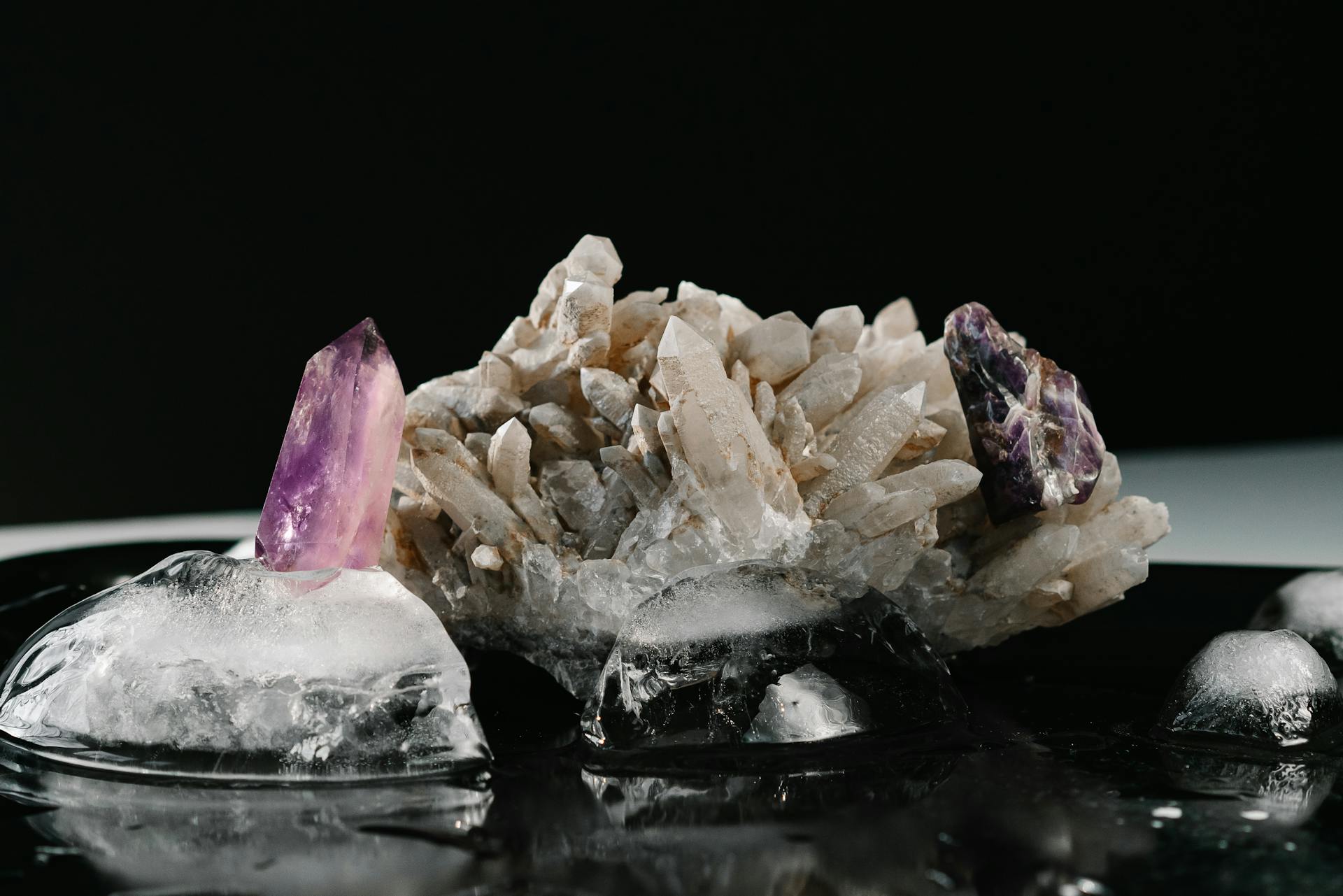
Clear quartz and amethyst crystals arranged on ice against a black background, the dark, grounding end of the crystal shelf where black onyx belongs
What Is Black Onyx?
Black onyx is a banded variety of chalcedony, which is a microcrystalline form of quartz made of crystals too small to see. True onyx shows straight, parallel bands, which is how gemologists tell it apart from agate, whose bands curve. The stone most people mean by "black onyx" is the solid, even black kind, and that's the version used in rings, pendants, and worry stones.
On the Mohs hardness scale it sits around 6.5 to 7, the same as most quartz, so it's tough enough for daily wear without chipping easily. The name comes from the Greek word for "claw" or "fingernail." There's a well-worn myth that Cupid trimmed the goddess Venus's nails while she slept and the clippings fell to earth as onyx, which is a charming story and nothing more than folklore.
Here's the part worth knowing before you buy: a lot of what sells as black onyx starts out as gray or pale chalcedony that's been dyed or chemically treated to an even black. That's not a modern trick either, since treatments to deepen onyx go back to antiquity. The material is still genuine chalcedony, so it isn't fake exactly, but naturally solid black onyx is rarer than the shelves at a crystal shop would suggest. More on telling the two apart further down.
Black Onyx Meaning and Symbolism
If you had to boil black onyx down to one idea, it's self-mastery. This is the stone of the person who wants to stop reacting and start choosing. It carries themes of willpower, discipline, focus, and the kind of steady resolve that lets you hold a position when someone's pushing on it. The crystal tradition ties it to protection too, but a specific flavor of protection: not a shield that hides you, more like a backbone that keeps you upright.
Because it's dark and grounding, onyx has long been linked to endings and the strength to move through them. Victorian mourning jewelry leaned on black stones like jet and onyx as symbols of grief carried with composure, and that association still colors how people use it today. I'd treat the historical detail loosely, since a lot of the specific claims you'll read online come from vendor blogs rather than solid sourcing, but the emotional logic is easy to follow. A dark, weighty stone feels like something to hold onto when the ground shifts.
So onyx tends to show up in two situations. One is when you're trying to build discipline, whether that's finishing a project, breaking a habit, or keeping your cool in a tense room. The other is when you're grieving or closing a chapter and want something steadying to carry. Both come back to the same core: staying centered in yourself when life, or another person, is trying to move you.
Black Onyx vs Obsidian vs Black Tourmaline
These three dark stones get confused constantly, and sorting them out is the fastest way to understand what onyx is really for. They look similar in a bowl, but the tradition gives each a different job.
Obsidian is volcanic glass, and it's the truth-teller. People use it for shadow work and reflection, the stuff you'd rather not look at. It shows you what's there. Our obsidian meaning guide digs into that reflective quality.
Black tourmaline is a true crystalline mineral and the heavyweight for absorbing and neutralizing heavy energy. It's the classic stone to set by the door or the computer because it's used like an energetic sponge. The black tourmaline guide covers that in depth.
Black onyx is the one about discipline and holding your ground. It isn't trying to reveal your shadow or soak up a room's mood. It's the stone of self-control and standing firm. A simple way to remember it: obsidian reflects, tourmaline absorbs, onyx steadies. Plenty of people keep all three, since they cover slightly different needs, and black onyx often earns its place as wearable jewelry you can keep on all day.
Healing Properties and Benefits
Keep in mind that none of these are medical claims. They're the qualities the crystal tradition attributes to black onyx, and the useful way to read them is as themes you might focus on while holding the stone.
On the emotional side, onyx is used for self-control and steadiness. The idea is that it helps you pause in the half-second before you snap back at someone, or stick with a boring task instead of wandering off. People reach for it when they're trying to make a clear decision without getting swept up in other people's opinions, and when they want firmer boundaries with someone who drains them.
It also gets used for grief and letting go. Because of its old link to mourning, onyx shows up in practices around processing loss, closing a difficult chapter, and finding the strength to keep going. If you're working through heavy emotions, it can act as a small, solid anchor to hold while you sit with them.
On the physical side, you'll see claims that onyx boosts stamina, steadies the nerves, or supports the feet and bones. Treat those as folklore, since there's no evidence a stone does any of that. If an onyx bracelet helps you feel more grounded before a stressful meeting, that effect is real and worth having, but it's coming from your own attention and ritual, not from the mineral.
Black Onyx and the Chakras
Black onyx is a root chakra stone. The root, or muladhara, sits at the base of the spine and governs your sense of safety, stability, and being present in your body. When it feels off, you might read as anxious, scattered, or like you're running on nervous energy you can't land. Dark, dense stones are the traditional go-to here because their heaviness mirrors the grounded quality the root chakra is after.
To work with it this way, you can hold a piece of onyx or rest it at the base of your spine or between your feet while you breathe slowly and let your attention drop out of your head and into your body. Our root chakra guide walks through balancing it in more detail. Onyx pairs naturally with other grounding stones like hematite and smoky quartz if you want to build a small grounding set.
Zodiac Signs and Ruling Planet
Black onyx is most often tied to Capricorn and Leo, though you'll find sources that disagree, so it's fair to treat the pairing as tradition rather than fixed fact. The Capricorn link is the stronger fit. Capricorn is ruled by Saturn, the planet of discipline, boundaries, structure, and the long game, and onyx's whole personality of self-mastery and steady resolve lines up almost too neatly with those Saturn themes. If you want to see how the sign plays out, our Capricorn guide breaks down its drive to build and endure.
The Leo connection runs through a cousin stone. Sardonyx, which layers reddish-brown sard with the white and black of onyx, is a traditional birthstone for August and gets linked to Leo. Black onyx itself isn't a standard calendar birthstone, so if someone tells you it's "the August stone," they're probably thinking of sardonyx. For a fuller map of which stones pair with which signs, see our guides to birthstones and the zodiac and crystal healing by zodiac sign.

A wall of flat slate and sandstone stones stacked in neat, overlapping layers in warm sunlight, the kind of steady, built-up structure that mirrors black onyx's grounded discipline
How to Use Black Onyx
Wearing it is the most popular route, and it suits onyx well because the stone is hard enough to live on your skin all day. A ring, bracelet, or pendant keeps that steadying quality in contact with you, which is handy since you don't have to remember to bring anything along. Onyx has been a favorite for grounding jewelry for exactly this reason, and it's at home in both plain and dressy pieces.
If jewelry isn't your thing, carry a tumbled stone in a pocket or bag and give it a squeeze when you feel yourself about to react. At home or at a desk, set a piece where you tend to lose focus or patience, and let it act as a small visual cue to slow down. By the door works too, in the same spot people often keep tourmaline.
For something more deliberate, hold onyx during meditation and pick one thing to steady yourself around, a decision you keep flip-flopping on or a boundary you've been avoiding. You can also place it in a crystal grid with other grounding and protective stones, or add it to a protection setup alongside tiger's eye for focus and courage.
How to Cleanse and Charge Black Onyx
At 6.5 to 7 on the Mohs scale, natural onyx is durable, and a quick rinse under cool water won't hurt it. The catch is dye. Since so much black onyx is color-treated, it's safer to assume yours might be and go gentle. Skip long soaks, harsh chemicals, and extended direct sunlight, any of which can slowly pull color out of a dyed stone.
The low-risk ways to clear it work on any onyx, treated or not. Pass it through the smoke of incense or a herb bundle, ring a bell or singing bowl near it, leave it out under the moon overnight, or rest it on a selenite plate for a few hours. To recharge it, moonlight is the usual choice, and setting an intention while you hold it does as much as anything. Our full guide on how to cleanse and charge crystals covers the methods in more detail.
Real vs Dyed: Is Your Onyx Treated?
This trips up a lot of buyers, so it's worth being clear. Most black onyx on the market is gray or banded chalcedony that's been dyed to a uniform black, and that treatment has been standard practice since ancient times. It doesn't make the stone fake. It's still real chalcedony, and the color is permanent enough for normal wear. It does mean the deep, flawless black you're holding was helped along in a lab, not pulled from the ground that way.
A few tells can hint at treatment. Under magnification, dye sometimes concentrates along tiny fractures or pools unevenly, where natural color would be more consistent through the body of the stone. A very cheap piece with a perfectly even, glossy black is almost certainly dyed, since naturally solid-black onyx is uncommon and priced accordingly. The honest move is simply to ask the seller whether the stone is treated. A good one will tell you, and either answer is fine as long as you know what you're paying for.
Does Black Onyx Actually Work?
Here's the straight version. There's no scientific evidence that crystals give off healing energy, change your luck, or shift your willpower on their own. If black onyx helped in a measurable, repeatable way, we'd have the studies, and we don't.
What a stone can genuinely do is act as a focal point for intention. It works the way a wedding ring or a photo you keep in your wallet works. The object doesn't carry power, but it carries meaning you assigned it, and that meaning can change how you behave. If gripping a piece of onyx reminds you to breathe before you react, or sitting with it helps you stay with a grief instead of running from it, those are real effects. They're just coming from your attention, your ritual, and your own resolve, with the stone as the reminder.
That framing takes nothing away from it. You can keep black onyx on your hand as a daily nudge toward steadiness and still keep the real supports in place: enough sleep, people you trust, and a professional if grief or anxiety is wearing you down. Enjoy it as a beautiful, meaningful object, and let it do the one thing it's actually good at, which is reminding you who you want to be when things get hard.
Frequently Asked Questions
What is black onyx good for?
In the crystal tradition, black onyx is used for self-control, willpower, focus, and grounding. People reach for it to steady their nerves under pressure, finish what they start, set firmer boundaries, and process grief or endings. Think of it as the stone of holding your ground rather than opening up.
Can black onyx get wet?
A quick rinse is fine, since onyx is hard enough to handle water. The bigger concern is that most black onyx is dyed, so avoid long soaks and harsh chemicals that could slowly fade the color. If you want to be safe, cleanse it with smoke, sound, or moonlight instead of water.
Who should not wear black onyx?
There's no real rule here, and no evidence it's harmful to anyone. Some people simply find a heavy, grounding stone too intense to wear all the time, especially if they're already feeling low or stuck. If onyx ever feels draining rather than steadying, just set it aside. It's a matter of preference, not danger.
What is the difference between black onyx and obsidian?
Obsidian is volcanic glass used for reflection, truth, and shadow work, the stone that shows you what you'd rather not see. Black onyx is a type of chalcedony used for discipline, self-control, and standing firm. Obsidian reveals, onyx steadies. They look alike but do different jobs in the tradition.
Is black onyx real or dyed?
Often both. Most commercial black onyx is genuine chalcedony that's been dyed to an even black, a treatment that's been around since ancient times. Naturally solid-black onyx exists but is rarer and costs more. The stone is still real, so if you want an untreated piece, ask the seller directly about treatment.
The Takeaway
Black onyx is the steady one. It isn't here to crack you open or clear a room, it's here to help you keep your footing, choose instead of react, and carry a hard season with some composure. Whether you wear it, carry it, or set it on your desk, the real work is the same one onyx has always pointed at: self-mastery, one grounded choice at a time.
If that discipline-and-structure theme speaks to you, it probably runs through your chart too. Generate your free natal chart to see where Saturn and Capricorn sit for you, pull a tarot reading when you're stuck between reacting and choosing, or run a compatibility report to see how your steadier instincts meet someone else's. The stone is a reminder. The rest is you.