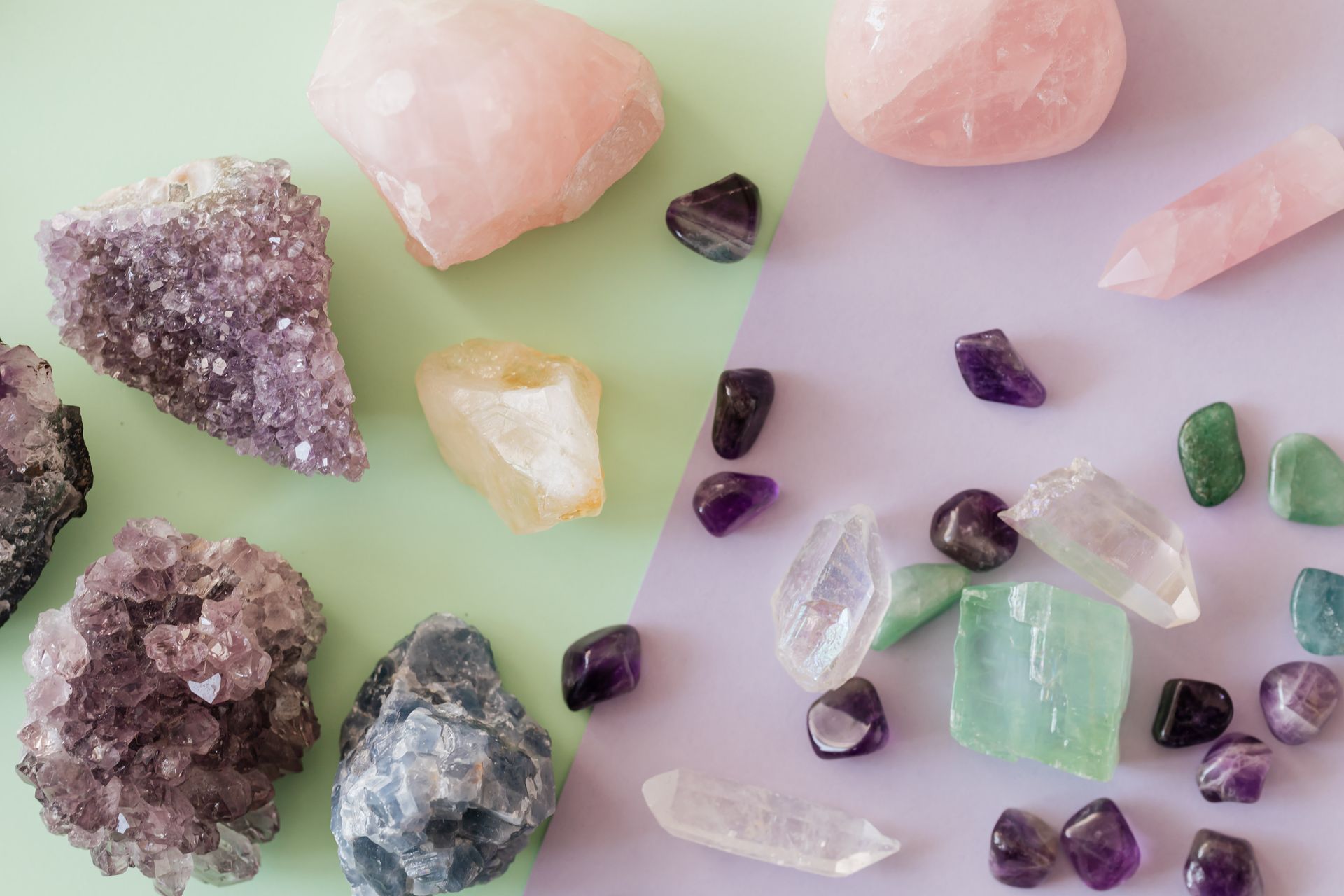
How to Cleanse and Charge Crystals: 7 Methods and Which Stones to Keep Out of Water
To cleanse a crystal you clear the energy it has soaked up, and to charge it you fill that energy back up with intention or a natural source like moonlight. Most people do both in one short sitting: cleanse first, charge second. You don't need special tools or an elaborate ritual for it. A windowsill, a little smoke, or a bowl of dry rice handles almost anything in your collection.
The one thing worth learning before you touch water is which crystals can't get wet, because a rinse that refreshes rose quartz will slowly wreck selenite or malachite. Here's how cleansing and charging differ, seven methods that hold up in practice, the stones to keep away from water, and how often any of this is actually worth doing.
What You'll Learn
What Does It Mean to Cleanse and Charge Crystals?
These are two different jobs, and it helps to keep them straight. Cleansing clears whatever a stone has absorbed since you last tended to it, the way you'd reset something that feels a little heavy or dull. Charging is the opposite motion. You're adding energy and a clear purpose back in, so the crystal feels bright and ready to work again.
Think of it like a phone. Cleansing is closing all the apps that have been running in the background. Charging is plugging it into the wall. You can do one without the other, but they pair naturally, which is why the usual routine runs cleanse, then charge, in that order.
There's a third step some people add called programming or setting an intention, and it comes last. Once a stone is clear and charged, you tell it what you want it to help with. We'll get to that at the end, since it only makes sense after the first two steps are done.
If you're brand new to any of this, our guide to healing crystals for beginners covers how to choose and start using your first few stones before you worry about upkeep.
Do Crystals Really Need Cleansing?
Honest answer: it depends on what you believe cleansing does, and there's no test that settles it. The energetic case is that crystals pick up the moods, stress, and intentions around them, and clearing that keeps them working the way you want. Nobody can prove that with a meter. If it doesn't fit your worldview, that's fine.
There's a second reason to do it that has nothing to do with energy, though, and it's the one almost everyone agrees on. Cleansing is a ritual of attention. When you take a stone off the shelf, hold it, clear it, and set an intention, you're focusing your own mind on what you want. That focus is where a lot of the real benefit lives, whether the crystal is doing anything or just giving your intention a place to land.
So the practical view is this: cleanse your crystals because it resets your relationship with them, not because a dirty crystal will hurt you. Newly bought or gifted stones are the exception most people treat as non-negotiable, since you have no idea how many hands they passed through first.
How Often Should You Cleanse Your Crystals?
There's no fixed schedule, and anyone who gives you an exact number is guessing. A few sensible triggers work better than a calendar:
For a stone you use daily, once or twice a month is plenty. One you keep for decoration might go months. Protective stones like black tourmaline tend to get cleansed more often, since their whole job is absorbing what you don't want around you.
7 Ways to Cleanse Your Crystals
No single method is best. Pick one that suits the stone in front of you and the tools you have. Here are seven reliable options, roughly from gentlest to most hands-on.
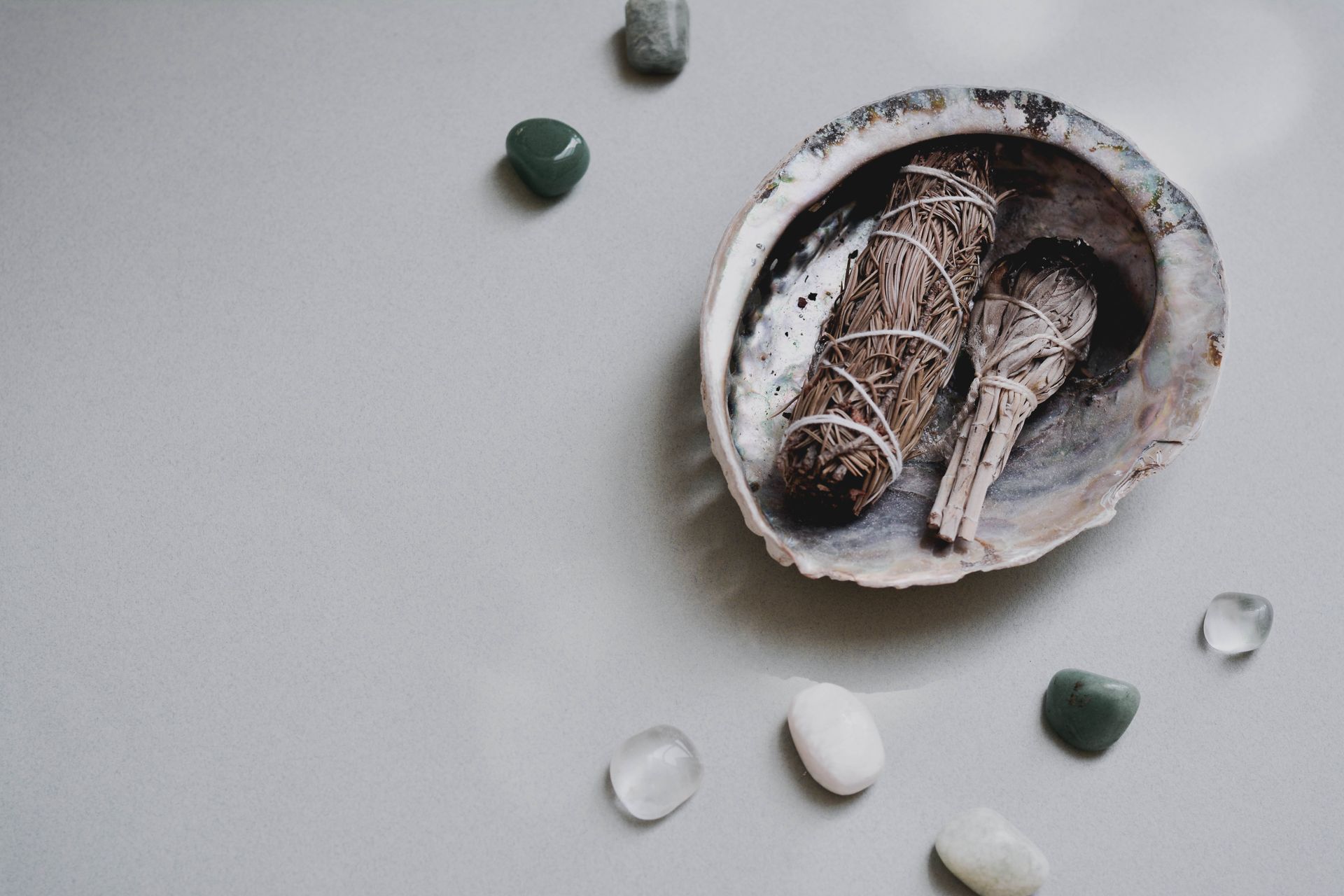
Tumbled crystals being cleansed with the smoke of a burning sage bundle, a safe way to clear water-sensitive stones
1. Moonlight. Set your stones on a windowsill or outside overnight, ideally near the full moon. This is the safest method of all, since moonlight never fades a color or damages a surface. It works for every crystal without exception, which is why it's the one to reach for when you're unsure.
2. Smoke. Pass the stone through the smoke of dried herbs, incense, or wood like palo santo. Smoke cleansing suits water-sensitive stones perfectly because nothing gets wet. Our guide to smoke cleansing and smudging walks through how to do it respectfully, including which traditions the practice comes from.
3. Selenite or clear quartz. Rest a stone on a selenite slab or beside a clear quartz cluster for a few hours. Both are known for clearing other crystals without needing to be cleansed themselves, which makes a selenite plate the low-effort choice for a whole collection at once.
4. Sound. Ring a singing bowl, tuning fork, or bell near your stones and let the vibration wash over them. Sound reaches a group all at once and touches nothing physically, so it's another safe pick for delicate or layered stones.
5. Earth. Bury the crystal in soil, either outdoors or in a plant pot, for a day or a few. The idea is that the earth draws off what the stone has taken on. Mark the spot well, and skip this one for water-soluble stones since damp soil counts as moisture.
6. Running water. Hold a hardy stone under cool running water for a minute, picturing the energy rinsing away. This works beautifully for quartz-family stones and other hard crystals. It's also the method that ruins the wrong stone fastest, so read the next section before you turn on the tap.
7. Breath and visualization. Hold the stone, take a slow breath, and picture bright light clearing it as you exhale. It needs nothing but you, which makes it the method you always have on hand when you're away from home.
Which Crystals Should Never Go in Water
This is the section that saves your collection. Water damages some stones fast and others slowly, and salt water is harsher than plain. The risk comes down to hardness and structure. Softer stones, anything fibrous or layered, and stones that literally dissolve are the ones to protect.
A quick way to judge is the Mohs hardness scale. Stones under about 6 are risky for soaking, and a few are ruined by a splash. Keep these out of water:
When in doubt, don't soak it. Moonlight, smoke, selenite, or sound clears any of these safely. Salt water deserves its own warning: it's abrasive and corrosive, and it damages far more stones than plain water does, so most people skip it entirely now. If you're ever unsure about a specific stone, check its individual guide before you get it wet.
How to Charge Your Crystals
Once a stone is clear, charging fills it back up. The methods overlap with cleansing, which is handy, since one session can do both.
Crystals and candles set out under the full moon, the gentle all-purpose method for charging stones overnight
Moonlight is the gentle all-purpose charger. A full moon is the traditional peak, and the light suits emotional and intuitive stones especially well. Leave them out overnight and bring them in by morning. For the reasoning behind moon-phase timing, our guide to setting intentions with moon phases explains which phase fits which goal.
Sunlight charges with brighter, more active energy, and it's great for stones tied to confidence, motivation, and vitality. Here's the catch: direct sun fades many crystals. Amethyst, citrine, rose quartz, fluorite, and aventurine all lose color with too much sun. Give light-sensitive stones an hour of early morning sun at most, or skip it and use the moon.
A crystal cluster works quietly indoors. Set smaller stones on or beside a large clear quartz or amethyst cluster and leave them a few hours. It's the method for anyone who forgets to bring stones in from the windowsill.
Your own intention charges a stone anytime. Hold it, picture it filling with light, and state what you want it to carry. Many people find this the most meaningful part, and it costs nothing.
If you want a step that combines clearing and charging in one, moon water is worth a look, as long as you only use it with water-safe stones.
How to Cleanse a Crystal for the First Time
A brand-new stone deserves a proper first cleanse, because you're clearing everyone who touched it before you: the miner, the shipper, the shop, other browsers. Treat this one as the exception to the casual schedule.
Keep it simple. Pick a method that suits the stone, moonlight or smoke if you're unsure, and give it a full clearing. Then hold it for a minute and introduce yourself, so to speak. Notice its weight, its color, how it feels. That first quiet moment is where your bond with the stone starts, and it matters more than any technique.
After that first cleanse, charge it and set your intention, and it's ready to work. From there you're just on upkeep.
How to Set an Intention Into a Crystal
Programming a crystal means telling it what you want it to help with, and it's the final step after cleansing and charging. Hold the clear, charged stone in your hands. Take a breath, get calm, and picture the outcome you want as if it's already true. Then state it plainly, out loud or in your head: something like "help me stay calm under pressure" or "support restful sleep."
That's the whole thing. One intention per stone keeps it focused, and you can re-cleanse and reprogram whenever your goal changes. If you're pairing several stones toward one purpose, a crystal grid arranges them so they reinforce each other, and a grid is a lovely place to put freshly charged stones to work.
Want to match stones to your birth chart while you're at it? Our guide to crystal healing by zodiac sign suggests which stones tend to suit each sign's energy.
Frequently Asked Questions
How do you cleanse crystals for the first time?
Cleanse a new stone before you use it, since you don't know who handled it first. Moonlight overnight or a pass through smoke works for any crystal and won't risk damage. After clearing it, hold the stone for a moment to get familiar with it, then charge it and set your intention.
Which crystals cannot go in water?
Keep selenite, malachite, pyrite, hematite, lepidolite, angelite, celestite, calcite, turquoise, and opal out of water. Soft stones under about 6 on the Mohs scale, anything layered or fibrous, and water-soluble stones all risk dulling, rusting, or dissolving. Use moonlight, smoke, or sound instead.
How often should you cleanse your crystals?
There's no fixed rule. Cleanse after buying a stone, after heavy use, after other people handle it, or whenever it feels heavy. A crystal you use daily does well with a clearing once or twice a month, while decorative pieces can go much longer.
Can you charge crystals in sunlight?
Yes, and sunlight suits active, energizing stones. The problem is that direct sun fades color in amethyst, citrine, rose quartz, fluorite, and aventurine. Give light-sensitive stones only an hour of early sun, or use gentle moonlight, which never fades a stone.
Do crystals really need to be cleansed?
There's no way to prove crystals absorb energy, so treat cleansing as optional from that angle. The reliable benefit is that the ritual focuses your own attention and intention. Most people still cleanse new or gifted stones as a matter of habit, since their history is unknown.
Cleansing and charging come down to a simple rhythm: clear the stone, fill it back up, and tell it what you need. Keep the water-sensitive ones dry, lean on moonlight when you're unsure, and let the ritual do as much for your focus as for the crystal. Ready to build your collection with intention? Start with our guide to healing crystals for beginners and find the stones that fit your practice.