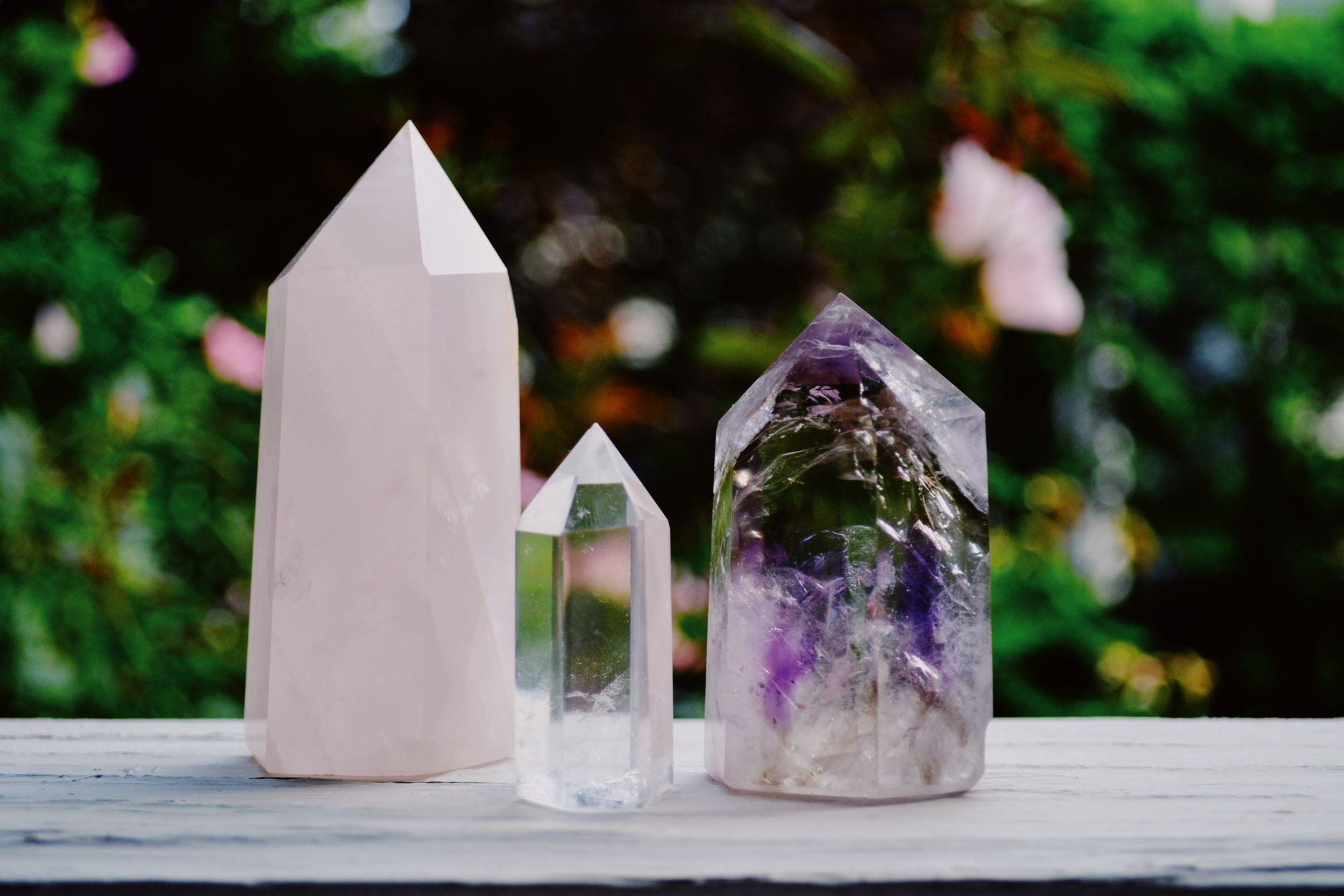
Healing Crystals for Beginners: How to Choose, Cleanse, and Use Them
Healing crystals for beginners come down to three simple habits: choose stones you're actually drawn to, cleanse them so they feel fresh, and set a clear intention for how you want to use them. You don't need a huge collection, a fancy altar, or any special talent. A single piece of clear quartz on your desk is a real start. Crystal practice is less about owning rare stones and more about building a small, consistent ritual that keeps you grounded and focused.
In the crystal healing tradition, stones are seen as steady carriers of energy, each one tied to particular themes like calm, protection, love, or clarity. People use them to anchor a mood, mark an intention, or add a tactile cue to meditation. Nothing here is a medical treatment, and crystals aren't a substitute for care from a doctor or therapist. Think of them as a focusing tool, the way a candle or a piece of jewelry can carry meaning. This guide walks you through how crystals work, how to pick your first ones, how to cleanse and charge them, and how to fold them into everyday life.
What You'll Learn
A collection of polished and raw healing crystals in soft natural light, arranged for a beginner's crystal practice
What are healing crystals and how do they work?
Healing crystals are natural minerals and stones that people use as focusing tools for intention, mood, and energy work. Each type, from amethyst to rose quartz to black tourmaline, carries its own set of traditional associations built up over centuries of folklore, color symbolism, and metaphysical practice. In crystal healing, the idea is that a stone holds a steady, consistent vibration, and that keeping it close helps you tune your own attention toward whatever that stone represents.
It helps to be honest about the mechanism. There's no scientific proof that crystals emit healing energy, and any benefit you feel is best understood through intention, ritual, and focus rather than a measurable force. That's not a knock on the practice. Holding a smooth stone, pausing to breathe, and naming what you want is a small act of mindfulness, and mindfulness genuinely changes how you feel. A crystal gives that intention a physical home. When you see rose quartz on your nightstand, it reminds you of the self-compassion you decided to practice, and that reminder does real work.
Crystals also slot neatly into broader spiritual practice. Many people pair them with the body's energy centers, matching stones to specific chakras to focus their meditation. If that idea is new to you, our guide to the zodiac signs and chakras explains how those energy centers map onto your chart and where each one sits.
How do you choose your first crystals?
Choose your first crystals by intention or by attraction, and either approach is valid. The intention method means you start with a goal, like better sleep, more calm, or stronger boundaries, and pick stones traditionally tied to that theme. The attraction method means you walk into a shop or scroll a collection and simply notice which stones you keep coming back to. Many longtime practitioners trust attraction, since the stone you're drawn to often matches something you need.
Here's a simple way to pick without overthinking it:
Watch out for fakes and dyed stones, especially online. Suspiciously bright, uniform color and prices that seem too good to be true are common red flags. A reputable seller will tell you a stone's name and origin without hesitation. If you like tying your choices to your birth chart, our breakdown of birthstones and their astrological connections is a natural place to begin, and our guide to crystal healing by zodiac sign suggests stones that complement each sign's strengths.
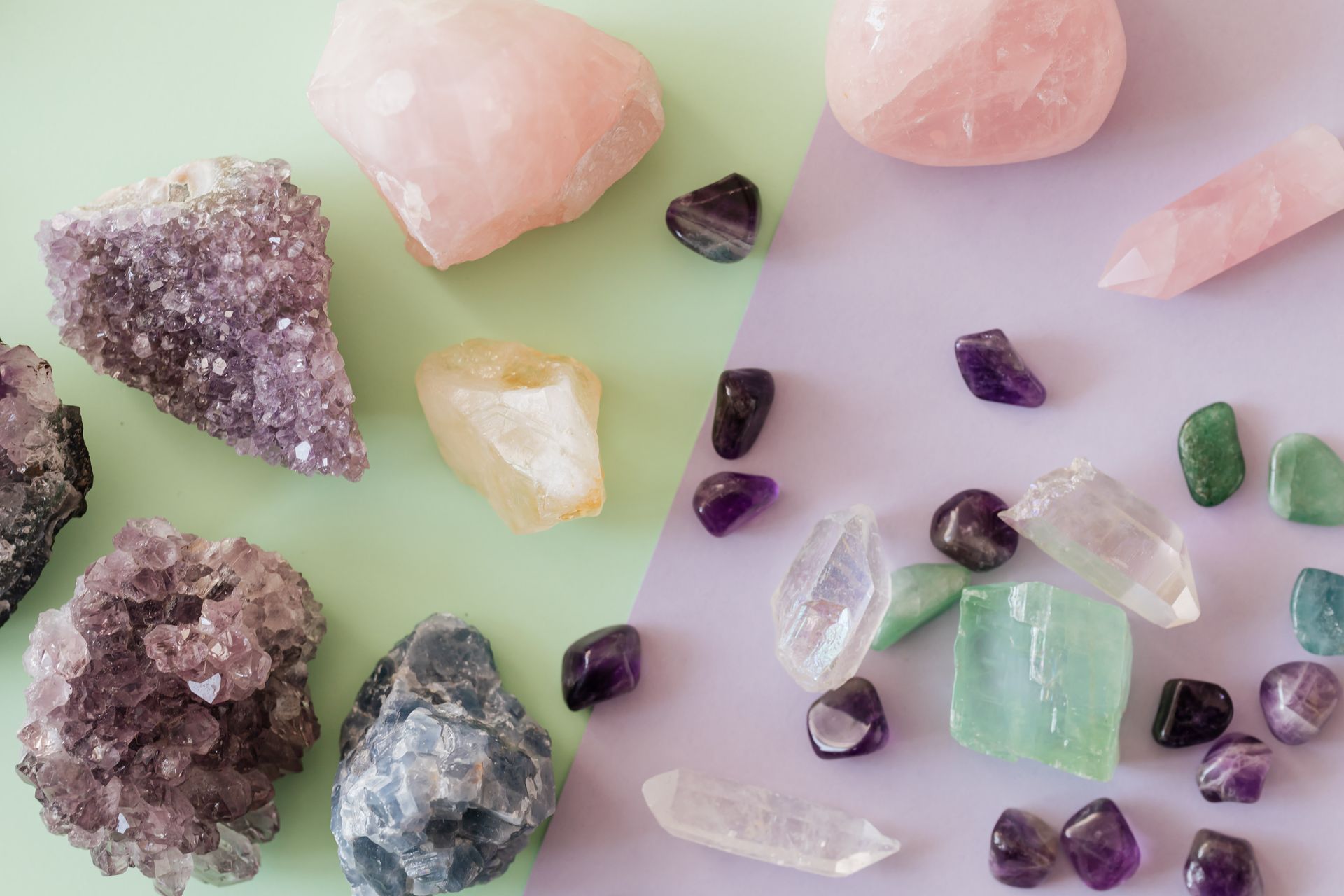
An open box of assorted raw and tumbled crystals in many colors, ready for a beginner to choose from
Best crystals for beginners
The best crystals for beginners are the affordable, widely available stones with clear, easy-to-remember meanings. You don't need anything rare. These seven cover most of what a new practice asks for, and you can find all of them as small tumbled stones for a few dollars each.
You don't have to collect all seven at once. Pick the one or two whose meanings match what you're working on right now, and let the collection grow naturally over time. A clear quartz plus one stone that fits your current goal is a complete beginner kit.
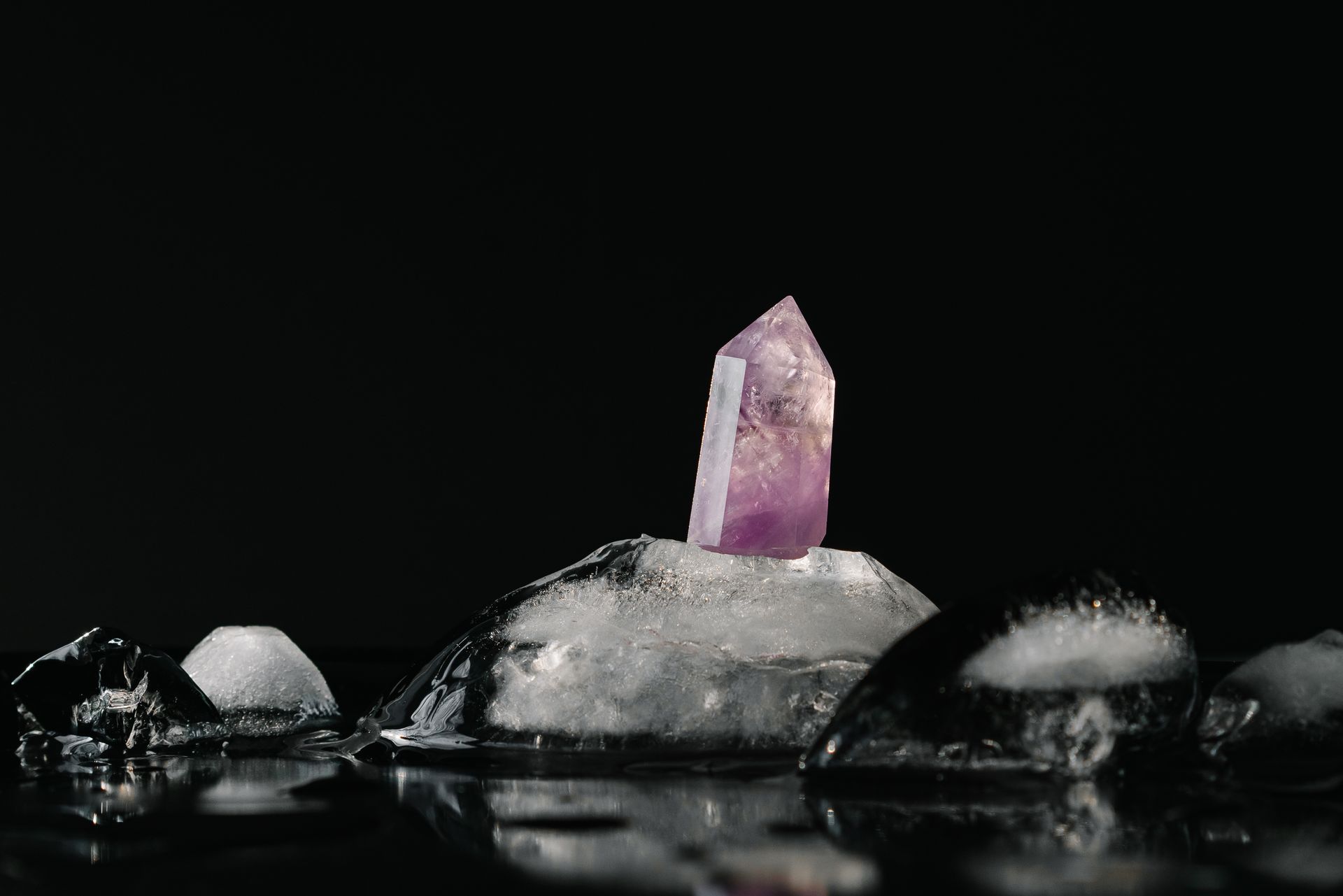
A single raw amethyst cluster glowing purple in warm light, a calming stone popular with beginners
How do you cleanse crystals?
Cleansing a crystal means clearing the energy it has picked up so it feels fresh and ready for your intention. In the tradition, stones absorb the moods and energy around them, so people cleanse a new crystal when they first bring it home and again whenever it feels dull or heavy. There are several methods, and you only need one. Pick whichever fits your stones and your routine.
A safety note matters here. Avoid water and salt for soft or porous stones. Selenite dissolves in water, and stones like malachite and pyrite can be damaged by moisture or release unwanted residue. When in doubt, use selenite, sound, or moonlight, since those work for everything. If you want a water-based cleanse for water-safe stones, you can rinse them in moon-charged water, and our guide to making and using moon water walks through that step by step.
How do you charge and program crystals?
Charging a crystal means restoring its energy after cleansing, and programming it means assigning it a clear job. Cleansing clears the slate, charging fills it back up, and programming points that energy at your goal. You don't have to do all three every time, but new crystals benefit from the full sequence.
To charge a stone, return it to a natural energy source. Sunlight gives an active, energizing charge, though bright sun can fade colored stones like amethyst, rose quartz, and citrine, so keep those to an hour or use moonlight instead. Moonlight gives a softer, more reflective charge and is safe for everything. Many people simply cleanse and charge in one step by leaving stones out overnight under the full moon.
Programming is the part that ties the crystal to you. Hold the cleansed stone in your hand, take a breath, and state a single, specific intention, either out loud or silently. Something like, this stone helps me stay calm in stressful meetings. Picture the outcome clearly for a moment, then set the stone where you'll see it. That's the whole process. The clarity of your intention matters more than the words, so keep it simple and concrete rather than vague.
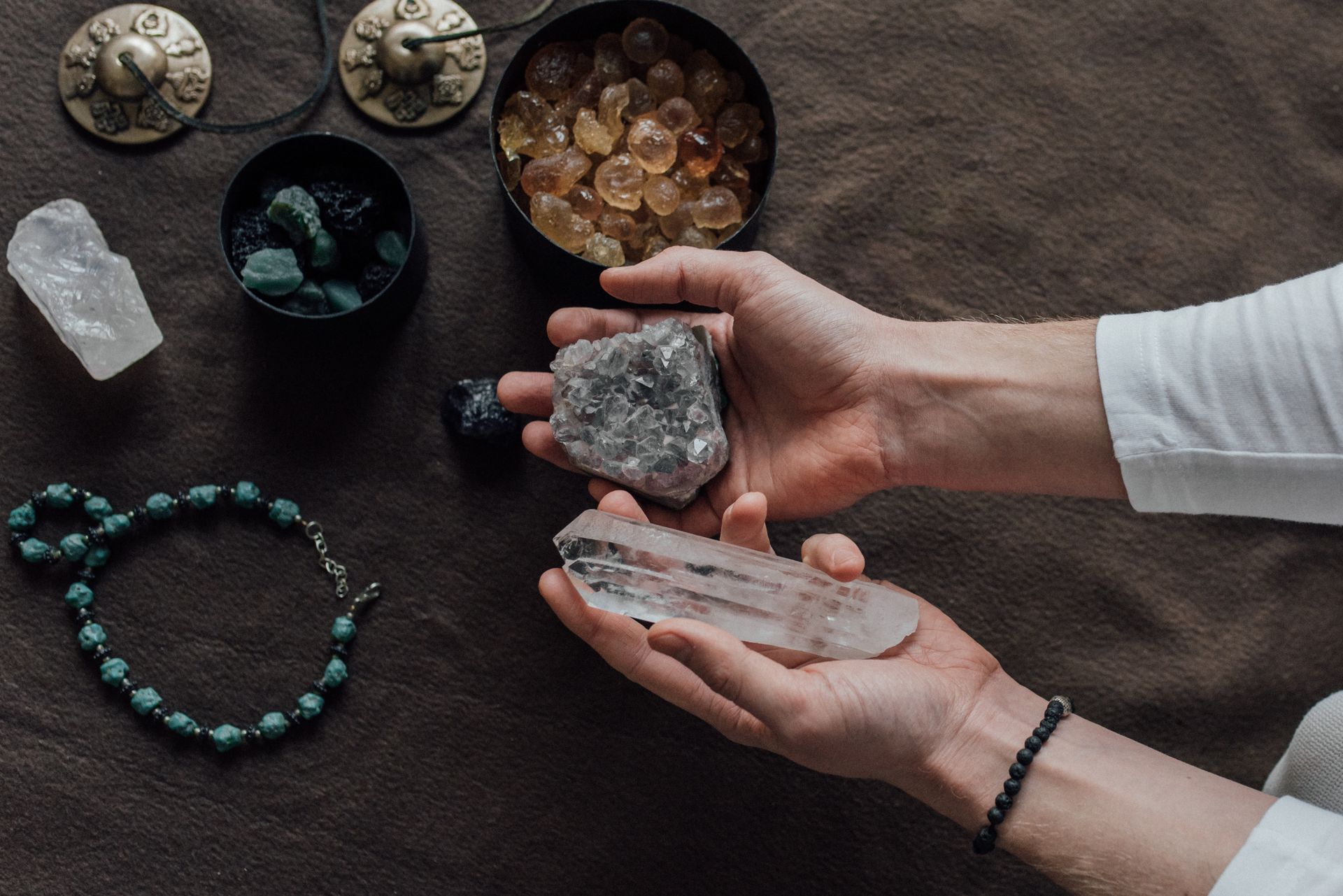
Crystals arranged in a geometric grid pattern on a cloth, a setup used for focusing intention
How to use healing crystals day to day
Using crystals day to day is about keeping them in your path so they cue the intention you set. The point isn't to do something elaborate, it's to build small, repeatable contact with the stone and the goal behind it. Here are the most common ways beginners actually use their crystals.
Carry a stone in your pocket or bag so you can touch it when you need a reset, like a worry stone with a meaning attached. Wear crystal jewelry to keep a stone against your skin all day, which is popular for rose quartz and amethyst. Place stones around your home where their themes fit, like citrine near your workspace for motivation or black tourmaline by the front door for protection. Keep amethyst or selenite near your bed if you're working on sleep and rest.
Crystals also deepen meditation and intention-setting. Hold a stone while you breathe, letting its weight anchor your focus, and name what you're working toward. Some people build a crystal grid, arranging stones in a geometric pattern around a central intention to concentrate their attention on a single goal. You can even keep a stone beside you during a tarot reading to help you stay present and centered while you reflect on the cards. The method matters less than the consistency. A stone you touch every morning does more than a beautiful one you forget in a drawer.
How often should you cleanse your crystals?
Cleanse your crystals whenever they feel heavy, dull, or off, and at minimum once a month. There's no rigid rule, since this is about your sense of the stone rather than a schedule. That said, a few moments naturally call for a cleanse, and building them into your routine keeps the practice simple.
Cleanse a new crystal as soon as you bring it home, since it has passed through many hands. Cleanse after heavy emotional use, like working through stress, grief, or conflict, when the tradition says the stone has absorbed a lot. Cleanse protective stones such as black tourmaline more often, since their job is to take on energy. And cleanse on a regular rhythm that's easy to remember, which is why so many people use the full moon as a monthly reset for their whole collection. Trust the stone. If it feels like it needs refreshing, it does.
Beginner mistakes to avoid
The most common beginner mistake is collecting far more stones than you use. A focused set of two or three you actually work with beats a basket of forgotten crystals. Start small and let your collection grow around real intentions rather than impulse buys.
A few other slip-ups are easy to sidestep. Don't soak water-sensitive stones, since selenite dissolves and some stones release residue, so check before you cleanse with water. Don't leave colored stones in harsh sunlight for hours, since amethyst, rose quartz, and citrine can fade. Don't expect crystals to replace medical or mental health care, since they're a focusing tool, not a treatment, and any stone marketed as a cure is a red flag. Don't skip cleansing your new stones, since starting fresh sets your intention cleanly. And don't overthink the rituals. A clear intention and a stone you keep close is the entire practice, and everything else is refinement.
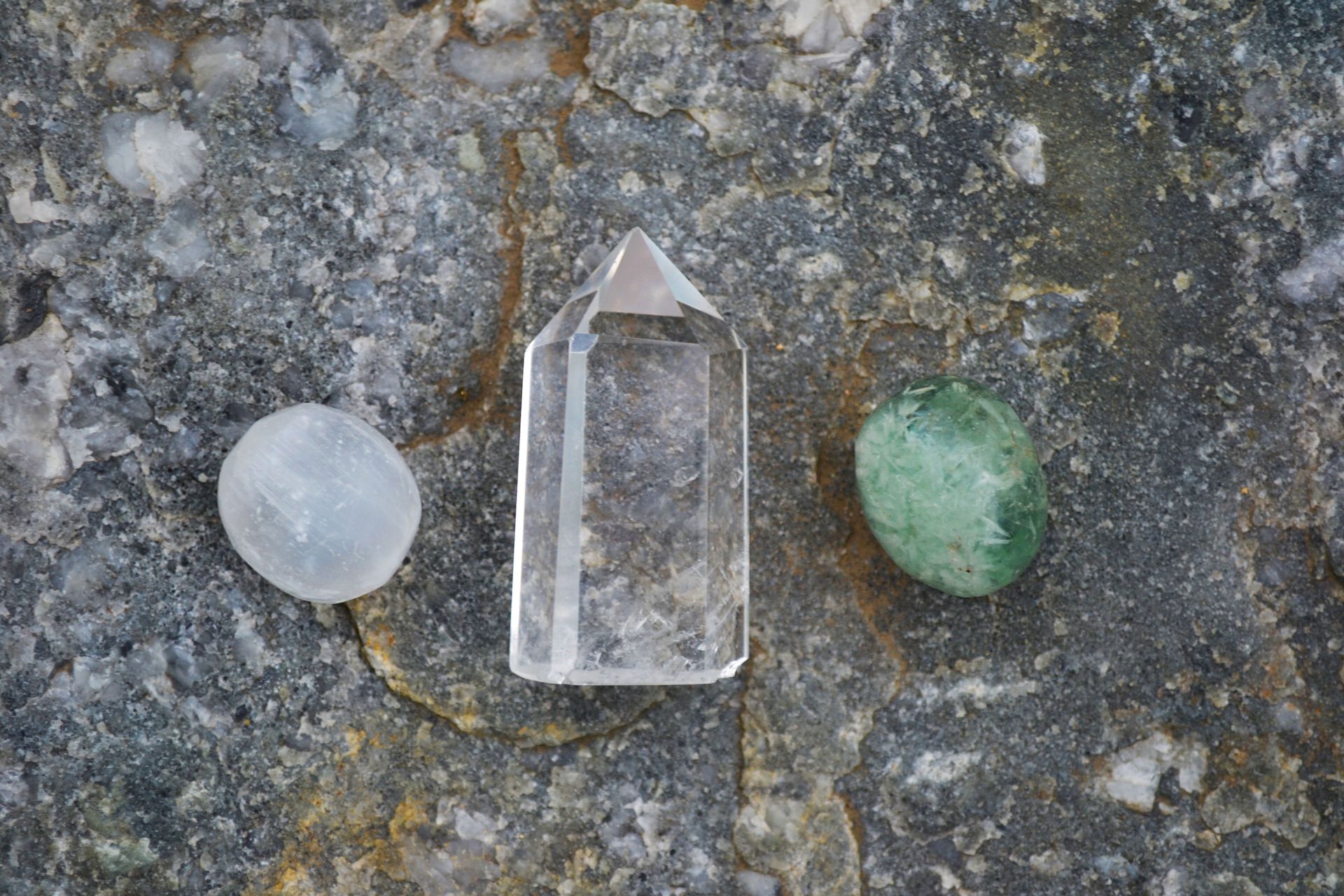
A piece of white selenite glowing in soft light, a stone often used to cleanse other crystals
Frequently asked questions
What crystals should a beginner start with?
Start with clear quartz for clarity, plus one or two stones that match your goal, like rose quartz for self-love, amethyst for calm, or black tourmaline for grounding. These are affordable, widely available, and have simple meanings, so you can build a useful practice with just two or three stones rather than a large collection.
How do you cleanse crystals for the first time?
Cleanse a new crystal as soon as you bring it home, since it has passed through many hands. The easiest safe methods are leaving it on selenite or beside clear quartz overnight, setting it under the full moon, or passing it through incense smoke. Avoid water for soft stones like selenite, which dissolves.
Do healing crystals actually work?
There's no scientific evidence that crystals emit healing energy, so any benefit comes through intention, ritual, and mindfulness rather than a measurable force. Many people still find them genuinely helpful as focusing tools, the way a candle or keepsake carries meaning. Use them alongside real medical and mental health care, never as a replacement.
How do you charge a crystal?
Charge a crystal by returning it to a natural energy source after cleansing. Moonlight gives a gentle charge and is safe for every stone, while sunlight gives an active charge but can fade colored stones like amethyst and rose quartz. Leaving a stone out overnight under the full moon cleanses and charges it in one step.
Where should you keep your crystals?
Keep crystals where their meaning fits your daily path, so they cue the intention you set. Carry a stone in your pocket, wear it as jewelry, place citrine near your workspace for motivation, set black tourmaline by the door for protection, or keep amethyst by your bed for rest. Contact and consistency matter more than placement rules.
Healing crystals reward a small, steady practice far more than a big collection. Pick a stone or two you're drawn to, cleanse them, set a clear intention, and keep them somewhere you'll see them every day. That's the whole foundation, and the rest is personal refinement. Curious how your stones connect to the rest of your spiritual blueprint? Generate your free natal chart and see which energies your chart leans on most.