How to Set Intentions with Moon Phases: A Complete 8-Phase Guide
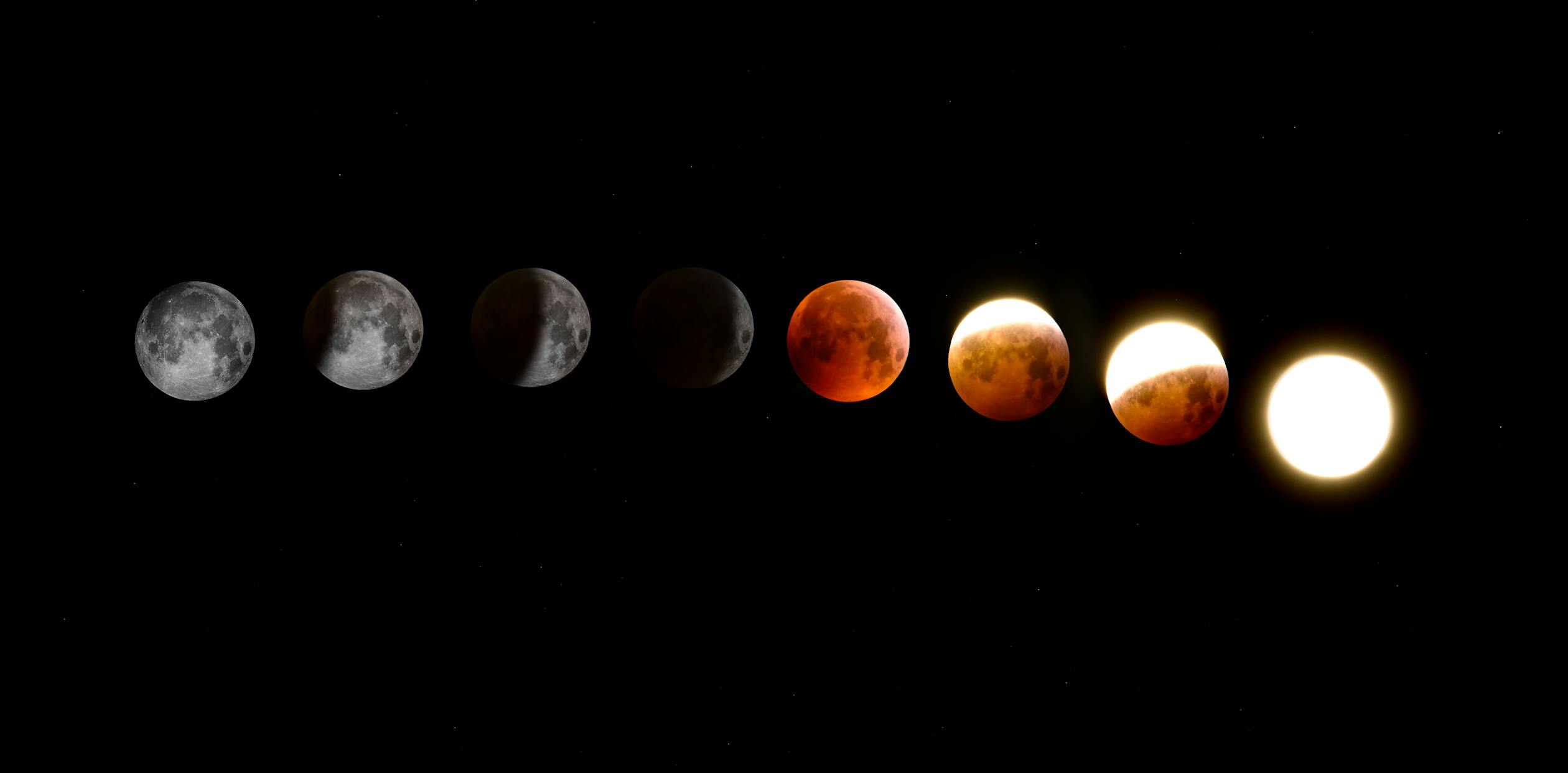
The Moon completes a full orbit around the Earth every 29.5 days, and during that cycle it passes through eight distinct phases, each carrying a different energetic quality that's been observed by humans for thousands of years. Farmers have planted by moon phases since before written history. Fishermen have timed their catches to the lunar calendar. Babylonian priests tracked the Moon's cycle with obsessive precision because they noticed that certain types of actions succeeded when aligned with certain phases and failed when they weren't.
Setting intentions by moon phase isn't a modern wellness trend dressed in ancient clothing. It's one of the oldest planning frameworks in human history, and it persists because it works. Not because the Moon beams magical energy into your journal, but because the 29.5-day cycle provides something that most goal-setting systems lack: a natural rhythm of building, culminating, processing, and resting that mirrors how humans actually accomplish things when they're not forcing artificial deadlines.
If you've ever set a New Year's resolution on January 1st and abandoned it by February, you've experienced what happens when intention meets a calendar that has no built-in phases for adjustment, reflection, or rest. The lunar cycle builds those phases into its structure. You don't have to create them. You just have to use them.
What You'll Learn
Why Moon Phases Work for Intention Setting
Most goal-setting frameworks treat time as linear. You set a goal, you work toward it, you either hit the deadline or you don't. There's no structured space for doubt, adjustment, rest, or the recognition that forward momentum isn't constant. You're expected to push at the same intensity from day one until the finish line, and when your energy naturally ebbs (as it always does), the system treats that as failure rather than rhythm.
The lunar cycle operates differently. It's cyclical, not linear. Energy builds for the first half (waxing phase), peaks at the full moon, then shifts into processing and release during the second half (waning phase). This mirrors how humans naturally work on projects. You start with excitement and forward motion. You hit a peak where results become visible. Then you process what happened, adjust, rest, and prepare for the next cycle.
There's also the astronomical reality that the Moon genuinely affects Earth. It moves oceans. It influences animal behavior, plant growth, and human sleep patterns. A 2013 study from the University of Basel found that around the full moon, participants took five minutes longer to fall asleep, slept 20 minutes less, and had 30% less deep sleep, even in a controlled lab environment with no exposure to moonlight. Whether or not you believe the Moon affects your intentions directly, it affects your biology, and your biology affects your capacity to act on those intentions.
The practical advantage of moon-phase intention setting is structure without rigidity. Each phase tells you what type of work is supported right now, not what specific task to do. You bring the goals. The Moon provides the rhythm.
The 8 Moon Phases and What Each One Is For
The lunar cycle divides into eight phases, each lasting roughly 3.5 days. Here's the overview before we dig into each one.
New Moon (Day 0-1): Set intentions, plant seeds, begin fresh.
Waxing Crescent (Days 2-6): Commit, take first steps, protect the vision.
First Quarter (Days 7-8): Face challenges, push through resistance, decide.
Waxing Gibbous (Days 9-13): Refine, edit, adjust your approach.
Full Moon (Days 14-15): Receive clarity, celebrate, release what's finished.
Waning Gibbous (Days 16-20): Share, teach, express gratitude.
Last Quarter (Days 21-22): Evaluate honestly, forgive, let go of what didn't work.
Balsamic Moon (Days 23-29): Rest, surrender, prepare the ground for the next cycle.
The first half (new moon through full moon) is about building. The second half (full moon through balsamic) is about integrating and releasing. Both halves are equally important, and skipping the second half is the reason most people burn out.
New Moon: Plant Your Seeds
The new moon occurs when the Sun and Moon occupy the same degree of the zodiac, a conjunction that merges your conscious will (Sun) with your emotional truth (Moon). The sky is dark. No lunar light reaches Earth. And in that darkness, something can begin cleanly because there's no residual light from the previous cycle interfering.
This is the phase for setting intentions. Not vague wishes, not long lists of everything you've ever wanted, but focused, honest statements about what you're ready to build during this specific cycle.
What to do during the new moon:
Write 3-5 intentions. More than that dilutes your focus. Less than that underuses the opportunity. Be specific enough that you'll know whether the intention manifested when you review at the full moon. "I intend to have three conversations about advancing my role at work" is better than "I want a better career."
Include at least one feeling-based intention alongside your action-based ones. "I intend to feel rested and present by the full moon" addresses the emotional dimension that pure goal-setting misses.
Speak your intentions aloud. Writing engages one neural pathway. Speaking engages another. The combination creates stronger commitment than either alone.
Take one small action before the day ends. Send the email. Open the document. Make the call. This grounds the intention in physical reality rather than leaving it as an abstraction.
The zodiac sign of each new moon shapes what types of intentions have the most support. A new moon in Taurus favors financial and stability-related intentions. A new moon in Gemini favors communication and learning goals. Checking which house the new moon falls in on your natal chart tells you exactly which life area is being activated. For a deeper dive into new moon practices specifically, read the new moon manifestation guide.
Waxing Crescent: Commit and Protect
The first sliver of light appears. The intention you set at the new moon is real now, but it's fragile. This is the phase where most intentions die, not because they were bad ideas, but because the initial excitement fades and the work begins.
The waxing crescent asks you to commit. Not dramatically, not with a grand gesture, but with consistent small actions that prove to yourself that you're serious. Show up for the intention even when the mood that inspired it has passed. The mood was the spark. The crescent phase is where you build the fire.
What to do during the waxing crescent:
Take your first real steps toward each intention. If your intention was to start writing, write something today, even if it's terrible. If your intention was to improve a relationship, initiate a genuine conversation. The quality of the action matters less than its existence.
Protect your intentions from premature exposure. This isn't superstition. It's psychology. Intentions that get shared too early often receive criticism or indifference that kills them before they've had a chance to take root. The waxing crescent is not the time to announce your plans publicly. It's the time to nurture them privately until they're strong enough to withstand scrutiny.
Notice resistance. The crescent phase will surface every reason you shouldn't pursue what you set at the new moon. That resistance isn't a sign to quit. It's a sign that the intention matters enough to trigger your defenses. Write the resistance down. Acknowledge it. Then take the next step anyway.
First Quarter: Push Through Resistance
The Moon has completed one quarter of its orbit. Exactly half of the visible lunar surface is illuminated, creating a visual split that mirrors the internal experience of this phase: you're halfway committed and halfway tempted to abandon the whole thing.
The first quarter Moon forms a square aspect to the Sun, and squares are the aspect of tension, friction, and forced decision. Something will challenge your intentions during this phase. An obstacle will appear. A conflict will arise. A competing priority will demand your attention. The first quarter isn't asking whether your intention is valid. It's asking whether you're willing to fight for it.
What to do during the first quarter:
Expect friction and don't interpret it as failure. The obstacle that appears at the first quarter is part of the process, not evidence that you chose the wrong intention. Growth requires resistance. Muscles don't get stronger without weight. Intentions don't get stronger without challenge.
Make a decision. The first quarter demands commitment. If you've been wavering between approaches, choose one. If you've been half-heartedly pursuing your intention, go all in or consciously release it. The halfway state doesn't survive the first quarter's pressure.
Take bold action. This is the phase for courage, not contemplation. Do the thing that scares you. Have the conversation you've been avoiding. Submit the application. The first quarter rewards action and punishes hesitation.
Waxing Gibbous: Refine and Adjust
The Moon is more than half full and growing. The light is increasing, and with it comes clarity about what's working and what isn't. The waxing gibbous is the editing phase, the point in the cycle where raw effort gets refined into something more precise.
You've been building for over a week now. Some of your initial strategies are proving effective. Others are clearly not. The waxing gibbous asks you to adjust without abandoning. Don't scrap the whole project. Refine it. Trim what's not working. Double down on what is.

A woman in white pajamas writing in a journal while sitting on a bed during a cozy nighttime reflection practice
What to do during the waxing gibbous:
Review your progress honestly. Not harshly, not with the inner critic's voice, but with the clear-eyed assessment of a friend who wants you to succeed and isn't afraid to tell you what they actually see.
Adjust your approach. If a particular strategy isn't producing results, change it now rather than waiting for the full moon to show you what you already know. The waxing gibbous rewards flexibility. The people who insist on doing things exactly as they planned, regardless of feedback, lose the advantage this phase offers.
Seek input from trusted sources. Unlike the crescent phase, where protection is key, the gibbous phase benefits from outside perspective. Your intention is strong enough now to withstand constructive feedback. Ask someone you trust what they see. Their perspective might reveal a refinement you'd miss on your own.
Prepare for the full moon. The culmination is approaching. What needs to be in place before results become visible? Handle the details now. Tie up loose ends. Get your house in order so the full moon's illumination falls on a clean surface.
Full Moon: Receive and Release
The Moon sits opposite the Sun, fully illuminated, reflecting maximum light back to Earth. Everything that was planted at the new moon is now visible. The full moon doesn't create results. It reveals them. It shows you, with unflinching clarity, what your two weeks of intention and action have actually produced.
Sometimes what you see matches what you planted. Sometimes it's wildly different. Both outcomes carry valuable information. The match confirms your alignment. The mismatch reveals a disconnect between what you thought you wanted and what you were actually building, a disconnect that's useful to understand before setting the next cycle's intentions.
The full moon is also the natural release point. The energy shifts from building to processing after this peak. Whatever you've been holding that no longer serves the intention, whether that's a belief, a habit, a resentment, or a strategy that clearly isn't working, the full moon gives you the emotional intensity to actually let it go rather than just thinking about letting it go.
What to do during the full moon:
Review your new moon intentions. Pull out what you wrote two weeks ago. Read it with fresh eyes. What grew? What didn't? What surprised you?
Celebrate what's working. Genuine gratitude for progress made, however small, creates positive momentum that carries into the next cycle. Don't skip this step in your rush to identify problems.
Release what's finished. Write down what you're letting go of. Be specific. Then destroy the paper: burn it, tear it, bury it. The physical act signals completion to your subconscious more powerfully than thinking about release.
Pull a tarot card if you use divination. The full moon's clarity pairs naturally with tarot's reflective power. Ask: "What is being revealed that I need to see?" For full moon practices in depth, the full moon rituals guide covers eight specific practices.
Waning Gibbous: Share and Teach
The Moon begins to shrink. The peak has passed, and the energy shifts from building to distributing. What you've learned and gained during the first half of the cycle is ready to be shared.
The waning gibbous (also called the disseminating Moon) is the phase of generosity, communication, and teaching. You've gained something over the past two weeks, whether it's a skill, an insight, a result, or a hard-won lesson. This phase asks you to pass it on. Not because you're obligated to, but because the act of sharing solidifies your own understanding and creates value that extends beyond your personal circle.
What to do during the waning gibbous:
Share what you've learned. Write about it. Talk about it. Teach it to someone who's behind you on the same path. Sharing isn't just generous. It's clarifying. You don't truly understand something until you can explain it to someone else.
Express gratitude. Thank the people who supported your intentions during the waxing phase. Thank yourself for showing up. Gratitude during the waning gibbous isn't performative. It's the honest acknowledgment that nothing grows in isolation.
Begin integrating the full moon's revelations. Whatever the full moon showed you, the waning gibbous is where you start making sense of it. If the full moon revealed that your career intention was actually driven by someone else's expectations, the waning gibbous is where you sit with that realization and begin deciding what to do about it.
Last Quarter: Evaluate and Forgive
The Moon reaches its final quarter, again showing exactly half its face, but this time the illuminated half is waning rather than waxing. The last quarter mirrors the first quarter's energy of tension and decision, but where the first quarter asked you to push forward, the last quarter asks you to let go.
This is the evaluation phase. Be ruthless with your honesty and gentle with yourself. Some intentions from this cycle worked beautifully. Others didn't. The last quarter asks you to assess why without turning the assessment into self-punishment. The intention that failed might have failed because of poor timing, insufficient resources, a misunderstanding of what you actually wanted, or simply because that particular goal needs more than one lunar cycle to mature.
What to do during the last quarter:
Evaluate each intention honestly. Did it manifest? Partially? Not at all? Why?
Forgive what didn't work. Forgive yourself for the actions you didn't take. Forgive the circumstances that interfered. Forgive the people who didn't support you the way you needed. Carrying resentment into the next cycle poisons the soil for new intentions.
Make peace with incompleteness. Not every intention resolves in a single cycle. Some goals are multi-cycle projects that need to be re-set at the next new moon with adjustments based on this cycle's feedback. Recognizing that isn't failure. It's maturity.
Clear your physical space. The last quarter supports decluttering, cleaning, and organizing. As you release mental and emotional weight, release physical weight too. The correspondence between internal and external space is real. A clear desk genuinely supports a clearer mind.
Balsamic Moon: Rest and Surrender
The final phase. The thinnest crescent of light remains before the Moon goes dark again. The balsamic Moon (also called the dark Moon) is the quietest, most introspective phase of the entire cycle. It's the energetic equivalent of the pause between an exhale and the next inhale.
Most people skip this phase entirely, and it's the reason most people burn out. The balsamic Moon is for rest. Not rest as a reward for productivity, but rest as a necessary component of the cycle. Seeds planted in exhausted soil don't germinate. If you rush from the end of one cycle into the beginning of the next without this pause, your new moon intentions will carry the fatigue, unprocessed emotions, and residual noise of the previous cycle.
What to do during the balsamic Moon:
Rest without guilt. Sleep more. Do less. Cancel what can be cancelled. The balsamic Moon isn't lazy. It's strategic. The quality of your next new moon's intentions depends on the quality of your rest during this phase.
Surrender control. You've done what you can for this cycle. The balsamic Moon asks you to release your grip on outcomes and trust that the work you did will produce results in its own time, not necessarily on your schedule.
Dream. Pay attention to your actual dreams during the balsamic phase. They often carry seeds of what the next cycle wants to be about. Keep a notepad by your bed. The themes that surface in your dreams during the dark Moon frequently align with the intentions that feel most authentic at the next new moon.
Avoid starting anything new. This is the one phase where the "don't start new things" advice is genuinely important. Actions initiated during the balsamic Moon tend to fizzle because the cosmic energy is contracting, not expanding. Wait for the new moon. It's coming. The void of course Moon often overlaps with balsamic periods, reinforcing the message to pause rather than push.
How to Track Your Intentions Across the Cycle
A moon-phase intention practice only works if you actually track it. Here's a simple system.
Get a dedicated journal or notebook. Digital works too, but there's something about handwriting intentions that engages the brain differently. Whatever format you choose, keep it in the same place so you can find it every 3-4 days when the phase shifts.
Create a cycle page at each new moon. Write the date, the zodiac sign of the new moon, and your 3-5 intentions. Leave space below each intention for notes you'll add as the cycle progresses.
Check in at each phase shift. Every 3-4 days, spend 5-10 minutes with your journal. Note what's happened with each intention. What actions did you take? What resistance did you encounter? What surprised you? You don't need to write essays. Bullet points are fine. The point is consistent contact with your intentions rather than setting them and forgetting them.
Do a full review at the full moon. This is your midcycle assessment. Spend more time here. Celebrate, adjust, release.
Do a final review at the last quarter. Evaluate the full cycle's arc. Note what you want to carry forward and what you want to leave behind.
Rest during the balsamic Moon. Close the journal. Stop tracking. Let the cycle end completely before beginning a new one.
After three to four complete cycles of this practice, you'll start to notice patterns. Certain types of intentions consistently gain traction. Others consistently stall. Certain phases feel easier for you. Others feel like pulling teeth. Those patterns are deeply personal information about how you process intention, energy, and time, information you can't get from any goal-setting framework that treats every day as identical.
Combining Moon Phases with Astrology
Moon-phase intention setting becomes significantly more powerful when you layer in astrological context.
The sign of each new moon determines which themes are cosmically supported. A new moon in Capricorn naturally supports career, structure, and long-term planning intentions. Setting a career intention at a Capricorn new moon is like planting a seed in exactly the right soil. You can still set career intentions at other new moons, but the Capricorn new moon gives that specific intention extra support.
The house activation in your chart personalizes the timing even further. The same Capricorn new moon falls in your 7th house? Now it's about career through partnership, or about bringing more structure to your relationships. Knowing your houses (which requires knowing your birth time and rising sign) transforms generic moon-phase practice into a customized system that's calibrated to your life.
Aspects to other planets at the new moon add power or challenge. A new moon trine Jupiter supports ambitious, expansive intentions. A new moon square Saturn demands discipline and patience. A new moon conjunct Venus favors love, creativity, and financial intentions. Checking the planetary transits at each new moon tells you what kind of cosmic support (or resistance) your intentions will meet.
Eclipse new moons are a special case. Eclipses carry fated, volatile energy that's difficult to direct with personal intention. Most experienced astrologers recommend against deliberate manifestation work during eclipse new moons. Let the eclipse do what it will. Resume your regular intention-setting practice at the next non-eclipse new moon.
Your natal Moon sign also matters. If your natal Moon is in a water sign, you might find the emotional phases (new moon intention-setting, full moon release) come naturally while the action phases (first quarter, waxing gibbous) require more effort. If your natal Moon is in a fire sign, the action phases may feel easy while the reflective phases test your patience. Understanding your Moon sign helps you anticipate which parts of the cycle will challenge you and where you can lean into natural strengths.
For the broadest possible understanding of how all eight phases interact with your personal chart, generate your natal chart with the natal chart calculator and note which houses the upcoming new and full moons will activate over the next few months.
Frequently Asked Questions
What if I miss the new moon for setting intentions?
The ideal window for intention setting extends about 48 hours after the exact new moon. If you miss that window, the waxing crescent phase (days 2-6) still supports beginning new things, though the energy becomes progressively more about commitment and action than about fresh planting. If you miss the new moon entirely, don't force an awkward catch-up ritual. Use the remaining cycle to observe, take notes, and prepare exceptional intentions for the next new moon. Skipping one cycle to set better intentions next time is infinitely more effective than setting rushed ones at the wrong phase.
Do I need to set new intentions every single month?
No. Some intentions are multi-cycle projects that carry forward from one new moon to the next. You can re-set the same intention with adjustments based on the previous cycle's feedback. You can also take a cycle off entirely, using the full 29.5 days as a rest period where you observe without directing. The cycle is always available. It doesn't require perfect attendance. What matters is that when you do set intentions, you follow them through the full cycle rather than abandoning them at the first quarter's resistance.
How do I know which moon phase we're currently in?
Any weather app, moon phase app, or astrology app will show you the current moon phase. Many wall calendars include moon phase symbols. You can also learn to identify phases by looking at the sky: waxing phases light up the right side of the Moon (in the Northern Hemisphere), waning phases light up the left side. A fully illuminated disk is the full moon. No visible moon means new moon or balsamic. With practice, you'll be able to glance at the Moon and know which phase you're in without checking an app.
Can I set intentions during the full moon instead of the new moon?
The full moon is traditionally the culmination and release point, not the planting point. However, you can use the full moon to set intentions specifically about what you're calling in after releasing what's blocking it. The key distinction: new moon intentions are "I'm starting this." Full moon intentions are "I'm clearing space so this can grow." If an important intention strikes you at the full moon, write it down and hold it. Then formally set it at the next new moon when the planting energy returns. For detailed full moon practices, read the full moon rituals guide.
Does this actually work or is it just a journaling exercise?
The mechanism behind moon-phase intention setting works whether or not you believe in astrology. At its core, it's a structured system that asks you to clarify what you want (new moon), take action (waxing phases), assess results honestly (full moon), process and adjust (waning phases), and rest before beginning again (balsamic). That's a complete cycle of goal-setting, action, reflection, and recovery. Most productivity systems include only the first two steps and skip the rest, which is why they produce burnout. The lunar calendar adds the recovery and reflection that makes sustained effort possible. Whether the Moon's energy directly supports your intentions or simply provides a reliable external timer for a psychologically sound process, the results tend to speak for themselves.
The Moon doesn't care whether you track it. It'll complete its cycle regardless. But you'll move through your life differently when you align with its rhythm rather than ignoring it. The phases are a map. Your intentions are the territory. Use the map to navigate the territory with more awareness, more patience, and more respect for the natural rhythm of building and resting that governs everything from ocean tides to your own energy levels. Start with the natal chart calculator to find your Moon sign and houses. Read about planetary transits to understand the broader context each new moon arrives in. Try the tarot reader when you need additional clarity about what a particular phase is asking of you. And give yourself permission to rest during the balsamic Moon. The next new moon is always coming. The darkness before it arrives isn't empty. It's preparation.