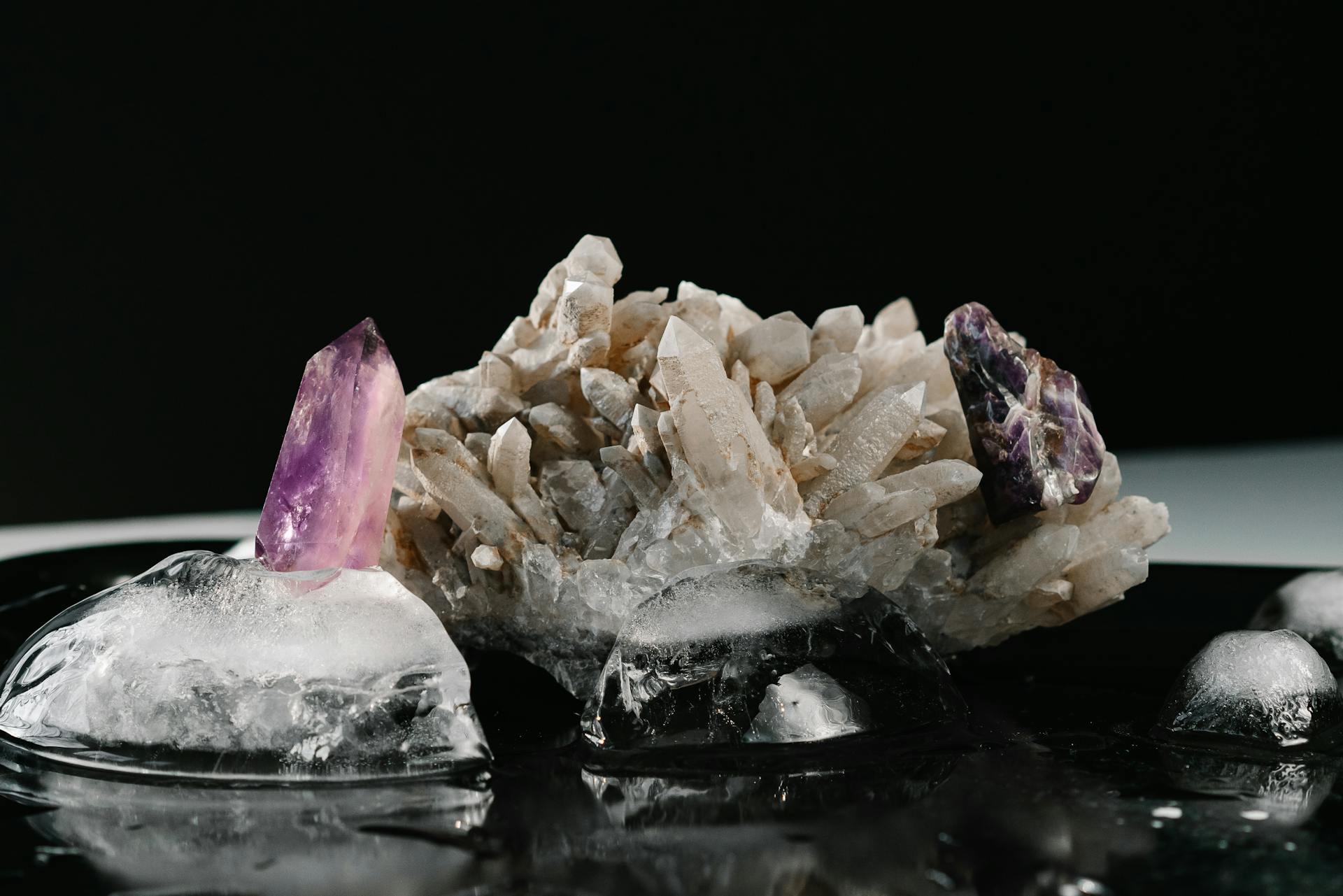
Obsidian Meaning: Healing Properties, Uses, and How to Work With It
Obsidian is a glossy black volcanic glass, and its meaning centers on protection, grounding, and honest truth. People reach for obsidian when they want a stone that shields their energy, keeps them rooted, and reflects back the parts of themselves they'd rather not look at. It forms when lava cools so fast it never crystallizes, and that raw, born-from-fire origin is exactly why practitioners treat it as one of the strongest protective and shadow-work stones you can hold.
This guide breaks down what obsidian means, the main types you'll run into, its traditional healing properties, how it connects to your root chakra, which zodiac signs and planets it suits, and the practical care it needs, including the question almost everyone asks: can obsidian get wet? Let's start with the stone itself.
What You'll Learn
Polished black obsidian stones resting in low light, representing obsidian meaning and healing properties
What Does Obsidian Mean?
Obsidian means protection, clarity, and truth without softening. It's the stone people keep close when they want to feel guarded and grounded at the same time. Because it comes straight from fire and cooling, tradition treats obsidian as a mirror of transformation: something intense that gets forged into something useful.
Here's a detail that surprises people. Obsidian isn't technically a crystal at all. It's a mineraloid, which means its atoms never lined up into a repeating crystal structure the way quartz or amethyst do. When felsic, silica-rich lava cools too quickly to organize, it freezes into a smooth natural glass instead. That's why obsidian has that dark, glassy shine and breaks with the curved, razor-sharp edges known as a conchoidal fracture.
Those sharp edges shaped human history. Ancient cultures knapped obsidian into arrowheads, blades, and scrapers because a fresh obsidian edge can be finer than surgical steel. Polished slabs became some of the world's first mirrors. In Aztec belief, the god Tezcatlipoca carried a smoking obsidian mirror said to reveal hidden truth, and centuries later the English advisor John Dee reportedly used an obsidian mirror for scrying. That long link to reflection is why obsidian's meaning keeps circling back to seeing clearly and facing what's real.
Types of Obsidian and Their Meanings
Not all obsidian is plain black. The inclusions and cooling patterns create distinct varieties, and each one carries a slightly different reputation.
If you're new to stones and not sure where to begin, our healing crystals for beginners guide walks through how to choose your first pieces without getting overwhelmed.
A dark meditation setting with candlelight, representing obsidian for shadow work and grounding
Obsidian Healing Properties and Benefits
Obsidian's traditional healing properties all grow out of two ideas: protection and truth. None of this is medical, and crystals aren't a substitute for care from a professional, but here's what practitioners reach for obsidian to support.
The theme is honesty. Obsidian doesn't promise to make you feel good. It promises to show you what's true so you can deal with it, which is a different and often more useful kind of support.
What Does Obsidian Do Spiritually?
Spiritually, obsidian is a truth stone and a mirror. Its most famous role is in shadow work, the practice of confronting and integrating the parts of yourself you usually hide, deny, or judge. Obsidian is said to reflect those parts back without flattery, which makes the work uncomfortable and also faster. If you want a structured way into that practice, our guide to shadow work by zodiac sign pairs naturally with an obsidian meditation.
Obsidian is also linked to cord cutting, the idea of releasing energetic ties to people or situations that drain you. And thanks to its reflective history, polished obsidian mirrors and spheres are classic tools for scrying, a form of divination where you gaze into a dark surface to let intuitive impressions rise. Whatever the method, the spiritual meaning stays consistent: obsidian helps you see, and then it helps you let go.
Obsidian, the Root Chakra, and Grounding
Obsidian is a root chakra stone. The root chakra, called Muladhara, sits at the base of your spine and governs safety, stability, and your basic sense of being supported in the world. When it's balanced you feel secure and present. When it's off you feel anxious, ungrounded, or braced for the worst.
Obsidian's dense, earthy energy is a natural match for that center. Holding a piece at the base of the spine during meditation, or simply keeping one in your pocket, is a common way to steady a frazzled nervous system and reconnect to your body. Some practitioners also use black obsidian at the feet in a crystal layout to draw excess energy downward and out. If you want the full map of the energy centers and which stones support each one, start with our seven chakras explained guide.
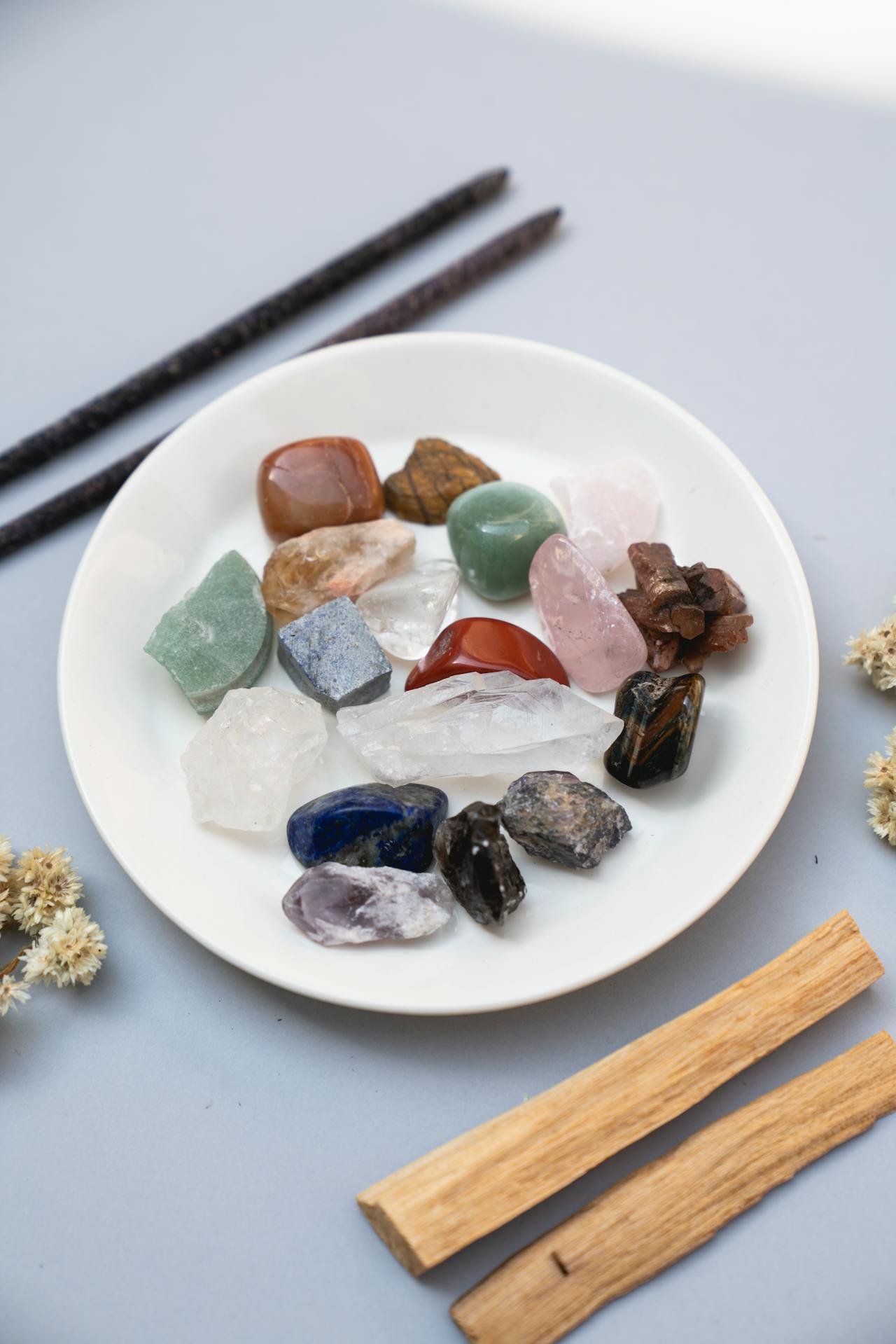
A collection of crystals arranged for meditation practice, representing how to use obsidian
Obsidian, the Zodiac, and Ruling Planets
Obsidian isn't a traditional birthstone tied to a calendar month, but it has clear astrological connections. Its strongest link is to Scorpio, the sign of depth, transformation, and the willingness to look where others won't. Obsidian's mirror energy suits Scorpio perfectly, which is why it shows up so often as a Scorpio stone. You can read more about that intensity in our Scorpio zodiac sign profile.
It also resonates with Sagittarius, sometimes named as obsidian's zodiac association, and with Capricorn, whose disciplined, boundary-minded nature matches obsidian's protective streak. On the planetary side, obsidian connects to Pluto, the planet of death, rebirth, and buried power, and to Saturn, the planet of boundaries, structure, and hard truth. If Pluto features strongly in your chart, obsidian can be a supportive companion for the deep-transformation seasons it brings, which you can explore through Pluto in the houses. To match stones to your own placements, our crystal healing by zodiac sign guide breaks it down sign by sign.

A dark cosmic sky over water, representing obsidian's connection to transformation and Pluto
How to Use Obsidian at Home and in Practice
Obsidian is versatile, and you don't need a formal ritual to benefit from it. A few of the most common ways to work with it:
Obsidian pairs especially well with intention work. Setting a clear boundary or release intention during the new moon and holding obsidian while you do it gives the practice a grounded, protective anchor. One gentle caution: some people find obsidian too intense to sleep with under the pillow, since it can stir up vivid dreams and buried feelings. If that happens, keep it in another room at night and work with it during the day instead.
Can Obsidian Get Wet? Cleansing and Care
Obsidian can handle brief contact with water, but it isn't a stone you want to soak. It ranks around 5 to 5.5 on the Mohs hardness scale, which makes it softer than quartz and genuinely brittle. Those beautiful sharp edges chip easily, and a polished piece can lose its shine or develop tiny fractures if you're rough with it. A quick rinse under cool running water is fine, but skip long soaks, hot water, and harsh salt scrubs, and never expose it to sudden temperature changes that could crack the glass.
For cleansing, dry methods are safer and just as effective. You can smudge obsidian with sage or palo santo, run it through the sound of a singing bowl, bury it briefly in dry earth, or set it on a selenite slab. To recharge it, moonlight is the classic choice, especially the new moon, which suits obsidian's releasing, protective energy. Direct sunlight for long stretches is best avoided, since heat can stress the glass over time. If you want a full walkthrough of the safest cleansing options, our selenite meaning guide covers the self-cleansing stone most people pair with obsidian.
Obsidian vs Black Tourmaline vs Onyx
These three dark protectors get mixed up constantly, so here's how they differ. Obsidian is volcanic glass and a mineraloid, prized for truth-telling, shadow work, and reflection. It shows you what's there. Black tourmaline is a true crystalline mineral, and it's the heavyweight for absorbing and grounding negativity, which is why it's the classic stone to place by the door or a computer. Compare the two directly in our black tourmaline meaning guide. Black onyx is a form of chalcedony, associated with self-control, focus, and steady willpower more than reflection.
If you want raw honesty and transformation, choose obsidian. If you want a stone that soaks up and neutralizes heavy energy, choose black tourmaline. If you want discipline and grounded resolve, choose onyx. Many practitioners keep all three, since they cover slightly different jobs.
Frequently Asked Questions
Is obsidian a crystal?
Not in the strict sense. Obsidian is a mineraloid, a natural volcanic glass that cooled too fast to form a crystal structure. People still call it a crystal casually and use it the same way, but geologically it's amorphous glass, not a true crystal like quartz.
Can obsidian get wet?
Briefly, yes. A short rinse under cool water won't hurt it, but obsidian is fairly soft and brittle, so avoid long soaks, hot water, salt, and sudden temperature changes that can chip or crack it. Dry cleansing methods like smudging or moonlight are safer.
What does black obsidian protect you from?
Practitioners use black obsidian to guard against negative energy, psychic drain, and stagnant emotional patterns. It's known as a shielding and grounding stone, so people carry it in draining environments or place it near the front door to protect their space.
Who should be careful with obsidian?
Obsidian is considered a powerful, no-nonsense stone that can bring buried feelings to the surface quickly. If you're feeling emotionally fragile, ease into it slowly and pair it with a gentler stone. Some people also find it too intense to sleep beside because it can stir vivid dreams.
Where should I put obsidian in my home?
Popular spots are near the front door to guard the entrance, in an entryway or hallway to catch incoming energy, and on your altar or meditation space for grounding. Keep it somewhere you'll notice and hold it so it becomes part of your daily rhythm.
Bringing It Together
Obsidian earns its reputation as a protector and a mirror. It's grounding, honest, and unafraid to show you what's real, which makes it one of the most useful stones for boundary work, shadow work, and staying rooted when life gets intense. Handle it gently, cleanse it with care, and let its dark, glassy calm remind you that facing the truth is its own kind of protection. To go deeper into the transformation obsidian supports, generate your free natal chart to see where Pluto and Scorpio energy live in your chart, pull a tarot reading when you need honest guidance on what to release, or run a compatibility report to understand the bonds worth protecting.