
The 7 Chakras Explained: A Beginner's Guide to Your Energy Centers
The seven chakras are energy centers that run up the midline of your body, from the base of your spine to the crown of your head. Each one governs a different part of your physical, emotional, and spiritual life, from your sense of safety to your connection with something larger than yourself. When energy moves freely through all seven, you feel grounded, clear, and open. When one gets blocked or overactive, that part of your life tends to feel stuck.
The word chakra comes from Sanskrit and means wheel or disk, because each center is pictured as a spinning wheel of energy. This idea has roots in ancient Indian texts going back thousands of years, and it's stayed alive because it gives you a simple map for reading what's happening inside you. This guide walks through all seven chakras, what each one means, how to tell when one is blocked, and the practices that help you bring them back into balance.
What You'll Learn
A person meditating in soft light, representing the flow of energy through the seven chakras
What are chakras?
Chakras are focal points of energy in the body, each one tied to specific organs, emotions, and life themes. The traditional system maps seven main chakras along the spine, though some lineages count more. Think of them less as physical objects and more as a language for how your energy organizes itself. Each chakra has a name, a location, a color, an element, and a cluster of issues it watches over.
The core idea is flow. Energy, sometimes called prana or life force, is meant to move smoothly through all seven centers. When it does, you feel balanced and present. When something disrupts that flow, whether stress, old wounds, or habits that no longer serve you, a chakra can become underactive or overactive. You don't have to take the system literally to find it useful. Many people treat the chakras as a self-reflection tool, a way to notice which part of life needs attention right now.
The seven chakras and their meanings
The seven chakras stack from the base of the spine upward, moving from the most physical concerns to the most spiritual. The lower three keep you grounded in the body and the material world. The upper three connect you to insight and the bigger picture. The heart sits in the middle, bridging the two. Here's what each one governs.

Seven glowing energy points aligned along a meditating silhouette at sunset
Root chakra (Muladhara)
The root chakra sits at the base of your spine and is your foundation. Its color is red and its element is earth, and it rules your sense of safety, stability, and belonging. This is the chakra of survival, the part of you that asks whether your basic needs are met and whether you feel secure in the world. When your root is balanced, you feel grounded, calm, and able to handle whatever comes. When it's off, you might feel anxious, scattered, or stuck in fear about money, health, or home.
Sacral chakra (Svadhisthana)
The sacral chakra sits just below the navel, glows orange, and carries the element of water. It governs emotion, pleasure, creativity, and sexuality. This is where your capacity to feel, to enjoy, and to create lives. A balanced sacral chakra shows up as healthy desire, emotional flow, and a playful relationship with life. When it's blocked, you might feel numb, creatively dry, or cut off from joy. When it's overactive, emotions and cravings can run the show.
Solar plexus chakra (Manipura)
The solar plexus chakra sits in your upper abdomen, shines yellow, and burns with the element of fire. It's the seat of personal power, confidence, and willpower. This chakra shapes how you show up in the world, whether you trust your own decisions, and how you handle the urge to control. When it's strong and balanced, you feel capable and self-assured without needing to dominate. When it's weak, self-doubt and people-pleasing creep in. When it's overactive, you can become rigid or controlling.
Heart chakra (Anahata)
The heart chakra sits at the center of your chest, radiates green, and holds the element of air. It's the bridge between the lower, earthbound chakras and the upper, spiritual ones. This is the home of love, compassion, forgiveness, and connection, both for others and for yourself. A balanced heart chakra lets you give and receive love freely and stay open even after being hurt. When it's closed, you might feel guarded, lonely, or resentful, holding old grievances long after they've stopped serving you.
Throat chakra (Vishuddha)
The throat chakra sits at the throat, glows blue, and is tied to sound and expression. It governs communication, truth, and your ability to speak up and be heard. This chakra asks whether you say what you actually mean and whether you listen as well as you talk. When it's balanced, you express yourself clearly and honestly. When it's blocked, you might swallow your words, struggle to set boundaries, or feel like no one really hears you. An overactive throat can tip into talking over others or speaking without thinking.
Third eye chakra (Ajna)
The third eye chakra sits between your eyebrows, shines indigo, and connects to light and perception. It rules intuition, insight, imagination, and your ability to see beyond the obvious. This is the part of you that trusts a gut feeling, reads between the lines, and senses the deeper pattern. When your third eye is open and clear, your intuition feels reliable and your inner vision is sharp. When it's clouded, you might feel confused, disconnected from your instincts, or stuck overthinking instead of knowing.
Crown chakra (Sahasrara)
The crown chakra sits at the very top of your head, glows violet or white, and connects you to consciousness itself. It's the chakra of spirituality, higher awareness, and your sense of being part of something larger. This is where the personal meets the universal. A balanced crown brings a quiet sense of meaning, peace, and trust in life. When it's blocked, life can feel flat, cynical, or disconnected from any sense of purpose. Opening the crown is often described as the goal that the other six chakras build toward.
What are the signs of a blocked chakra?
A blocked chakra usually announces itself through the theme that chakra governs. If your sense of safety feels shaky and you're constantly anxious about the basics, that points to the root. If you feel creatively stuck or emotionally flat, look at the sacral. Struggling with confidence and decisions points to the solar plexus, while feeling guarded or resentful points to the heart.

A person resting their head in their hands by a window, reflecting on where energy feels stuck
Trouble speaking up or feeling unheard often traces to the throat. Confusion, overthinking, and a sense that you've lost your intuition suggest the third eye. Feeling disconnected, cynical, or empty of meaning can signal the crown. Many traditions also link each chakra to nearby parts of the body, so people watch for recurring tension or discomfort in those areas as another clue. The point isn't to diagnose yourself, it's to notice which life theme keeps coming up so you know where to put your attention.
How do you balance your chakras?
Balancing a chakra means restoring healthy flow to the part of life it governs, and the practices are surprisingly simple. The most direct approach is to work with the chakra that's calling for attention rather than trying to fix all seven at once. Start with whichever theme feels most stuck.
Common chakra-balancing practices include:
You don't need special training to start. A few minutes of focused breathing on a single chakra, done consistently, does more than an occasional marathon session. If you're moving through a larger inner shift, these practices pair naturally with the work of a spiritual awakening.
Chakras, colors, and crystals
Each chakra has a signature color, and that color is one of the easiest ways to remember the system. The sequence follows the rainbow from bottom to top: red root, orange sacral, yellow solar plexus, green heart, blue throat, indigo third eye, and violet crown. Surrounding yourself with a chakra's color, through clothing, candles, or visualization, is a gentle way to call its energy forward.
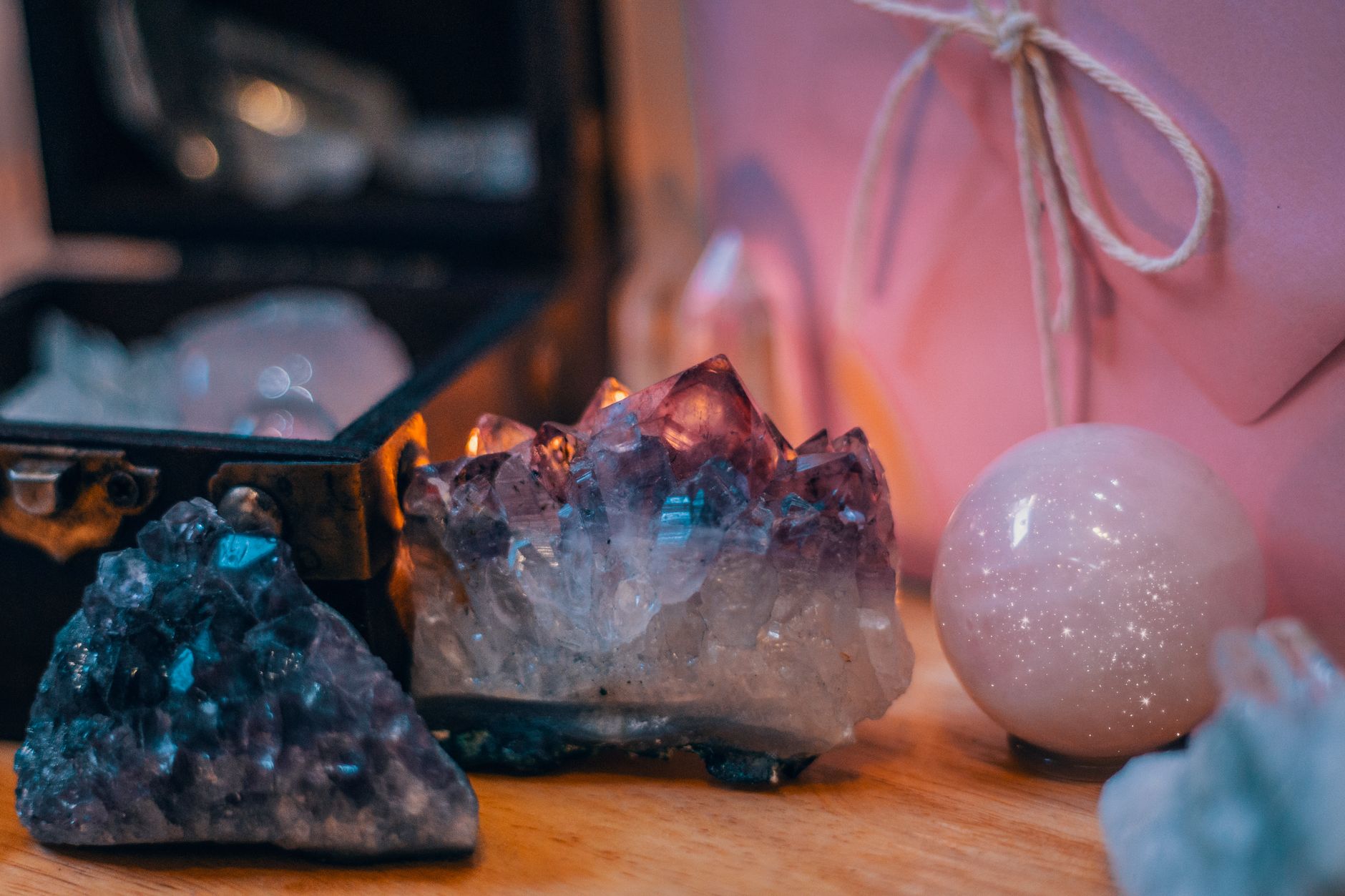
A spread of healing crystals in chakra colors arranged on a soft surface
Crystals are another popular tool, since many people match stones to chakras by color and quality. Red and black stones like red jasper and hematite are used for the root, while amethyst is a favorite for the third eye and crown. If you're new to working with stones, our guide to healing crystals for beginners covers how to choose and cleanse them. The color thread also connects chakras to the body's broader energy field, which is why people interested in chakras often explore aura colors and their meanings next.
Chakras and astrology
Chakras and astrology come from different traditions, but a lot of people use them together because both map your inner world. Astrology reads the energies you were born with through your planets and signs, while the chakras describe how that energy moves through your body day to day. Where they overlap is the theme. The confidence and willpower of the solar plexus echoes solar and fiery placements, and the love and connection of the heart echoes Venus.
Many practitioners pair the two by reading their birth chart for where they're naturally strong or challenged, then using chakra work to support the areas that need it. If that idea draws you in, our article on how the zodiac signs connect to the chakras breaks the relationship down sign by sign, and you can start by pulling your own Celesian natal chart to see which energies you came in with.
How to start a chakra practice
The simplest way to begin is to pick one chakra and spend a week with it. Choose the center tied to whatever feels most stuck in your life right now, learn its color and theme, and give it a few minutes of attention each day through breath, color visualization, or a matching affirmation. Notice what shifts. A regular, low-key practice teaches you far more than reading ever will, because you start to feel the difference between flow and blockage in your own body.
From there you can widen out, moving through the chakras from root to crown or following whichever one asks for attention. Keep it light and curious rather than turning it into one more thing to get right. The chakras are a map, not a test. Used gently and consistently, they give you a clear, body-based way to check in with yourself and tend to the parts of life that need care.
Frequently asked questions
What are the 7 chakras in order?
From the base of the spine to the top of the head, the seven chakras are the root, sacral, solar plexus, heart, throat, third eye, and crown. They move from the most physical and grounding concerns at the bottom to the most spiritual and expansive at the top, with the heart bridging the two.
How do I know which chakra is blocked?
A blocked chakra usually shows up as struggle in the life area it governs. Anxiety about safety points to the root, creative or emotional flatness to the sacral, low confidence to the solar plexus, guardedness to the heart, trouble speaking up to the throat, confusion to the third eye, and disconnection to the crown.
How long does it take to balance a chakra?
There's no fixed timeline, since it depends on the issue and how consistent you are. Many people notice small shifts within a week of daily practice on a single chakra, while deeper patterns can take longer. Regular short sessions tend to work better than occasional long ones.
Can you balance all seven chakras at once?
You can do a full sweep from root to crown in a single meditation, and many guided practices are built that way. For real change, though, most people find it more effective to focus on the one or two chakras that feel most stuck rather than spreading attention thin across all seven.
Are chakras part of any religion?
The chakra system originates in ancient Indian spiritual traditions, including parts of Hinduism and Buddhism, where it's woven into yoga and meditation. Today many people work with chakras outside any religious framework, treating them as a self-reflection and energy practice rather than a belief system.
Bringing it together
The seven chakras give you a simple, body-based map for reading your inner life, from your sense of safety at the root to your connection with the larger whole at the crown. You don't have to master all of them at once. Pick the center that's asking for attention, work with it gently, and let the rest follow. To go deeper into the energies you were born with, pull your Celesian natal chart and see how your placements line up with the chakras you most want to nurture.