
Heart Chakra Meaning: Signs of a Blocked Anahata and How to Open It
The heart chakra is the fourth of the seven main chakras, sitting in the center of the chest, and it governs love, compassion, connection, and forgiveness. Its Sanskrit name is Anahata, which translates to "unstruck" or "unhurt." When it's balanced you give and receive love freely, feel connected to the people around you, and can forgive without losing yourself. When it's blocked, you either wall off and keep everyone at arm's length, or you pour love out endlessly while struggling to let any of it back in.
If you've been holding a grudge you can't put down, feeling lonely even in a crowd, or noticing that closeness makes you flinch, the heart chakra is where to look. This guide covers what Anahata is, where it sits, how to spot an imbalance, and the practices, stones, and affirmations that help this center open back up.
What You'll Learn
What Is the Heart Chakra?
The heart chakra is the fourth energy center in the chakra system, and its position is the whole point. It sits right in the middle of the seven, with the root, sacral, and solar plexus chakras below it and the throat, third eye, and crown chakras above. That makes Anahata the bridge, the place where the earthy, physical lower three meet the spiritual upper three. Love is what joins them, which is why so much chakra work turns out to hinge on this one center.
Its Sanskrit name, Anahata, means "unstruck" or "unbeaten," and it points to an old idea called the unstruck sound: a tone said to arise on its own, without any two things striking together. The name carries a quiet promise, that underneath our scars there's a part of the heart that stays whole no matter what happens to it. Its element is air, and that fits its nature perfectly. Air is open, light, and everywhere at once, the way real compassion reaches beyond just the people we happen to like.
Where the solar plexus chakra asks "Do I have the power to act?", the heart chakra asks "Can I stay open while I do?" It's the seat of empathy, warmth, and the ability to connect, and it holds both sides of love: giving it and letting it in. Many people moving through the seven chakras find this is where old grief, betrayal, and the fear of getting hurt again rise up to be cleared.
Where Is the Heart Chakra Located?
The heart chakra sits at the center of the chest, along the breastbone, at roughly the level of the physical heart. It's worth noting that Anahata is centered on the sternum rather than off to the left where the heart muscle actually sits, since it governs the whole chest as an energetic center, not just one organ.
Physically, the heart chakra is tied to the heart, the lungs, the chest and rib cage, the circulatory system, and the arms and hands, which is why we reach out and embrace with them. It's also linked to the thymus gland, a small gland behind the upper sternum that plays a real role in the immune system. When this center feels open, breathing tends to come easy and the chest feels light. When it's blocked, that same area can feel tight, guarded, or heavy, and people often describe a literal weight on the chest when they're carrying grief.
Heart Chakra Basics at a Glance
Every chakra has a set of traditional correspondences that make it easier to recognize and work with. Here's the shorthand for Anahata:
The six-pointed star inside the lotus is one of the most telling symbols in the whole system. It's two triangles, one pointing up and one pointing down, woven together. The upward triangle is spirit rising, the downward triangle is matter descending, and where they meet is the heart: the exact midpoint where body and soul come together.
What Does the Heart Chakra Govern?
The heart chakra governs everything to do with love and connection, and it covers a wider territory than most people expect. It rules romantic love, of course, but also friendship, family bonds, compassion for strangers, love for animals and nature, and, crucially, the love you have for yourself. A common trap is to pour attention into loving others while the self-love half of this center runs empty, and Anahata never fully balances until both are fed.
It's also the home of forgiveness, empathy, and acceptance. When this center is open, you can feel what another person is feeling without being swallowed by it, hold compassion for people who've hurt you without excusing what they did, and let go of resentment that's only weighing you down. The emotion most tied to the heart chakra is grief, since unprocessed loss and heartbreak are what most often close it. Working with Anahata is largely the work of grieving cleanly and choosing to stay open anyway.
Signs of a Blocked Heart Chakra
A blocked heart chakra usually shows up as trouble connecting, on either the giving or the receiving side. Common signs include:
Physically, a blocked heart chakra can show up as tightness in the chest, shallow breathing, tension in the upper back and shoulders, or a heavy, guarded feeling around the sternum. None of that is a medical diagnosis, but the body often mirrors what the heart is holding, and the chest is where many people first feel the weight of grief or loneliness.
What Causes Heart Chakra Imbalance?
Heart chakra imbalance almost always traces back to a wound around love. Heartbreak, the loss of someone close, betrayal, or broken trust can all slam this center shut as a way of protecting a tender place. Childhood plays a large role too. Growing up with little affection, or with love that felt conditional on performing or behaving, teaches the heart to stay braced.
Grief that never got fully felt is one of the biggest culprits. When we push loss down instead of moving through it, the heart chakra stays clenched around it, sometimes for years. Ongoing self-criticism does its own quiet damage, since it's hard to keep a center of love open while running a constant inner commentary about not being good enough. The good news is that the heart is built to reopen. Gentle, patient work with grief and self-compassion, sometimes supported by shadow work, tends to loosen what heartbreak locked down.
Overactive vs Underactive Heart Chakra
Like every center, the heart chakra can be out of balance in two directions, and they look almost like opposites.
An underactive heart chakra is the closed door. Here love is held back: the person seems cold, distant, or guarded, keeps others at a safe distance, and struggles to trust, forgive, or be vulnerable. It often comes from being hurt and deciding, consciously or not, that staying open isn't safe.
An overactive heart chakra is the door that won't close. Here love pours out with no filter, which sounds lovely but usually means weak boundaries, giving until you're drained, staying in situations you should leave, and losing your own edges inside a relationship. Jealousy and possessiveness live here too, since love without boundaries can curdle into a need to cling. The goal isn't to love as hard as possible. It's balance: an open heart that can also say no, give freely and receive fully, and stay whole while it stays warm.
Signs of a Balanced Heart Chakra
When the heart chakra is open and balanced, love flows in both directions without draining you. You can care deeply and still hold boundaries, forgive without forgetting the lesson, and feel genuinely connected to the people and the world around you. Signs of a healthy Anahata include:
Physically, a balanced heart chakra tends to bring easy breathing, a light and open feeling in the chest, and a relaxed set to the shoulders. Emotionally, it feels like quiet warmth: you don't have to guard the door, because you trust yourself to stay whole whether love comes or goes.

A sunlit path winding through a lush green forest, symbolizing the green color and airy, open energy of a balanced heart chakra
How to Heal and Balance the Heart Chakra
Healing Anahata is about softening the guard around your chest and letting love move again, gently and without forcing it. A few reliable practices:
Breathe into your chest. Since the heart's element is air, breath is direct medicine here. Slow, full breaths that expand the ribs and belly signal safety to the nervous system and physically open the chest. Even a few minutes of conscious breathing, focused on the space behind the sternum, helps loosen this center.
Open the chest with movement. Gentle backbends and chest openers like cobra, bridge, camel, cow face, and fish pose all stretch the front of the body and release the guarded, hunched posture that grief and stress build up. Anything that draws the shoulders back and opens the chest is heart work.
Chant the YAM mantra. The seed sound for Anahata is YAM. Sit comfortably, breathe slowly, and repeat YAM out loud or silently while picturing soft green light glowing in the center of your chest. Even a short session strengthens this center.
Practice compassion, starting with yourself. Loving-kindness meditation, where you silently wish yourself and then others well, is classic heart-chakra practice. So is forgiveness work, gratitude, spending time in green nature, and simple touch and connection, since touch is this center's sense. Practices like energy healing through Reiki can support the process by helping a braced nervous system feel safe enough to soften.
Heart Chakra Crystals and Stones
Crystals are a popular tool for heart work, and the stones tied to Anahata are mostly green and pink, matching the center's two colors. You can hold them during meditation, lay one on your chest while resting, carry one in a pocket, or build a grid with them.
The go-to heart chakra stones include:
If you're new to working with stones, our guide to healing crystals for beginners walks through how to choose, cleanse, and use them, and you can arrange several into a simple crystal grid to hold an intention around love or forgiveness. Rose quartz is the one to start with if you only pick a single stone.
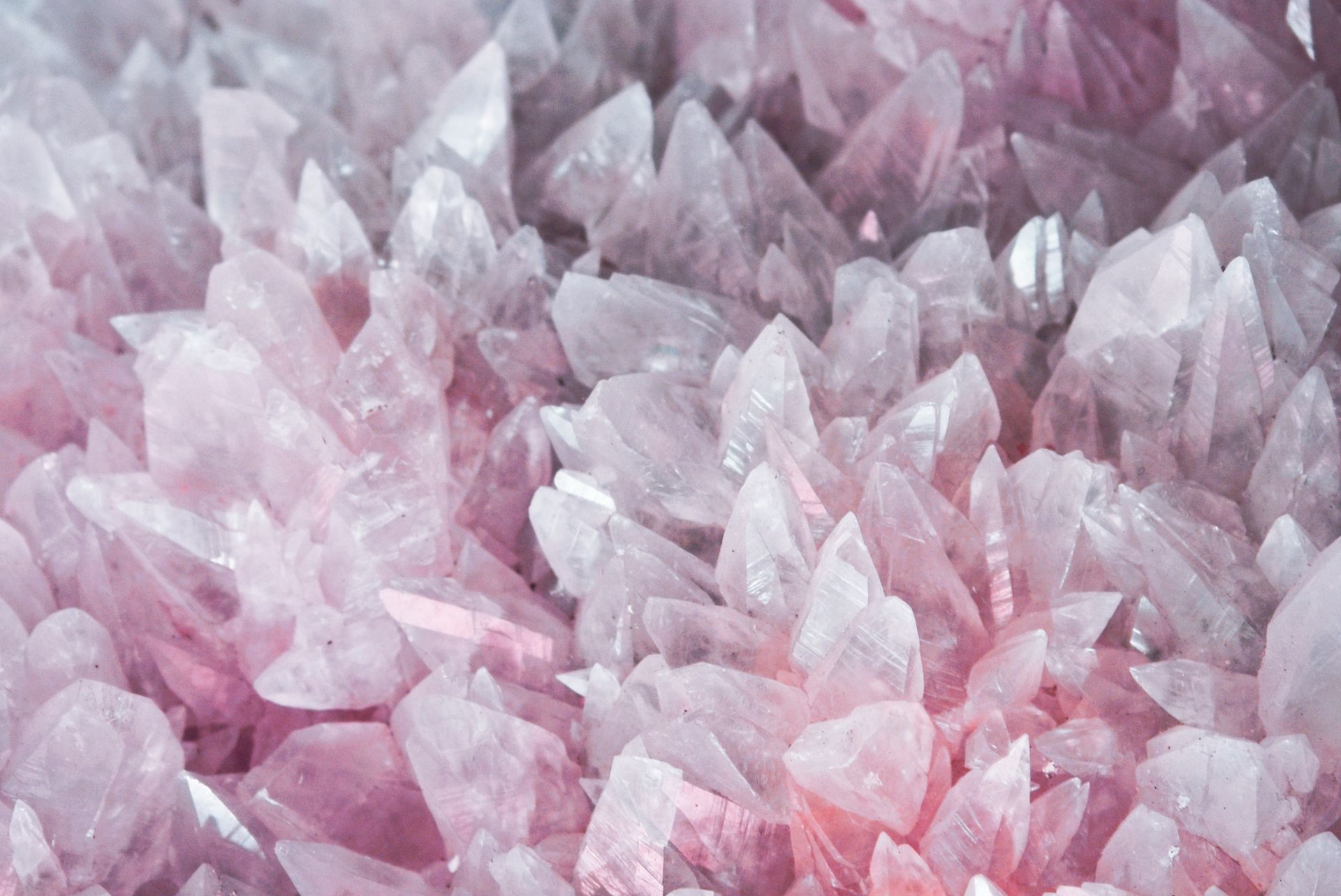
A cluster of pale pink rose quartz crystals, the classic stone used to open and heal the heart chakra
Heart Chakra Affirmations
Affirmations gently rewrite the old stories that told you love isn't safe or that you have to earn it. Say them out loud, write them down, or repeat them silently during meditation, ideally while picturing soft green light in the center of your chest. Keep the focus on love, worthiness, and forgiveness:
Consistency matters more than intensity. A minute of these each morning does more over time than an occasional long session.
The Heart Chakra and Astrology
The heart chakra and astrology meet in the language of love and air. Anahata's element is air, which links it to the air signs, Gemini, Libra, and Aquarius, the placements most associated with connection, relating, and reaching toward others. Libra especially, ruled by Venus and built around partnership and balance, is the zodiac's clearest picture of a healthy fourth chakra. If you want to understand this energy in your own chart, start with the zodiac elements and how air, fire, earth, and water shape the way you love.
Two placements echo this center. Venus rules love, affection, and how we bond and value one another, mirroring the heart chakra almost exactly, so your Venus sign says a lot about how you give and receive affection. The Moon rules tenderness, nurturing, and emotional safety, the softer side of the heart, so your Moon sign shows what makes you feel cared for and cared about. In the houses, the themes live in the fifth house of romance and giving love and the seventh house of partnership and one-to-one relationships. For a fuller map of how the energy centers connect to your birth chart, see our guide to the zodiac signs and chakras.
Two hands gently forming a heart shape, symbolizing the love, connection, and open-hearted energy of the Anahata heart chakra
Frequently Asked Questions
How do I know if my heart chakra is blocked?
The clearest signs are difficulty trusting or opening up, holding grudges, feeling lonely or disconnected, and fearing intimacy. It can also show as harsh self-criticism or trouble accepting love. Physically, people often notice tightness in the chest or tension in the upper back and shoulders.
What emotion is stored in the heart chakra?
Grief is the emotion most tied to the heart chakra, along with heartbreak and resentment. Unprocessed loss tends to clench this center shut. When Anahata is balanced, that grief can move through and soften into compassion, gratitude, and open connection.
What is the heart chakra mantra?
The seed mantra, or bija, for the heart chakra is YAM. Chanting YAM slowly while picturing soft green light glowing in the center of your chest is one of the simplest and most traditional ways to activate and balance this center.
How do I open my heart chakra?
Breathe fully into your chest, do gentle backbends and chest-opening poses, and practice compassion starting with yourself through loving-kindness meditation and forgiveness work. Chanting YAM, working with rose quartz, spending time in green nature, and repeating heart chakra affirmations all help this center open.
Which crystal is best for the heart chakra?
Rose quartz is the most classic choice, valued for unconditional love and self-love and gentle enough for grief. Green aventurine, jade, malachite, and rhodonite are also strong heart stones. Pick the one you feel most drawn to and work with it regularly.
Bringing It Together
The heart chakra is your center of love and connection, the bridge where body and spirit meet. When it's open, you give and receive love freely, forgive without losing yourself, and feel genuinely connected to the world. When it's blocked, you either wall off or pour yourself out until you're empty. The path back is gentle and practical: breathe into your chest, open your posture, grieve what needs grieving, and start the flow of love with yourself.
Want to see how love lives in your own chart? Run your free natal chart to explore your Venus, Moon, and air placements, pull a tarot reading when your heart needs clarity or a nudge toward forgiveness, or see how your way of loving meshes with someone using the compatibility tool.