Third Eye Chakra Meaning: Signs of a Blocked Ajna and How to Open It
The third eye chakra is the sixth of the seven main chakras, sitting at the center of the forehead between the eyebrows, and it governs intuition, insight, and inner vision. Its Sanskrit name is Ajna, which translates to "command" or "perceive." When it's balanced, you trust your gut, read situations clearly, and sense meaning that logic alone would miss. When it's blocked, life feels flat and overly literal, your intuition goes quiet, and you second-guess the very instincts that were trying to help you.
If you've been ignoring hunches that turned out right, feeling stuck in your head, or struggling to picture or imagine anything at all, the third eye is where to look. This guide covers what Ajna is, where it sits, how to spot an imbalance, and the practices, stones, and affirmations that help this center clear. If you want a step-by-step opening routine specifically, our companion guide on how to open your third eye walks through the techniques; here we map the chakra itself, top to bottom.
What You'll Learn
What Is the Third Eye Chakra?
The third eye chakra is the sixth energy center, and the second of the three upper, spiritual centers. Below it sit the root, sacral, solar plexus, heart, and throat chakras; above it sits only the crown. That near-the-top position matters. Where the throat turns your inner life into spoken words, the third eye is the center that perceives in the first place, the inner screen where intuition, imagination, and insight show up before you ever put them into language.
Its Sanskrit name, Ajna, means command or perceive, and both meanings fit. This is the center that perceives what the five senses can't reach, and the one that quietly gives the command your deeper knowing hands to the rest of you. Its element is light, and in some systems the mind or thought itself, since the third eye works in images, symbols, and flashes of understanding rather than in the solid stuff of the lower chakras. Many people moving through the seven chakras find this is the center where they finally learn to tell the difference between anxious mental chatter and a real, quiet inner knowing.
Where Is the Third Eye Chakra Located?
The third eye chakra sits at the center of the forehead, just above and between the eyebrows, at the point often called the brow. As an energetic center its influence spreads through the whole head, but that brow point is where practitioners rest their attention during meditation and where a piece of indigo stone goes when you lie down to work with it.
Physically, the third eye is tied to the eyes, brain, forehead, and nervous system, and especially to the pineal gland, a small gland deep in the brain that responds to light and dark and helps set your sleep rhythm. Many traditions treat this gland as the bodily anchor for the sixth chakra, the physical seat of a very non-physical sense. When this center is open, you tend to think clearly and picture things easily. When it's blocked, that same region can feel foggy, with tension headaches, eye strain, and a mind that won't settle often clustering there.
Third Eye Chakra Basics at a Glance
Every chakra has a set of traditional correspondences that make it easier to recognize and work with. Here's the shorthand for Ajna:
The two petals are worth a second look, since every chakra below carries more of them. They're traditionally said to represent the two great energy channels, Ida and Pingala, meeting the central Sushumna channel at the brow. In other words, this is where the moon-side and sun-side of your energy finally come together into a single point of sight.
What Does the Third Eye Chakra Govern?
The third eye chakra governs perception in the widest sense, everything you take in that doesn't arrive through the five ordinary senses. It rules intuition, that quiet knowing that shows up without an argument attached, along with insight, imagination, and the ability to picture things clearly in your mind. When someone reads a room accurately, trusts a hunch that turns out right, or sees the pattern everyone else missed, they're working a healthy Ajna.
It's also the seat of inner vision and meaning-making. Dreams, symbols, visualization, and the sense that events carry significance beyond the obvious all live here. Just as important, though, is discernment, the ability to tell a true signal from a passing worry. A strong third eye isn't one that treats every stray thought as a message; it's one that perceives clearly and then judges wisely what's worth acting on. That pairing, open perception plus grounded judgment, is what balance in this center actually looks like.

A dreamy scene of water and soft light evoking the intuitive, imaginative energy of the third eye chakra
Signs of a Blocked Third Eye Chakra
A blocked third eye chakra usually shows up as a break in the connection to your own inner knowing, and like the other centers it can swing two ways. On the underactive end, intuition goes quiet. You feel stuck in your head, overly literal, and cut off from imagination, and you might struggle to visualize anything at all when you close your eyes. Decisions get harder because you don't trust your gut, poor memory and mental fog creep in, and a flat "there has to be more than this" feeling can settle over everything. Cynicism about anything you can't measure is a classic underactive sign.
On the overactive end, a blocked third eye tips into too much of a good thing. The imagination runs the show: daydreaming that never lands, fantasies you mistake for guidance, and a tendency to read cosmic meaning into every coincidence. This is the person who can't sleep for racing visions, or who leans so far into intuition that they stop using plain common sense. Physically, third eye blocks often surface as tension headaches, eye strain, sinus trouble, dizziness, and sleep problems, since the pineal gland and the whole head region sit right in this center's territory.

A crystal ball catching the light, symbolizing inner vision and the perception governed by the third eye chakra
What Causes Third Eye Chakra Imbalance?
Most third eye wounds trace back to having your perception denied. Being told that what you sensed wasn't real, that you were imagining things, or that only what you can prove counts, teaches you to distrust your own inner signal. Growing up somewhere strictly rigid or purely rational, with no room for intuition, imagination, or wonder, can shrink this center over time until the channel feels closed.
Fear does the rest. Sometimes it's a fear of what you might see if you really looked, at a situation, a relationship, or yourself, so the third eye stays shut to keep you comfortable. Sometimes it's the opposite, a fear of the ordinary world that pushes someone to hide out in fantasy and spiritual escape rather than face what's in front of them. Both are imbalances of the same center. Modern life adds its own strain, since constant screens, information overload, and never-quiet minds give the third eye no darkness or stillness to work in. Steady meditation, real rest, and a little shadow work to face what you've been avoiding all help this center settle back into clear seeing.
Overactive vs Underactive Third Eye Chakra
Like every chakra, Ajna can be underactive or overactive, and the two look nothing alike. An underactive third eye is the shut-down one: no imagination, no intuition you trust, a mind stuck in facts and to-do lists, and a quiet suspicion that anything mystical is nonsense. If you can't picture images in your mind, dismiss every hunch, and feel spiritually numb, your third eye is likely running underactive.
An overactive third eye tips the other way, and it's the trickier imbalance because it can feel spiritual. It shows up as an overactive imagination, difficulty telling intuition from anxiety, spacing out and dissociating from daily life, and a habit of chasing visions or reading signs into everything. Nightmares, headaches, and trouble sleeping are common here too. Balance isn't about being more or less intuitive; it's about clear perception paired with the grounded judgment to know what it means. This is exactly why experienced practitioners always balance third eye work with grounding through the lower centers, so insight has somewhere solid to land.
Signs of a Balanced Third Eye Chakra
When the third eye chakra is open and balanced, you think clearly and trust yourself. Intuition arrives as a calm, quiet knowing rather than a loud demand, and you can act on it without either ignoring it or blindly obeying it. You read people and situations accurately, imagine and visualize with ease, and feel connected to a sense of meaning that runs under the surface of daily life. Ideas and insights come more freely, and you can hold the big picture and the practical detail at the same time.
A balanced Ajna is also a discerning one. You can be open to intuition and still ask good questions, so you're neither cynical nor gullible. Dreams tend to get richer and easier to remember, focus improves, and problems you were forcing suddenly solve themselves once you stop grinding and let a clearer view come. People with an open third eye often have a certain unhurried clarity about them, the look of someone who sees what's actually happening and isn't rattled by it.
How to Heal and Balance the Third Eye Chakra
Healing the third eye comes down to giving it what it needs to perceive: stillness, darkness, and gentle, repeated attention at the brow. Meditation is the heart of it. Sitting quietly and resting your inner gaze on the point between your eyebrows, without straining your physical eyes, is the single most effective practice, and even five to ten minutes a day builds the channel. Slow breathwork settles the mental noise that drowns out subtler signals, and picturing a soft indigo light glowing at your brow speaks to this center in its own language of color and image. The seed mantra OM, chanted slowly while you feel the vibration in your forehead, is the classic activation.
Protect your darkness and your rest. The pineal gland runs on the rhythm of light and dark, so morning sunlight, real darkness at night, and fewer screens before bed all support the third eye directly. Beyond that, feed your imagination on purpose: visualization, art, keeping a dream journal by the bed, and writing down first impressions before your logical mind edits them all strengthen inner sight. Because a waking third eye also raises sensitivity, pair every session with grounding through the root chakra, and consider gentle energy work like Reiki to help a busy mind soften. For structured intuition training, our guide to developing psychic abilities and the clair senses picks up where this leaves off.
Third Eye Chakra Crystals and Stones
Indigo and purple stones are the traditional allies for the third eye, and their color is the tell. A few of the most trusted:
If you're new to working with stones, our guide to healing crystals for beginners walks through how to choose, cleanse, and use them, and you can arrange several into a simple crystal grid to hold an intention around clarity or trust. Amethyst is the one to start with if you only pick a single stone, rested on the brow for a few quiet minutes of breathing.
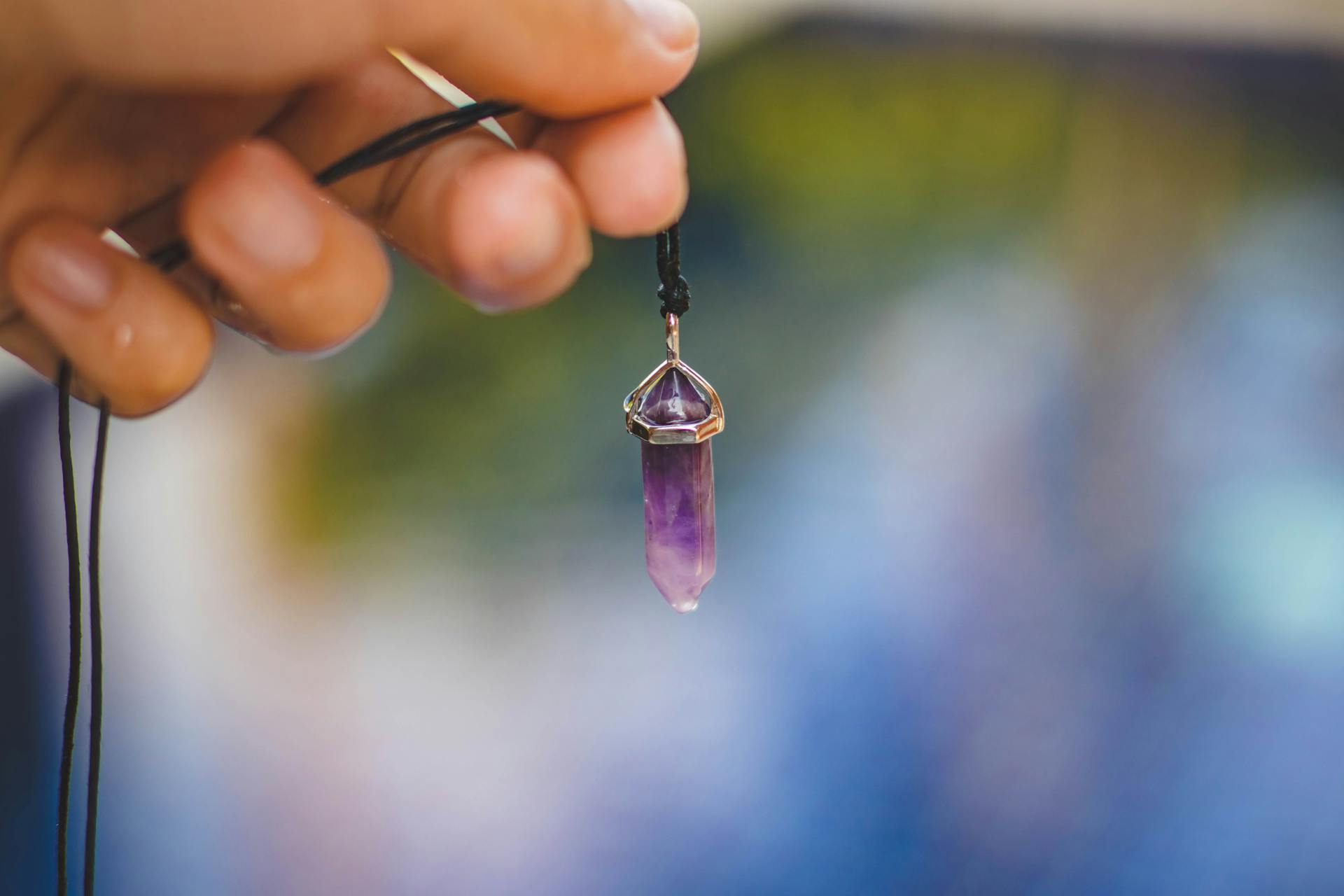
An amethyst crystal pendulum, an intuitive tool tied to the indigo third eye chakra
Third Eye Chakra Affirmations
Affirmations retrain the quiet story you tell yourself about whether your inner knowing can be trusted. Spoken as you picture indigo light at your brow, they double as third eye practice. Try a few of these each morning:
Consistency matters more than intensity. A minute of these spoken aloud each morning does more over time than an occasional long session done silently in your head.
The Third Eye Chakra and Astrology
The third eye chakra and astrology meet wherever a chart speaks about intuition and the unseen. The clearest ruler is Neptune, the planet of dreams, imagination, psychic sensitivity, and the dissolving of the line between self and something larger. Your Neptune sign and the house it sits in describe where your intuition runs strongest and where you're most porous to impressions the five senses miss. Pisces, the sign Neptune rules, is the zodiac's most naturally intuitive and dreamlike energy, the closest thing the wheel has to a living third eye.
The Moon adds the intuitive, inner-facing half of the chart, and Jupiter and Sagittarius bring the higher mind, the search for wisdom and meaning that this center thrives on. The themes gather in the ninth house of higher understanding and the twelfth house of the unseen and the subconscious. In medical astrology, the head and the eyes carry this territory in the body. To see how all of this runs in your own chart, the zodiac signs and chakras guide maps the whole energy system onto your birth placements.
An artistic view of Neptune and deep space representing the intuitive, dreamlike energy the third eye chakra draws on
Frequently Asked Questions
How do I know if my third eye chakra is blocked?
The clearest signs are weak or distrusted intuition, trouble visualizing, mental fog, and a flat, overly literal outlook, or the opposite: an overactive imagination you can't tell apart from real guidance. Physically it often shows as tension headaches, eye strain, sinus trouble, and sleep problems.
What is the third eye chakra mantra?
The seed mantra, or bija, for the third eye chakra is OM, sometimes given as KSHAM. Chanting OM slowly while picturing indigo light glowing at the center of your forehead is one of the simplest and most traditional ways to activate and balance this center.
Which crystal is best for the third eye chakra?
Amethyst is the classic third eye stone, valued for intuition, calm, and spiritual clarity. Lapis lazuli, labradorite, fluorite, and sodalite are also excellent, and clear quartz can amplify any of them. Resting your chosen stone on the brow during meditation is the traditional method.
What's the difference between the third eye and crown chakra?
The third eye, the sixth chakra, governs intuition, insight, and inner vision, how you perceive. The crown, the seventh, governs connection to the divine and pure awareness, how you unite with something larger. The third eye sees; the crown transcends. They sit right next to each other and often open together.
What planet rules the third eye chakra?
Neptune is the planet most associated with the third eye, since it rules intuition, dreams, imagination, and psychic sensitivity. The Moon carries the intuitive, inner-facing side too, and Jupiter adds the higher-mind wisdom this center thrives on. Pisces is its clearest zodiac match.
The third eye is where you stop just looking and start actually seeing, which is why so much clarity depends on it. Tend it with stillness, darkness, and a little trust in your own quiet knowing, and the fog starts to lift.
Want to see where intuition lives in your own chart? Run your free natal chart to explore your Neptune, Moon, and ninth and twelfth house placements, pull a tarot reading to practice reading the subtle impressions your third eye is learning to trust, or see how your intuitive wiring meshes with someone else's using the compatibility tool.