
How to Open Your Third Eye: Signs, Techniques, and Safe Practice
Opening your third eye means activating the sixth chakra, the energy center at the middle of your forehead that governs intuition, inner vision, and insight. You open it through steady practice: meditation focused on the brow, slow breathwork, visualization, working with indigo light, and quieting the noise of the thinking mind so subtler impressions can come through. It isn't a switch you flip once. It's a sense you strengthen the same way you'd build any other, a little at a time.
If you've felt a pressure between your eyebrows during meditation, started noticing vivid dreams, or had the sense that you just know things before they happen, your third eye may already be stirring. This guide walks through what the third eye actually is, the signs it's waking up, the techniques that open it, the crystals that support the work, and how to stay grounded so the process feels clear instead of overwhelming.
What You'll Learn
A person meditating calmly in soft light with focus on the brow, representing how to open your third eye
What is the third eye?
The third eye is the sixth of the seven main chakras, known in Sanskrit as ajna, which translates to command or perceive. It sits at the center of the forehead, just above and between the eyebrows. While your two physical eyes take in the outer world, the third eye is said to perceive the inner one: intuition, imagination, symbolic meaning, and the quiet knowing that arrives without logic walking it there step by step.
In the body, the ajna chakra is often linked to the pineal gland, a small gland deep in the brain that helps regulate sleep and responds to light and dark. Many traditions treat this gland as the physical anchor for the third eye, the bridge between the visible and the unseen. Its associated color is a deep indigo, sometimes violet, and its element is light itself.
When this center is balanced, you tend to trust your gut, read situations accurately, and feel connected to something larger than the day to day. When it's blocked, life can feel flat and overly literal, and you might second guess every instinct. Opening the third eye is really about clearing that channel so insight can flow. If you're new to the chakra system, our guide to the seven chakras lays out how all seven centers work together, since the third eye rarely opens in isolation.
What are the signs your third eye is opening?
Third eye activation usually shows up as a cluster of small shifts rather than one dramatic moment. The most commonly reported sign is a physical sensation at the brow: a gentle pressure, tingling, warmth, or a pulsing feeling right where the chakra sits. People often notice it first during meditation, then at random moments through the day.
Here are the signs that come up again and again:
Not everyone gets every sign, and none of them are a test you pass or fail. If several resonate, your third eye is likely waking up. Some of these overlap with a broader shift many people go through, which our article on spiritual awakening signs and stages covers in full.

The seven chakra energy centers along the body, with the indigo third eye at the brow
How do you open your third eye?
You open the third eye through repetition, not force. The goal is to gently draw attention to the brow and create the inner stillness where subtle perception can register. Here are the core practices, roughly in the order a beginner might build them.
Brow-focused meditation. Sit comfortably, close your eyes, and turn your inner gaze upward and inward toward the point between your eyebrows, without straining the physical eyes. Rest your attention there and breathe slowly. Even five to ten minutes a day builds the habit. This is the single most important practice.
Breathwork. Slow, even breathing calms the nervous system and quiets mental chatter. Try inhaling for a count of four, holding for four, and exhaling for four. A settled body makes intuition easier to hear.
Visualization. Picture a small indigo light glowing at your brow, growing brighter with each breath. Color and light are the third eye's native language, so imagining them speaks to it directly.
Chanting the seed sound. The traditional seed mantra for the ajna chakra is Om, and some lineages give it as Ksham. Softly repeating it, feeling the vibration in your forehead, is a time honored way to activate the center.
Sunlight and darkness. Gentle exposure to natural light in the morning and true darkness at night supports the pineal gland's natural rhythm. Cutting screens before bed protects that cycle.
Journaling and intuition drills. Write down first impressions, hunches, and dreams before your logical mind edits them. Guessing small things, like who's calling before you check, trains you to trust the signal. For structured practice, pair this with the exercises in our guide to developing psychic abilities and the clair senses.
Consistency beats intensity every time. A short daily practice will open the third eye faster than an occasional marathon session.

A woman meditating quietly in soft light, symbolizing third eye meditation and growing intuition
What crystals help open the third eye?
Crystals are a popular support for third eye work because certain stones carry the indigo and violet tones tied to the chakra. They don't do the work for you, but many practitioners find they help focus intention and hold energy during meditation.
The most recommended third eye stones are:
A simple method is to lie down, place your chosen stone on your forehead at the brow point, and rest there while you breathe and visualize indigo light. To go deeper on choosing and caring for stones, see our beginner's guide to healing crystals. Cleanse new crystals before you use them, since they pick up energy from everywhere they've been.
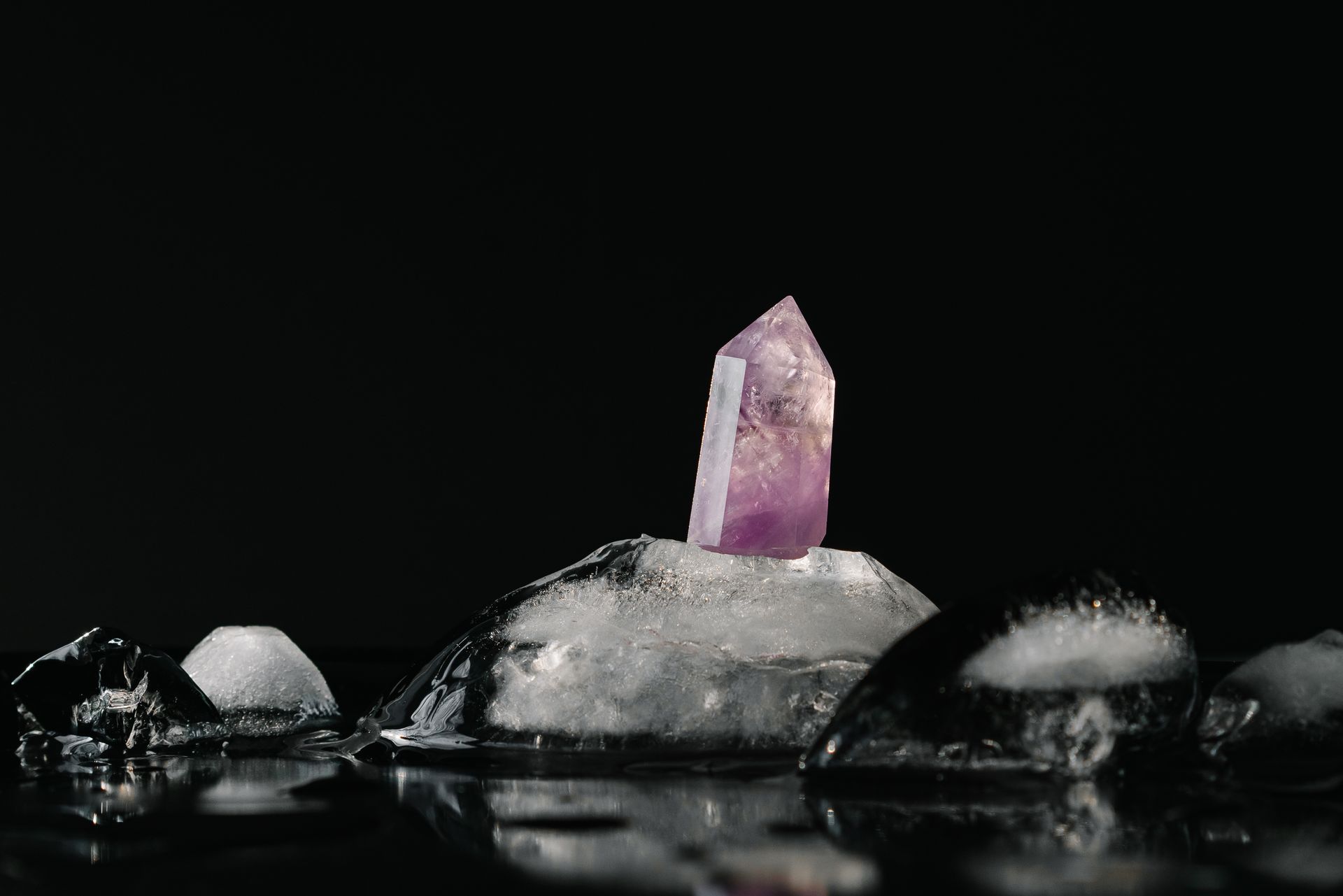
An amethyst crystal, a classic stone used to help open the third eye chakra
How long does it take to open your third eye?
There's no fixed timeline, because it depends on how consistently you practice and how open the channel already is. Some people feel sensations at the brow within a few weeks of daily meditation. For others it unfolds over months or years, in waves rather than a straight line. And for many, the third eye was never fully closed, just quiet, so the work is less about opening something new and more about learning to notice what was always there.
What matters far more than speed is steadiness. Ten minutes a day, most days, will carry you further than an intense weekend followed by nothing. Treat it like tending a garden. You water it regularly and let it grow at its own pace instead of yanking on the sprouts. Watch for the signs above as your feedback, and let them tell you the channel is clearing.
Can opening your third eye be dangerous?
Opening your third eye isn't dangerous in a physical sense, but rushing it can be uncomfortable. When people push too hard, too fast, with aggressive breathwork or long, forced sessions, they sometimes report headaches, brow pressure that lingers, trouble sleeping, anxiety, or feeling ungrounded and spaced out. That's usually a sign of doing too much rather than any real harm.
The common thread in overwhelm is imbalance. If the upper chakras open quickly while the lower ones stay neglected, you can feel unmoored, like a kite with no string. That's why experienced practitioners always pair third eye work with grounding, and why they favor gentle, consistent practice over dramatic techniques. The stronger your intuition gets, the more you also need discernment, so you don't treat every stray thought or anxious spike as a genuine message. If any sensation feels persistent or distressing, ease off, ground, and give yourself time before continuing.
How to ground and protect your energy
Grounding is what keeps third eye opening feeling clear instead of chaotic. It anchors the extra sensitivity you're developing so it works for you rather than running the show. Build these habits alongside your practice from day one.
Grounding after each session is the difference between insight you can use and sensitivity that leaves you frazzled. Don't skip it.
Frequently asked questions
How do I know if my third eye is open?
The clearest signs are pressure or tingling at your brow, stronger and more accurate intuition, vivid dreams, occasional flashes of indigo light with your eyes closed, and frequent synchronicities. Most people notice several of these together rather than one big moment.
Can you open your third eye too much?
You can't damage it, but you can overdo the practice. Pushing too hard can leave you feeling ungrounded, anxious, or headachy. The fix is gentler sessions and consistent grounding, not more force. Balance the lower chakras alongside the upper ones.
What is the fastest way to open your third eye?
There's no genuine shortcut, but daily brow-focused meditation is the most direct method. Ten minutes each day, paired with breathwork, visualization of indigo light, and good sleep, works faster than occasional long sessions.
Is the third eye the same as the pineal gland?
They're closely linked but not identical. The third eye is the energetic sixth chakra, while the pineal gland is a physical gland in the brain that many traditions treat as its bodily anchor. Caring for the gland with natural light and darkness is thought to support the chakra.
What color is the third eye chakra?
The third eye, or ajna chakra, is associated with deep indigo, and sometimes violet. That's why indigo stones like lapis lazuli and purple stones like amethyst are the go to crystals for this center, and why visualizing indigo light is a core practice.
Bringing it all together
Opening your third eye comes down to steady, gentle practice: meditate on the brow, breathe slowly, work with indigo light and supportive crystals, and always ground afterward. Watch for the signs, trust the process, and let it unfold at its own pace instead of chasing a dramatic breakthrough.
Ready to go deeper into your own intuitive blueprint? Your birth chart shows where intuition and inner vision live in your unique makeup. Pull your free natal chart to explore your ninth and twelfth house placements, or try a tarot reading to practice reading the subtle impressions your waking third eye is learning to trust.