Pyrite Meaning: Healing Properties, Uses, and Why It's Called Fool's Gold
Pyrite is the brass-gold, metallic mineral best known as fool's gold, and its meaning centers on abundance, confidence, and protection. People reach for it as a manifestation stone for wealth and willpower, the kind of crystal you keep on a desk or in a wallet when you want to feel bold and back yourself. Chemically it's iron sulfide, and that shiny gold color has fooled prospectors for centuries.
If you've ever mistaken a glittering rock for real gold, you've met pyrite. Its name comes from the Greek "pyr," meaning fire, because it throws sparks when you strike it against steel. Here's what pyrite means, how people use it, why it fools so many people, and the one care rule you can't skip: never let it get wet.
What You'll Learn
What Is Pyrite?
Pyrite is iron sulfide, with the chemical formula FeS2, which just means each unit is one iron atom bonded to two sulfur atoms. That combination gives pyrite its pale brass-yellow color and bright metallic luster, the shine that makes it look so much like gold. It's one of the most common sulfide minerals on Earth and turns up all over the world, from Spain and Peru to Italy, and it often grows alongside quartz.
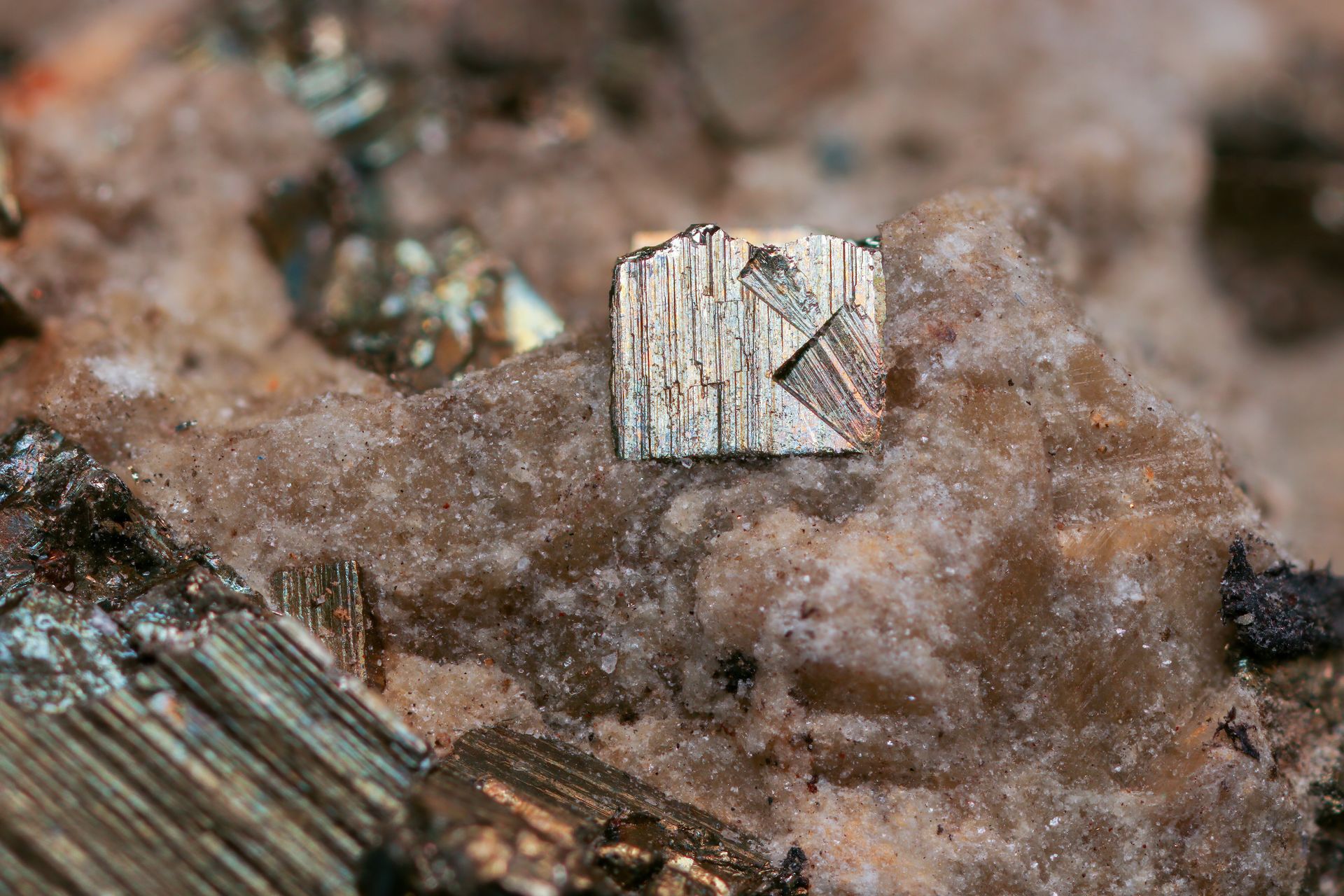
The most striking thing about pyrite is its shape. It crystallizes in the cubic system, so it frequently forms almost unbelievably perfect cubes, sometimes with fine parallel lines called striations running across their faces. It also grows as a twelve-sided form so characteristic that mineralogists named it the pyritohedron after the stone. The cubes from Navajun, Spain are famous for looking machine-cut even though nature made them. If you're just starting a collection, our beginner's guide to healing crystals is a good place to get your bearings.
On the Mohs hardness scale, pyrite sits at 6 to 6.5, hard enough to scratch glass. Historically it earned its "fire stone" name because a spark flies when it's struck against flint or steel, and people used it for fire-starting and even in early firearms. Later, small pyrite crystals served as the detector in early crystal radios. It's a mineral with a long, practical resume before it ever landed on a crystal shelf.
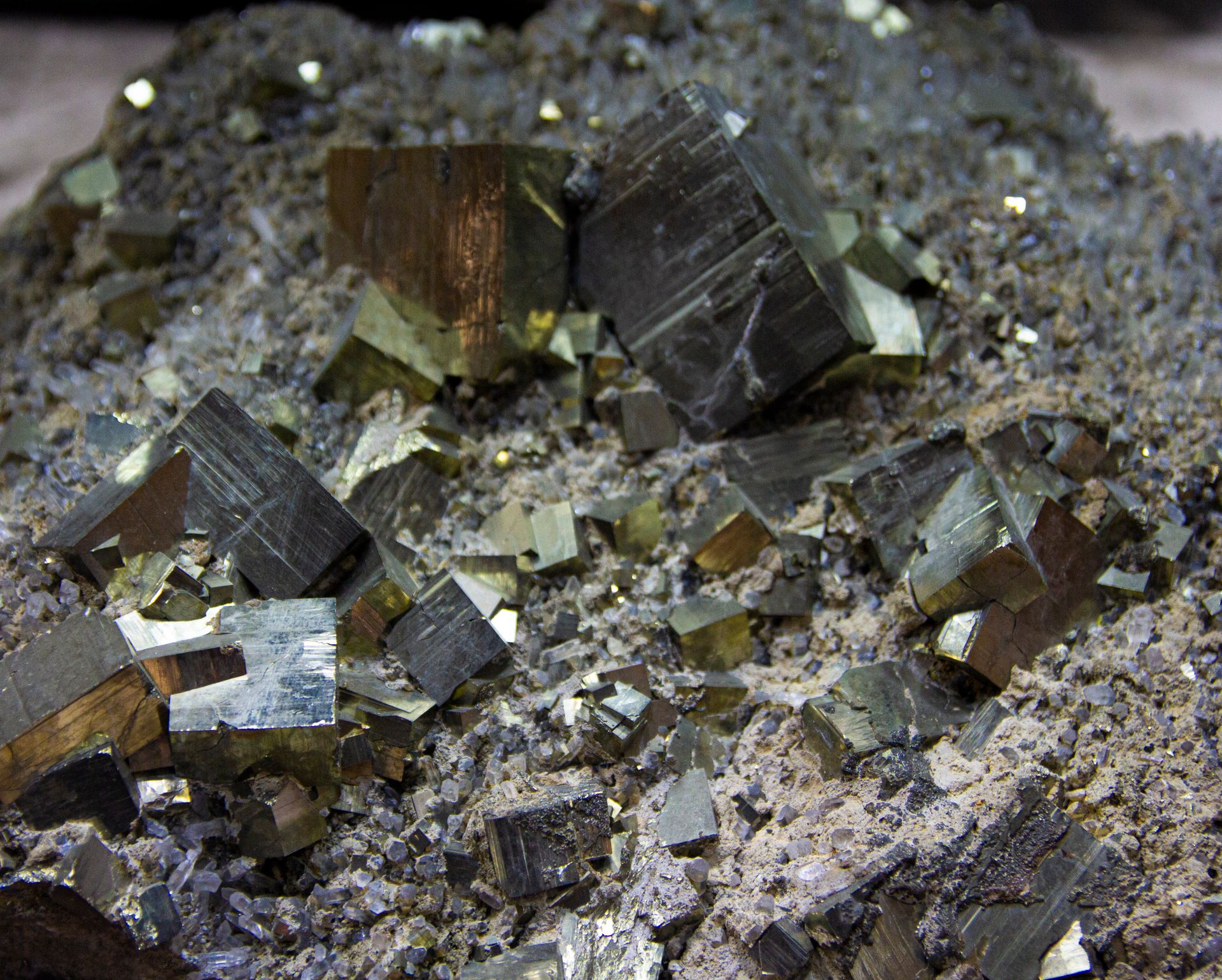
Cubic brass-gold pyrite crystals clustered on rock, the classic fool's gold cube shape
What Does Pyrite Mean?
Pyrite's meaning grows straight out of that gleaming gold appearance: it's the classic stone of abundance and prosperity. Because it looks like a pocket full of gold, tradition ties it to wealth, luck, and the confidence to go after what you want. Some people call it the money stone or a merchant's talisman, and it's a staple in manifestation and law-of-attraction practices.
There's a second layer to it, though. That fiery, spark-throwing nature links pyrite to willpower, drive, and protection. In folklore it was carried as a shielding stone, something that reflected negativity and danger away from the person holding it, a fitting job for a stone whose whole reputation is a shiny surface. Put those together and pyrite reads as bold, warm, solar energy: the stone of taking action, backing yourself, and standing your ground.
Where a cooling stone like aquamarine is about calm and clear speech, pyrite is the opposite pole. It's about heat, confidence, and momentum. People reach for it when they want to feel capable rather than calm.
Pyrite Healing Properties and Benefits
In crystal healing, pyrite is used as a stone of confidence, abundance, and protection. These are traditional and metaphysical associations, not medical claims, but they explain why people keep it close:
You'll notice the theme: everything pyrite is known for circles back to power, willpower, and the confidence to act, which points straight at one energy center.
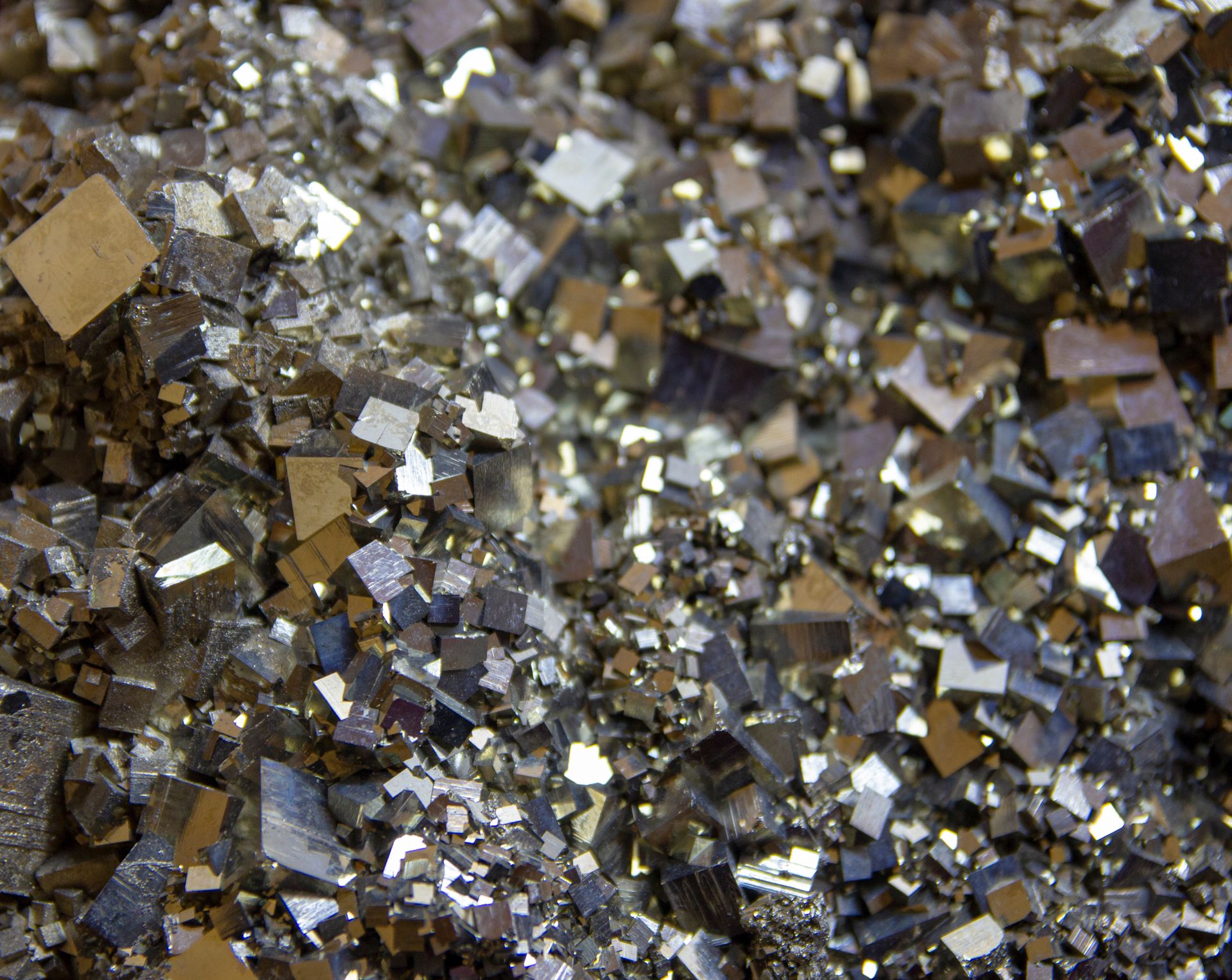
A cluster of pyrite crystals showing intricate metallic gold luster
Pyrite and the Solar Plexus Chakra
Pyrite is one of the classic solar plexus chakra stones, and the match is easy to see. Its warm golden color is the exact shade linked to the solar plexus, the energy center that sits above the navel and governs willpower, confidence, personal power, and self-esteem. When that center feels weak, you might second-guess yourself, struggle to set boundaries, or feel like you can't get moving.
People use pyrite to support that sense of inner authority: making a decision and standing behind it, following through on a goal, or feeling worthy of good things. Its abundance reputation fits here too, since real prosperity work is as much about believing you can as it is about any outside luck. Our solar plexus chakra guide breaks down the signs of a blocked power center and how to strengthen it, and the seven chakras overview shows where it fits in the whole system.
A simple way to work with it: sit up straight, hold a piece of pyrite over your upper belly, and breathe slowly while you picture a warm gold light building there with each breath. If you like linking your practice to your chart, our guide to the energy centers and the zodiac shows how the two systems line up.
Pyrite Zodiac Signs and Astrology
Pyrite isn't a traditional birthstone, so its zodiac links come from its energy rather than a calendar month. The stone is most often paired with Leo, and it's a natural fit. Leo is ruled by the Sun, and pyrite's golden, radiant, confident nature matches that solar energy almost perfectly. It supports the Leo themes of self-expression, courage, and shining without apology.
The other common pairing is Aries, the fire sign ruled by Mars. That link makes sense on two levels: pyrite contains iron, the metal traditionally tied to Mars, and its bold, action-driven reputation suits Aries drive and initiative. Astrologically, then, pyrite leans on the Sun for vitality and identity and on Mars for willpower and momentum, all under the Fire element. If you'd rather match a stone to your own chart, our guide to crystal healing by zodiac sign walks through options for all twelve signs.
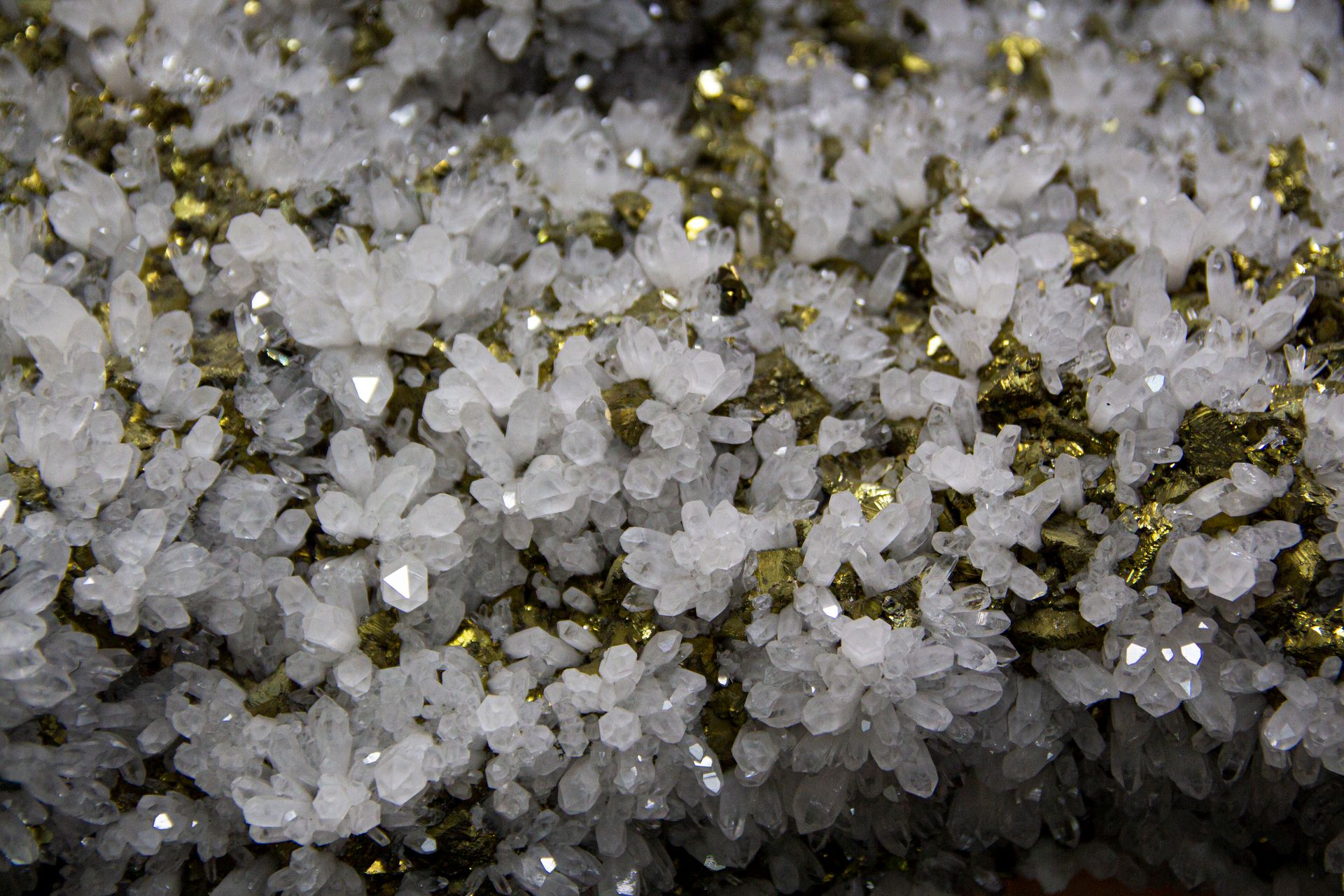
White crystals studded with golden pyrite, a natural pairing of quartz and fool's gold
Fool's Gold: Pyrite vs Real Gold
Pyrite's nickname, fool's gold, comes from centuries of prospectors mistaking it for the real thing, so this is the section that sets it apart from every other crystal. The good news is that once you know what to check, the two are easy to tell apart:
Any one of these can trip up a hopeful eye on its own, but together they're conclusive. Worth noting: some gold ore actually does contain tiny amounts of real gold locked in alongside pyrite, which is part of why the confusion has lasted so long.
Does Pyrite Rust? Why You Should Keep It Dry
Here's the honest care warning that matters most with pyrite: it does not like water. Because it's an iron sulfide, pyrite slowly reacts with moisture and oxygen in the air. Over time that reaction can produce iron sulfates and even a little sulfuric acid, which makes the crystal dull, crumble, and give off a faint sulfur smell. Collectors and museums call this pyrite decay or pyrite disease, and it's a real conservation headache, especially for pyrite fossils stored in humid rooms.
For you, the takeaway is simple. Never cleanse pyrite in water, salt water, or moon water, and never make a pyrite elixir. Don't leave it in a steamy bathroom, on a damp windowsill, or anywhere humid. Store it somewhere dry, and if you live in a humid climate, keeping it in a closed container with a silica gel packet is a smart move. This puts pyrite in the same care category as hematite and other iron-based stones that rust or degrade when they get wet. Treat it as a dry-only stone and it will keep its shine for years.
Real vs Fake Pyrite
Pyrite is common and inexpensive, so it's rarely worth faking outright. The confusion usually runs the other way: other minerals get mistaken for pyrite, or pyrite gets sold under a different name. A few things to know:
Because pyrite is affordable, the bigger risk isn't overpaying, it's care. A cheap piece that gets stored somewhere damp will decay no matter how real it is.
Does Pyrite Actually Work?
Here's the straight answer this site always gives: there's no scientific evidence that pyrite, or any crystal, emits energy that changes your finances, confidence, or health. If you're weighing money decisions or your motivation, please don't outsource them to a rock.
What pyrite genuinely offers is focus and ritual. A gold-colored stone on your desk is a physical, visible reminder of a goal you set, and that kind of cue really can nudge your attention and behavior day to day, the same way a written intention or a vision board does. Holding it before a hard conversation or a big pitch can help you slow down and gather yourself. The value is real, it just lives in your attention and intention, not in the mineral. Used that way, pyrite is a helpful companion to effort, not a substitute for it.
How to Use Pyrite
There are plenty of simple, everyday ways to work with pyrite:
Pyrite pairs naturally with other golden abundance stones like citrine and confidence stones like tiger's eye, so it slots easily into a prosperity-minded collection.
How to Cleanse and Charge Pyrite
Because pyrite can't get wet, cleansing it means sticking to dry methods only. Any of these work well:
To charge it, hold the cleansed stone, picture it filling with warm gold light, and name what you want it to support, whether that's confidence, focus, or an abundance goal. Then put it back where you'll see it. If you want a fuller walkthrough of intention-setting, the same principles in our tarot cleansing guide apply to crystals too.
Frequently Asked Questions
Is pyrite the same as fool's gold?
Yes. Fool's gold is the common nickname for pyrite, earned because its brass-yellow metallic shine fooled prospectors into thinking they'd struck real gold. You can tell them apart by hardness, weight, and streak: pyrite is hard, brittle, lighter, and leaves a greenish-black streak, while gold is soft, dense, malleable, and streaks golden-yellow.
Can pyrite get wet?
No, keep pyrite dry. As an iron sulfide, it reacts with water and humidity over time, which can make it corrode, crumble, and smell of sulfur, a process collectors call pyrite decay. Never cleanse it in water or make a pyrite elixir. Use dry methods like smoke, sound, or selenite instead.
Is pyrite toxic?
Solid, polished pyrite is safe to handle, and casual contact is fine. Just wash your hands after handling raw or crumbling pieces, don't inhale dust if you cut or grind it, and never make gem water or elixirs by soaking it, since sulfides and any decay byproducts shouldn't go in something you drink.
What chakra is pyrite good for?
Pyrite is most associated with the solar plexus chakra, the energy center of willpower, confidence, and personal power, thanks to its warm gold color. That's why it's used for self-belief, motivation, and standing in your own authority.
What's the difference between pyrite and marcasite?
They share the same chemistry, iron sulfide, but have different crystal structures. Marcasite is paler and much more likely to crumble over time. To add to the confusion, most vintage "marcasite" jewelry is actually made from cut pyrite because it's more stable and holds a polish better.
Bringing It Together
Pyrite is the bold, golden stone of abundance, confidence, and protection, a fool's gold that's fooled people for centuries with its cubic crystals and metallic shine. Work with it at your solar plexus, on your desk, or in an abundance grid, lean on its Sun and Mars energy if you're a Leo or an Aries, and remember the one rule that keeps it beautiful: keep it dry. Let it be a bright reminder of the goals you're already taking action on, not a shortcut around the work.
Curious how your own chart handles ambition, money, and drive? Explore your free natal chart to see where your confidence lives, pull a tarot reading for insight on your next bold move, or check your compatibility with someone who matters. Your practice is yours to build, one intention at a time.