
Aquamarine Meaning: Healing Properties, Uses, and How to Cleanse It
Aquamarine is the pale sea-blue variety of beryl, and its meaning centers on calm, clear communication, and courage. It's the March birthstone, it carries the throat chakra, and for centuries sailors kept it close as a talisman for safe passage across the water. The name says it all: aquamarine comes from the Latin "aqua marina," or sea water.
If you're drawn to that tranquil ocean-blue color, you're not alone. Aquamarine has been prized since ancient times for the way it seems to hold the sea inside a stone. Here's what it means, how people use it, and how to tell a real one from the blue topaz and glass that often get sold in its place.
What You'll Learn
What Is Aquamarine?
Aquamarine is a blue to blue-green variety of the mineral beryl, a beryllium aluminum silicate. If that sounds familiar, it should: emerald is the exact same mineral. Aquamarine and emerald are chemically the same stone, just colored by different trace elements. Iron gives beryl its cool blue, while chromium and vanadium turn it the deep green we call emerald. The beryl family also includes pink morganite, yellow heliodor, and colorless goshenite, so aquamarine has some famous relatives.
That iron content is the key to the color. Ferrous iron produces the clean sky-blue most people picture, while ferric iron pushes the stone toward a greenish or yellowish tint. The most valued aquamarines are a pure, saturated blue, but a lot of natural material leans pale and slightly green straight out of the ground.
On the Mohs hardness scale, aquamarine sits at 7.5 to 8, which makes it durable enough for everyday rings and bracelets and safe to get wet. Most of the world's supply comes from Brazil, along with deposits in Pakistan, Nigeria, Madagascar, and Mozambique. Because beryl grows in large, clean crystals, aquamarine is one of the few gems you can find in big, eye-clean sizes without paying an emerald-level price. If you're new to gemstones, our beginner's guide to healing crystals is a good place to start before you build a collection.
Turquoise ocean waves in clear blue water, reflecting the sea-water origin of the name aquamarine
What Does Aquamarine Mean?
Aquamarine's meaning flows directly from the sea it's named after. It's the stone of calm water: steady, clear, and cooling. Where a fiery stone like garnet is about drive and passion, aquamarine is about settling the nervous system and speaking with a clear head.
The Romans believed aquamarine absorbed the atmosphere of young love and gave it to newlyweds. Sailors carried it as a good-luck charm and a guard against seasickness, trusting the "stone of the sea" to keep the waters calm and bring them home. Some old lore even tied it to mermaids' treasure. Across those traditions the theme stays consistent: aquamarine is a protective, soothing stone linked to honesty, courage, and safe passage through change.
Today people reach for aquamarine when they want to communicate clearly without getting emotional, cool down anxiety, or find a sense of flow. It's a favorite for anyone who has to speak, teach, or stand their ground under pressure.
Aquamarine Healing Properties and Benefits
In crystal healing, aquamarine is used as a calming and clarifying stone. These are traditional and metaphysical associations, not medical claims, but they're the reasons people keep it nearby:
You'll notice a pattern: everything aquamarine is known for links back to communication, calm, and the throat.
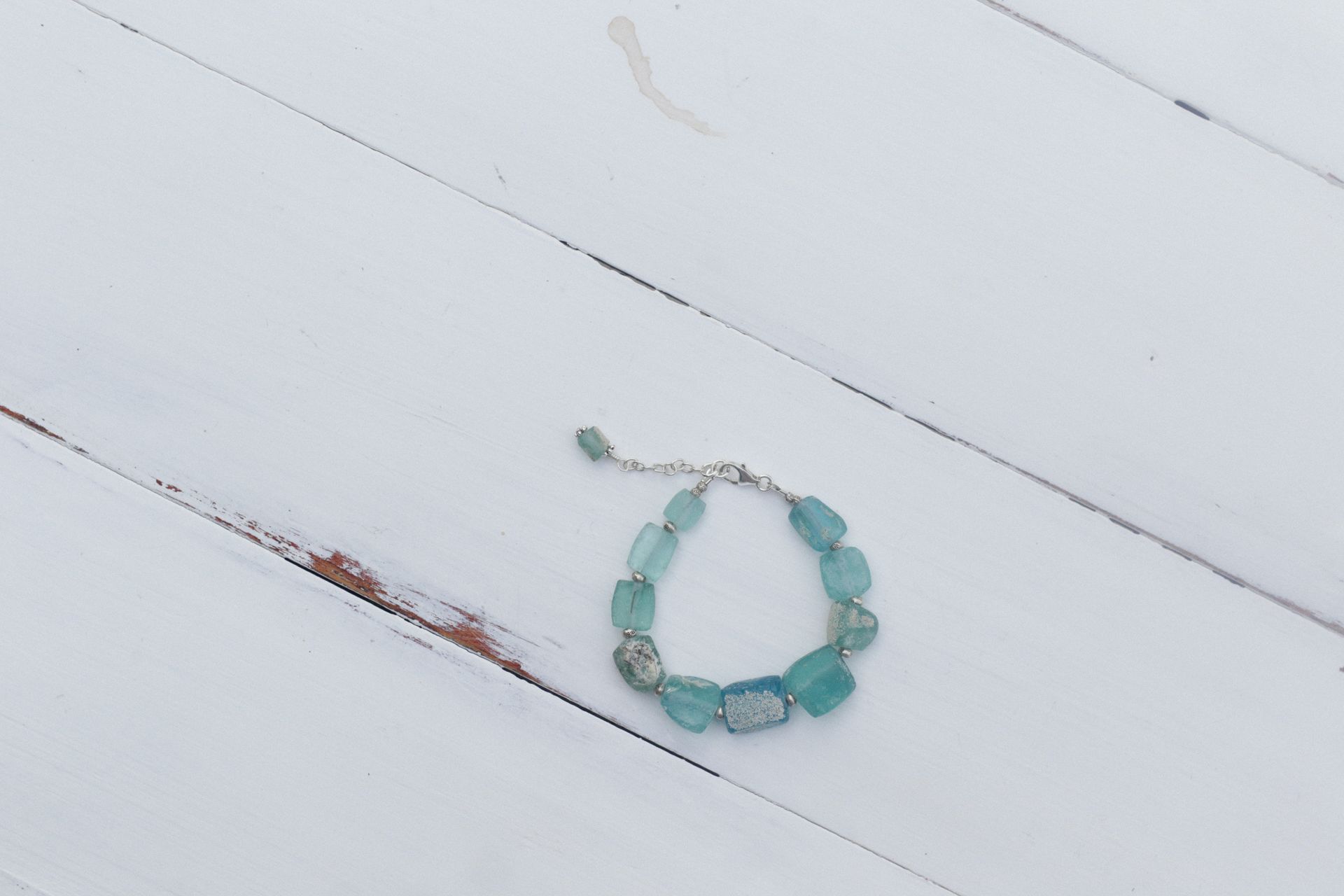
A pale blue-green aquamarine beaded bracelet resting on white painted wood
Aquamarine and the Throat Chakra
Aquamarine is one of the classic throat chakra stones, and it's easy to see why. Its cool blue color is the exact shade linked to the throat, the energy center tied to communication, truth, and self-expression. When that center feels blocked, you might hold back what you really think, talk yourself in circles, or feel a lump-in-the-throat tightness when it's time to speak up.
People use aquamarine to support honest, clear expression: saying the hard thing kindly, setting a boundary, or simply feeling heard. Because its color drifts toward blue-green, aquamarine is sometimes described as a bridge between the throat and the heart, helping you speak from a place of compassion rather than reactivity. If you want the full picture, our throat chakra guide breaks down the signs of a blocked throat center and how to work with it, and the seven chakras overview shows where it fits in the whole system.
A simple way to work with it: lie down, rest an aquamarine at the base of your throat, and breathe slowly while you picture cool blue light easing any tension there. You can also learn how the energy centers line up with the zodiac if you like connecting your chart to your practice.
Aquamarine Birthstone and Zodiac Signs
Aquamarine is the birthstone for March, sharing that month with bloodstone, and it's also the traditional gift for a 19th wedding anniversary. That March timing puts it squarely in Pisces season, and Pisces is the sign most often paired with the stone. It fits: Pisces is a water sign ruled by dreamy, oceanic Neptune, and a sea-blue calming stone suits that watery, intuitive energy well.
Because March also spills into early Aquarius associations in some systems, and because the name literally contains "aqua," Aquarius often gets linked to aquamarine too, even though Aquarius is technically an air sign. Beyond birthstone tradition, many people connect aquamarine to Gemini and Libra for its communication-boosting qualities. There's no single "correct" pairing here, so trust the stone that pulls at you. Our guide to crystal healing by zodiac sign walks through matches for every sign if you'd like a starting point.
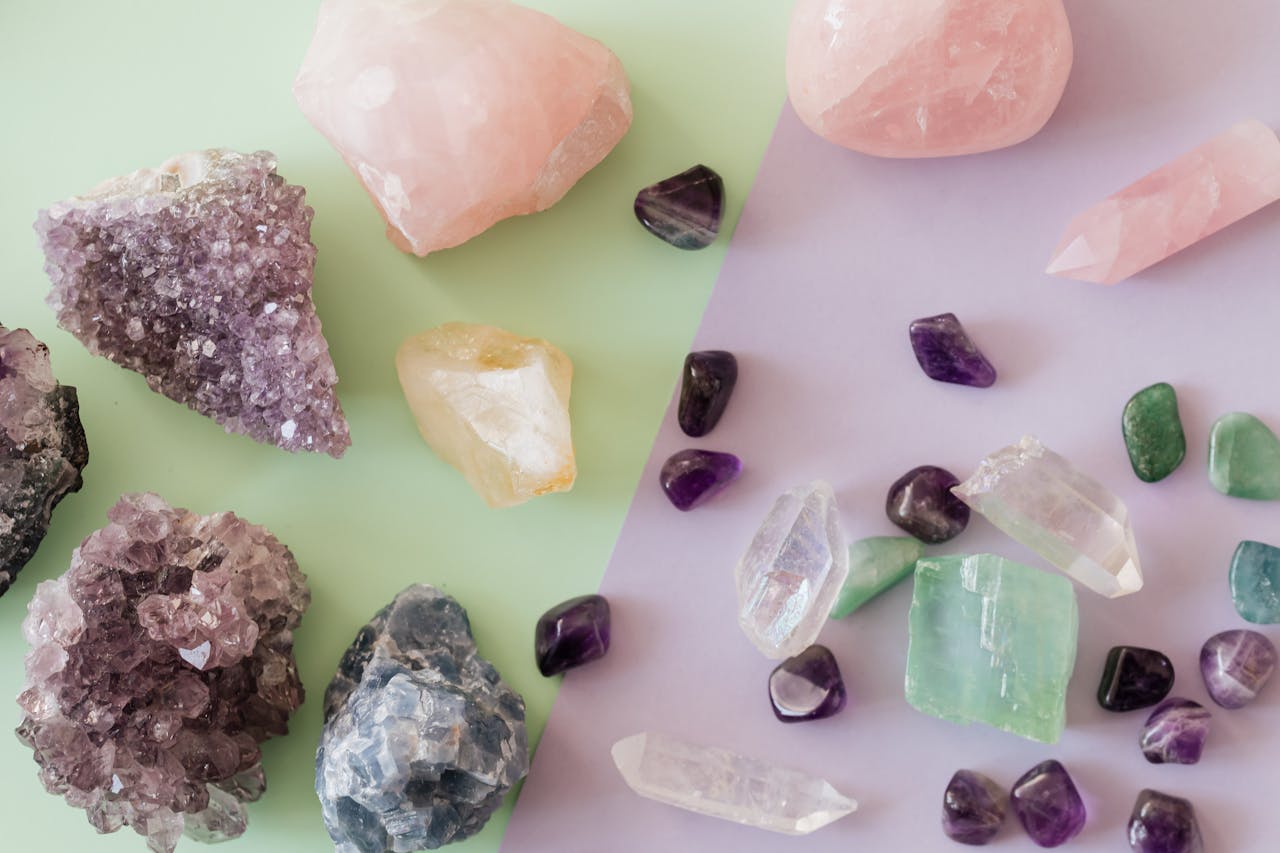
A flat lay of colorful healing crystals arranged by zodiac and birth month, including cool blue stones like aquamarine
Is Your Aquamarine Heat-Treated?
Here's something most sellers won't lead with: a large share of the aquamarine on the market has been heat-treated, and that's completely normal. Much natural aquamarine comes out of the earth with a greenish or yellowish cast. Gentle heating drives off those tones and leaves the pure, even blue that buyers prefer. The change is permanent and stable, the same way most citrine is heat-treated amethyst and most blue topaz is irradiated and heated.
So heat treatment doesn't make your stone fake. It's still real aquamarine, and treated stones make up most of what you'll find in jewelry cases. What it does affect is value: a naturally deep-blue, untreated aquamarine is rarer and commands a higher price than a heated one. If untreated origin matters to you, ask the seller directly and expect to pay more for documentation.
One caveat worth knowing: there's a rare deep-blue beryl called Maxixe that can fade back toward colorless with prolonged light exposure. Standard aquamarine is stable, but this is part of why crystal folks tend to charge aquamarine in moonlight rather than baking it in the sun.
Real vs Fake Aquamarine
Because aquamarine is popular and its color is easy to fake, imitations are common. The usual stand-ins are blue glass, synthetic spinel, and above all blue topaz. Here's how to think it through:
If you can, buy from a seller who names the treatment and material outright. When a "huge deep-blue aquamarine" costs almost nothing, it's almost always topaz or glass.
Does Aquamarine Actually Work?
Time for the honest part. There's no scientific evidence that aquamarine, or any crystal, emits an energy that heals the body, calms anxiety, or improves communication on its own. Its properties are traditional and symbolic, not medical.
That doesn't mean keeping one is pointless. The real value is in ritual and focus. When you pick up a stone that reminds you to slow down, breathe, and speak clearly, that cue can genuinely shift how you show up, the same way a wedding ring or a worry stone works. Aquamarine's cool color is calming to look at, and holding something smooth and grounding gives your hands and attention somewhere to go in a tense moment. Treat it as a beautiful anchor for the mindset you're trying to build, not a substitute for real support when you need it. That framing keeps crystal practice both meaningful and honest.
Cool-toned healing crystals including blue stones arranged on a dark surface for a calming display
How to Use Aquamarine
There's no wrong way to keep aquamarine around, but a few uses fit its calm, communicative nature especially well:
How to Cleanse and Charge Aquamarine
Aquamarine is hardy and water-safe, so cleansing is simple. Rinse it under cool running water for a minute to reset it, which is a fitting method for a stone of the sea, then pat it dry. If you want to add intention, holding it under moving water while you picture stress rinsing away works well.
For gentler options, you can cleanse aquamarine with smoke, sound from a singing bowl, or by resting it on a selenite plate overnight. To recharge it, moonlight is the safest bet. A full moon night is traditional, and moonlight avoids the fading risk that strong, prolonged sunlight can pose to some blue beryls. If you like a water ritual, setting your stone beside a jar of moon water overnight is a natural fit for its ocean personality.
How often you cleanse is up to you. Many people reset a stone after heavy emotional use or roughly once a lunar cycle. The same rinse-and-moonlight routine you'd use for tarot tools applies here too.
Frequently Asked Questions
What is aquamarine good for?
Aquamarine is traditionally used for calm, clear communication, and courage. People keep it to soothe anxiety, speak honestly under pressure, and support the throat chakra. These are symbolic and metaphysical uses, not proven medical benefits, but many find the stone a helpful anchor for a calmer, clearer mindset.
Can aquamarine get wet?
Yes. At 7.5 to 8 on the Mohs scale, aquamarine is durable and water-safe, so brief rinsing and normal wear are fine. In fact, water is a fitting way to cleanse a stone named after the sea. Just avoid prolonged soaking in salt water or harsh chemicals, which can affect metal settings.
What is the difference between aquamarine and blue topaz?
They're different minerals. Aquamarine is a beryl, usually a softer, paler pastel blue, while most blue topaz is irradiated and shows a more electric, saturated color. Topaz is also denser, so it feels slightly heavier. A very cheap, deeply saturated "aquamarine" is often blue topaz or glass.
Is aquamarine a birthstone?
Yes. Aquamarine is the modern birthstone for March, sharing the month with bloodstone, and it's the traditional gift for a 19th wedding anniversary. It's most often paired with Pisces, the water sign that rules March, though Aquarius and Gemini are sometimes linked to it as well.
Is real aquamarine expensive?
It depends. Because beryl forms large, clean crystals, pale aquamarine in bigger sizes is fairly affordable compared with many gems. Value climbs with a deeper, more saturated blue and, especially, with a natural untreated color, since most market stones are heat-treated to improve the blue.
Bringing It Together
Aquamarine earns its name. It's the sea in stone form: cool, clear, and calming, a March birthstone tied to honest communication, the throat chakra, and the courage to move through change. Whether you wear it, meditate with it, or just keep one on your desk before a hard conversation, let it be a reminder to slow down and speak from a steady place.
Curious how the watery, communicative energy of aquamarine fits your own chart? Generate your free natal chart to see where your Neptune and communication planets sit, pull a tarot reading when you need clarity before you speak, or check your compatibility to understand how you and someone close to you really talk.