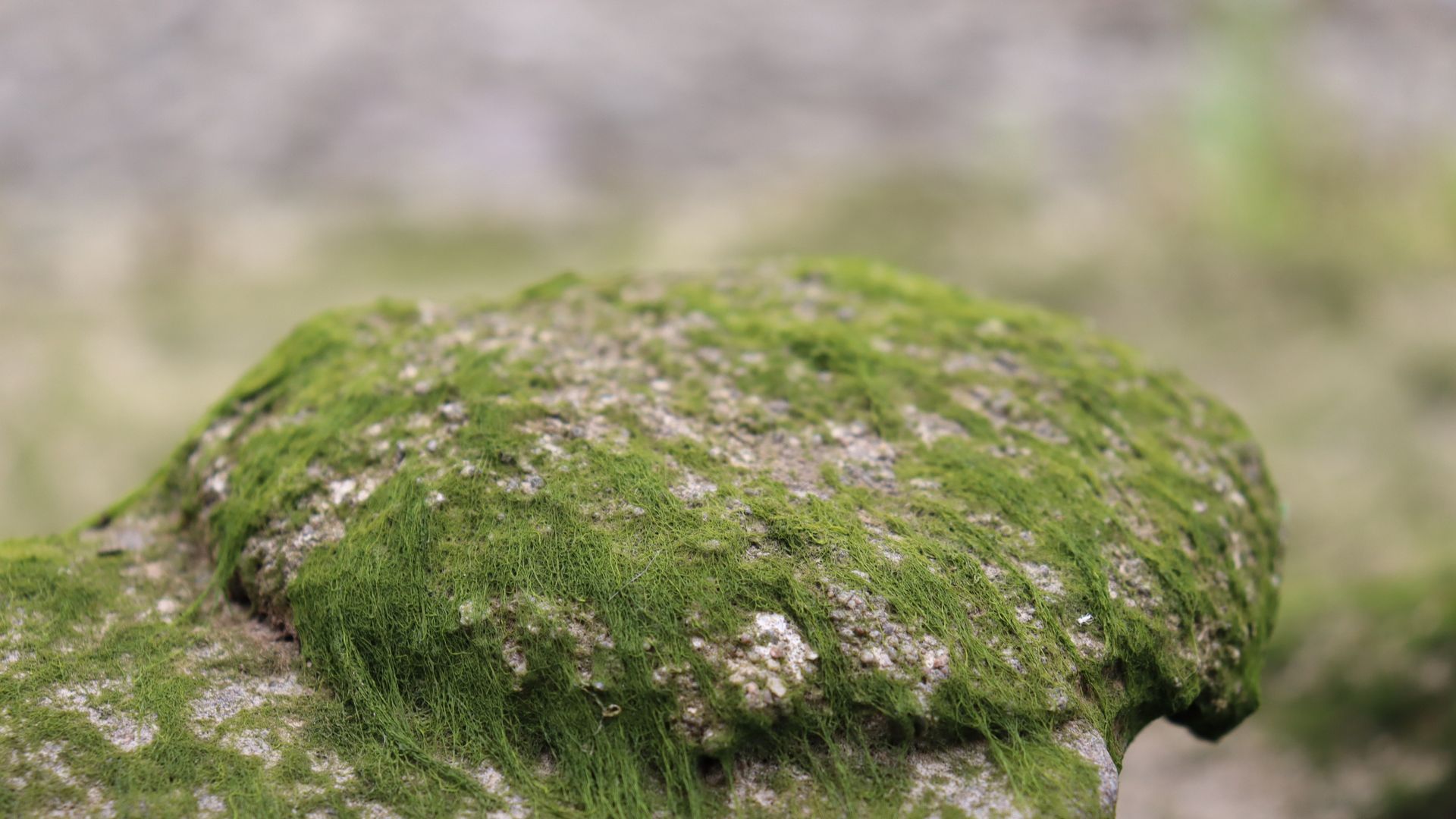
Moss Agate Meaning: The Gardener's Stone of Growth and New Beginnings (Healing Properties and Uses)
Moss agate is the gardener's stone. It's the milky, translucent crystal shot through with green that looks like moss or tiny ferns pressed into glass, and in crystal practice it stands for one thing above all: steady growth. New beginnings that take root and actually last, projects you plant and tend and watch come up. A lot of popular crystals promise a sudden windfall or a lightning-bolt transformation. Moss agate promises the opposite, which is the slow, green, unglamorous work of things growing.
The look is the whole story with this stone, and so is the honest catch: those green patterns aren't moss, and moss agate isn't really an agate. Here's what it actually is, what people use it for, which chakras and zodiac signs it's tied to, and how to tell the real meaning from the marketing.
What You'll Learn
What Is Moss Agate?
Moss agate is a type of chalcedony, which is quartz made of crystals too small to see without a microscope. The base is usually translucent and milky white or gray, and running through it are green, branching shapes that look like moss, ferns, or tiny trees. Those shapes are where the stone gets its name and almost all of its character.
Here's the catch that's worth getting straight up front: the "moss" isn't moss. It isn't a plant, it isn't fossilized, and nothing ever grew inside the rock. The green branches are mineral inclusions, mostly manganese and iron oxides, and sometimes green minerals like chlorite or hornblende. As the chalcedony formed, these minerals crystallized in feathery, tree-like patterns called dendrites. The result just happens to look organic. People have mistaken it for petrified plants for centuries, and it's an easy mistake to make, but geologically it's all mineral.
There's a second technicality. A true agate is banded, with its color laid down in curved stripes. Moss agate doesn't have those bands. The color comes from scattered inclusions instead. So in a strict mineralogical sense, moss agate is dendritic chalcedony rather than a real agate. The name stuck anyway because it's old and descriptive, and nobody's going to rename it now. When the dendrites sit in a clearer, more colorless base, sellers often label it dendritic agate, which is the same idea with less of the milky background.
Because it's part of the quartz family, moss agate is hard and durable, around 6.5 to 7 on the Mohs scale. That matters for everyday use. It won't scratch easily, it takes a good polish, and unlike softer stones it holds up to water and handling. That durability is part of why it ends up in rings and worry stones that get worn constantly.
What Does Moss Agate Mean?
Strip away the specifics and moss agate means one thing: growth. Not the dramatic kind. The kind that happens underground first, slowly, before you see any of it.
A few threads show up in nearly every description of the stone.
New beginnings. Moss agate is the one people reach for at the start of something: a new job, a move, a recovery, a fresh chapter after a hard one. The association is with the first green shoots rather than the full harvest.
Grounding and stability. Despite its growth reputation, it isn't a stone of restless ambition. It's earthy and steadying, tied to patience and staying rooted while a thing develops. People describe it as calming, and a good match for the anxiety that comes from wanting results before their time. If that's the kind of worry you carry, our roundup of crystals for anxiety covers stones used the same way.
Abundance that builds. The money and luck side of moss agate is modest and slow, not a jackpot. It's the abundance of a garden that produces a little more each season, not a lottery ticket.
None of this is measurable, and it's worth saying so plainly. These meanings come from folklore and crystal-healing tradition, not from any property of silica or manganese. What moss agate can genuinely do is work as a focus object, something you hold while you set an intention so the intention feels more concrete. If you're new to that idea, our guide to healing crystals for beginners walks through how it actually works without overpromising.
The Gardener's Stone: Why Moss Agate Is Tied to Growth
This is where moss agate earns its particular spot in the cabinet. Of all the green stones, it's the one most tied to literal growing things.
The nickname is old and practical. Because the stone looks like moss and foliage trapped in rock, gardeners and farmers historically treated it as a talisman for good harvests and healthy crops. It became a stone of agriculture, carried or buried in the hope of a productive season. By the late eighteenth century in Britain it had also picked up a broad reputation for good luck. You don't have to believe a rock can fertilize a field to see why that particular stone got that particular job. It looks like the thing it's supposed to help.
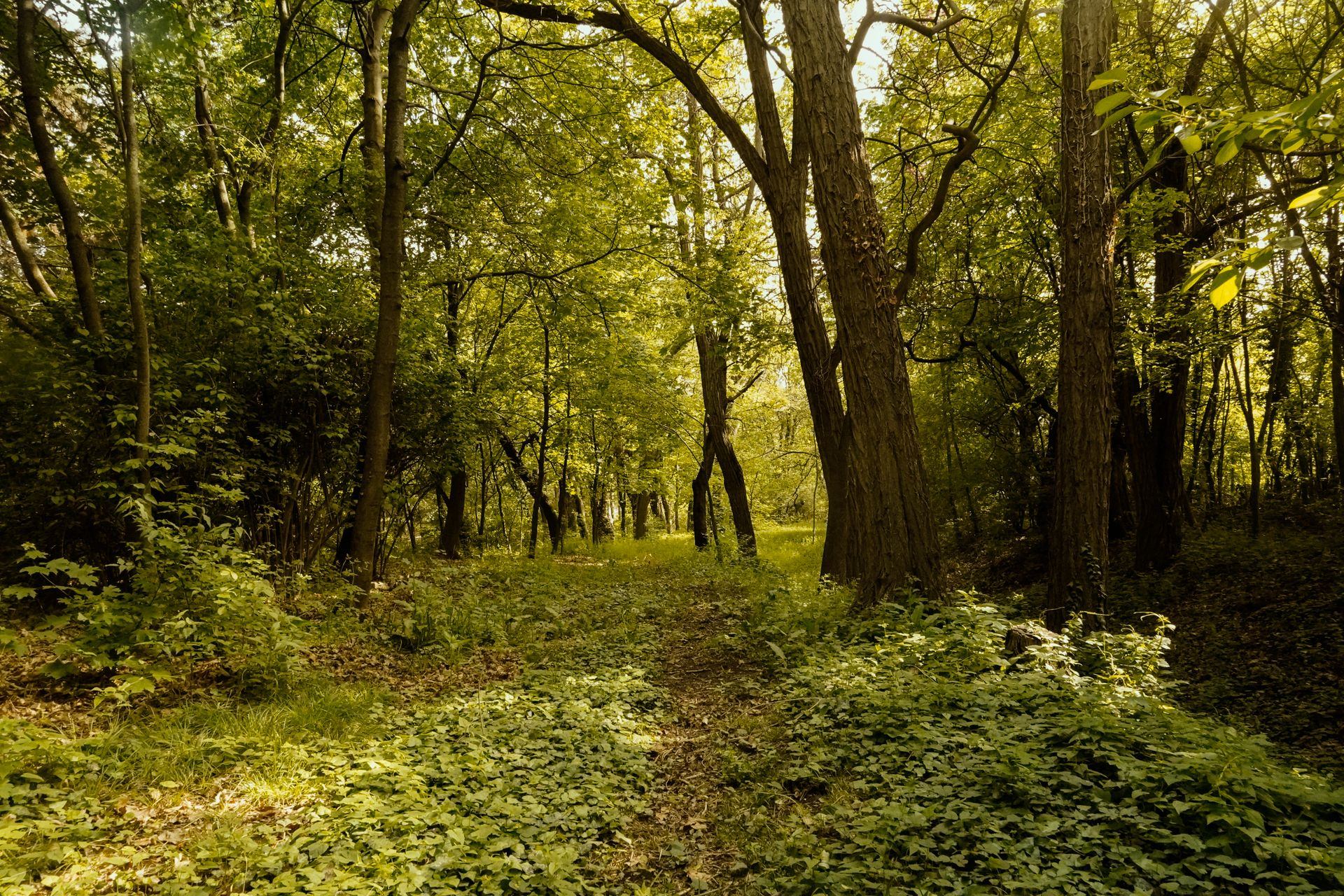
A sunlit green forest glade with tall trees and lush undergrowth, a quiet image of slow, steady natural growth
The modern reading extends the same logic from vegetable gardens to everything else you're trying to grow. Starting a business, learning a skill, rebuilding after a setback, planting real seeds in real dirt: moss agate gets attached to all of it as a reminder that growth is gradual and mostly invisible until it isn't. If moldavite is the lightning strike that blows your life open, moss agate is the quiet season of tending that comes after.
The honest version is simple. The stone won't grow your garden or your career for you. But keeping a physical token of a slow goal somewhere you'll see it every day is a small ritual that some people find genuinely useful for staying patient. Moss agate's whole character suits that job.
Moss Agate and the Heart Chakra
Most sources tie moss agate to the heart chakra, the energy center linked to love, compassion, and emotional balance. The logic is color-based, as it usually is. Green stones get matched to the green heart center. For moss agate specifically, the heart connection gets framed around renewal and emotional growth, healing an old hurt the way a field recovers after a hard winter.
That said, sources don't fully agree. Some also connect it to the root chakra, because of its grounding, earthy reputation, and a few list the sacral or solar plexus centers as well. This kind of disagreement is normal in crystal practice. Chakra assignments aren't standardized, and different traditions sort the same stone differently. If you want the framework behind these associations, our guide to the seven chakras explains what each center is supposed to govern, and the piece on the heart chakra goes deeper on that one.
The practical takeaway: if you work with chakras, moss agate is usually placed at the heart, sometimes at the root, and you can follow whichever reasoning feels right rather than treating one source as the final word.
Which Zodiac Signs Moss Agate Suits
Moss agate isn't an official birthstone, so any zodiac pairing comes from crystal tradition rather than the calendar. Two signs come up most, and both are earth signs, which fits a stone this grounded.
Virgo is the one cited most often. The match makes sense. Virgo is associated with harvest, care, service, and patient attention to detail, which lines up neatly with a gardener's stone. If you want to read more about that sign, our Virgo personality guide covers its traits.
Taurus is the other common pairing, another earth sign tied to steadiness, material security, and a slow, sensory relationship with the physical world. Some sources add other signs here and there, but Virgo and Taurus are the two you'll see again and again.
Worth repeating: a crystal doesn't become more or less effective based on your birthday. These pairings are a tradition for choosing stones, not a rule. If you like matching crystals to your chart, our overview of crystal healing by zodiac sign lays out how people do it, and birthstones and their astrological connections covers the official birthstone side.
Where Moss Agate Comes From
Moss agate forms in volcanic rock around the world, so it isn't rare or tied to a single deposit the way larimar is. That's part of why it's affordable and easy to find.
India is one of the most common sources, and a lot of the tumbled stones and beads you'll see come from there. The United States produces a famous variety called Montana moss agate, found in the gravels of the Yellowstone River and prized for its clear backgrounds and dramatic black and red dendrites. Other well-known sources include Brazil, Uruguay, and Australia. Because it's so widespread, moss agate stays inexpensive, which is a point in its favor if you're just starting out and don't want to spend much.
How Moss Agate Differs From Green Aventurine, Jade, and Unakite
Green crystals pile up fast, and it helps to know what sets this one apart.
Green aventurine is the stone of luck and opportunity. It's a more uniform, sparkly green, with that shimmer coming from tiny mineral flecks, and its reputation is about taking chances and attracting good fortune. Moss agate is patchier, earthier, and less about luck than about steady, worked-for growth. Our green aventurine guide covers that one in full.
Jade is about prosperity, protection, and harmony, with deep roots in Chinese tradition. It's typically more opaque and solid in color than moss agate's translucent, mossy look. The jade meaning piece goes into its long history.
Unakite is the pink-and-green stone of slow, patient transformation. It overlaps with moss agate on the theme of gradual change, but unakite leans toward emotional release and healing old wounds, while moss agate leans toward growth and fresh starts. If you're drawn to the slow-change idea, the unakite guide is the companion to this one.
The short version: aventurine for luck, jade for prosperity and protection, unakite for patient healing, moss agate for growth and new beginnings.
How to Spot Fake or Dyed Moss Agate
Moss agate is cheap enough that outright fakes are less common than with pricier stones, but dyeing and glass imitations do happen. A few things to watch for.
Color that's too vivid. Natural moss agate's green is muted and a little drab, closer to real moss than to neon. If the green is electric or unnaturally bright, it may be dyed.
Dye pooling in cracks. On dyed stones, color often collects in fractures and looks uneven under a loupe, concentrated in lines rather than spread through the body of the stone.
Dendrites that are too perfect. Real inclusions are irregular and random, branching unpredictably. Glass imitations sometimes have green swirls that look too even, too repetitive, or suspended in a way that's slightly off.
Bubbles. Air bubbles inside a "stone" are a tell for glass. Natural chalcedony doesn't have them.
None of this requires an expert. Buy from a seller who answers questions, be a little skeptical of a green that looks like a highlighter, and you'll avoid most of the bad pieces.
Does Moss Agate Actually Work?
Honestly, there's no scientific evidence that moss agate, or any crystal, heals the body, changes your luck, or grows your garden through some energetic property. Chalcedony is silicon dioxide with mineral inclusions. It doesn't emit anything that affects plants, moods, or money.
What's real is the psychology. Choosing a stone, assigning it a meaning, and keeping it where you'll see it is a small ritual, and rituals can genuinely help you focus, stay patient, and notice progress you'd otherwise overlook. A moss agate on your desk during a slow project isn't doing anything to the project. It's reminding you of the intention you set, and that reminder can be worth something. The useful framing is as a tool for attention, not a source of outside power. Held that way, moss agate is a pleasant, grounding object with a fitting story. Expected to do the work for you, it will disappoint.
How to Use and Care for Moss Agate
Moss agate is one of the easier stones to live with, mostly because it's so durable.
Carry or wear it. Because it's hard and water-safe, it works well in rings, bracelets, and pockets that see daily wear. Many people keep a tumbled piece on them during a new venture as a steadying touchstone.
Put it where you're growing something. On a desk during a new project, on a windowsill near your plants, or tucked into the soil of a potted plant if you like the gardener's-stone tradition literally. The point is proximity to the thing you're tending.
Use it in a grid or on an altar. If you build crystal layouts, moss agate pairs naturally with intentions around growth and new starts. Our guide to making a crystal grid walks through the basics.
Caring for it is low-effort. It tolerates water, so you can rinse it, and it won't fade quickly the way light-sensitive stones do, though no stone loves baking in direct sun for days on end. To reset it energetically, running water, moonlight, or smoke cleansing all work, and our guide to cleansing and charging crystals covers the common methods. Moss agate's hardness means you don't have to baby it the way you would selenite or larimar.
Frequently Asked Questions
Is moss agate a real agate?
Not in the strict sense. A true agate is banded chalcedony, with color in curved stripes. Moss agate gets its color from scattered mineral inclusions instead, so mineralogists call it dendritic chalcedony. The "agate" name is traditional and has stuck, but technically it isn't a banded agate.
Is the moss inside moss agate a real plant?
No. The green, moss-like patterns are mineral inclusions, mostly manganese and iron oxides, that crystallized in branching shapes called dendrites. Nothing organic ever grew inside the stone. It only looks like trapped moss or fern.
Can moss agate go in water?
Yes. At 6.5 to 7 on the Mohs scale, moss agate is hard and water-safe, so rinsing it or brief contact with water is fine. That's different from soft or porous stones like selenite and larimar, which don't tolerate water well.
What chakra is moss agate?
Most often the heart chakra, because of its green color and its link to emotional renewal. Some traditions also connect it to the root chakra for grounding, or to the sacral and solar plexus centers. Chakra assignments aren't standardized, so sources vary.
What is moss agate good for?
In crystal tradition, it's used for growth, new beginnings, grounding, and slow, steady abundance, which is why it's nicknamed the gardener's stone. There's no scientific evidence it heals or changes outcomes, but people value it as a focus object for patience and fresh starts.
Bringing It Together
Moss agate is the stone of things that grow slowly. Its green patterns aren't moss and it isn't quite an agate, but it's earned its gardener's-stone reputation honestly: it's grounding, it's durable, it's cheap enough for anyone to own, and its whole character points at patience with a process that isn't finished yet. Use it as a reminder to keep tending whatever you're trying to grow, and it does its small job well.
If you want to see how crystals line up with your own chart, start with your free natal chart, then explore a tarot reading or check your compatibility with someone you're building something with.