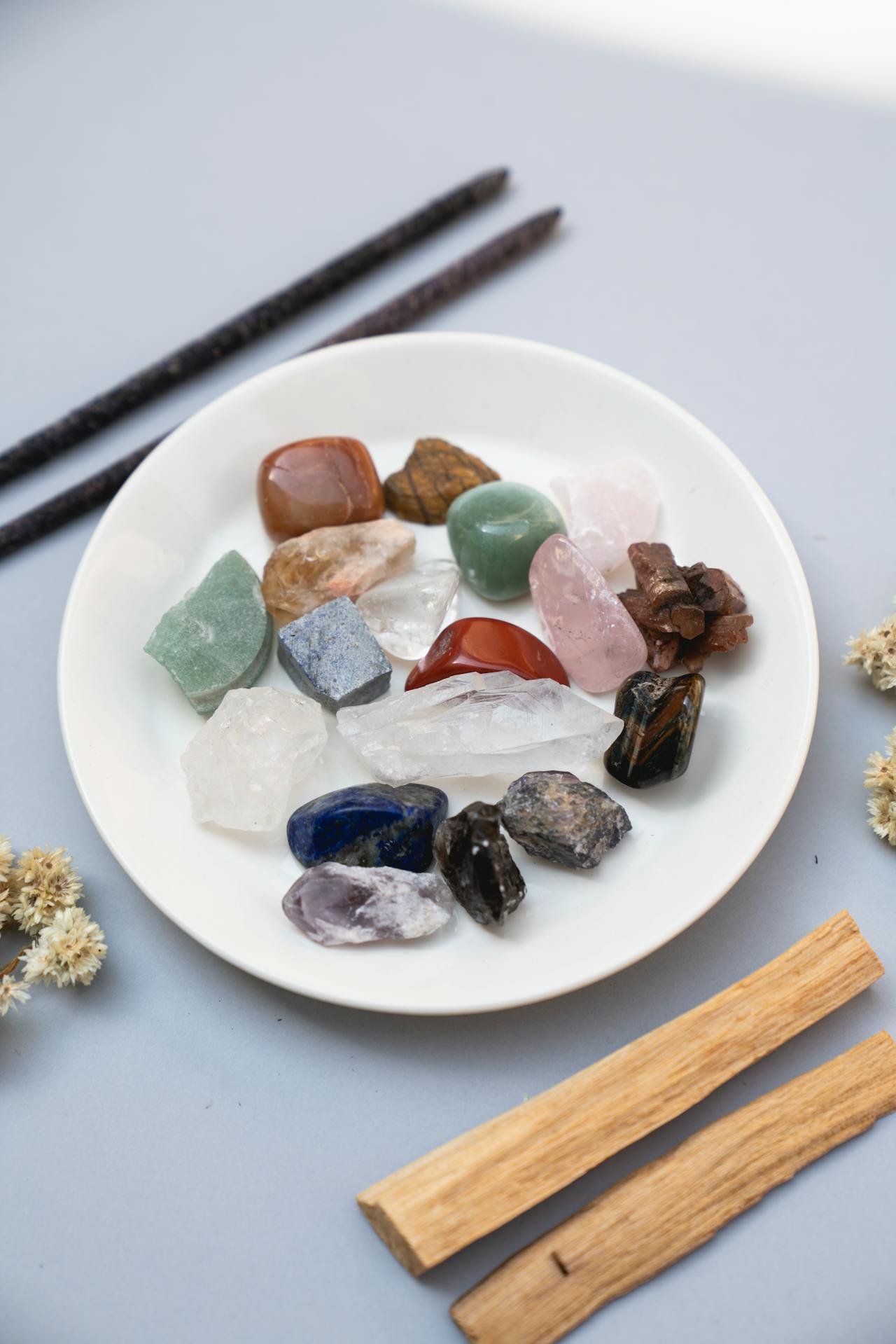
Crystals for Anxiety: 12 Calming Stones and How to Use Them
If you want a quick answer, the crystals people reach for most when anxiety hits are amethyst, lepidolite, rose quartz, and black tourmaline. Amethyst and lepidolite calm a racing mind, rose quartz softens the harsh self-talk that anxiety feeds on, and black tourmaline gives you something grounding to hold when your thoughts spiral. None of them replace treatment for an anxiety disorder, and I'll be honest about that throughout. What they can do is give you a small, physical ritual that pulls your attention back into your body, which is exactly what an anxious mind struggles to do on its own.
That last part matters more than any single stone. Holding a cool, weighted crystal, breathing while you turn it over in your hand, and pairing it with a calming intention is a form of tactile grounding, and grounding is one of the oldest tricks for interrupting a spiral. The crystal is the anchor. Here's which stones suit which kind of anxiety, how to actually use them, and how to pick the one that fits you.
What You'll Learn
Do Crystals Actually Help With Anxiety?
Let me set expectations honestly. There's no clinical evidence that crystals treat anxiety, and any calm you feel comes from you, not from a mineral. In one well-known experiment, people reported the same tingling, warmth, and calm whether they held a real crystal or a fake one, as long as they believed it was real. So the effect is real, but the source is your own attention and expectation.
That's not a reason to dismiss the practice. The relief is genuine even if the mechanism isn't magic. A crystal works the way a worry stone or a set of prayer beads works. It gives your hands a job, your breath a rhythm, and your mind a single point to return to instead of the ten open tabs anxiety keeps running. Slow breathing, especially a longer exhale, calms the nervous system, and a crystal is a simple way to prompt both.
Think of a stone as a cue rather than a cure. If you're dealing with panic attacks, ongoing dread, or anxiety that gets in the way of daily life, please treat crystals as a comfort alongside real care, whether that's therapy, medication, movement, or all three. Used that way, with clear eyes, they can earn a spot in your toolkit.
The Best Crystals for Anxiety
Different stones suit different flavors of anxiety. Here's how the popular ones are traditionally used, with links to the deeper guides for each.
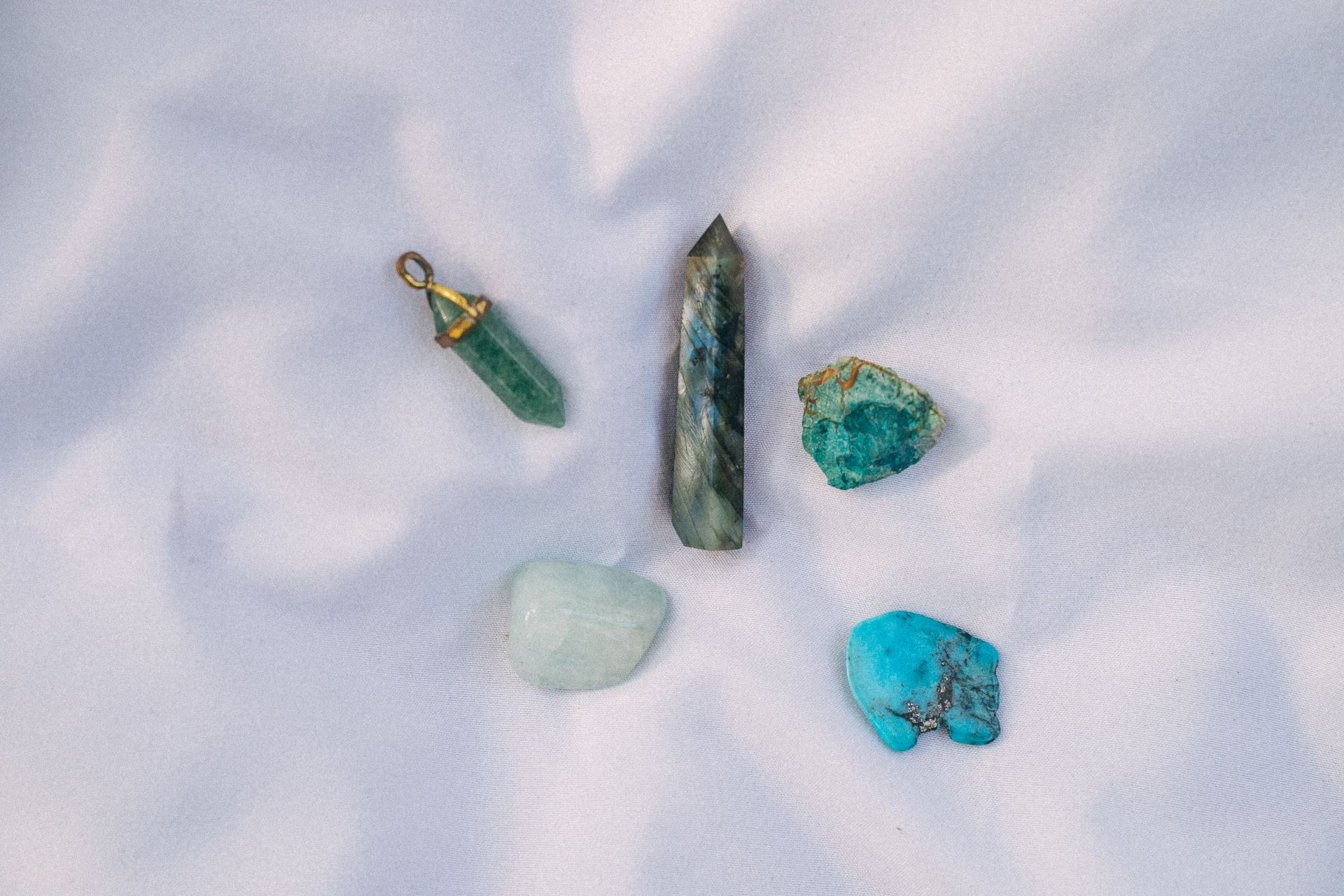
A polished amazonite stone in soft green and blue, one of the calming crystals people use for anxiety
Amethyst is the one most people start with. Its soft purple color is easy on the eyes, and it's linked to the crown and third-eye energy centers, which is why people tie it to a quiet, settled mind. Keep a tumbled piece where your thoughts tend to race, like your desk or nightstand. Read the full amethyst meaning and uses if you want the background.
Lepidolite is the anxiety stone people talk about most, and for an interesting reason: it actually contains lithium, the same element used in some mood medications. You don't absorb any of it by holding the stone, so the connection is symbolic rather than chemical, but the lilac stone has a long reputation for easing worry and emotional overwhelm. See the lepidolite guide, including its care needs.
Rose quartz works on the self-critical voice that so often rides along with anxiety. It's the stone of self-compassion, and holding it while you talk to yourself more kindly is a gentle practice on a rough day. The rose quartz meaning covers its link to the heart.
Howlite targets the racing, looping thoughts that keep you up at night. Its white marbled surface is calming to look at, and it's a favorite among overthinkers. Learn more in the howlite guide.
Black tourmaline is a grounding, protective stone, and it does its best work when your anxiety is social or environmental, the kind you feel in a crowded room or after too much bad news. Its weight in your palm gives you something solid to come back to. The black tourmaline guide explains the grounding tradition.
Sodalite is a calm-blue stone tied to the throat, and people reach for it when anxiety shows up as a tight chest or a fear of speaking up. It has a reputation for easing panic and clearing mental fog. The sodalite meaning has the details.
Amazonite soothes in a similar way, a soft green-blue stone linked to calm communication and to letting go of the small daily stresses that pile up. See the amazonite guide.
Smoky quartz is a grounding stone that's traditionally used to draw off stress and heavy moods. Its brownish tint pairs well with black tourmaline for anyone who feels better with an earthy anchor. Here's the smoky quartz meaning.
Blue lace agate rounds out the calming blues. It doesn't have its own guide here yet, but this pale banded stone is a classic pick for a cooled-down nervous system, often used for gentle, everyday calm.
Moonstone helps when anxiety runs on hormonal or emotional tides. It's linked to emotional balance and to riding your feelings without drowning in them. The moonstone guide covers its lunar connection.
If the choice feels like a lot, don't overthink it. Start with one or two that you're drawn to, since the stone you actually reach for is the one that works.
How to Use Crystals for Anxiety
A crystal only helps if you build a small habit around it. Here are the ways people use them, from simplest to most involved.
Carry one in your pocket. A tumbled stone in your pocket or bag means you have a discreet anchor with you all day. When you notice your chest tighten, reach for it, feel its weight and temperature, and take three slow breaths before you do anything else.
Hold it during breathing. Sit down, cup the stone in both hands, and breathe in for four counts and out for six. The longer exhale is what settles your nervous system. The crystal gives your hands and eyes somewhere to rest so your mind follows.
Keep one at your desk or bedside. Anxiety often has hot spots, a particular place or time when it flares. Put a stone there on purpose. Seeing amethyst next to your laptop is a small reminder to unclench your jaw and drop your shoulders.
Wear it. A pendant or bracelet keeps a stone against your skin all day and turns it into a wearable cue. Bracelets of lepidolite, amethyst, or rose quartz are common for exactly this reason.
Meditate with it. Lie down, rest a calming stone on your chest or hold one in each hand, and do a few minutes of quiet breathing. If you already have a reiki or energy-healing practice, crystals slot into it naturally.
Build a small grid. Arranging a few stones around a candle or a photo turns your intention into something you can see and tend. Our guide on how to make a crystal grid walks through the setup.
Crystals for Panic Attacks in the Moment
A panic attack needs a different approach than everyday worry, because your body has flipped into full alarm and you can't reason your way out mid-wave. This is where a heavy grounding stone earns its place. Hold black tourmaline or smoky quartz tight enough to feel it press into your palm, and let that pressure be one of the senses you name.
Pair the stone with the 5-4-3-2-1 grounding method: name five things you can see, four you can hear, three you can touch (the crystal is one), two you can smell, and one you can taste. The stone gives the exercise a physical center. You're not asking it to stop the attack. You're using it to ride the wave until your body settles, which it always does.
Keep your panic stone somewhere you can grab it fast, like a bag pocket or a bowl by the door. In the middle of an attack you won't want to search for it, so decide now where it lives.
Crystals for Anxiety and Sleep
Nighttime anxiety has its own pattern. The house goes quiet, the day's worries get loud, and your mind starts writing tomorrow's worst case. A calming stone on the nightstand gives you a wind-down ritual to replace the doomscrolling that makes it worse.
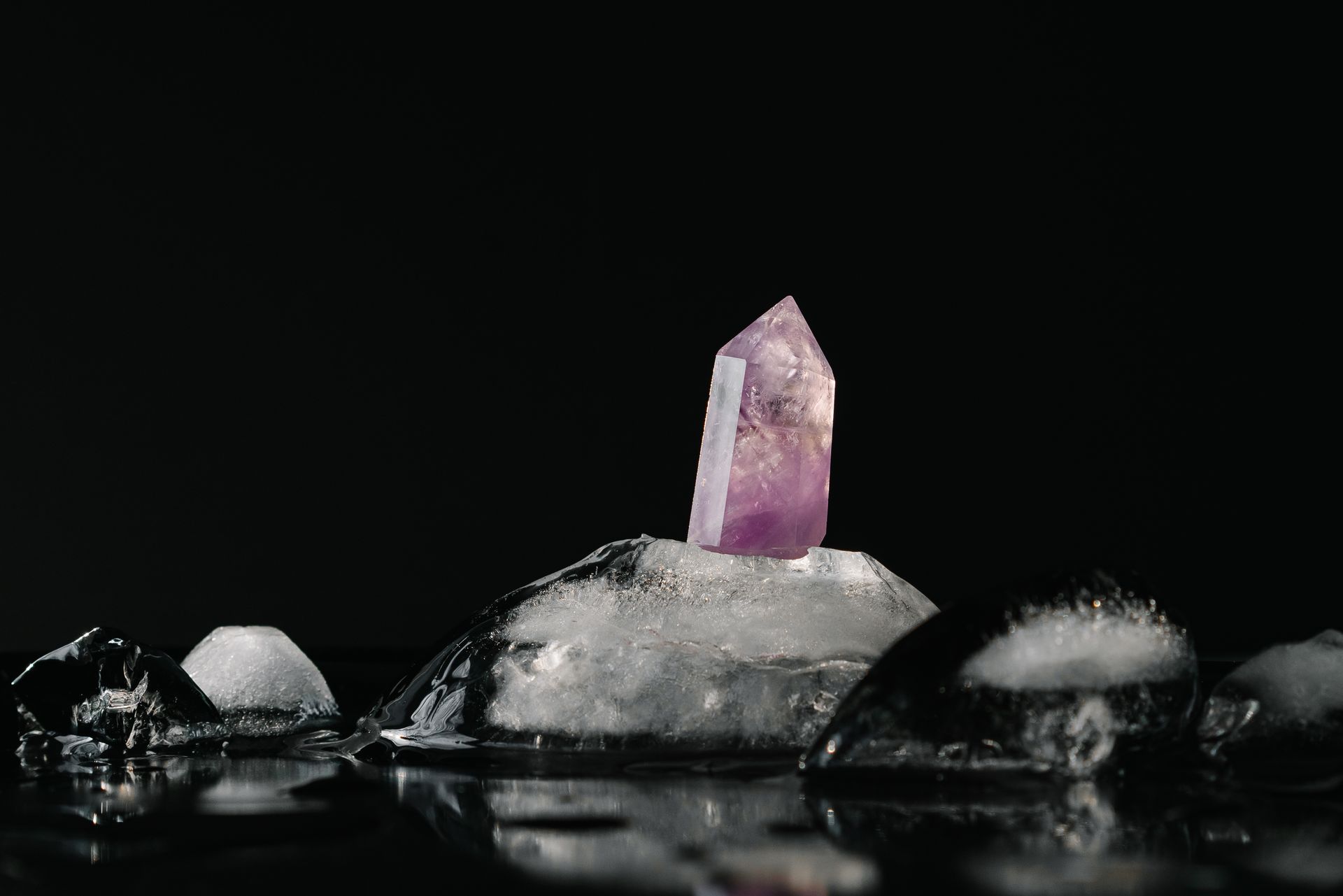
A cluster of purple amethyst, a common bedside crystal for a settled mind
Amethyst and howlite are the usual bedside picks, amethyst for a settled mind and howlite for the looping thoughts that keep you awake. Some people slip a small stone under the pillow, though a nightstand works just as well and you won't lose it in the sheets. The point is the routine: hold the stone, set down your phone, and breathe.
If racing thoughts are your main problem, keeping a dream journal beside your bed pairs well with a calming stone. Writing the worry down and then holding something grounding tells your brain it can stop rehearsing.
How to Cleanse and Charge Your Crystals
Whether or not you believe a stone holds energy, cleansing it is a useful ritual on its own, a moment to reset your intention. There are a few gentle methods, and the right one depends on your stone.
Moonlight is the safest all-purpose method. Set your crystals on a windowsill overnight, especially under a full moon, and they're cleared by morning with zero risk of damage. Smoke cleansing works too. Pass the stone through the smoke of herbs or incense, which our guide on smoke cleansing your space covers in full.
Be careful with water and salt. Softer stones can be damaged by water, and lepidolite in particular should stay dry, so don't default to rinsing everything. When you're unsure, choose moonlight or smoke. Selenite is a handy tool here, since a selenite slab is traditionally used to cleanse other stones set on top of it, no water required.
How to Choose the Right Crystal for You
With so many calming stones, the honest advice is to trust your pull toward one. The stone you keep coming back to in photos or in the shop is usually the right starting point, because your attention is already landing on it.
If you'd rather have a system, two paths help. You can choose by chakra: pick a grounding stone like black tourmaline or smoky quartz if your anxiety feels scattered and untethered, and a heart or throat stone like rose quartz or amazonite if it feels emotional or tied to speaking up. Working with your root chakra is a natural fit when anxiety leaves you feeling unsafe or ungrounded.
You can also choose by your birth chart. Certain stones pair with certain signs and planets, and matching a calming stone to your placements makes the practice feel personal. Our guide to crystal healing by zodiac sign maps them out, and if you're new to stones in general, start with healing crystals for beginners.
Frequently Asked Questions
What is the best crystal for anxiety?
Amethyst and lepidolite are the two most recommended, since both have long reputations for calming a racing mind. If your anxiety feels more like ungrounded panic, a heavier stone like black tourmaline gives you something solid to hold. The best one is the stone you'll actually reach for.
Where do I put crystals for anxiety?
Keep them where anxiety flares. A stone in your pocket travels with you, one at your desk or bedside sits right where anxiety flares, and one worn as jewelry stays against your skin all day. The goal is to have it within reach the moment you need a cue to breathe.
Do crystals really work for anxiety?
There's no clinical evidence that the stone itself does anything, and the calm you feel comes from your own focus, breathing, and expectation. That relief is still real. Treat crystals as a grounding ritual that supports treatment, not as a replacement for therapy or medication.
Can I sleep with a crystal for anxiety?
Yes. Many people keep amethyst or howlite on the nightstand or under the pillow as part of a wind-down routine. The stone itself won't put you to sleep, but the ritual of holding it and setting down your phone can quiet a racing mind.
How do I cleanse a crystal used for anxiety?
Moonlight overnight is the safest method for any stone. Smoke cleansing works too. Avoid water and salt for soft stones like lepidolite, which can be damaged, and reach for a selenite slab as a dry, gentle option.
Bringing It Together
Crystals won't cure anxiety, and anyone who promises otherwise is selling something. What a calming stone can do is give you a small, repeatable ritual that pulls you out of your head and back into your breath, and that's a genuinely useful thing to have in your pocket on a hard day. Start with one stone that draws you in, build a simple habit around it, and lean on real support for the rest.
Curious which stones match your chart? Run your free natal chart on Celesian to see the signs and planets that shape you, then pair them with the calming crystals that fit. You can also browse our crystal library to compare stones side by side.