Crystals for Sleep: Best Stones for Deeper Rest and Fewer Nightmares
If you want the short answer, the stones people reach for at bedtime are amethyst, lepidolite, howlite, and moonstone. Amethyst is the classic one, kept on a nightstand to quiet a busy head. Lepidolite carries natural lithium and gets used the same way. Howlite is the "slow your thoughts down" stone, and moonstone is tied to soft, dreamy sleep. None of them will knock you out like a sleeping pill, and I'll stay honest about that the whole way through. What a sleep crystal can do is anchor a wind-down ritual, and a steady wind-down is one of the few things that reliably helps people fall asleep faster.
That distinction is the whole game. A stone on your nightstand or in your palm gives your attention somewhere to rest instead of the running list your mind wants to review at midnight. The crystal is the cue. Here's which stones suit which kind of sleep trouble, where to put them, and how to build a bedtime habit around one without turning it into another thing to worry about.
What You'll Learn
Do Crystals Actually Help You Sleep?
Let me set expectations before we go further. There's no clinical proof that a mineral changes your sleep chemistry, and any calm you feel at bedtime comes from you, not from the stone. When people hold a crystal and report feeling warmer or more relaxed, they tend to say the same thing whether the stone is real or a glass copy, as long as they believe it's genuine. So the calm is real. The source is your own attention.
That's not a reason to wave the practice off. Falling asleep is mostly about lowering your arousal, and a small, repeatable ritual is one of the better ways to do that. A crystal gives your hands a job and your mind a single point to return to instead of tomorrow's to-do list. It works the way a worry stone or a set of prayer beads works, by slowing you down on purpose.
Think of a stone as a cue, not a cure. If you're dealing with insomnia that wrecks your days, loud snoring, or waking up gasping, please see a doctor, because those need real care. Used with clear eyes alongside good sleep habits, a crystal can earn a spot on your nightstand.
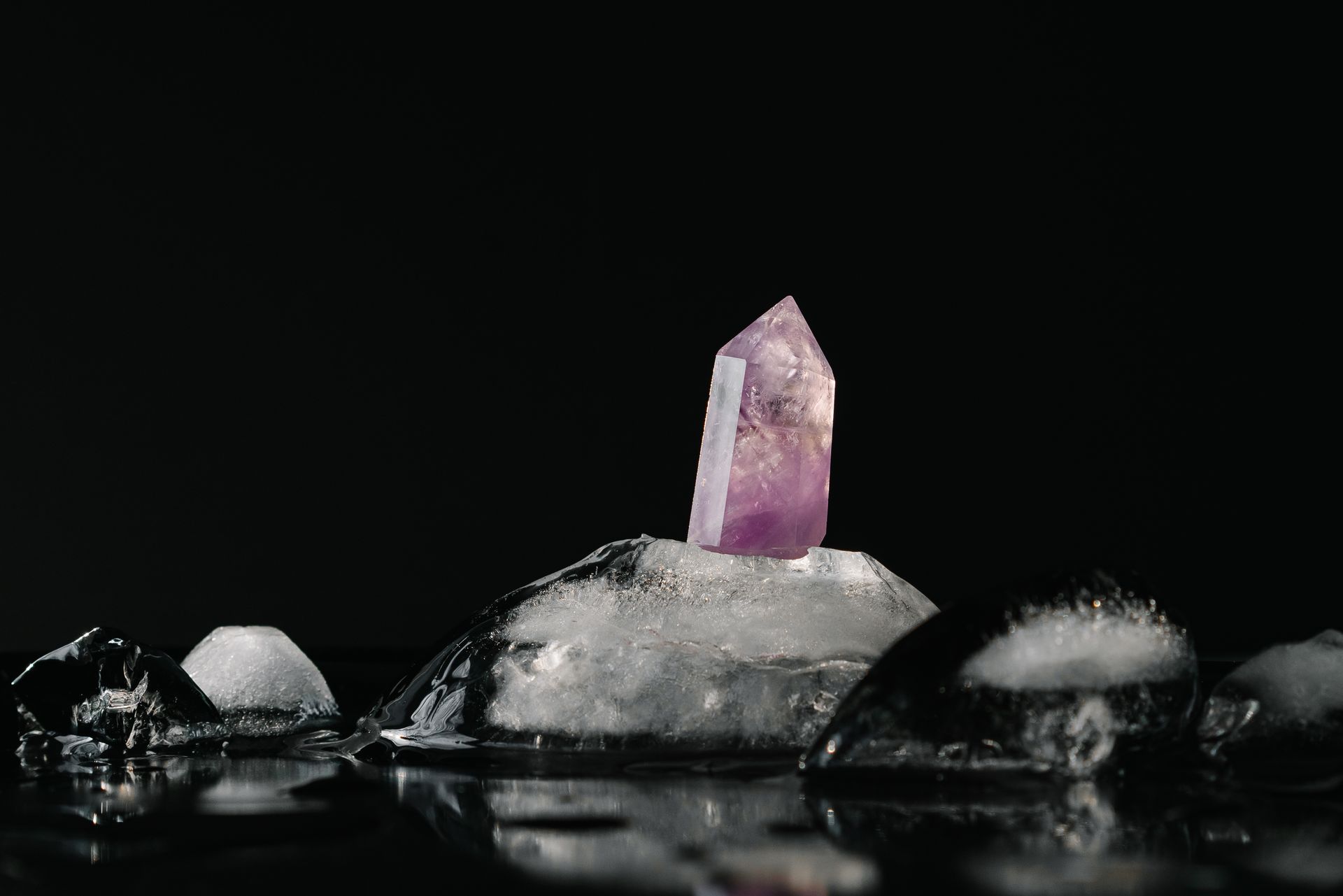
A polished amethyst point, the crystal most linked with restful sleep, glowing purple against a dark background
The Best Crystals for Sleep
Different stones suit different reasons you're lying awake. Here's how the popular ones get used, with links to the full guide for each.
Amethyst is where almost everyone starts. Its calm purple color ties it to the crown and third eye chakras, and people keep it by the bed to quiet mental chatter. Read the full amethyst meaning and uses for the background.
Lepidolite is a soft lilac stone that naturally contains lithium, the same element used in some mood medications. That fact gets repeated a lot online, so stay grounded about it: the amount is tiny and it isn't absorbed by holding the stone. People still favor it for a racing, anxious mind at night. See the lepidolite guide.
Howlite is the white, marbled stone people reach for when their thoughts won't slow down. It's the classic pick for the kind of overthinking that keeps you staring at the ceiling. The howlite meaning covers its link to a quiet head.
Moonstone carries an obvious tie to the night and the moon, and it's used for gentle, dreamy sleep and for softening restless nights. The moonstone guide has more on its lunar reputation.
Selenite is a pale, luminous stone many people set on the nightstand to keep the room feeling clear and calm. Just keep it dry, since it's soft and can flake in water. Learn more in the selenite guide.
Rose quartz softens the harsh self-talk that shows up when the lights go out, which is why it lands on this list even though it's better known for love. The rose quartz meaning explains its gentle reputation.
Black tourmaline is the grounding option for people who feel wired and need something heavy to hold. It's the same stone many use for protection. See the black tourmaline guide.
A few others come up often: smoky quartz for grounding, celestite for a peaceful room, and angelite for comfort. You don't need all of them. One stone you actually use beats a drawer full you don't.
Where to Put Crystals for Better Sleep
Placement is mostly about keeping the stone where you'll notice it, since noticing it is what cues the ritual. The nightstand is the standard spot. A single amethyst or a small cluster within arm's reach is enough, and it means you can pick it up during the last few minutes before sleep.
Under the pillow works too, and plenty of people swear by it, but be practical. A hard point under your head can dig in, and a small tumbled stone can slide onto the floor by morning. If you want a crystal close, a flat tumbled piece tucked into the pillowcase seam is more comfortable than a raw point.
Some people build a small crystal grid on the nightstand or dresser, arranging a few stones around a central one. The value there isn't the geometry, it's the ritual. Setting the stones out each night is the wind-down. Keep whatever you choose away from clutter and phone chargers, so the corner reads as a calm-down zone rather than another workstation.
How to Use Crystals in a Bedtime Ritual
The stone does the most good when it's part of a short, repeatable routine. Here's a simple version.
Start about ten minutes before you want to be asleep. Dim the lights and put your phone down first, because no crystal competes with a bright screen. Pick up your stone and hold it in one hand. Notice its weight and its temperature. Take slow breaths and make your exhale a little longer than your inhale, since a long exhale is one of the quickest ways to calm your nervous system.
As you breathe, set a plain intention. Something like "I'm letting today go" is enough. You're not casting anything. You're telling your brain the day is closed. When your mind wanders back to a worry, and it will, bring your attention back to the stone in your hand. That gentle return, over and over, is the actual practice.
Set the crystal on your nightstand and lie down. If you like, keep one hand near it. The point is consistency. Do the same small thing most nights and your body starts reading it as a signal that sleep is coming. If anxiety is what keeps you up, the approach in our guide to crystals for anxiety applies here too.
Crystals for Nightmares and Anxious Sleep
If you wake from bad dreams or go to bed with a knot of dread, the stones people lean on shift toward grounding. Black tourmaline and smoky quartz are the usual picks, held or placed at the foot of the bed for a sense of something solid underneath the fear. Amethyst still helps here, kept near the head for its calming reputation.
The ritual matters more than the mineral when nightmares are the problem. A steady wind-down that lowers your stress before sleep tends to soften the intensity of dreams. Cutting late caffeine and alcohol does more than any stone, since both fragment sleep and feed vivid, unpleasant dreams. Use the crystal as the calm anchor and fix the inputs too.
Children sometimes like a worry stone by the bed, and a smooth tumbled crystal can be a kind way to give an anxious kid something to hold. Keep it large enough that it isn't a choking hazard, and skip anything soft or water-soluble like selenite that can flake apart.
Crystals for Vivid Dreams and Dream Recall
Some people want the opposite of a dreamless night. If you're working on dream recall or trying to lucid dream, moonstone and amethyst are the common companions, kept by the bed or under the pillow with the intention of remembering.
Here the crystal's real job is to prompt the habit that builds recall: keeping a dream journal. Set the stone next to a notebook and pen. When you wake, hold the stone for a second before you move, then write down whatever fragments you have. The stone becomes the reminder to catch the dream before it fades, which is the part that trains recall over weeks.
Be ready for a trade-off. The same practices that boost dream recall, like waking gently and paying attention to your dreams, can make sleep feel lighter. If you're already tired, put rest first and save the dream work for a weekend when a groggy morning costs you less.
How to Cleanse and Charge Your Sleep Crystals
Whether cleansing does anything physical is beside the point. It's a reset for you, a way of marking a fresh start with the stone. Do it when a crystal feels heavy to you, or every couple of weeks if you like a schedule.
The simplest methods: leave the stone in moonlight overnight, which suits sleep crystals nicely, or rest it on a selenite slab, or pass it through the smoke of dried herbs. Sound works too, from a singing bowl or a tuning fork. Skip water for lepidolite, selenite, and any soft or layered stone, since water can damage them.
To charge a stone, the common practice is to hold it, breathe, and picture it holding the calm you want at bedtime. That's the same act as setting an intention, which is really all charging is. You're loading the stone with a reminder, not electricity.
How to Choose the Right Sleep Crystal
Don't overthink this. If a stone catches your eye and you'll actually keep it by the bed, that matters more than matching a chart of properties. Still, here's a quick way to narrow it down by what's keeping you up.
If your mind races with tomorrow's list, start with amethyst or howlite. If you go to bed anxious or low, lepidolite and rose quartz suit that better. If you feel wired and need grounding, reach for black tourmaline or smoky quartz. If it's restless, dream-heavy nights, or you want softer sleep, try moonstone. And if you just want the room to feel calm, selenite on the nightstand is a low-effort start.
You can always pair two, like an amethyst for the head and a black tourmaline for grounding. Just resist collecting for its own sake. The best sleep crystal is the one you use the same way every night until your body learns the cue.
Frequently Asked Questions
What is the best crystal for sleep?
Amethyst is the most popular choice, kept on the nightstand to quiet a busy mind. Lepidolite and howlite are close behind for overthinking, and moonstone suits restless, dream-heavy nights. The best one is the stone you'll actually keep by the bed and use every night.
Where should I put crystals for sleep?
The nightstand within arm's reach is the standard spot, so you can hold the stone during your wind-down. Under the pillow works if you use a flat tumbled piece that won't dig in or slide off. Keep the corner clear of screens and chargers so it reads as a calm space.
Can crystals stop nightmares?
There's no proof a crystal stops nightmares, but grounding stones like black tourmaline and a calming amethyst are what people reach for. What helps most is a steady wind-down and cutting late caffeine and alcohol, both of which fuel vivid, restless dreams more than any stone can settle.
Is it safe to sleep with crystals under your pillow?
For most tumbled stones, yes, though comfort is the catch, since a hard point can dig in. Avoid soft or water-soluble stones like selenite near a pillow, since they flake, and keep stones out of reach of small children as a choking risk.
How do I cleanse a crystal used for sleep?
Leaving it in moonlight overnight is a fitting method for a sleep stone. You can also rest it on a selenite slab, pass it through herb smoke, or use sound from a singing bowl. Skip water for lepidolite, selenite, and other soft stones, since water can damage them.
Bringing It Together
The best crystal for sleep is the one that matches what keeps you up, whether that's amethyst for a racing mind, lepidolite for an anxious one, moonstone for restless dreams, or black tourmaline when you need grounding. Let the stone anchor a short, repeatable wind-down and the ritual does the real work.
Want to go deeper into what your nights are telling you? Explore your natal chart to see how your Moon shapes your emotional world and rest, try a tarot reading when a worry won't quiet down, or check your compatibility with someone whose sleep rhythm never matches yours.