
Sodalite Meaning: Healing Properties, Uses, and How to Work With It
Sodalite is the stone people reach for when they want their head and their gut to finally agree. Its meaning centers on logic, truth, and clear thinking, the calm mental order that lets you sort what's real from what's just noise and then say it plainly. That deep royal blue, marbled with white, has a settling, almost studious feel, and the tradition around this stone is that it quiets an anxious, overthinking mind first and then sharpens it. If you tend to spin in circles, second-guess every decision, or freeze up when you need to speak, sodalite is the crystal that gets recommended.
This guide covers what sodalite means, what it's actually made of, its healing properties, and how it works with the chakras and the zodiac. It also clears up the questions that trip shoppers up most with this stone: how to tell sodalite from the pricier lapis lazuli it's so often confused with, whether it can go in water, and how to spot dyed fakes. Let's start with the meaning.
What You'll Learn
What Does Sodalite Mean?
Sodalite is best known as the Stone of Logic, and it's one of the blue stones people also call a Stone of Truth. Both nicknames point at the same thing: this is a crystal for clear, honest thinking. Its meaning is about calming a busy mind enough to see a situation as it really is, then trusting what you find and saying it without flinching. That's why it gets tied so closely to rationality, objectivity, and communication that comes from a steady place rather than a rattled one.
There's a quieter side to the meaning too. Sodalite is often called the stone of the writer, the student, and the thinker, because it's said to pair rational thought with intuition instead of forcing you to pick one. The idea is that it settles mental chatter and self-doubt so ideas can line up in order, then helps you notice the deeper hunch running underneath the logic. People also lean on it for self-trust, the sense that you don't have to borrow everyone else's opinion because you can actually hear your own. Put simply, sodalite's meaning is truth you've thought through, spoken with a calm and steady voice.
What Is Sodalite?
Sodalite is a rich royal-blue mineral, a sodium aluminum silicate that contains chlorine, and it gives its name to the whole sodalite group of minerals. Its blue runs from a soft cornflower to a deep, almost navy, and it's nearly always shot through with white or gray veins of calcite, sometimes with hints of black. That white marbling is normal and expected, not a defect, and it turns out to be one of the best ways to tell the real stone from a lookalike later on.
The name is refreshingly literal. Sodalite is named for its sodium content, from the same root as soda, plus the Greek word for stone. It was first described in 1811 from a deposit in Greenland, but it stayed a collector's curiosity until large deposits turned up near Bancroft, Ontario, in the late 1800s. When those Canadian stones were shown off around the time of a royal visit by the Princess of Wales, the material picked up the nickname princess blue, and sodalite finally became popular for jewelry and carving. Today the best-known sources include Brazil, Canada, Greenland, Namibia, Russia, and parts of the United States.
A couple of mineral facts are worth knowing before you buy. Sodalite is fairly soft, around 5.5 to 6 on the Mohs scale, which is softer than quartz, so it scratches more easily than harder crystals. There's also a special variety called hackmanite that shows tenebrescence, a genuinely strange trick where the stone changes color in sunlight or ultraviolet light and then fades back, which is a real optical property of that specific type and not folklore.
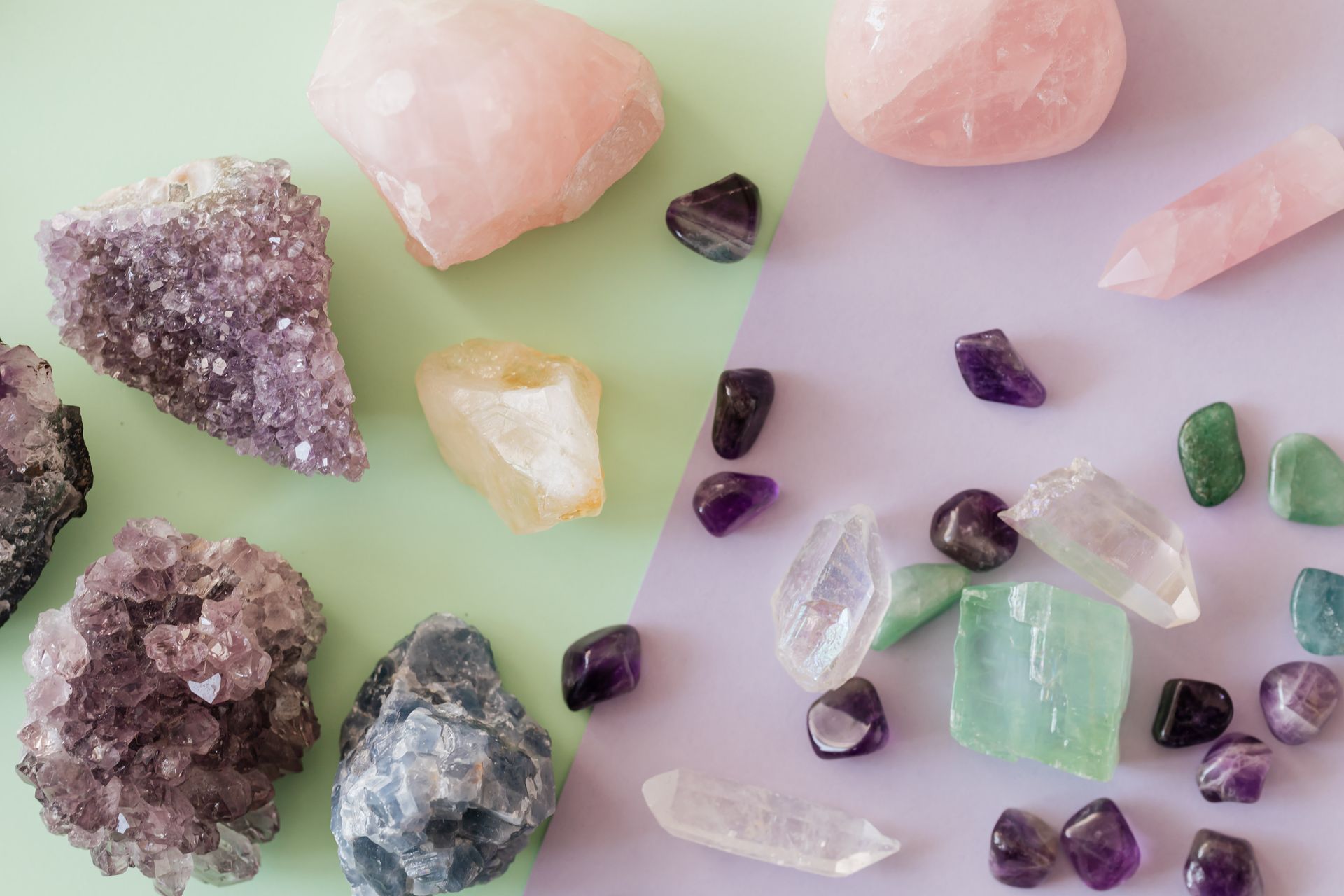
A bright collection of tumbled healing crystals arranged for study, representing what sodalite is made of
Sodalite Healing Properties and Benefits
In crystal healing, sodalite is treated first and foremost as a calming, clarifying stone for the mind. The classic use is mental and emotional: people turn to it to quiet racing thoughts, ease anxiety and panic, and cool the low buzz of overthinking that makes it hard to decide or speak. Because its whole reputation is built around mental order, it's a popular study and work stone, reached for before exams, presentations, hard conversations, or any moment that calls for a clear head instead of a spinning one.
Alongside the calm, sodalite is said to build confidence and self-trust, helping you rely on your own judgment rather than constantly checking it against everyone else's. On the physical side, folk tradition connects it to the throat and thyroid, which fits its throat-chakra links, and some practitioners also associate it with metabolism, blood pressure, and calming the nervous system. It's important to be honest here: these are traditional metaphysical associations, not medical facts, and sodalite is not a treatment for any condition. The same goes for the popular idea that sodalite blocks electromagnetic frequencies from phones and computers. It's a common reason people keep a piece on a desk, but there's no scientific evidence that any crystal shields you from EMF. Enjoy sodalite for how it helps you focus and for the intentions it helps you hold, and keep your actual health care with your doctor.
Sodalite Spiritual Meaning
Spiritually, sodalite is the stone that bridges the thinking mind and the intuitive one. Its most cited property is the ability to bring reason and insight into the same room, so you can analyze a problem clearly and still stay open to the quiet inner knowing that logic alone would miss. That pairing is why it's so tied to meditation and inner work; a calmer, more orderly mind is simply easier to go deep with.
It's also described as a stone of self-honesty. Sodalite is said to help you notice the old mental habits, absorbed beliefs, and quiet guilt that shape how you see things, and then set down the ones that aren't yours. That clearing makes room for a more grounded kind of intuition, the sort that shows up as a steady sense of what's true rather than a loud demand. If you're doing any kind of inner work around clarity, honesty, or trusting yourself, sodalite is a natural companion, and it sits comfortably beside the third eye chakra practices that train that same quiet perception.
Sodalite and the Chakras
Sodalite works with two energy centers, and the pair it bridges says a lot about the stone: the throat chakra and the third eye chakra. The throat chakra, Vishuddha, sits at the base of the throat and governs expression, honesty, and communication. The third eye chakra, Ajna, sits at the brow and governs intuition, insight, and clear perception. Sodalite's whole promise, clear thinking that you can actually put into honest words, lives exactly where those two centers meet.
That throat-to-brow connection is the reason sodalite feels so useful for anyone who thinks clearly but struggles to say it, or who speaks constantly without ever pausing to perceive. A blocked throat chakra can show up as swallowed words, nervous rambling, or a fear of speaking up, while a foggy third eye makes it hard to know what you even believe. Working sodalite along both centers, resting it at the throat or the brow during meditation, is meant to open that channel so insight arrives clearly and then flows out in calm, truthful speech. If you're new to these energy centers, it helps to understand the full seven-chakra system first so you can see where the throat and third eye fit.
Polished crystals laid out along the chakra centers for balancing, representing sodalite and the throat and third eye chakras
Sodalite Zodiac Signs and Birthstone
Sodalite isn't a traditional birthstone tied to a calendar month, but in astrology it's most associated with Sagittarius, and it's sometimes linked to Virgo as well. Both pairings make sense once you know the stone. Sagittarius is the sign of the truth-seeker and the philosopher, restless for meaning and honest to a fault, and sodalite's gift for calm, clear-eyed truth speaks straight to that Sagittarian hunger to understand and to say what's real. Virgo, the sign of analysis, discernment, and careful communication, connects to sodalite's more studious side, the part that wants to think a thing through and get the words exactly right.
You don't have to be a Sagittarius or a Virgo to work with sodalite, though. Anyone who needs help calming an overactive mind, thinking objectively, or speaking their truth without anxiety can benefit from it. To see where these energies actually land for you, it's worth looking at where Sagittarius and Virgo sit in your own chart, and which houses they light up. Our guide to crystal healing by zodiac sign is a good next step if you want to match stones to your whole chart rather than just your sun sign.
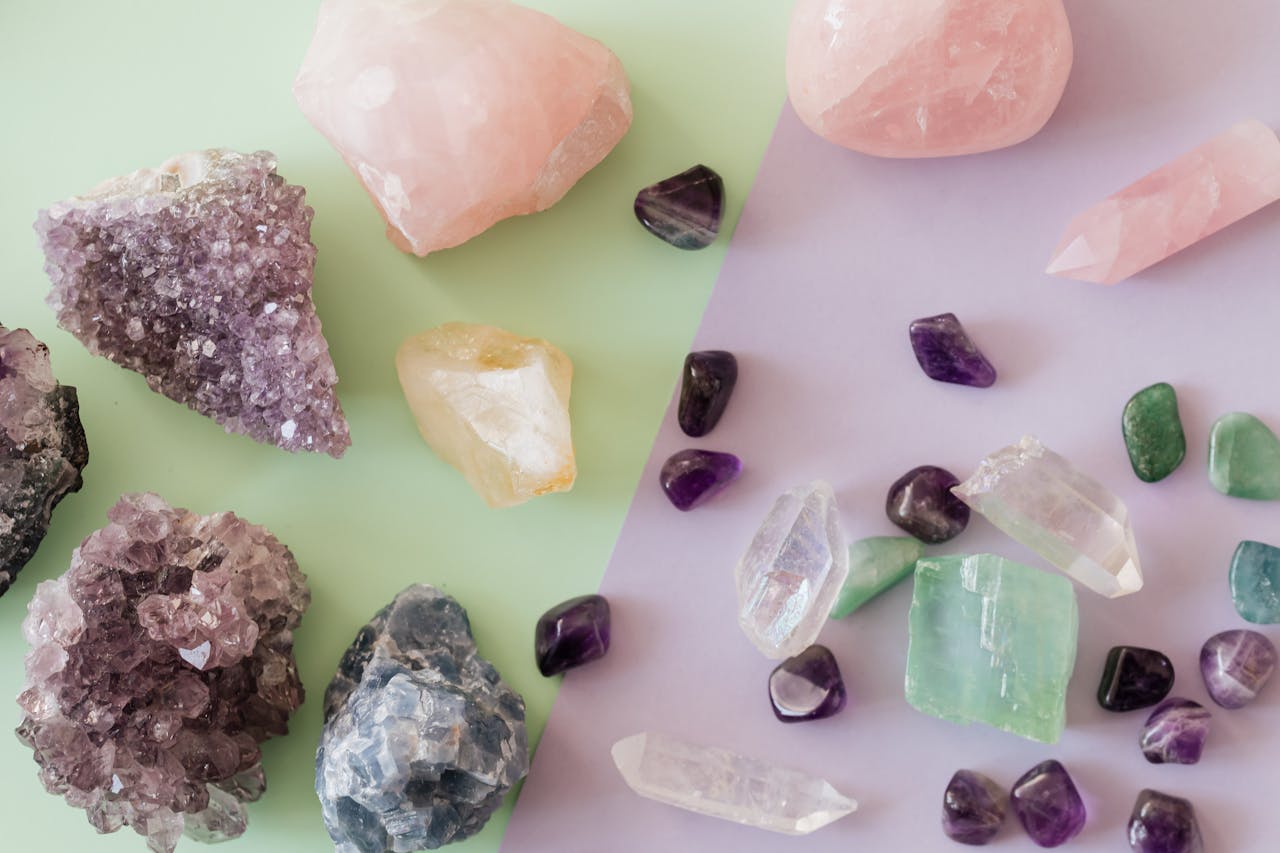
Healing crystals arranged with zodiac symbolism, representing sodalite zodiac signs and astrological associations
Sodalite vs Lapis Lazuli
This is the confusion that sends most people searching, because the two stones look like cousins and are often sold side by side. The quickest tell is the flecks. Lapis lazuli almost always carries little glints of gold, which are tiny bits of pyrite, and its blue is a deep, saturated ultramarine. Sodalite has no gold pyrite at all. Its blue is usually a slightly softer royal or navy, and instead of gold it's marbled with white or gray veins of calcite. If you see gold sparkle, you're looking at lapis; if you see white marbling and no gold, it's almost certainly sodalite.
There's a deeper reason they resemble each other. Lapis lazuli isn't a single mineral but a rock, and its main blue ingredient is lazurite, which belongs to the same sodalite mineral group, so the two really are chemically related. In practice, lapis tends to be more expensive and more intensely blue, while sodalite is more affordable and a touch more even in color, which is exactly why sodalite is so often sold as a budget-friendly stand-in. Their meanings overlap too, since both are throat-and-brow stones of truth and communication, but lapis leans toward royal wisdom and inner power while sodalite leans toward calm logic and clear thinking. If you love the blue but want the classic version, our lapis lazuli guide breaks that stone down in the same detail.
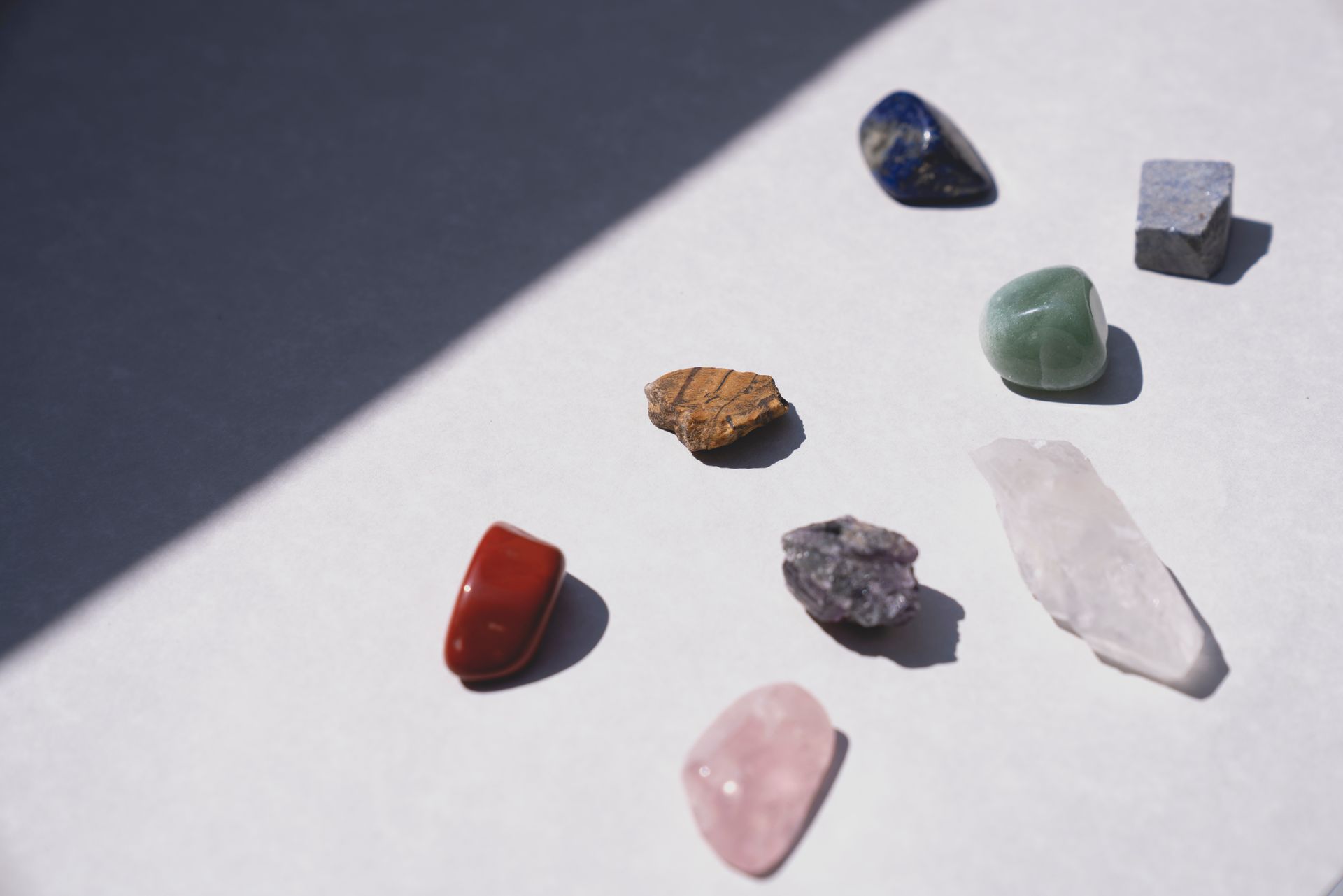
Deep blue healing crystals gathered together for comparison, representing sodalite versus lapis lazuli
How to Use Sodalite
Sodalite is easy to fold into daily life, and the best method depends on what you want from it. Here are the most common ways people work with it:
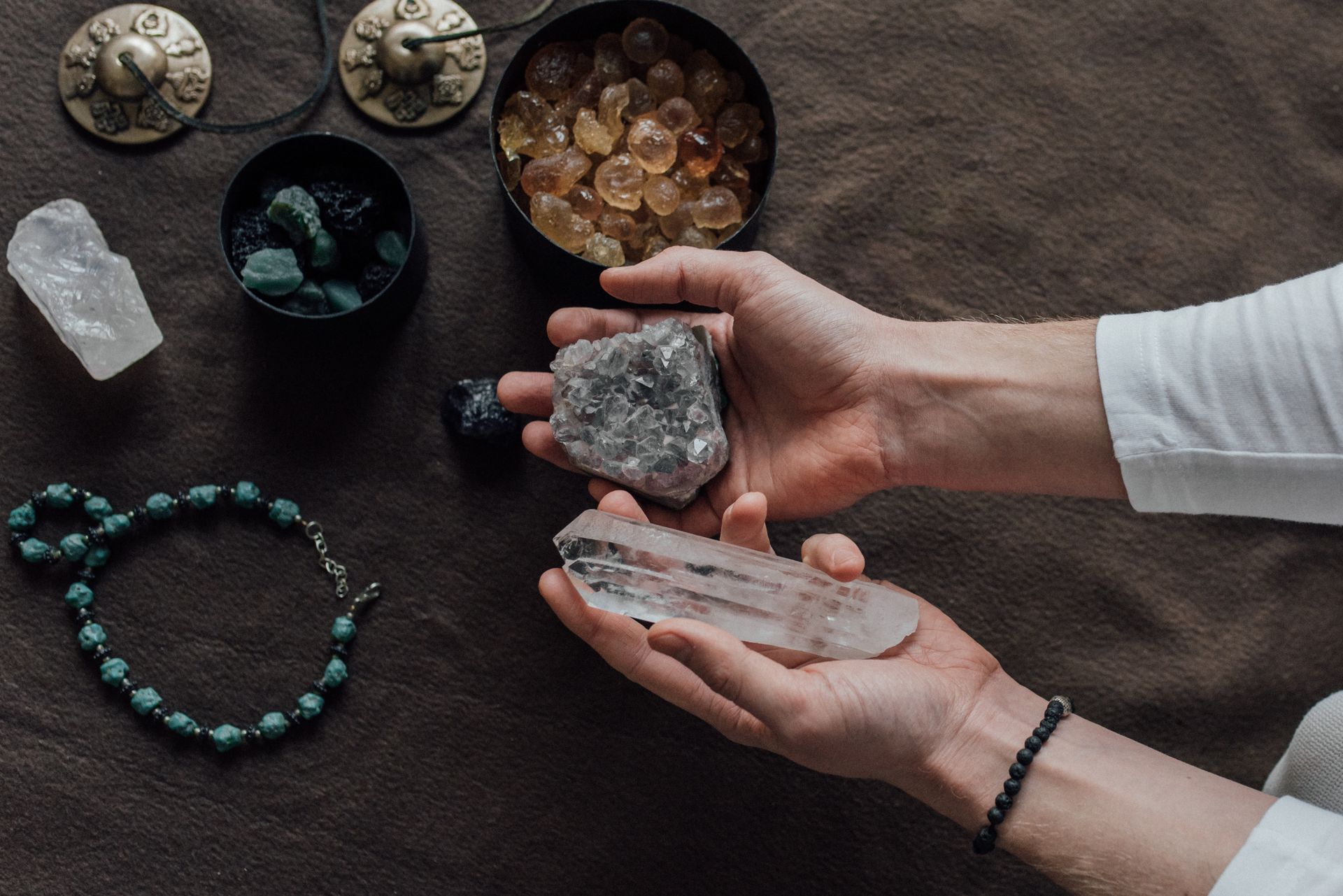
Healing crystals set out for a calm meditation practice, representing how to use sodalite
How to Cleanse and Charge Sodalite
Sodalite needs a gentle touch, mostly because it's on the softer side at 5.5 to 6 on the Mohs scale. A quick rinse under cool water is usually fine, but skip the long soaks and never use salt water, since prolonged moisture can dull the surface of a softer stone over time. Dry it right away if it does get wet. For cleansing without water, smudge it with sage or palo santo, run it through the sound of a singing bowl, or rest it overnight on a selenite slab, which cleanses other stones without needing to be cleansed itself. Our guide to smoke cleansing and smudging walks through that method if it's new to you.
Charging is where sunlight becomes a question. Ordinary sodalite tolerates short sun exposure, but long, direct sun can fade the color of some blue stones, and the hackmanite variety literally changes color under UV, so the safer habit is to charge sodalite under the moon instead. A full moon suits its calm, reflective nature much better than a hot windowsill. Store it away from harder stones like quartz so nothing scratches its surface, and it'll hold that deep blue for years.
Real vs Fake Sodalite
Real sodalite gives itself away through its markings. Genuine stone is rarely a flat, perfectly even blue; it's marbled with white or gray calcite veins, and the color tends to vary a little across a single piece. It feels cool and solid, shows a white streak if scratched on unglazed porcelain, and has that slightly soft, waxy-to-glassy look of a natural mineral. If a piece is a single, uniform, almost plastic shade of blue with no variation and no white matrix at all, be suspicious.
The most common fake is dyed howlite or magnesite. Both are naturally white or gray stones with dark veining, and when they're dyed blue the color pools unevenly in the cracks and lines instead of running through the body of the stone, which is the opposite of sodalite's natural pattern. The other mix-up is with lapis lazuli, and there the gold-pyrite test settles it fast, since sodalite has no gold flecks. None of these swaps are necessarily a scam, they're just not what a shopper assumes, so buy from a seller who's clear about exactly what a stone is and priced accordingly.
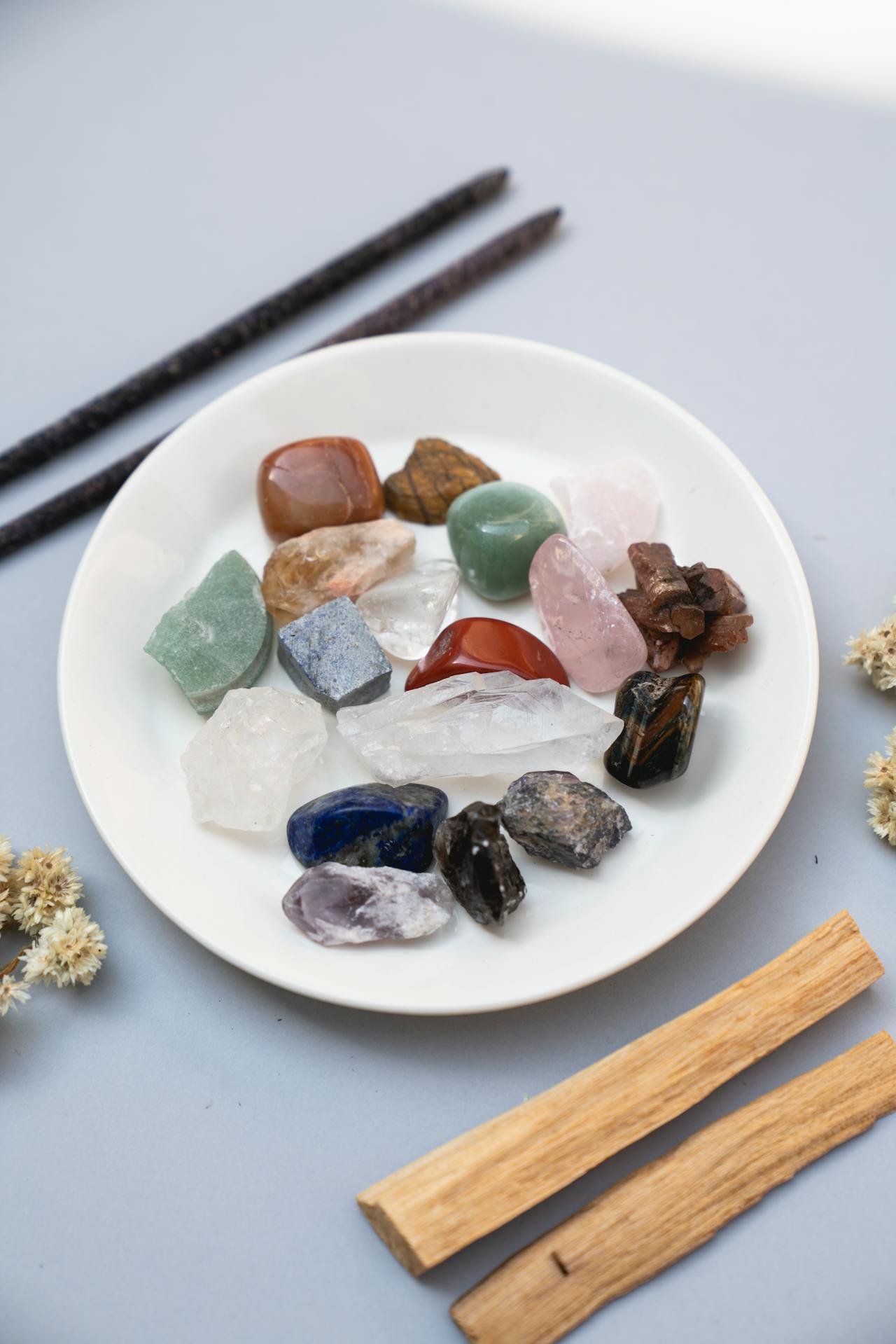
A grid of assorted healing crystals for comparison, representing how to tell real sodalite from fakes
Frequently Asked Questions
What is sodalite good for?
Sodalite is used mainly for calm, clear thinking and honest communication. People work with it to quiet racing thoughts, ease anxiety and overthinking, and boost confidence in their own judgment. As a study, writing, and throat-chakra stone, it's a popular choice before exams, presentations, and hard conversations where you need a steady head.
What's the difference between sodalite and lapis lazuli?
The gold flecks are the giveaway. Lapis lazuli carries tiny bits of gold pyrite and a deep ultramarine blue, while sodalite has no gold and is marbled with white calcite veins instead. Lapis is pricier and more intensely blue; sodalite is more affordable and often sold as a budget-friendly stand-in for it.
Can sodalite go in water?
A quick rinse is okay, but it's best not to soak sodalite. At 5.5 to 6 on the Mohs scale it's softer than quartz, so long water exposure and salt water can dull or damage it over time. Cleanse it with smudging, sound, or moonlight instead, and dry it right away if it does get wet.
What chakra and zodiac sign is sodalite?
Sodalite works with two chakras, the throat (Vishuddha) and the third eye (Ajna), which is why it's the stone for turning clear insight into honest words. It's most associated with the zodiac sign Sagittarius, the truth-seeker, and is sometimes linked to Virgo, the sign of careful analysis and communication.
Does sodalite fade in the sun?
It can. Long, direct sunlight may gradually fade the color of some blue stones, and the hackmanite variety of sodalite actually changes color under UV light. To be safe, charge sodalite under the moon rather than on a sunny windowsill, and store it somewhere shaded to protect that deep blue.
Bringing It Together
Sodalite earns its title as the Stone of Logic. It's the crystal of the calm, clear mind, reached for whenever you need to quiet the mental noise, think a thing through honestly, and say it in a steady voice. Wear it near your throat, keep it on your desk when you study or write, and respect its softer nature by keeping it out of long sun and away from harder stones. To see where Sagittarius truth-seeking and Virgo discernment actually live in your life, generate your free natal chart and find the houses those energies light up, pull a tarot reading when you need clear guidance on what to say, or run a compatibility report to understand the conversations worth having honestly.