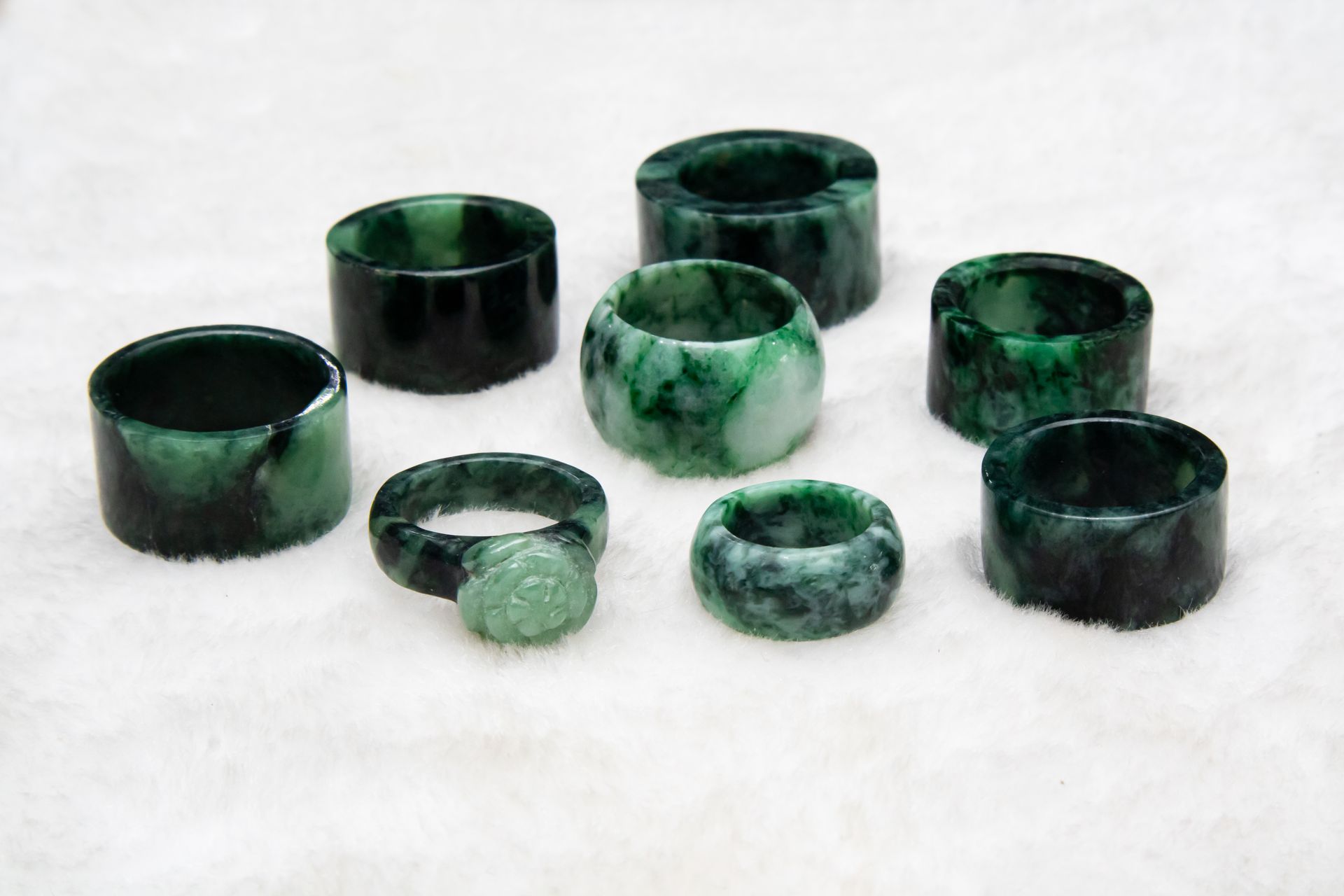
Jade Meaning: Healing Properties, Nephrite vs Jadeite, and Uses
Jade is the stone of calm. For more than five thousand years people have reached for it to feel steadier, luckier, and more protected, which is why it earned the title Stone of Heaven in China and was once prized above gold. Its meaning centers on serenity, harmony, and good fortune, the quiet kind of luck that comes from a settled mind rather than a lucky break. If green aventurine is the stone of the leap, jade is the stone of the long game: patient, protective, and built to last.
There's a twist most guides skip, though. "Jade" isn't one stone. It's two completely different minerals, nephrite and jadeite, that happen to look alike and share a name. That single fact shapes everything about jade, from its price to its history to how easily it gets faked. This guide covers what jade means, the nephrite-versus-jadeite split, its healing properties, its link to the heart chakra and the zodiac, and how to tell real Type A jade from the dyed and plastic-filled stones sold in its place.
What You'll Learn
What Does Jade Mean?
Jade means serenity, balance, and good fortune. Across cultures it's been the stone of peace and protection, worn to invite luck, guard against harm, and keep the wearer calm under pressure. Its core message is steadiness: jade is meant to help you stop reacting and start responding, to hold your center when life gets loud. That's why it's linked to wisdom and maturity rather than excitement. Jade rewards patience.
It also carries a strong thread of prosperity and longevity. In Chinese tradition especially, jade is a symbol of long life, health, and abundance, often given as a protective gift to babies and passed down through families. Put those ideas together and jade's meaning is a promise of the good, slow things: peace of mind, a long healthy life, steady luck, and protection for the people you love. It's less a spark and more a foundation.
Nephrite vs Jadeite: The Two Stones Called Jade
Here's the fact that separates jade from every other stone. Two different minerals are both sold as real jade. Nephrite is a calcium magnesium silicate from the amphibole family. Jadeite is a sodium aluminum silicate from the pyroxene family. They aren't varieties of one mineral, they're chemically unrelated stones that early traders lumped together because they looked and behaved alike.
For thousands of years, the jade of ancient China, New Zealand, and much of the world was nephrite. Jadeite only became the prized jade of China after it started arriving from Burma (now Myanmar) in the 1700s. Today jadeite is the rarer and more valuable of the two, and the finest translucent emerald-green jadeite, called imperial jade, is among the most expensive gem materials on earth. Nephrite is more common, usually more affordable, and often a softer, creamier, more oily green.
Hardness-wise they're close, with jadeite around 6.5 to 7 and nephrite around 6 to 6.5 on the Mohs scale. Toughness is where jade shows off. Its interlocking fibrous structure makes it one of the toughest natural materials known, so tough that Stone Age cultures carved it into axes and blades long before it became jewelry. Nephrite is actually the tougher of the two.
Jade Healing Properties and Benefits
The property people chase most is calm. Jade is used to soothe anxiety, quiet mental chatter, and bring a frazzled nervous system back to baseline, which is why it's a favorite worry stone and pocket piece. The idea is that holding jade helps you slow down and make decisions from a steady place instead of a panicked one.
Its second signature is luck and abundance, especially the sustainable kind. Rather than a jackpot, jade is associated with steady prosperity, wise money choices, and gradually building something that lasts. People keep it near their work or finances as a reminder to play the long game. It shares this prosperity reputation with citrine, though jade's version is calmer and more patient.
Jade is also known as a protective and heart-healing stone, said to shield against negativity and support emotional recovery, forgiveness, and healthy relationships. Chinese medicine has associated jade with kidney and heart health for centuries. To be clear, these are traditional and metaphysical uses, not medical claims. Jade won't treat an illness. What it can do is give you a calming ritual and a physical anchor for the mindset you're trying to hold.
Jade Spiritual Meaning and Cultural History
No stone carries more spiritual weight across history than jade. In China it's the Stone of Heaven, valued above gold for over five thousand years and tied to the five Confucian virtues of benevolence, righteousness, wisdom, courage, and integrity. Emperors were buried in jade, and jade discs called bi were used in rituals connecting earth and sky. The belief is that jade holds and reflects the moral character of the person who wears it.
Jade's spiritual story isn't only Chinese, though. The Maori of New Zealand carve sacred nephrite they call pounamu, or greenstone, into heirloom pendants passed down through generations. In Mesoamerica, the Olmec and Maya prized jadeite above gold and used it in burial masks and offerings. That's an unusual pattern: cultures with no contact all landed on jade as their most sacred stone.
Spiritually, jade is a stone of wisdom, protection, and dream work. It's used to encourage insightful dreams, to release what no longer serves you, and to support manifestation grounded in patience rather than force, which pairs naturally with the law of attraction. Its whole message is that real growth is slow, and jade is happy to wait with you.
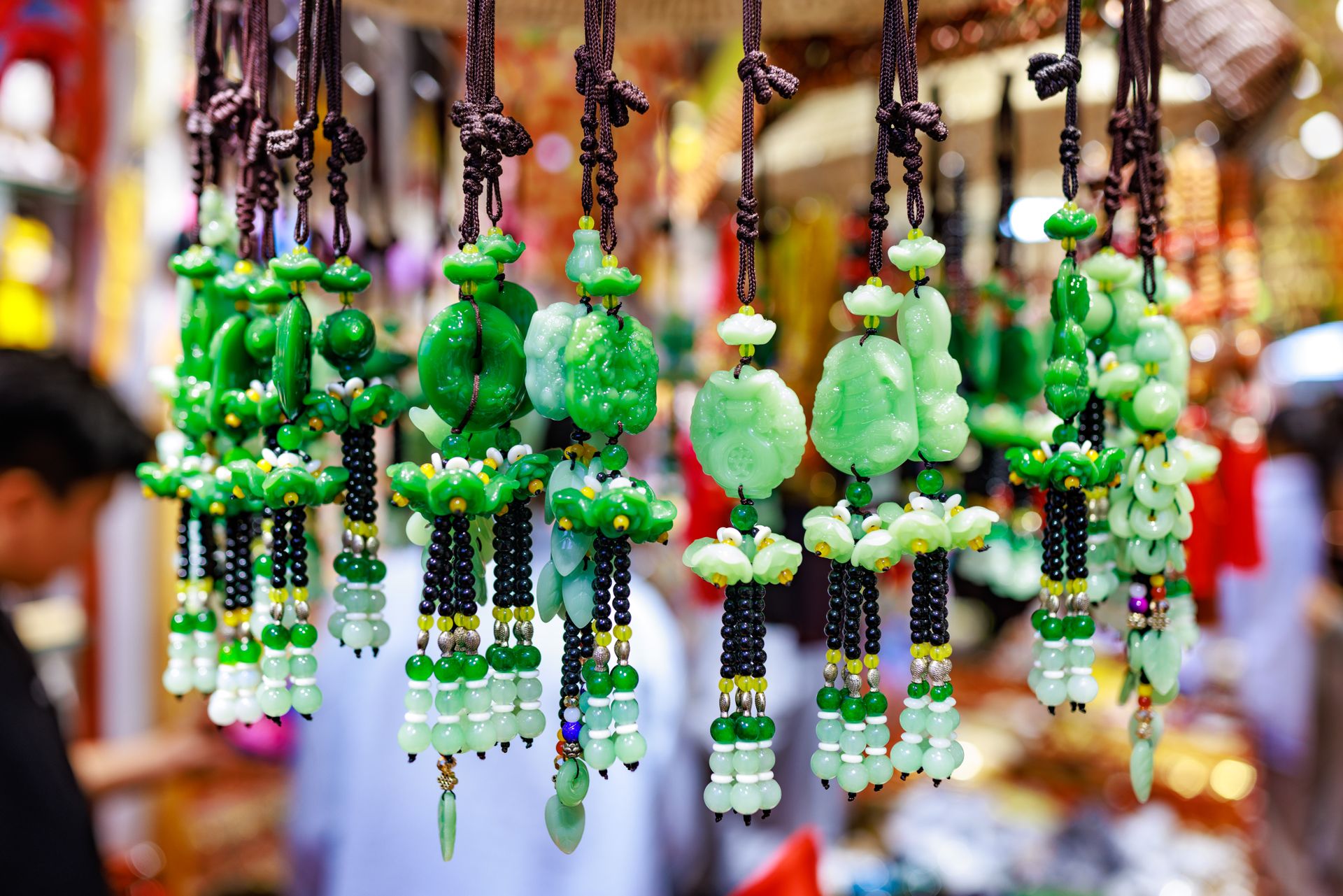
Carved green jade pendants and ornaments hanging on cords at a traditional market stall
Jade and the Heart Chakra
Green jade's home is the heart chakra, the energy center in the middle of the chest that governs love, compassion, and emotional balance. Green is the heart chakra's color, so a green stone like jade slots in naturally. When the heart chakra feels closed, people describe guardedness, grudges, or trouble trusting, and jade is used to gently open and steady it.
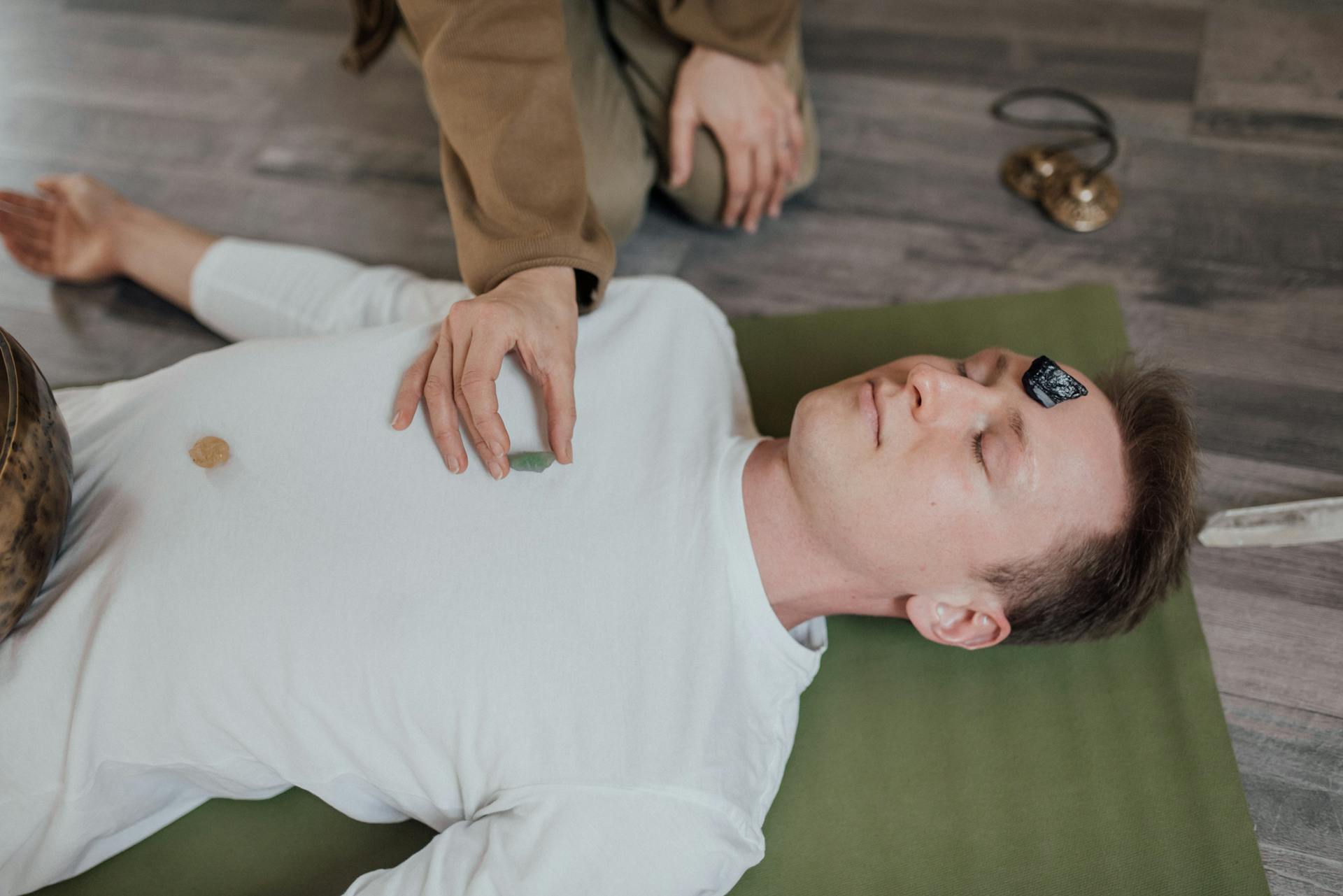
What makes jade different from a softer heart stone like rose quartz is its maturity. Rose quartz is tender, comforting, self-love energy. Jade brings calm and boundaries to the heart, the sense that you can love people without losing yourself. Many people work with both. To use jade this way, lie down and rest a piece on the center of your chest, breathe slowly, and let each exhale loosen the tightness there. Lavender and white jade are sometimes worked with at the higher chakras instead. If chakras are new to you, the seven chakras guide maps the whole system.
Green healing crystals arranged for heart chakra energy work and emotional balance
Jade Colors and What They Mean
Most people picture jade as green, but it comes in a whole range of colors, and the color often hints at which mineral you're holding. Green is the classic, from the deep translucent emerald of imperial jadeite to the soft, milky, oil-green of nephrite. Chromium gives the best jadeite its vivid green, while iron tends to make it duller or grayer.
White jade, often called mutton fat nephrite for its creamy look, is prized in China nearly as much as green and is linked to purity and peace. Lavender or purple jade is a jadeite color tied to spiritual awareness and serenity. There's also black jade for protection and grounding, yellow and orange jade for warmth and cheer, red jade for energy and courage, and blue jade for calm and clarity.
Color drives value more than almost anything else in jade. For jadeite, an even, vivid, translucent green sits at the top. For nephrite, a rich uniform color with a smooth waxy texture is the goal. Color is also where a lot of fakery happens, since dye is the cheapest way to turn a dull stone into a convincing green, which is why the type grading later in this guide matters so much.
Jade Zodiac Signs and Birthstone
Jade isn't a modern birthstone in the standard May-emerald sense, but it has a long life as a traditional and mystical birthstone, and it's most often linked to the zodiac signs Aries, Gemini, Taurus, and Libra. Aries borrows jade's calm to cool a hot temper, Gemini uses its steadiness to quiet a busy mind, and Taurus and Libra, both ruled by Venus, resonate with its heart-centered, harmony-loving nature.
As a Venus-associated, earth-and-water stone, jade suits anyone working on patience, emotional balance, or long-term security, no matter their sign. Its grounding, prosperity-minded energy fits earth signs well, while its calming quality helps fast-moving air and fire signs slow down. If you want to match stones to your chart more precisely, the guide to crystal healing by zodiac sign breaks it down sign by sign.
Some traditions also connect jade to good fortune in the Chinese zodiac and gift it for milestone birthdays and anniversaries as a wish for long life. However you frame it, jade is less about one birth month and more about the qualities you're trying to grow.
Healing crystals laid out on a zodiac wheel to match stones with astrological signs
How to Use Jade
The simplest way to use jade is to wear it. A jade bangle, ring, or pendant keeps the stone against your skin all day, which is exactly how it's traditionally worn in China as an everyday protective piece. Many people believe a jade bangle takes on the wearer's energy over time, and that a bangle which cracks has absorbed a blow meant for you. That's folklore rather than fact, but it's a meaningful idea for a lot of wearers.
Beyond jewelry, keep a tumbled jade stone in your pocket or bag as a worry stone to reach for when stress spikes. Place jade on your desk or in your wealth corner to hold the intention of steady prosperity, or set a piece by your bed to encourage calm, insightful dreams. Jade rollers and gua sha tools, usually made of nephrite, bring the stone into a skincare routine, though those are valued more for cool massage than for metaphysics.
For meditation, hold a piece in your palm, close your eyes, and focus on slowing your breath until your pulse settles. Jade rewards a quiet, unhurried practice, so pair it with a few grounding minutes rather than expecting a jolt of energy. New to crystals? Start with the beginner crystal guide.
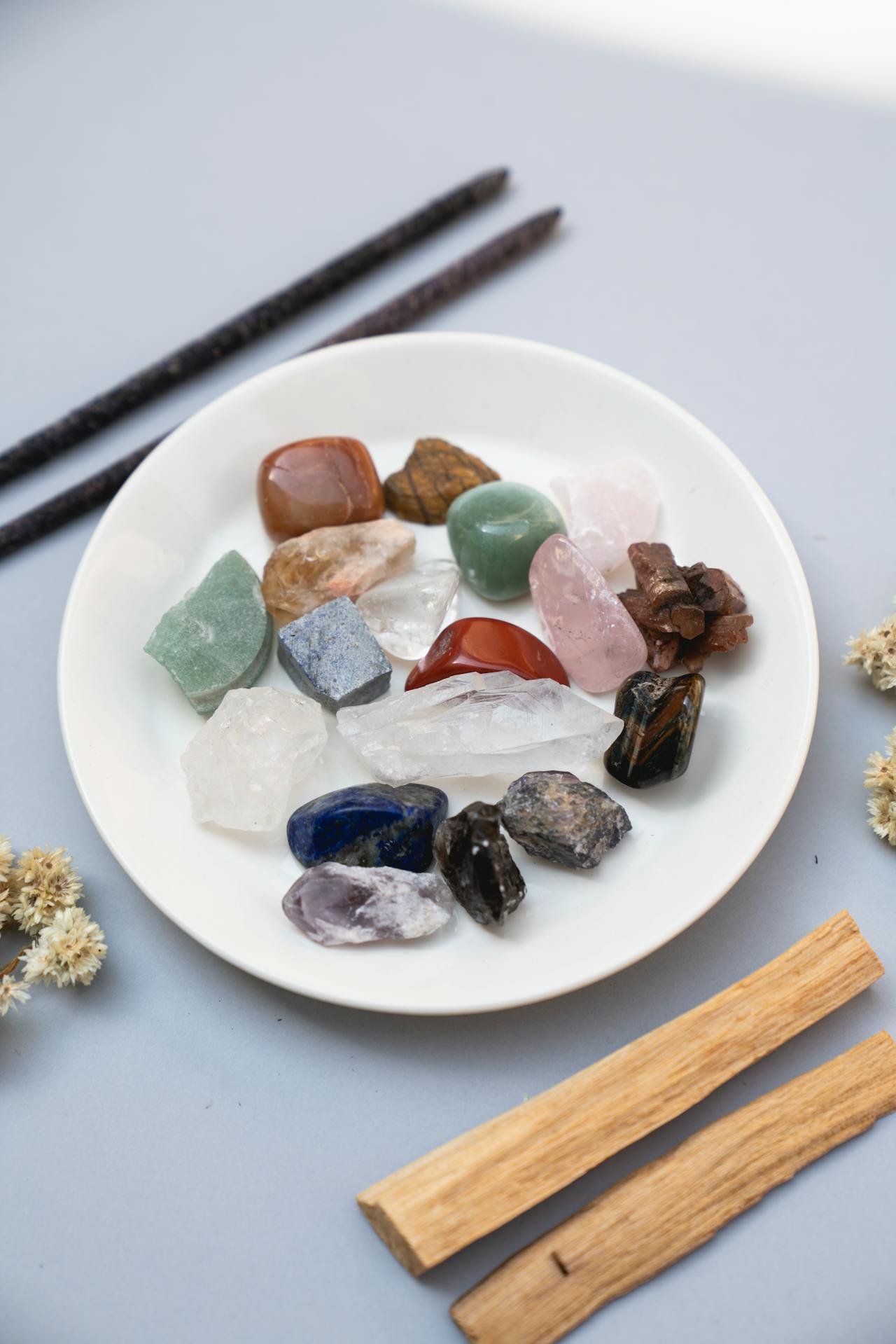
A collection of healing crystals arranged for a calm meditation practice
How to Cleanse and Charge Jade
Jade is one of the easier crystals to care for, because natural, untreated jade is tough and water-safe. You can rinse a piece of Type A jade under cool running water for a minute to clear it, then dry it with a soft cloth. Avoid very hot water and sudden temperature changes, which can stress the stone, and skip harsh chemicals, ultrasonic cleaners, and long soaks, especially for treated jade.
This is where the type matters. Type B and Type C jade, which are acid-treated, polymer-filled, or dyed as explained below, should never get the water or chemical treatment, because water and solvents can dull the dye or degrade the resin holding the stone together. For treated pieces, stick to gentle, dry methods.
To cleanse jade without water, use sound from a singing bowl or bell, a few hours in indirect moonlight, or a bed of dry salt or selenite overnight. To recharge it, moonlight is the traditional favorite, since jade has such strong lunar and earth associations. Prolonged direct sun can fade some jade colors over time, so moonlight or earth are the safer choices. Set your intention as you cleanse, then let the stone rest before wearing it again.
Real vs Fake Jade: Type A, B, and C
Jade is one of the most faked stones on the market, so it helps to know the grading system. Type A jade is natural and untreated, with only a traditional wax coating. Its color and structure are entirely genuine, and it's the only jade worth premium prices. Type B jade has been bleached with acid to remove impurities, then filled with clear polymer to boost translucency. It's real jadeite, but weakened and prone to yellowing as the resin ages. Type C jade has been dyed, and Type B plus C has been both filled and dyed. B and C jade can look great and cost little, but it isn't the same investment or the same durability as Type A.
Then there are outright substitutes sold as jade. Serpentine, sold as new jade or Korean jade, along with dyed quartz sold as Malaysia jade, aventurine, chrysoprase, green agate, and plain glass all get passed off as the real thing. A few quick checks help. Real jade feels cold and stays cool a while when you hold it, it's dense and heavier than it looks, and beads tapped together give a clear, ringing click rather than a dull plastic tick. Dye often pools in cracks, and glass may show tiny bubbles.
None of these tests are foolproof, so for anything expensive, buy from a reputable dealer and ask for certification that it's natural Type A. If you like green stones but want something simpler and cheaper, green aventurine and amazonite are honest, affordable alternatives.
Frequently Asked Questions
Is jade nephrite or jadeite?
It can be either. Both minerals are officially real jade. Nephrite was the historic jade of ancient China and New Zealand, while jadeite is the rarer, harder, more valuable type that includes imperial green jade. They look similar but are chemically different stones.
What is the difference between Type A and Type B jade?
Type A jade is natural and untreated, with only a surface wax. Type B jade is real jadeite that's been acid-bleached and filled with polymer to improve clarity, which weakens it over time. Type C is dyed. Only Type A holds long-term value.
Can jade get wet?
Natural Type A jade is water-safe and can be rinsed briefly in cool water. Avoid hot water, harsh chemicals, and long soaks. Treated Type B or C jade should be kept dry, since water and solvents can damage the dye or resin.
What chakra is jade good for?
Green jade is a heart chakra stone, used for love, compassion, and emotional balance. Lavender and white jade are sometimes worked with at the higher chakras. Its overall energy is calming and grounding rather than activating.
How can you tell if jade is real?
Real jade feels cold, is denser and heavier than it looks, and beads make a clear ringing click when tapped, not a dull tap. Dye pooling in cracks or tiny air bubbles suggest a fake. For valuable pieces, ask for certification of natural Type A jade.
The Long Game in Stone Form
Jade's appeal is patient by design. It's the stone for building calm, protecting what matters, and growing prosperity slowly instead of chasing it. Whether you wear nephrite or jadeite, green or lavender, the invitation is the same: steady yourself, play the long game, and let good things take root.
Ready to see which stones and signs support your own chart? Start with your free natal chart, pull a tarot reading for insight on your next step, or check your compatibility with someone you love.