Labradorite Meaning: Healing Properties, Uses, and How to Cleanse It
Labradorite is the crystal of magic, transformation, and protected intuition. It's a gray to blue-green feldspar named for the coast of Labrador in Canada, where it was first described, and it's famous for one thing above all: the flash of iridescent color that seems to switch on when you tilt it toward the light. That optical effect is called labradorescence, and it's why so many people treat this stone as a bridge between the everyday world and the unseen one. In crystal work, labradorite is believed to strengthen intuition, shield your energy during periods of change, and help you see what's hidden beneath the surface.
If you've ever held a piece and watched blue fire ripple across a dull gray face, you already understand the appeal. This guide covers what labradorite is, what it means spiritually, its healing properties, the chakras it works with, how to use it day to day, and how to cleanse and care for it without damaging the stone.
What You'll Learn
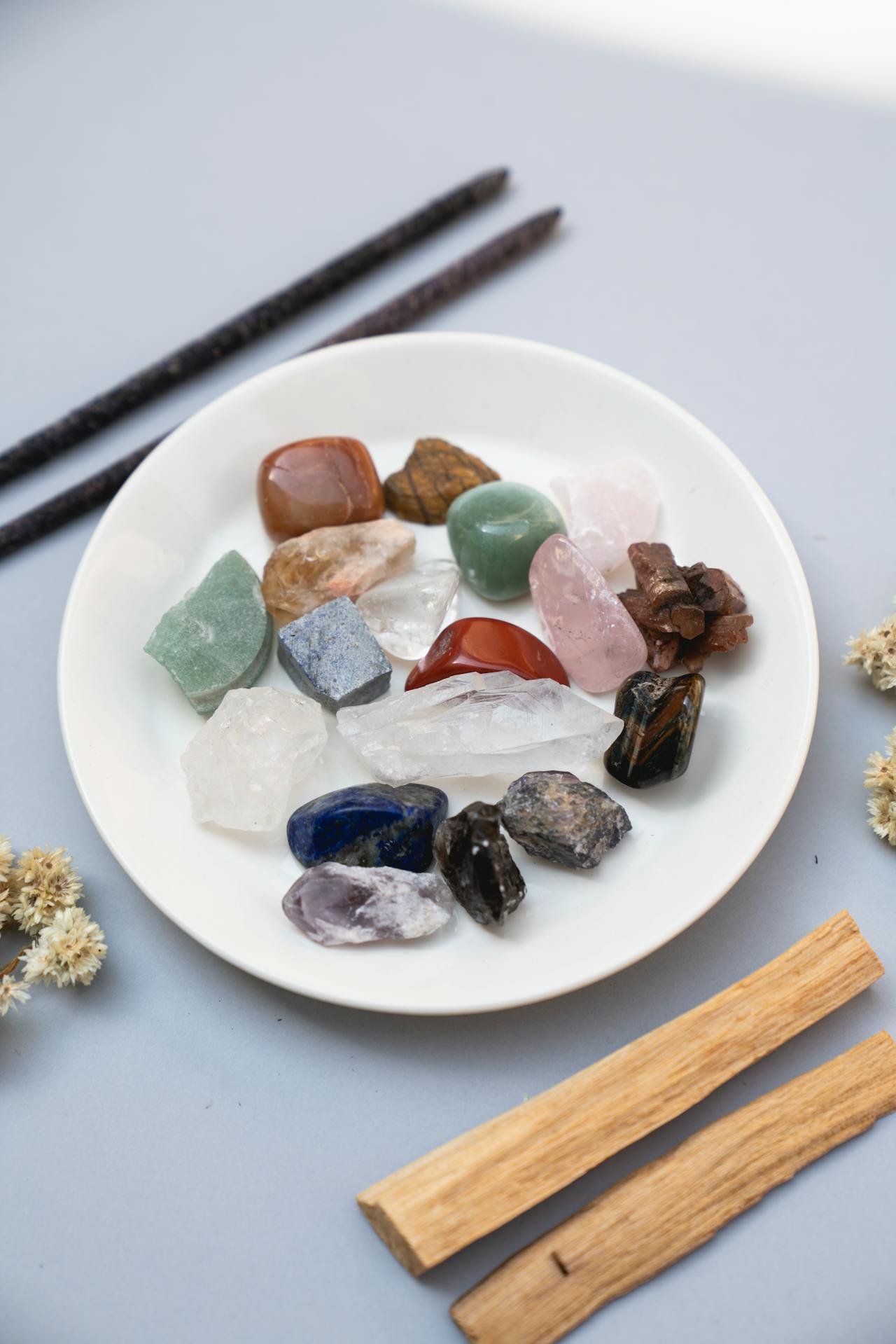
A collection of polished healing crystals in soft light, representing labradorite meaning and its transformative energy
What is labradorite?
Labradorite is a mineral in the feldspar family, the same broad group that makes up a large share of the Earth's crust. What sets it apart is labradorescence, a play of color that flashes across the surface in blues, greens, golds, and sometimes violet or fiery orange. Those colors aren't pigment. They come from light bouncing between microscopic layers inside the stone, so the flash appears and disappears as you move the piece around.
It was first documented in the late 1700s on the Labrador Peninsula, and it turns up today in Finland, Madagascar, and elsewhere. A rare Finnish variety with a full rainbow flash is sold as spectrolite. On the Mohs hardness scale, labradorite sits around 6 to 6.5, which makes it durable enough for jewelry but soft enough to scratch if you're careless with it.
The base color ranges from smoky gray to deep blue-green, and the quality of a piece is usually judged by how bright and broad its flash is. A stone can look plain and almost dull from one angle, then light up the moment you find the right tilt. That hidden-in-plain-sight quality is a big part of why the metaphysical world adopted it as a stone of secrets and revelation. If you're new to working with stones in general, our beginner's guide to healing crystals is a good place to start before you go deeper here.
What does labradorite mean spiritually?
Labradorite is best known as the stone of transformation. Because its color hides in the gray until light reveals it, practitioners connect it to the idea that your own gifts and potential are already there, waiting for the right conditions to shine. It's the crystal people reach for when they're standing at a threshold: a career change, a move, the end of one chapter and the uncertain start of another.
There's an old Inuit legend that the northern lights were once trapped inside the rocks along the Labrador coast until a warrior struck them with his spear and freed most of the light into the sky, leaving the rest behind in the stone. Whether or not you take the story literally, it captures how the crystal is understood: caught starlight, a piece of the aurora you can hold.
Spiritually, labradorite carries three main themes. It's a stone of intuition, said to sharpen your inner senses and make you more aware of messages from dreams, symbols, and gut feeling. It's a stone of protection, believed to seal the aura so you don't leak energy or absorb other people's moods. And it's a stone of magic and change, associated with people who work with ritual, divination, and self-reinvention. If you're curious about developing intuition itself, our guide to the clair senses and psychic abilities pairs naturally with this stone.
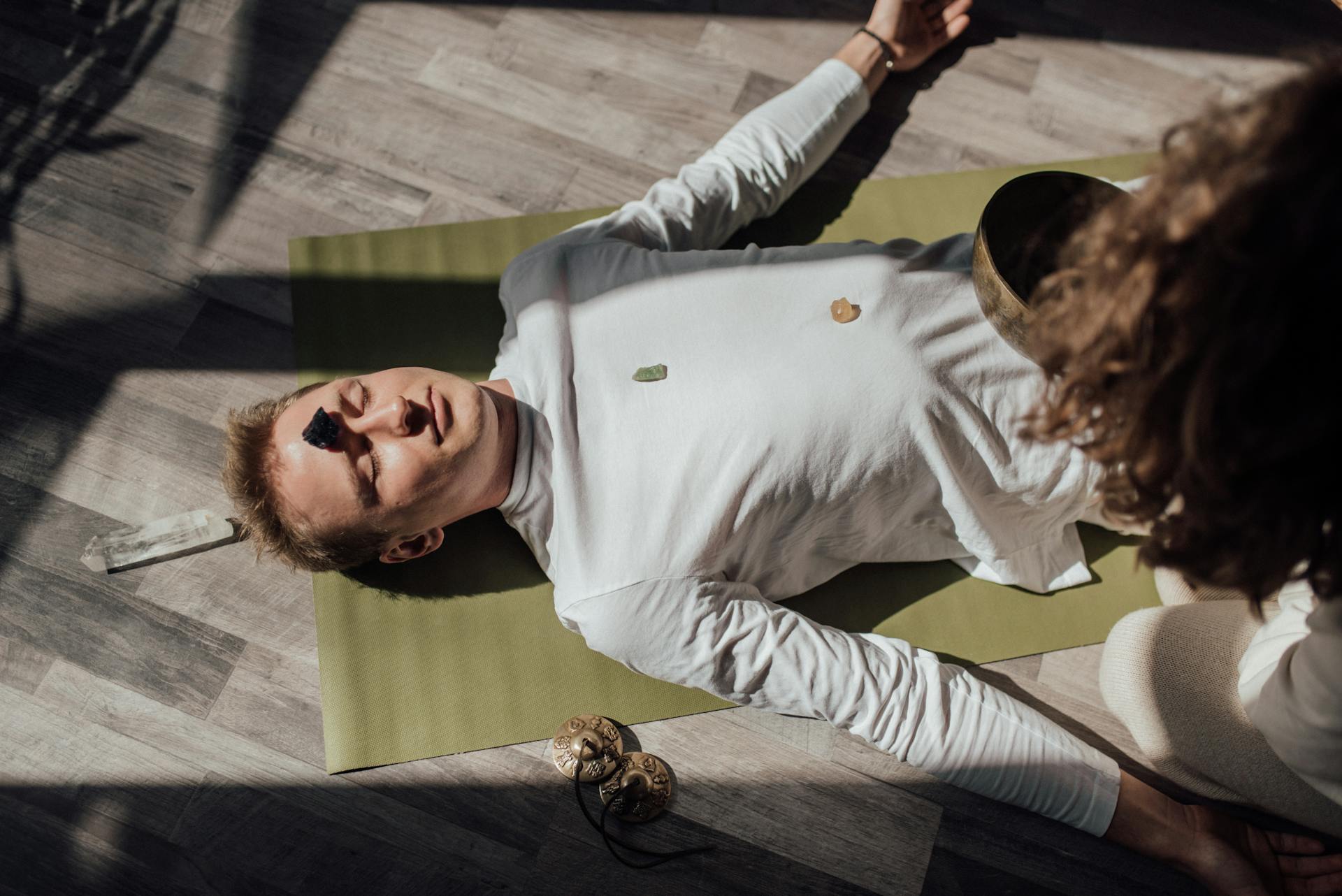
A person's hands resting near crystals during a quiet chakra practice
What are labradorite's healing properties?
It's worth being clear up front: crystal healing is a spiritual and folk practice, not a medical treatment, and nothing here replaces care from a doctor. With that said, here's what people who work with labradorite report and how they use it.
On the mental level, labradorite is treated as a calming stone for an overactive mind. People who feel scattered, anxious about change, or stuck in worry loops use it to steady their thoughts and cut through mental noise. Because it's tied to intuition, it's also a favorite for decision-making, the sense of quieting the chatter so you can hear what you actually feel.
Emotionally, it has a reputation as a shield. Empaths and highly sensitive people carry it to keep from soaking up the emotional weather of a crowded room. Rather than numbing you, the idea is that it helps you stay open without being drained, so you can be present with others and still come home with your energy intact. That protective quality is why it's often paired with grounding stones like black tourmaline for a fuller sense of security.
In folk practice, labradorite is also linked to imagination, creativity, and renewal, which is why writers, artists, and anyone starting something new tend to keep a piece on the desk. Think of its properties as support for a mindset, not a cure for a condition.
What chakras does labradorite work with?
Labradorite is primarily a third eye and crown chakra stone, with a strong connection to the throat as well. The blue and violet flashes line up with the upper energy centers, the ones traditionally tied to perception, insight, and spiritual connection.
The third eye chakra, at the center of the forehead, governs intuition and inner vision. This is labradorite's home base, and it's why the stone is such a common companion for meditation and dream work. If you want to go deeper into that energy center, our guide on how to open your third eye walks through the signs and techniques step by step.
The crown chakra, at the top of the head, is the seat of higher awareness and connection to something larger than yourself. Labradorite's rainbow flash is associated with lifting your perspective above the day to day. When the flash runs blue, many practitioners also work it with the throat chakra to support honest, clear communication, especially speaking a truth you've been holding back. If you want the full map of the energy system, see our beginner's guide to the seven chakras.
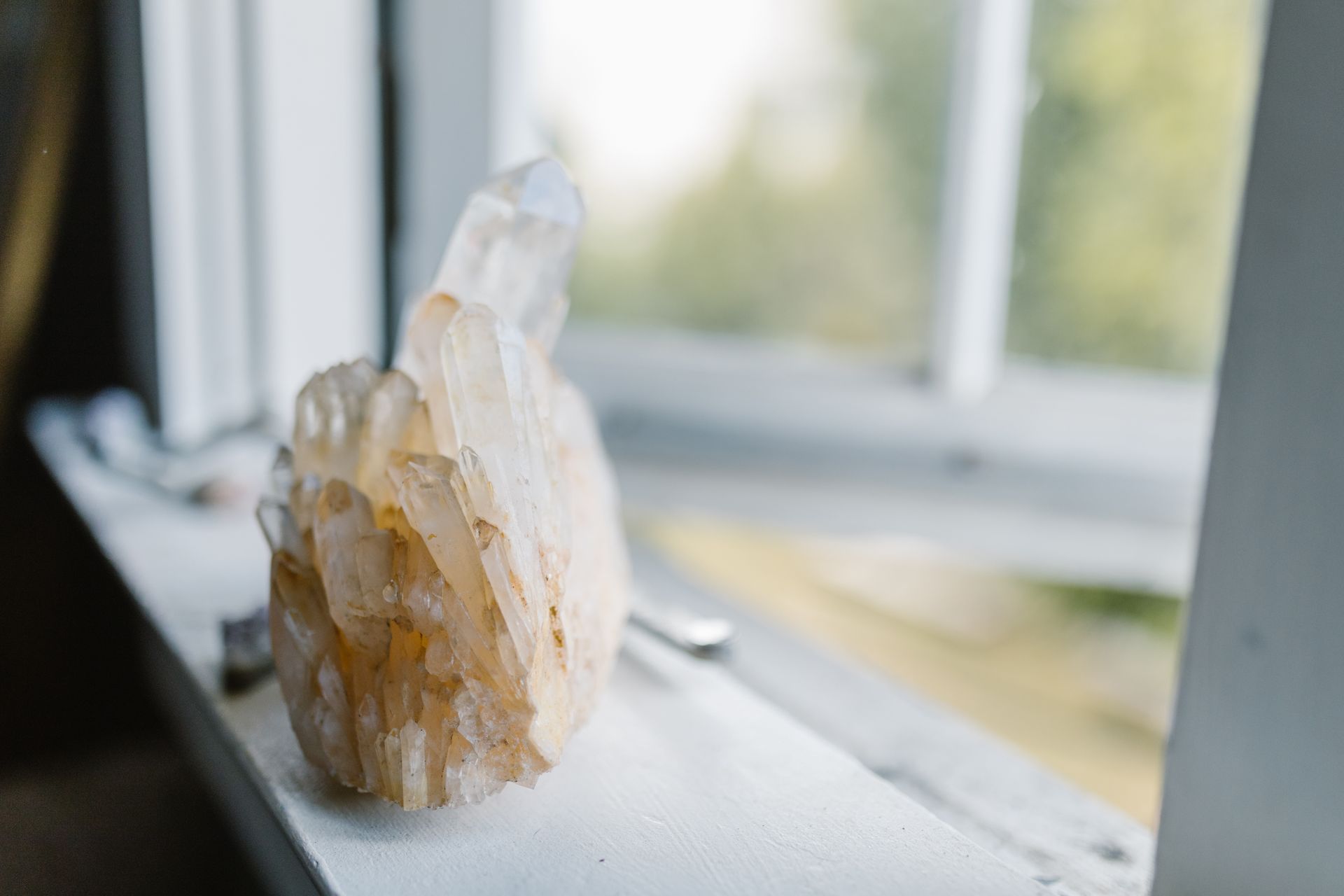
Polished crystals arranged for an energy healing session
How do you use labradorite?
You don't need a formal ritual to work with labradorite. Most of its uses come down to keeping it close and setting a clear intention for what you want it to support. Here are the most common ways people put it to work.
Whatever method you choose, the through line is attention. Handle the stone, name what you want, and check in with it now and then. The practice matters more than any single object.
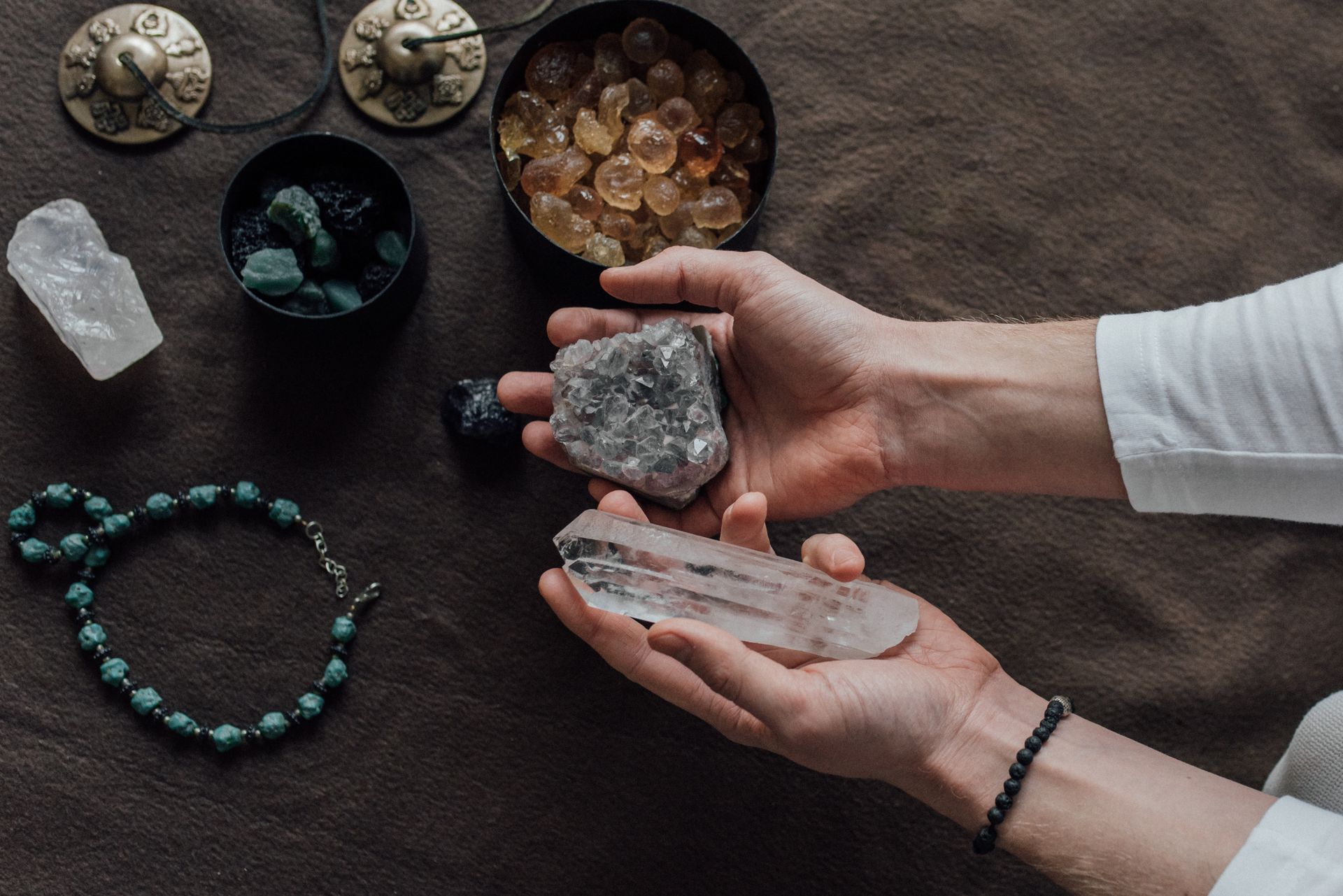
An assortment of healing crystals laid out on a soft cloth
Which zodiac signs benefit most from labradorite?
Labradorite isn't tied to a single sun sign the way a traditional birthstone is, but a few signs tend to resonate with it especially well. It's often recommended for Scorpio and Pisces, the two water signs most connected to intuition, mystery, and the inner world, since labradorite amplifies exactly those strengths.
Sagittarius has a traditional association with the stone too, valued for the way it supports vision, restlessness, and the drive to grow. Leo can benefit from its protective, grounding side, and Aquarius often connects with its themes of change, originality, and seeing past the obvious.
That said, labradorite is genuinely a stone for everyone. Because its core themes are transformation and protection during change, anyone standing at a crossroads can work with it regardless of their chart. To match stones to your own placements more precisely, see our guide to crystal healing by zodiac sign, and if you want to understand your birth stone connections, our overview of birthstones and their astrological ties is a useful companion.
How do you cleanse and charge labradorite?
Like any stone used often, labradorite is believed to pick up stagnant energy over time, so periodic cleansing keeps it feeling clear. The good news is it's easy to care for, with one important caution: it's a softer, layered stone, so you want to be gentle.
Safe ways to cleanse labradorite include smoke cleansing by passing it through incense or herb smoke, sound cleansing with a bell or singing bowl, and setting it on a bed of selenite or clear quartz overnight. You can also hold it under cool running water for a few seconds and dry it right away, but don't soak it. Because labradorite can have tiny fractures along its layers, long water baths and salt water are best avoided so you don't loosen the surface or dull the flash.
To recharge it, moonlight is the classic choice and a fitting one, given the stone's lunar, intuitive character. Set it on a windowsill under the full moon overnight and it'll be ready by morning. Gentle morning sunlight works too, but keep it brief, since long, intense sun exposure can fade some stones. Cleanse whenever the piece feels heavy or after any intense emotional stretch. If you like a monthly rhythm, pairing your cleansing with the moon's cycle and a batch of moon water is a simple habit to keep.
Frequently Asked Questions
Is labradorite a protective stone?
Yes, labradorite is widely regarded as one of the best protective crystals for the aura. Practitioners believe it seals the energy field so you don't absorb other people's moods or leak your own energy, which makes it a favorite of empaths and highly sensitive people.
Can labradorite go in water?
Briefly, but with care. Labradorite ranks about 6 to 6.5 on the Mohs scale and has natural layers that can hold hidden fractures. A quick rinse under cool running water is fine, but avoid long soaks and salt water, which can seep into the layers and dull the surface.
What is the difference between labradorite and moonstone?
Both are feldspar minerals with a glowing optical effect, but they show it differently. Labradorite flashes bold blues, greens, and golds across a gray body, while moonstone gives off a softer, milky white or blue sheen called adularescence. Energetically, labradorite leans toward transformation and protection, moonstone toward emotional flow and new beginnings.
What does it mean when your labradorite flash is strong?
A bright, broad flash simply means the stone's internal layers are aligned to catch and reflect light well, which is a mark of quality rather than a spiritual signal. Many people do find they're drawn to higher-flash pieces, and choosing the stone you feel pulled to is a fine way to select one.
How can you tell if labradorite is real?
Genuine labradorite shows labradorescence that shifts and disappears as you rotate the stone, and it feels cool and solid, with a hardness that resists easy scratching. Dyed or glass imitations often show color that stays put from every angle or looks painted on rather than glowing from within.
Bringing It Together
Labradorite earns its title as the stone of magic and transformation. It's the crystal for thresholds, the one that reminds you your own light is already there, waiting for the right angle to reveal it. Carry it through change, meditate with its flash, keep it dry and gentle, and let its caught-starlight glow steady your intuition when the path ahead feels uncertain. To connect its energy to your own chart, generate your free natal chart to see the moon and third-eye-linked placements that shape your inner life, pull a tarot reading when you want clarity on a decision, or run a compatibility report to understand the connections that matter most to you.