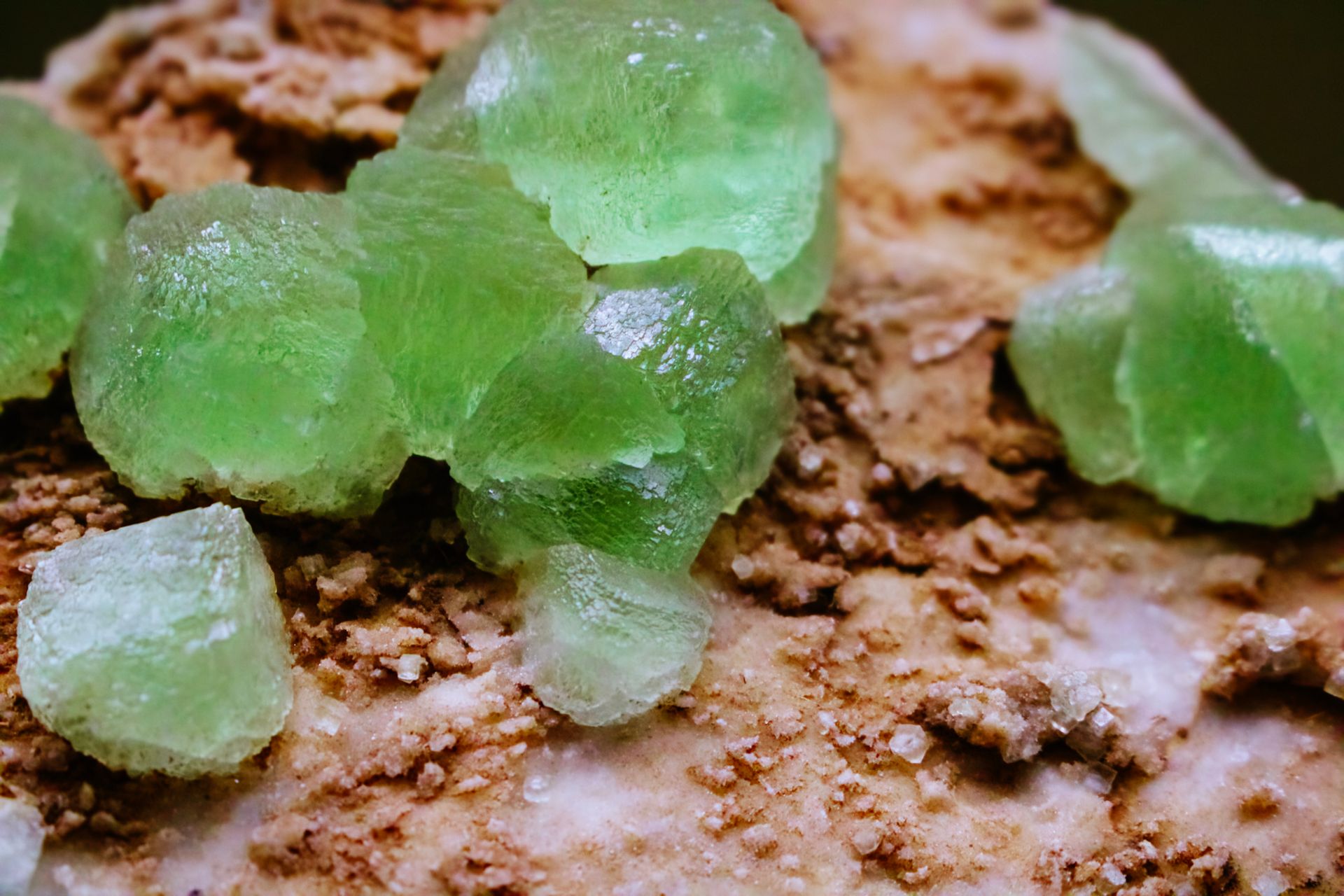
Moldavite Meaning: Healing Properties, Uses, and How to Work With It
Moldavite is the crystal people reach for when they want their life to change fast. Its meaning centers on transformation, spiritual awakening, and cosmic connection, and it has a reputation unlike any other stone: hold a real piece and you might feel a rush of heat move through your hands, your chest, or your head within minutes. That's the famous moldavite flush, and it's why this mossy green glass is both loved and treated with a little caution. Moldavite isn't a gentle, soothing stone. It's the one that shakes things loose.
There's a reason it feels otherworldly. Moldavite literally fell from the sky. It formed around 15 million years ago when a meteorite slammed into what's now central Europe, melting the ground into glass that rained back down as green droplets. This guide covers what moldavite means, what it actually is, its healing properties, how it works with the chakras and the zodiac, and the single biggest question with this stone: how to tell real moldavite from the flood of fakes. Let's start with the meaning.
What You'll Learn
What Does Moldavite Mean?
Moldavite is the Stone of Transformation. Where a stone like rose quartz nurtures and soothes, moldavite accelerates. Its meaning is tied to rapid change, spiritual evolution, and what practitioners call cosmic consciousness, the sense of being connected to something far larger than everyday life. Because it came from space and struck the Earth, it's seen as a bridge between the cosmic and the earthly, carrying what many describe as extraterrestrial or high-vibration energy.
The traditions around moldavite lean hard into that story. One old legend links it to the Holy Grail, describing an emerald that fell from the heavens, which is why you'll sometimes hear it called the Grail Stone. Whatever you make of the folklore, the theme stays consistent: moldavite is the crystal of breakthrough. People work with it when they're ready to leave something behind, whether that's a job, a relationship, a belief, or an old version of themselves, and they want the universe to hurry the process along. The common warning that comes with it is only half a joke. Be careful what you ask for, because moldavite tends to deliver.
What Is Moldavite? A Stone Born From a Meteorite
Here's the honest, geology-first answer most listings skip: moldavite isn't technically a crystal or a mineral at all. It's a natural glass. Around 15 million years ago, a large meteorite hit central Europe in the event that carved out the Ries crater in what's now southern Germany. The impact was violent enough to melt the surrounding rock and fling it high into the atmosphere, where it cooled and solidified into glass before falling back to Earth. Scientists call this kind of impact glass a tektite, and moldavite is the green variety.
Almost all real moldavite is found in one small region: the Czech Republic, scattered across the countryside near the Vltava River. The German name for that river is the Moldau, which is where the name moldavite comes from. Its color ranges from a deep forest or bottle green to a paler olive, and raw pieces often have a wrinkled, fern-like, etched surface from millions of years buried in sediment. Because it's a glass, it has more in common with obsidian than with quartz, and our obsidian meaning guide covers that other natural glass if you're drawn to stones like this. Moldavite is fairly soft at about 5.5 on the Mohs scale, and it's genuinely rare. The main deposits are being mined out, which is exactly why prices keep climbing and why fakes are everywhere.
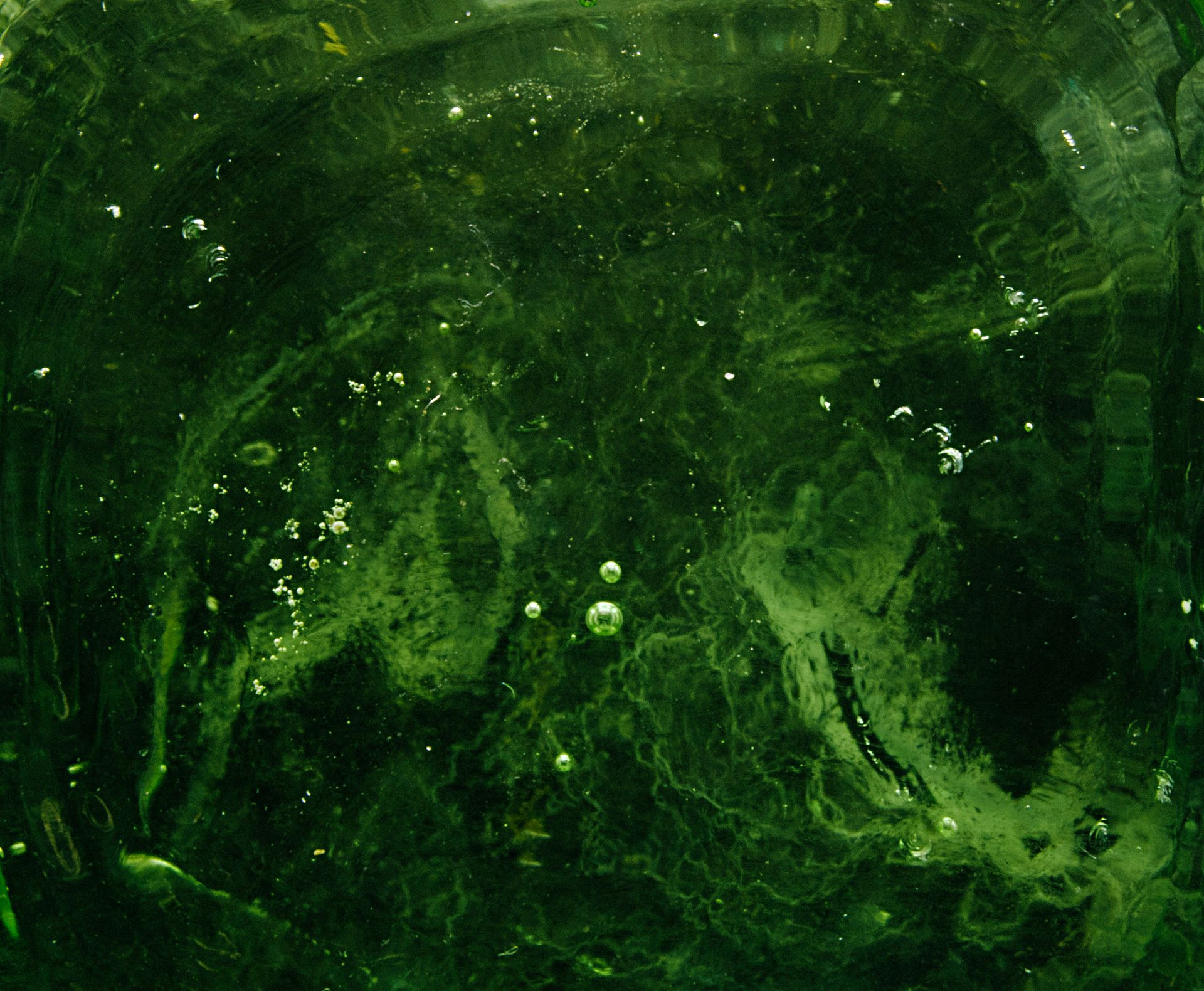
Swirling green glass with bubbles, evoking the molten origin of moldavite tektite
Moldavite Healing Properties and Benefits
Moldavite's reputation is built around accelerating growth. On the emotional level, it's used to break through stagnation, that feeling of being stuck in a loop you can't think your way out of. People turn to it when they know a change is overdue but keep putting it off, because moldavite is said to remove the excuses and push the shift into motion. It's also worked with for spiritual awakening and the intense experiences that can come with it, from vivid dreams to a sudden restlessness that reorders your priorities.
Spiritually, this is a high-vibration stone associated with expanding consciousness, deepening meditation, and strengthening the connection to guides, intuition, and higher realms. In crystal lore it's linked to memory, cellular renewal, and vitality, though these are traditional associations rather than medical facts, and moldavite is not a substitute for medical care. What sets it apart from nearly every other stone is speed. Amethyst or clear quartz can be worn all day, every day, but moldavite is more like a catalyst you reach for deliberately, in shorter sessions, when you actually want the ground to move under you.
The Moldavite Flush: What People Feel
The moldavite flush is the phenomenon that made this stone famous. When many people hold real moldavite for the first time, they report a wave of heat spreading through the palm, up the arm, into the chest, or rushing to the head, sometimes with tingling, lightheadedness, flushed cheeks, or a racing heart. For some it's pleasant and energizing. For others it's so intense they have to set the stone down and come back to it slowly.
It's fair to stay clear-eyed here. These are widely reported subjective experiences, not something proven in a lab, and plenty of people feel nothing at all, especially at first. Sensitivity often builds with repeated use. If you do feel the flush and it becomes uncomfortable, the standard advice is simple: put the stone down, hold something grounding, drink water, and work in shorter sessions until your system adjusts. The flush is a big part of why moldavite gets treated as a stone to respect rather than one to wear casually and forget about.

A person resting with a healing crystal on the third eye, representing how moldavite is used in meditation
Moldavite and the Chakras
Moldavite is best known as a heart chakra stone, which makes sense given its green color. On the heart it's said to open you to unconditional love and clear out old emotional wounds so compassion can move more freely. But it doesn't stop there. Moldavite is one of the stones most associated with the upper energy centers too, activating the third eye to sharpen intuition and inner vision, and reaching the crown to connect you with higher guidance and cosmic awareness.
That heart-to-crown span is part of why the flush can feel so full-body. Many practitioners describe moldavite as activating the entire chakra column at once, opening a channel from the heart straight up through the head. If you're newer to energy work, our seven chakras guide explains each center, and the how to open your third eye guide pairs naturally with moldavite's reputation for boosting intuition and psychic perception.
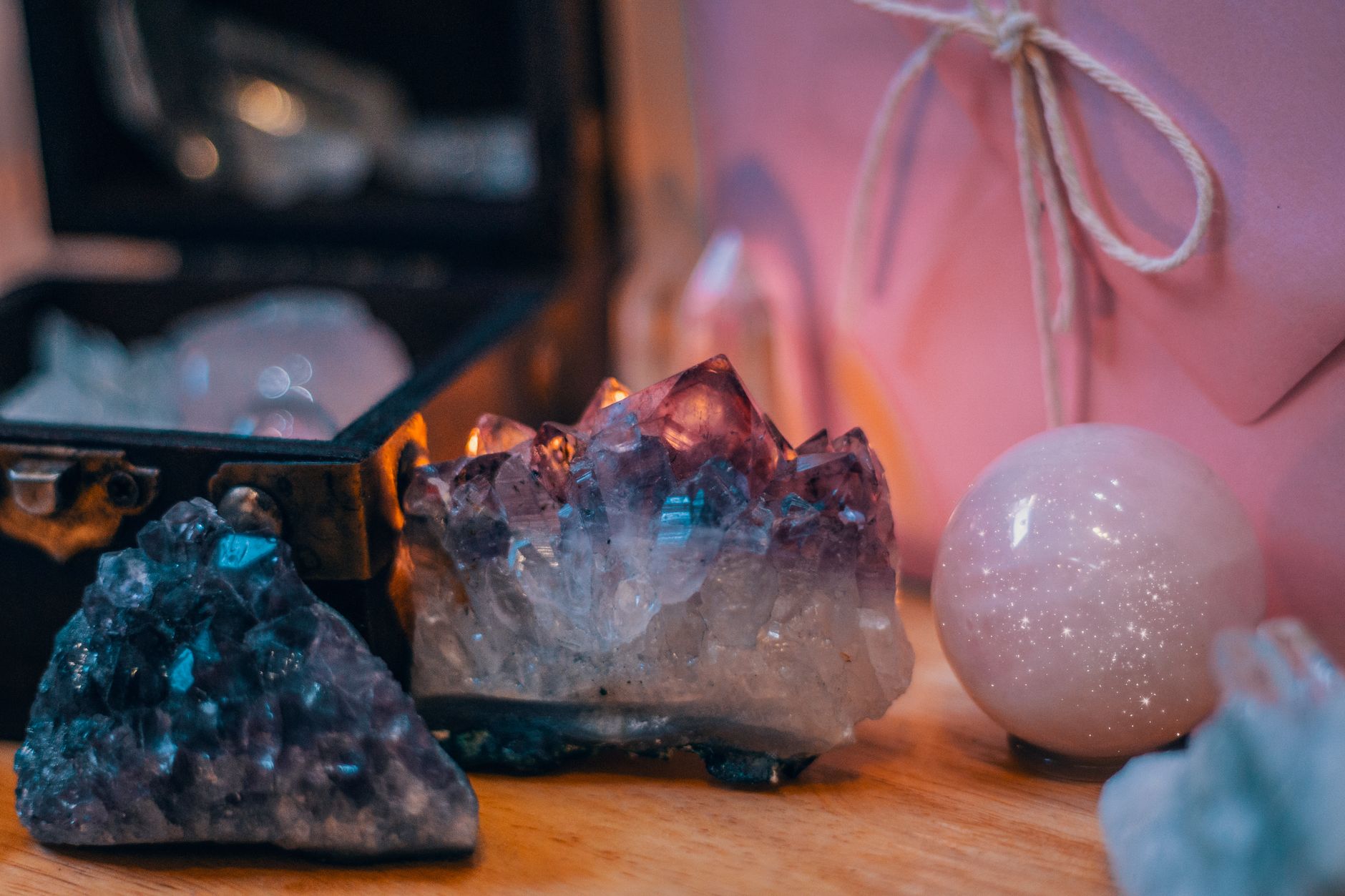
Seven chakra crystals laid out for energy balancing, representing moldavite's link to the heart, third eye, and crown
Moldavite Zodiac and Astrology
Unlike most crystals, moldavite isn't tied to a single zodiac sign or ruling planet. Because it came from the cosmos rather than forming inside the Earth, it's considered a stone for all signs and all planets, universal energy that doesn't belong to one corner of the chart. That said, some signs are drawn to it more than others. Scorpio, the sign of death and rebirth, resonates with moldavite's transformation theme. Aquarius, the cosmic rule-breaker, matches its otherworldly, future-facing energy. And any chart heavy on the outer planets, Uranus, Neptune, and Pluto, the planets of awakening, dissolution, and deep change, tends to feel at home with it.
Rather than assign moldavite to one sign, a more useful approach is to look at where change is already brewing in your own chart. Transits from the outer planets, a Pluto square or a Uranus opposition, often line up with the kind of upheaval moldavite is said to speed along. To see where transformation is active for you right now, you can generate your free natal chart and check which houses the outer planets are lighting up.
How to Use Moldavite Safely
The golden rule with moldavite is to start small and go slow. Because the energy is strong, most people begin with a small piece and short sessions rather than wearing a large pendant around the clock. Hold it during meditation for a few minutes, place it on the heart or third eye while lying down, or keep a small tumbled piece nearby while you set an intention for a change you're ready to make. Pay attention to how you sleep and feel over the following days, since moldavite's effects often show up as shifts in your life rather than a warm glow in the moment.
Pairing matters. Moldavite is frequently combined with grounding stones to soften its intensity and keep you anchored while it works. Black tourmaline and hematite are the usual companions, held in the opposite hand or placed at the feet to balance moldavite's upward pull with a downward, stabilizing current. If you ever feel spacey, ungrounded, or wired after working with it, that grounding pair, plus water and rest, is the reset. Think of moldavite as the accelerator and your grounding stones as the brakes.
How to Cleanse and Charge Moldavite
Moldavite is easy to care for as long as you remember it's a soft glass. For cleansing, moonlight is the preferred method, especially the full moon, which suits its high, receptive energy. You can also cleanse it with the smoke of sage or palo santo, or with sound from a singing bowl or bell. Because it's brittle and only about 5.5 in hardness, handle it gently and store it on its own so harder stones can't scratch or chip it.
Skip the harsh approaches. Long soaks and salt water aren't worth the risk with a soft, valuable, easily damaged stone, and prolonged direct sunlight isn't necessary and can heat and stress it. A quick moonlight bath or a pass through smoke is all moldavite needs, and many people feel it barely needs cleansing at all because its energy stays so consistently high. If you like to rest your stones on a self-cleansing slab, selenite works well and won't scratch it.
Real vs Fake Moldavite
This is the section that matters most, because moldavite is the single most faked stone in the crystal world. Real moldavite is rare and expensive, so if you see a large, flawless, cheap piece, it's almost certainly fake. The most common counterfeit is green bottle glass, melted and pressed into a mold, sometimes with a fake texture stamped on to imitate the natural surface. Resin copies exist too.
A few tells help you spot the real thing. Genuine moldavite has an irregular, natural, etched or fern-like texture, never a smooth molded surface with a seam line running around it. Look for internal bubbles and flowing, swirl-like patterns, which are natural to impact glass, but be suspicious of lots of large, perfectly round, evenly spaced bubbles, which point to molded manufactured glass. The color should be a natural forest or olive green, not a uniform, too-bright emerald or an artificial neon. Real pieces feel light, and they come with a real price. Most importantly, buy from a reputable dealer who can confirm the piece is from the Czech Republic, ideally with certification for larger stones. Don't confuse moldavite with goldstone either, which is a manmade glass full of copper sparkles and isn't a natural stone at all. For a quick reference on moldavite's correspondences, see the moldavite crystal card in our crystal library.
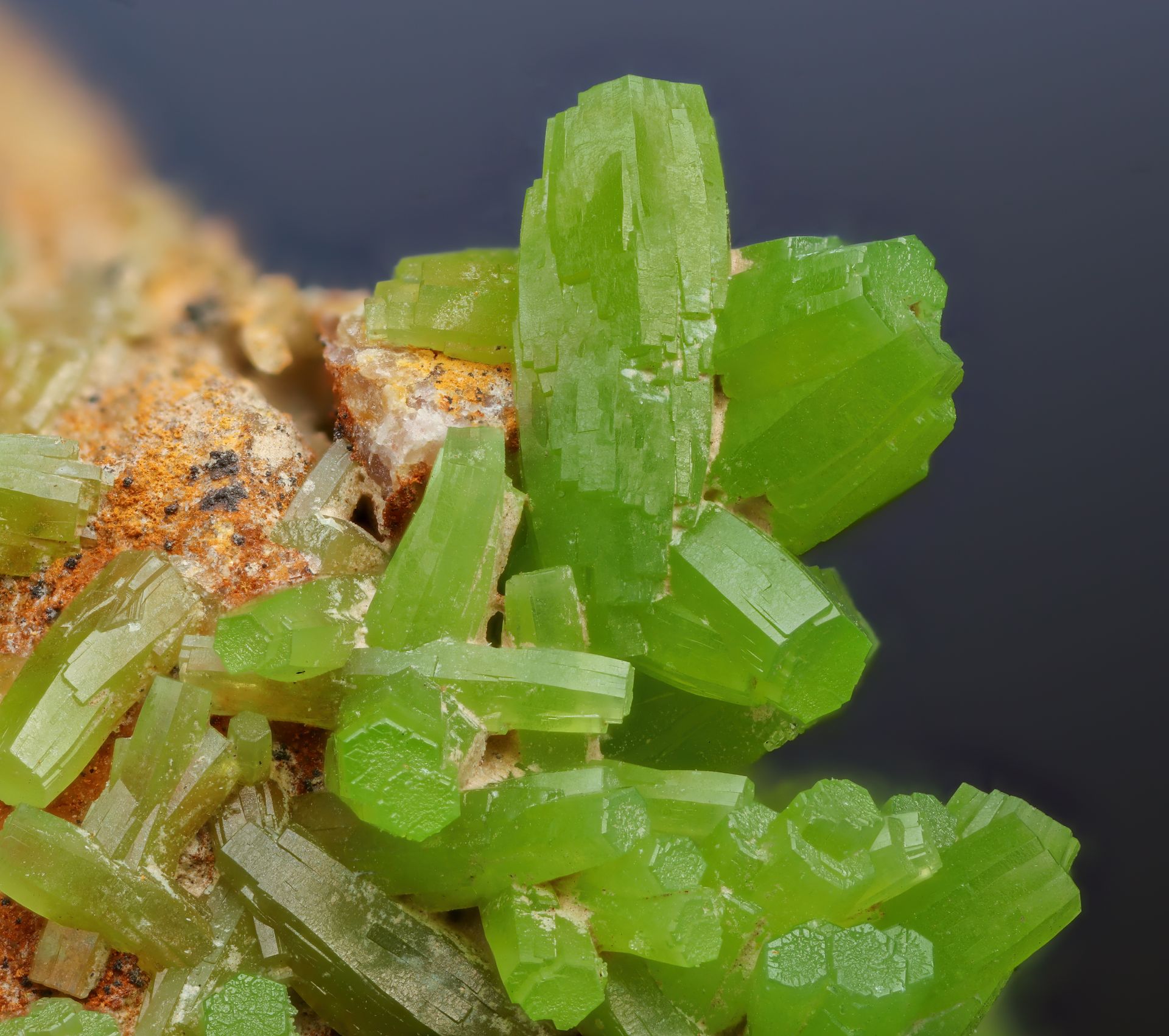
Raw green mineral specimen, representing how to identify authentic moldavite by its natural color and texture
Frequently Asked Questions
What is moldavite good for?
Moldavite is used mainly for transformation, spiritual awakening, and rapid change. People work with it to break out of stagnation, deepen meditation, open the heart, and accelerate personal or spiritual growth. It's considered a high-vibration catalyst stone, reached for deliberately when you want a shift rather than gentle daily comfort.
Is moldavite a real crystal?
Moldavite is real, but technically it's a natural glass, not a crystal or mineral. It's a tektite, formed about 15 million years ago when a meteorite impact melted rock into green glass. That glassy, extraterrestrial origin is exactly what gives moldavite its cosmic, high-vibration reputation.
Why do people feel dizzy or hot holding moldavite?
That sensation is the moldavite flush, a widely reported wave of heat, tingling, or lightheadedness some people feel when holding real moldavite. It's a subjective experience, not a proven effect, and many people feel nothing at first. If it's intense, set the stone down, ground yourself, and use shorter sessions.
How can you tell if moldavite is real or fake?
Real moldavite has a natural etched or fern-like texture, forest-to-olive green color, and internal swirls with some bubbles, and it carries a high price. Fakes are usually molded green glass with a seam line, too-bright color, and many perfectly round bubbles. Buy from a reputable dealer with Czech provenance.
Should you wear moldavite every day?
Most people don't. Because moldavite's energy is strong and can feel intense, it's usually worked with in shorter, intentional sessions rather than worn around the clock, at least at first. Pairing it with grounding stones like black tourmaline or hematite helps if you want to keep it on longer.
Bringing It Together
Moldavite is the crystal of transformation, a piece of green glass born from a meteorite impact that carries a reputation for shaking life loose and speeding change along. Respect its intensity, start with small pieces and short sessions, keep a grounding stone close, and buy carefully so you end up with the real thing instead of molded bottle glass. Handled with a little care, it's one of the most powerful catalysts in the crystal world. To see where transformation is already moving in your life, generate your free natal chart and find the houses your outer planets are activating, pull a tarot reading when you need guidance on a change you're facing, or run a compatibility report to understand the relationships shifting around you.