Sunstone Meaning: Healing Properties, Uses, and the Stone of Joy
Sunstone is a warm, glittering feldspar whose meaning centers on joy, confidence, and vitality. It's the crystal people reach for when they want to feel lighter, bolder, and more like themselves, which is why it's often called the stone of joy or the stone of light. Its signature is a coppery, metallic sparkle that seems to catch fire when the light hits it, and that inner shimmer is exactly why so many traditions tied it to the sun.
If moonstone is the soft, intuitive stone of the night, sunstone is its daytime twin: outgoing, energizing, and unapologetically bright. Here's what sunstone means, how people use it, how it connects to Leo and the Sun in astrology, and how to tell a real feldspar from the man-made glass that gets sold under its name.
What You'll Learn
What Is Sunstone?
Sunstone is a member of the feldspar family, the same broad group that gives us moonstone, labradorite, and amazonite. Most sunstone is a plagioclase feldspar, and it usually shows up in warm shades: peach, orange, copper-red, honey-gold, and golden-brown. It ranks about 6 to 6.5 on the Mohs hardness scale, which makes it durable enough for everyday jewelry but soft enough to scratch if you're careless.
What sets sunstone apart is its glitter. Trapped inside the stone are countless tiny, plate-like inclusions, usually hematite, goethite, or, in the finest material, flakes of pure copper. When light strikes those flakes, it bounces back as a shimmering, metallic sparkle. Gemologists call this optical effect aventurescence, sometimes described as schiller. It's the same kind of internal light-play that makes moonstone glow and labradorite flash, just tuned to warm, sunny tones instead of cool ones.
What Does Sunstone Mean?
Sunstone's meaning is bound up with the sun itself: warmth, light, life, and forward motion. Across cultures it's been treated as a stone of leadership, generosity, and personal power, the energy of someone who lights up a room without trying. Ancient Greek lore linked it to the sun god, and it has long carried associations with good fortune and abundance.
In modern crystal practice, people describe sunstone as a mood-lifter and a confidence stone. It's the crystal you keep close when you feel dimmed down, drained, or stuck in the shadows of self-doubt. Where a calming stone like amethyst is about turning inward, sunstone is about turning outward: showing up, speaking up, and taking the lead. That's why it's so often called the stone of joy. Whether or not a stone can carry energy, that symbolism gives it a clear, uplifting job to do.
Sunstone Healing Properties and Benefits
In metaphysical tradition, sunstone is used to support optimism, motivation, and a sense of your own worth. People who feel like they're always giving and never receiving are often drawn to it, because its reputation is for restoring warmth and enthusiasm when your inner light feels low. It's associated with independence, healthy self-reliance, and the courage to make your own choices.
Common intentions people bring to sunstone include:
A quick, honest note: these are traditional and intuitive uses, not medical claims. Sunstone is not a treatment for depression or any health condition. If you're struggling with your mood, a crystal can sit alongside real support, but it's not a substitute for a doctor or therapist.
Sunstone, the Sacral and Solar Plexus Chakras
Because of its warm color range, sunstone is most often linked to two energy centers in the lower body. Its orange tones tie it to the sacral chakra, the center of creativity, pleasure, and emotional flow that sits below the navel. Its golden tones connect it to the solar plexus chakra, the seat of confidence, willpower, and identity in the upper belly.
That pairing is a big part of sunstone's appeal. The sacral chakra governs how freely you feel and create, while the solar plexus governs how boldly you act on it. Sunstone is used to warm up both at once, which fits its reputation as a stone that helps you enjoy life and then step forward into it. Some practitioners also touch the root chakra with it for grounding. If you're new to the energy-center map, the seven chakras guide is a good place to start, and you can see how stones and signs line up in the zodiac and chakras overview.
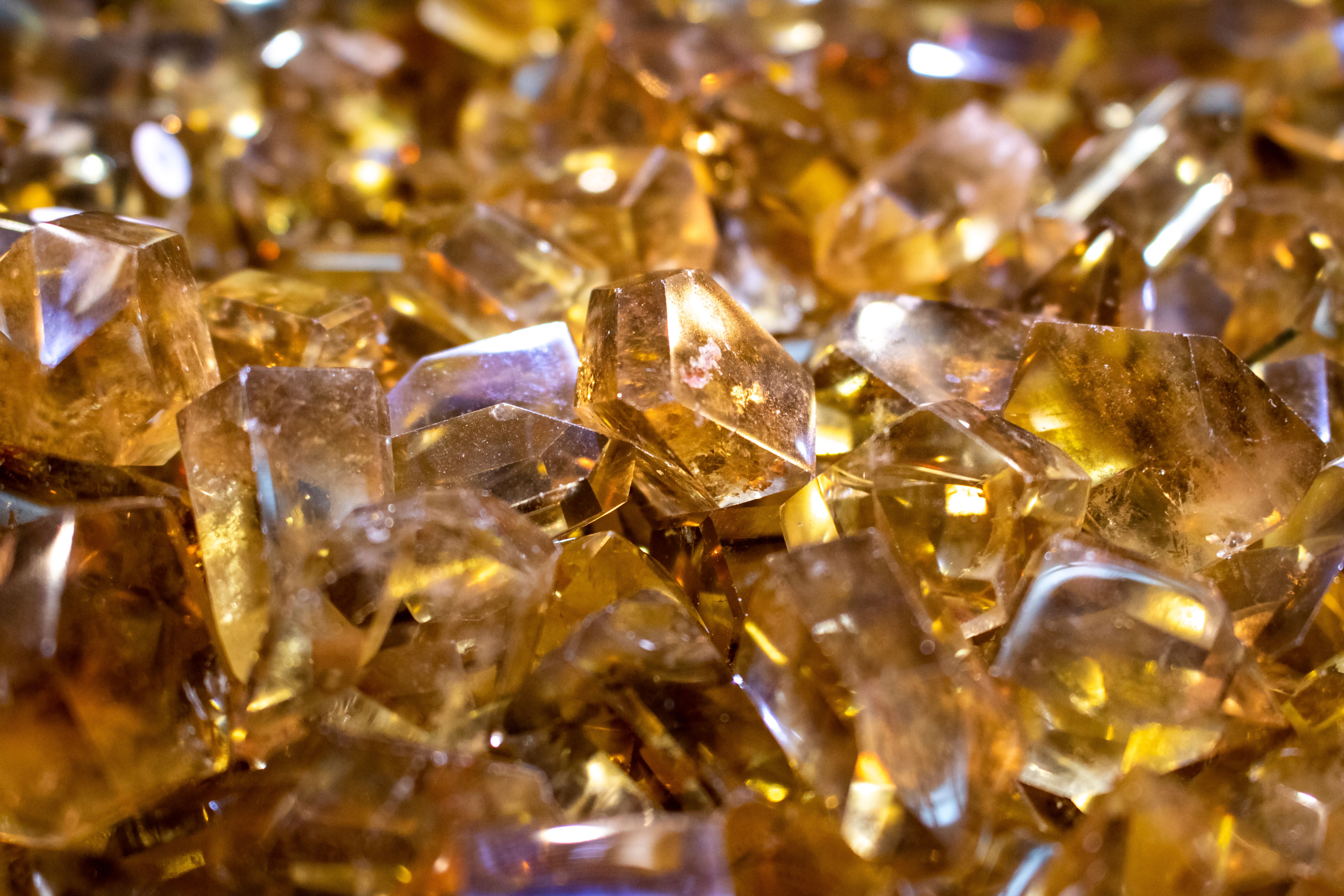
Warm golden crystals glowing with the same solar energy sunstone brings to the sacral and solar plexus chakras
Sunstone Zodiac Signs and Astrology
Sunstone's ruling planet is, fittingly, the Sun, so it has a natural home with Leo, the sign the Sun governs. Leo's warmth, confidence, and love of the spotlight mirror everything sunstone is meant to encourage, which makes it a popular birthday stone for Leo season. As a fire-toned crystal, it also resonates with the other fire signs, Aries and Sagittarius, who share that bold, outgoing streak.
Sunstone carries a long folk association with Libra as well, where it's used to encourage independence and help balance the people-pleasing that Libras can slip into. In a birth chart, you might reach for sunstone when your Sun or your first house feels dimmed, or when you want to lean into leadership and self-expression. To see which stones suit your own placements, the crystal healing by zodiac sign guide breaks it down sign by sign.
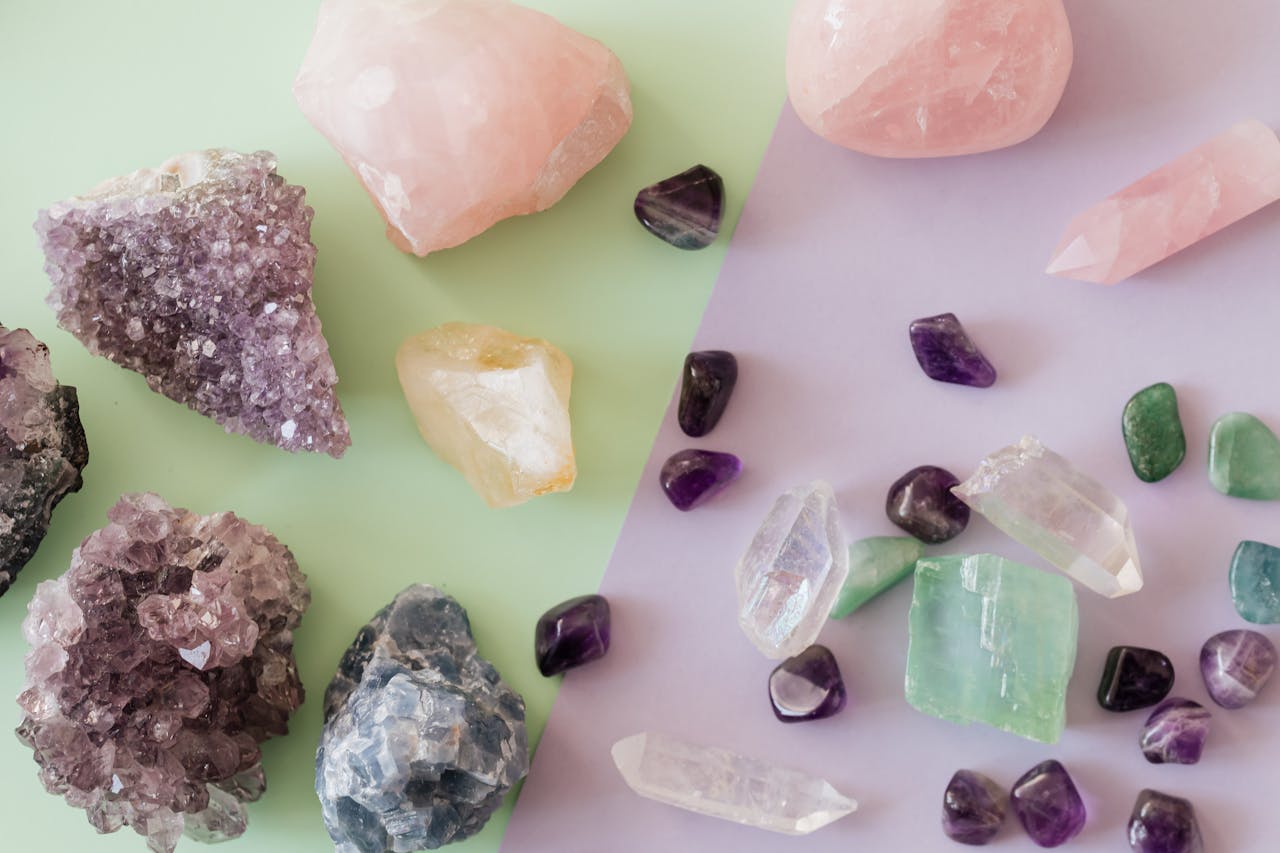
Healing crystals arranged on a zodiac wheel showing sunstone's link to Leo and the Sun
Sunstone vs Moonstone: Solar and Lunar Twins
Sunstone and moonstone are often sold and gifted as a pair, and it's easy to see why. Both are feldspars with that dreamy internal glow, but they sit at opposite ends of a natural rhythm. Moonstone is cool, silvery, and inward, tied to intuition, emotions, and the receptive, reflective energy of the Moon. Sunstone is warm, golden, and outward, tied to confidence, action, and the radiant energy of the Sun.
People who work with both describe them as a balance: moonstone for the days you need to feel and receive, sunstone for the days you need to do and give. Together they mirror the sun and moon pairing at the heart of astrology, where your Sun sign is your core identity and your Moon sign is your inner emotional world. Keeping the two stones side by side is a simple way to honor both halves of yourself, the bright and the quiet, without picking one over the other.
A radiant sun and moon in a celestial sky representing sunstone and moonstone as solar and lunar twins
What Is Oregon Sunstone?
The most famous sunstone in the world comes from the high desert of Oregon, where it's mined in Lake and Harney counties. Oregon sunstone is special because its color and sparkle come from tiny flecks of elemental copper, which is unusual for a gemstone. That copper produces everything from pale straw and soft pink to deep red and even rare green and blue-green, sometimes with two colors in a single stone.
Oregon sunstone is clear enough to be faceted into genuine gemstones, not just tumbled or cut into cabochons, and the finest red and green stones are prized by collectors. It's so tied to the state that Oregon named it the official state gem. Sunstone is also found in India, Tanzania, Norway, Russia, and Canada, but the copper-bearing Oregon material is the reference point most jewelers mean when they talk about top-grade sunstone.
Is Sunstone the Viking Navigation Stone?
You'll often read that sunstone was the legendary Viking navigation stone, used to find the sun on cloudy days at sea. It's a great story, but it's almost certainly not about this gem. Norse sagas mention a solarsteinn, or sunstone, that helped sailors locate the hidden sun, and researchers think that tool worked by detecting polarized light through the clouds.
The catch is that the feldspar sunstone in your jewelry box doesn't have that polarizing property. The stones that fit the Viking legend are Iceland spar, a clear form of calcite, and possibly cordierite, both of which split or shift light in a way you can actually use to navigate. So when a listing calls a copper-flecked orange gem the Viking sunstone, treat it as poetic branding, not history. It's a case where two very different stones ended up sharing one evocative name.
Real vs Fake Sunstone
The most common sunstone impostor isn't another mineral at all, it's goldstone: a man-made glass packed with copper flecks. Goldstone was invented to imitate exactly the sparkle sunstone is famous for, and it's frequently sold as sunstone to people who don't know the difference. Here's how to tell them apart:
Real sunstone is also a feldspar, so it has hardness and cleavage a glass copy won't share, and it feels cooler and heavier in the hand. Watch out for confusion with green aventurine, which has its own sparkle from a different mineral, and be skeptical of stones that are impossibly bright and flawless. When in doubt, buy from a seller who can name the origin, since honest dealers of Oregon material are usually happy to prove it.
Does Sunstone Actually Work?
Here's the straight answer this site always gives: there's no scientific evidence that crystals emit, store, or direct any kind of healing energy, and sunstone is no exception. Controlled studies of crystal effects point to the placebo response, meaning the benefit comes from your own belief and focus rather than the stone.
That doesn't make sunstone useless. A warm, bright stone you carry on purpose becomes a physical reminder of an intention, and that focus is real even if the mechanism isn't magic. Holding a sunstone before a hard conversation, or setting one on your desk during a heavy season, can genuinely shift your mindset the same way a photo or a written affirmation does. The honest way to use it is as a tool for attention and ritual, not as a source of power outside yourself. Keep your expectations grounded and sunstone can still earn its place.
How to Use and Cleanse Sunstone
Sunstone is easy to live with. People carry a tumbled stone in a pocket or bag, wear it as a ring or pendant, set it on a desk or windowsill, or add it to a crystal grid built around confidence and joy. A simple practice is to hold it in the morning, take a slow breath, and name one bold thing you want to do that day. It pairs naturally with citrine and carnelian for a warm, motivating trio.
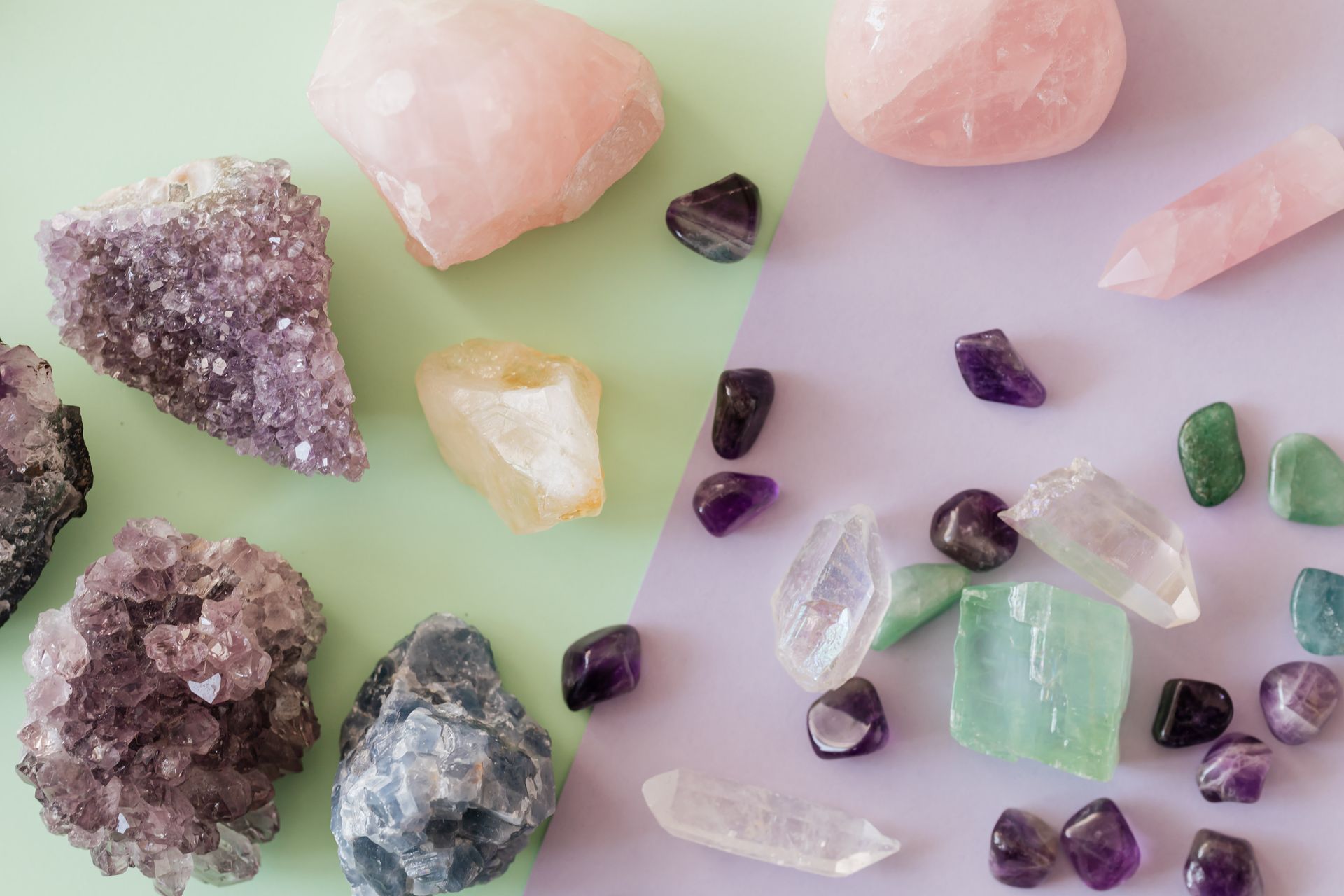
A collection of tumbled healing crystals for beginners including warm sunstone tones on a soft surface
To cleanse it, sunlight is the obvious and fitting choice. Feldspar sunstone doesn't fade the way amethyst or rose quartz can, so a few hours in morning sun both clears and charges it while echoing its solar meaning. You can also use sound, smoke from herbs, or a night under the moon if you want to balance it with lunar energy. It tolerates a quick rinse, but dry it right away and avoid long soaks and knocks, since feldspar can chip along its cleavage. The same care routine you'd use for cleansing tarot cards works well here too.
Frequently Asked Questions
What is sunstone good for?
Sunstone is traditionally used to lift low mood, build confidence, and reconnect you with joy, creativity, and personal power. It's linked to the sacral and solar plexus chakras and to the Sun in astrology. These are symbolic and intuitive uses, not medical treatments.
What is the difference between sunstone and moonstone?
Both are feldspars with an inner glow, but they're opposites in energy. Moonstone is cool and inward, tied to intuition and emotion and the Moon. Sunstone is warm and outward, tied to confidence and action and the Sun. Many people work with the two together for balance.
Can sunstone go in the sun?
Yes, and it's one of the few stones sunlight actually suits. Feldspar sunstone doesn't fade in light, so a few hours of morning sun cleanses and charges it while matching its solar theme. Just avoid leaving delicate settings in harsh heat for days.
Is my sunstone real or goldstone?
Goldstone is man-made glass with dense, perfectly even copper glitter that looks identical from every angle. Real sunstone has uneven, directional sparkle that flashes as you tilt it, plus natural color variation and the weight and cleavage of a true feldspar.
What zodiac sign is sunstone for?
Sunstone belongs first to Leo, the sign the Sun rules, and suits the other fire signs, Aries and Sagittarius. It also has a folk link to Libra, where it's used to support independence and healthy boundaries.
Bringing It Together
Sunstone is the crystal of warmth, confidence, and joy, a glittering feldspar that has stood in for the sun in cultures around the world. Whether you're drawn to Oregon's copper-flecked gems or a simple tumbled pocket stone, its value is the same: a bright, tangible reminder to step into your own light. Pair it with its lunar twin, keep your expectations honest, and let it prompt the boldness you already have.
Curious how your own chart lines up with the Sun's warmth and confidence? Explore your free natal chart to find your Sun and Leo placements, pull a tarot reading for a nudge toward joy, or check your compatibility with someone who lights you up.