Two of Swords Tarot Card Meaning: Upright, Reversed, Love, Career, and More
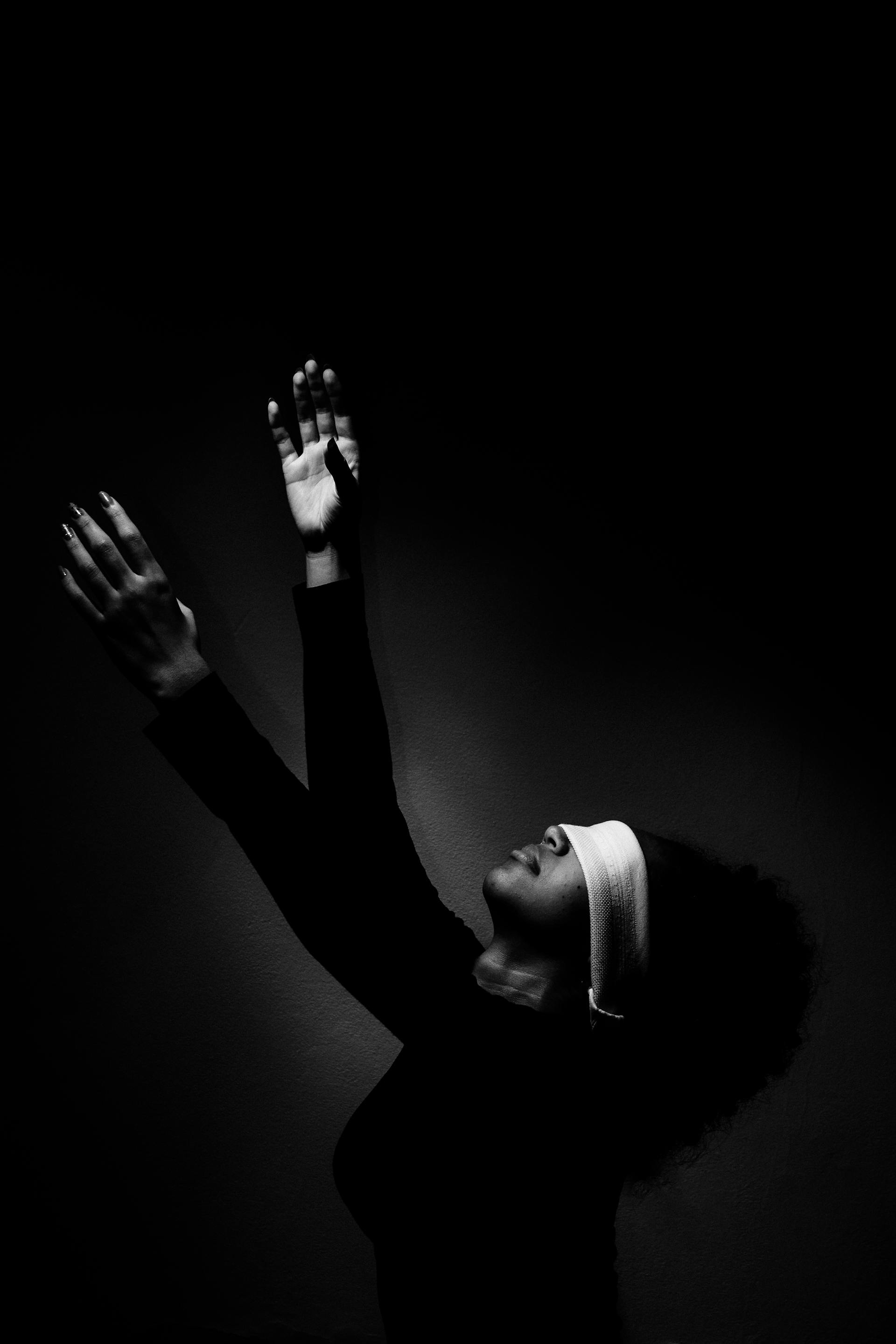
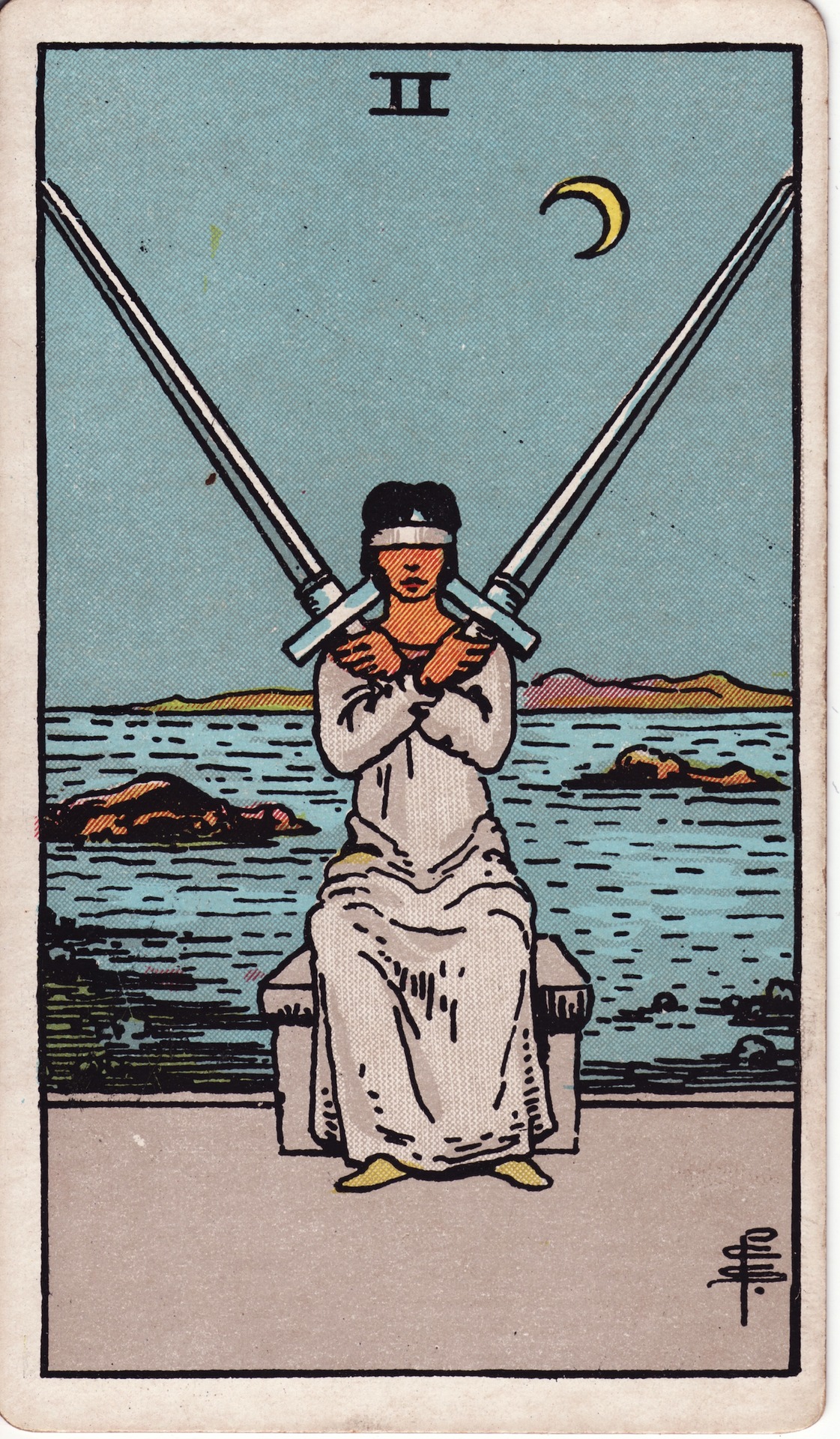
A blindfolded woman sits on a stone bench at the edge of the sea. She holds two crossed swords, one in each hand, balanced perfectly across her chest. Her posture is rigid and symmetrical, each arm mirroring the other, each sword equal in weight and reach. Behind her, the water is calm but dotted with rocky islands, obstacles that aren't immediately threatening but would be dangerous to navigate blindly. A crescent moon hangs in the sky, offering just enough light to see by, if her eyes were open. But they aren't. The blindfold is deliberate. She hasn't been blindfolded by someone else. She's chosen not to see, because seeing would force her to choose, and choosing feels impossible when both options carry equal weight.
The Ace of Swords offered perfect clarity, a single blade cutting through confusion with divine precision. The Two of Swords is what happens immediately after that clarity encounters real-world complexity. One sword was simple. Two swords create a dilemma. The mind that could see everything when it held one truth now finds itself paralyzed by two, because both truths are valid, both options are reasonable, and the rational mind that's supposed to resolve this can't, because rationality works by comparing values, and these two values are equal. The Two of Swords is the tarot's portrait of the stalemate that intelligence creates when it's too smart to ignore the merits of either side and too honest to pretend one option is clearly superior.
Two Of Swords - Rider-Waite-Smith Tarot
Table of Contents
Key Themes and Symbolism
The Two of Swords is the tarot's most precise depiction of conscious avoidance, the deliberate decision not to decide. Every element of the Rider-Waite-Smith image constructs this portrait of willed paralysis.
The blindfold. This is the card's most important symbol, and it's essential to understand that the blindfold is self-imposed. The woman isn't a victim. She's chosen to block her own vision because seeing the full picture would require her to act, and she's not ready to act. The blindfold represents denial, avoidance, the refusal to look at information that's available because looking would force a choice. In readings, the blindfold often corresponds to a situation where the querent already knows the answer but is deliberately not acknowledging it because the implications are uncomfortable.
The two crossed swords. Held in perfect balance across the chest, the crossed swords represent two opposing ideas, arguments, options, or loyalties that are held in a state of tension without resolution. The crossing creates a barrier across the heart, which is significant: the swords block emotional input. The woman is trying to make this decision with her head alone, and the swords' position across her chest is a physical manifestation of her attempt to keep feelings out of the process. But the Swords suit, for all its intellectual orientation, consistently teaches that the mind alone can't resolve certain dilemmas. Sometimes you need to lower the swords and let the heart speak.
The calm water with obstacles. The sea behind the woman is relatively peaceful, suggesting that the immediate environment isn't in crisis. The danger isn't acute. But the rocky islands protruding from the water indicate that hidden obstacles exist, and navigating among them while blindfolded is unwise. The water also connects to the emotional realm, reminding us that the emotions the woman is trying to block are still there, surrounding her, calm for now but filled with submerged hazards that avoidance doesn't remove.
The crescent moon. A sliver of moon hangs in the sky, offering partial illumination. The moon in tarot is associated with intuition, the unconscious, and the kind of knowing that doesn't come from rational analysis. Its presence in the Two of Swords suggests that intuitive guidance is available, that the answer the blindfolded woman can't find through logic might be accessible through feeling, if she were willing to remove the blindfold and look with different eyes. The crescent shape means the light isn't full yet. The complete picture hasn't emerged. But there's enough light to start navigating if she'd trust it.
The stone bench. The woman sits on stone, which represents rigidity, resistance to change, and the fixed position she's assumed. She's not standing, which would suggest readiness for action. She's not lying down, which would suggest surrender. She's sitting, which suggests waiting, holding a position, maintaining the stalemate for as long as possible. The bench is her comfort zone: uncomfortable, yes, but predictable.
The number two. In numerology, two represents duality, partnership, choice, and the tension between opposing forces. In the Swords suit, this duality manifests as the mind's encounter with ambiguity, the discovery that clear thinking doesn't always lead to clear answers because some situations genuinely have two valid but incompatible paths forward.
Upright Meaning
When the Two of Swords appears upright, you're stuck. Not because you lack information or intelligence, but because you have too much of both, and the information points in two different directions while your intelligence confirms that both directions are legitimate. The card appears at the moment of impasse, when avoidance has become more comfortable than decision.
General. The upright Two of Swords represents indecision, avoidance, stalemate, denial, and the deliberate blocking of emotional input to maintain a precarious mental balance. It appears when you know a decision needs to be made and you're refusing to make it, usually because both options involve loss. Choosing A means giving up B, and you can't stomach the sacrifice either way. The card doesn't judge this paralysis. It understands it. But it also gently insists that the stalemate can't last forever. The blindfold is buying time, not solving anything, and the longer you wear it, the more the rocky obstacles beneath the water's surface shift into positions that make eventual navigation harder.
Love. In love readings, the Two of Swords indicates a relationship impasse. You might be stuck between two potential partners, unable to choose because each offers something the other doesn't. You might be stuck within a relationship, knowing something needs to change but unable to commit to the uncomfortable conversation that change requires. The card often appears when couples have reached a silent standoff, both aware of a problem and both unwilling to be the first to name it. For singles, the Two of Swords can indicate emotional unavailability disguised as caution, keeping your heart armored with crossed swords because vulnerability feels like too much of a risk. The card asks: what are you protecting yourself from, and is the protection costing more than the risk would?
Career. In career readings, the Two of Swords represents professional indecision. You might be choosing between two job offers, two career directions, or two conflicting demands within your current role. The card indicates that you're weighing options with rational precision and arriving at a tie, which means the deciding factor probably isn't rational at all. It's intuitive, emotional, or values-based, and the Two of Swords is blocking exactly that input. Professional stalemates also appear under this card: negotiations that have reached a deadlock, partnerships where neither party will compromise, or projects stalled because no one will make the call.
Finances. Financially, the Two of Swords indicates paralysis around a money decision. You might be delaying a financial move because both options carry risk. You might be avoiding looking at your actual financial situation because what you'd see would require uncomfortable action. The card encourages removing the blindfold: look at the numbers honestly, gather whatever additional information you need, and recognize that financial avoidance is itself a decision, usually the worst one available.
Health. In health readings, the Two of Swords can indicate avoiding a medical decision, delaying a diagnosis, or refusing to acknowledge symptoms because dealing with them feels overwhelming. The card also connects to the physical effects of mental tension: headaches, jaw clenching, tension in the shoulders and arms from the metaphorical effort of holding two swords in a rigid position. The body responds to the mind's conflict, and the Two of Swords' stalemate creates real physical stress.

A forked trail in a forest park with two paths diverging among lush greenery and tall trees capturing the impossible choice at the heart of the Two of Swords
Reversed Meaning
When the Two of Swords appears reversed, the stalemate is breaking. The blindfold is coming off, voluntarily or forcefully. The paralysis that characterized the upright card gives way to movement, though that movement can be either the relief of finally deciding or the chaos of a decision being forced upon you before you're ready.
General. The reversed Two of Swords represents information overload, forced decisions, the collapse of avoidance strategies, emotional flooding, and the overwhelming experience of suddenly seeing a situation you've been deliberately not looking at. It can indicate that circumstances have changed and the stalemate is no longer sustainable: someone else has made the choice for you, new information has made one option clearly better than the other, or the cost of continued avoidance has become higher than the cost of deciding. The reversal can also indicate that you're finally ready to lower the swords and face what you've been avoiding, which is painful but ultimately liberating.
Love. In love readings, the reversed Two of Swords indicates the breaking of a romantic stalemate. The truth about the relationship is emerging whether you're ready for it or not. A partner may force a conversation you've been avoiding. A situation may change in a way that makes your decision for you. Feelings you've been blocking with the crossed swords are flooding through now, and they're messy and overwhelming but ultimately necessary. For singles, the reversal can indicate dropping emotional guards that have been keeping potential partners at bay, finally allowing vulnerability after a period of self-protective avoidance.
Career. In career readings, the reversed Two of Swords suggests that a professional decision is being made, either by you or for you. A deadline has arrived. An opportunity has a window that's closing. The luxury of deliberation is over. The reversal can also indicate that information that was previously hidden has come to light, making the career choice clearer. The relief of finally knowing which direction to move often outweighs the discomfort of the choice itself.
Finances. Financially, the reversed Two of Swords indicates that financial truth is emerging. Bills you've been ignoring demand attention. Investment decisions can't be postponed further. The numbers you've been avoiding looking at are now in front of you, and while they might not be what you hoped, at least you can now plan with real information rather than the anxiety of willful ignorance.
Health. In health readings, the reversed Two of Swords can indicate receiving a diagnosis you've been avoiding, or finally committing to a health decision after prolonged indecision. The emotional floodgates opening can manifest as anxiety or relief, often both simultaneously. The reversal encourages releasing the mental tension the upright card created and trusting that knowing the truth, even an uncomfortable truth, is better than the sustained stress of not knowing.
Card Combinations
The Two of Swords' stalemate takes different forms depending on its companions.
Two of Swords + The High Priestess. Both cards involve hidden knowledge and the tension between what's visible and what's concealed. Together, they strongly suggest that the answer to the Two's dilemma lies in intuition rather than analysis. The High Priestess holds the scroll of deeper wisdom. The Two of Swords figure has blindfolded herself against exactly that wisdom. This combination says: stop thinking. Start feeling. The answer you can't find with your mind is available to your intuition, and the High Priestess is holding it out to you if you'll lower the swords and look.
Two of Swords + The Lovers. A powerful pairing about choice in love. The Lovers card is fundamentally about conscious choice and commitment, while the Two of Swords represents the inability to choose. Together, they indicate that a significant romantic decision is at hand and that the indecision is actively preventing a deeper commitment from forming. The Lovers don't tolerate stalemate. They demand that you choose with your whole heart, not your analytical mind. This combination is a direct message to stop weighing options and start committing.
Two of Swords + Eight of Cups. The paralysis meets the courage to walk away. This combination suggests that the resolution to the Two of Swords' dilemma involves leaving something behind entirely rather than choosing between the two options as presented. Sometimes the answer to "should I choose A or B?" is "neither." The Eight of Cups provides the emotional courage to walk away from both options and seek something the stalemate never offered as a possibility.
Two of Swords + Wheel of Fortune. External change breaks the internal stalemate. This combination indicates that the situation will shift regardless of your decision, that the universe is turning the wheel and the balanced position of the Two of Swords can't be maintained through external forces beyond your control. This can be reassuring: if you can't decide, life will decide for you. It can also be a warning: deciding proactively usually produces better outcomes than having decisions imposed by circumstance.
Astrological Connections
The Two of Swords is associated with Moon in Libra, a placement that perfectly captures the card's essential tension. The Moon represents emotions, intuition, the inner world, and the fluctuating tides of feeling. Libra is the sign of balance, partnership, fairness, and the sometimes paralyzing desire to weigh all options before acting. When the Moon occupies Libra, it produces an emotional nature that needs harmony so badly it will sacrifice decisiveness to maintain it.
Moon in Libra people feel most comfortable when everything is balanced, when no one is upset, when all perspectives have been heard, and when decisions emerge from consensus rather than unilateral action. The shadow of this placement is exactly what the Two of Swords depicts: the inability to act because action would disrupt the balance. Choosing one option over another means one side "loses," and the Moon in Libra psyche finds that outcome emotionally unbearable even when the rational mind knows a choice must be made.
Libra is ruled by Venus, which adds an aesthetic and relational dimension to the Two of Swords' indecision. The stakes of the decision often involve relationships: choosing between two people, between your needs and a partner's needs, or between what you want and what keeping the peace requires. Venus' influence also means the two options aren't just intellectually equivalent. They're both attractive, both desirable, both offering something beautiful. Choosing between two bad options is unpleasant but straightforward. Choosing between two good options is the kind of luxury that becomes its own kind of torture.
If Moon in Libra is prominent in your natal chart, you may have a natural tendency toward the Two of Swords' pattern of prolonged deliberation. Explore your lunar placement with the natal chart calculator to understand how this balance-seeking emotional energy operates in your life.
Reading Tips for the Two of Swords
Name the two options. The Two of Swords always involves two specific things the querent is choosing between. Make them concrete. "What are the two options you're weighing?" is the most useful question you can ask when this card appears. Once both options are named out loud, the stalemate often begins to weaken, because avoidance thrives in vagueness and weakens under specificity.
Look for the blindfold motive. The blindfold is the key to the card. Ask the querent what they're avoiding seeing. It isn't the options themselves that are hidden. It's usually the consequence of choosing. They can see both paths. They can't face what walking down one path means for the other. Understanding what they're protecting themselves from reveals what's really keeping them stuck.
Suggest the intuitive path. The crescent moon in the card is the reader's ally. When logic produces a tie, intuition breaks it. Encourage the querent to spend a moment setting aside the analytical comparison and simply asking themselves which option feels right, not which option makes more sense, not which option is more defensible, but which one their gut reaches for when the mind stops arguing. The Two of Swords figure blocks this input with crossed swords. Your job as a reader is to suggest she lower them.
Validate the difficulty. The Two of Swords isn't a card of laziness or cowardice. The person depicted is dealing with a genuinely difficult dilemma. Don't trivialize the indecision or imply that the answer should be obvious. Acknowledge that both options have real merit and real cost, and that the paralysis is a reasonable response to an unreasonable situation. Then, from that place of validation, gently encourage movement.
Frequently Asked Questions
Is the Two of Swords a yes or no card?
The Two of Swords is the tarot's most honest "I don't know." In yes-or-no readings, it indicates that the situation hasn't resolved enough for a clear answer. The card is neither yes nor no. It's a maybe that leans toward "not yet," suggesting that more information, more time, or more emotional honesty is needed before the answer becomes clear. If you're hoping for a definitive response, the Two of Swords says the definitive response doesn't exist yet. The most useful action is to remove the blindfold, whatever that means in your situation, and let yourself see what you've been avoiding. The yes or no will become obvious once you do.
What does the Two of Swords mean for feelings?
The Two of Swords as feelings indicates someone who is deliberately blocking their emotional response. They have feelings, possibly strong ones, but they've erected a barrier against experiencing or expressing them. This might be self-protection after past hurt, fear of vulnerability, or the belief that acknowledging their feelings would force a decision they're not ready to make. If you're asking how someone feels about you, the Two of Swords says they're conflicted, not indifferent. Indifference doesn't require blindfolds and crossed swords. The defensive posture only makes sense if there's something real to defend against. Their feelings exist. They're just being deliberately suppressed.
Does the Two of Swords mean a relationship is over?
No. The Two of Swords indicates a stalemate, not an ending. The relationship is frozen, not finished. Something needs to shift, a conversation needs to happen, a truth needs to be acknowledged, but the raw materials for the relationship still exist. The card is more about avoidance than about loss. The danger isn't that the relationship is over. It's that the avoidance could eventually kill what's still alive. If both people can lower their swords and remove their blindfolds, the impasse can break. But that requires vulnerability from at least one party, and the Two of Swords figure isn't there yet.
How do I break the Two of Swords stalemate?
The card itself contains the answer: remove the blindfold. Stop avoiding the information, feeling, or conversation that you've been blocking. The stalemate exists because you've decided that not-deciding is safer than deciding, and while that's understandable, it isn't true. Not-deciding has its own costs: the stress of sustained tension, the relationships that deteriorate during the pause, the opportunities that expire while you deliberate. Practically, breaking the stalemate often involves three steps. First, name both options out loud. Second, acknowledge what you'd lose with each choice. Third, ask yourself which loss you can live with, because the Two of Swords always involves loss. The question isn't how to avoid it. It's which version of it you're willing to carry.
What does the reversed Two of Swords mean?
The reversed Two of Swords means the stalemate is breaking, voluntarily or otherwise. The blindfold is coming off. The information you've been avoiding is arriving. The decision you've been delaying is being made, by you or for you. This can feel overwhelming because the whole point of the upright Two was to maintain a comfortable (if tense) state of not-knowing. The reversal floods you with the knowing you've been avoiding. It's uncomfortable, but it's progress. The reversed Two of Swords is the end of avoidance and the beginning of whatever comes next, which might be painful but will at least be real.
The Two of Swords is the tarot's most compassionate portrait of the paralyzed mind. It doesn't condemn the woman for wearing the blindfold. It understands why she put it on: because the choice is genuinely hard, because both swords are heavy, because looking would mean accepting a loss she isn't ready for. But the card also knows what she doesn't: that the blindfold doesn't make the choice go away. It just moves the moment of reckoning forward in time while the rocks beneath the water continue to shift. The crescent moon shines. The sea waits. The swords grow heavier with every hour they're held. And somewhere behind the blindfold, the eyes that already know the answer are waiting for permission to open. For a deeper exploration of all 78 cards, visit the Celesian tarot reader. To understand how Moon in Libra shapes your relationship with balance, indecision, and the search for harmony, explore your natal placements with the natal chart calculator. And to continue through the Swords suit, look back at the Ace of Swords, whose singular clarity has now encountered the messy reality of competing truths, and ahead to the Three of Swords, where the stalemate finally breaks and the heart learns what the mind already suspected: that some truths, once seen, cut deep enough to leave scars.