Vimshottari Dasha Explained: Vedic Astrology's 120-Year Planetary Periods
Vimshottari dasha is the timing system at the heart of Vedic astrology. It divides a 120-year human lifespan into nine planetary periods called mahadashas, each ruled by one planet, ranging from the Sun's 6 years to Venus's 20. Which period you start with, and where you sit in the sequence right now, depends entirely on the position of your Moon at birth. While Western astrology mostly times events through transits, Vedic astrologers ask a different first question: whose dasha are you running?
The idea is simple and a little startling. At any moment of your life, one planet holds the microphone. Its themes, its placement in your birth chart, and the houses it rules set the agenda for everything from career moves to relationships, sometimes for nearly two decades at a stretch. People who discover their dasha timeline often find that the chapter breaks in their life story line up with dasha changes to within months. This guide covers how the system works, how your starting period is calculated, and what each of the nine mahadashas tends to bring.
What You'll Learn
What Is Vimshottari Dasha?
Vimshottari means "one hundred and twenty" in Sanskrit, and that number is the system's spine. The full cycle of nine planetary periods adds up to exactly 120 years, which classical texts treated as the maximum human lifespan. The system comes from the Brihat Parashara Hora Shastra, the foundational text of Vedic astrology attributed to the sage Parashara, and it's by far the most widely used of the many dasha systems that text describes.
A dasha is simply a period of time ruled by a planet. The big ones, the mahadashas, run anywhere from 6 to 20 years each. During your Venus mahadasha, Venus becomes the prime minister of your chart: its sign, house, dignity, and aspects color the whole era. When that period ends, the next planet in the fixed sequence takes over, and life often shifts in ways that feel like a new chapter rather than a gradual drift.
This is the biggest practical difference between Vedic and Western timing. Western astrologers watch planetary transits as planets move across the sky and touch the birth chart. Vedic astrologers use transits too, but they read them through the dasha first. A spectacular Jupiter transit means far more if you're also running a Jupiter period. The dasha tells you which promises in the birth chart are currently being delivered; transits tell you the delivery dates. Note that Vedic astrology calculates everything in the sidereal zodiac, so if you're coming from Western astrology, the guide to sidereal vs tropical zodiacs explains why the same birth data can produce different signs.
A starry night sky stretching over the Indian desert, evoking the long planetary cycles of Vedic astrology
The Nine Mahadashas and How Long Each Lasts
Vimshottari uses nine planets: the seven visible bodies of classical astrology plus Rahu and Ketu, the north and south lunar nodes, which Vedic astrology treats as shadow planets with real teeth. Each one rules a fixed number of years, and the sequence never changes.
The order and lengths are: Ketu, 7 years. Venus, 20 years. Sun, 6 years. Moon, 10 years. Mars, 7 years. Rahu, 18 years. Jupiter, 16 years. Saturn, 19 years. Mercury, 17 years. Add them up and you get 120. Once the Mercury period ends, the wheel returns to Ketu and starts again, though few people live to repeat much of the cycle.
Two things stand out in that list. First, the lengths are wildly uneven. Venus gets two full decades while the Sun gets six years, so two people of the same age can be in completely different dasha landscapes depending on where their sequence began. Second, the longest periods belong to Venus, Saturn, Rahu, and Mercury, which together cover 74 of the 120 years. Most of adult life happens inside a handful of long eras, punctuated by the shorter Sun, Mars, and Ketu periods that often feel like fast, intense transitions between them.
You don't start at the beginning of the sequence, though. Almost nobody is born at the start of a Ketu period. Where you enter the wheel is set by your Moon, which is where the calculation comes in.
A glowing full moon against a dark night sky, the starting point of every vimshottari dasha calculation
How Is Your Dasha Calculated?
Everything starts with your natal Moon's nakshatra. The nakshatras are the 27 lunar mansions of Vedic astrology, each spanning 13 degrees and 20 minutes of the sidereal zodiac, and each one is ruled by one of the nine dasha planets. The ruler of the nakshatra your Moon occupied at birth becomes your first mahadasha. If you were born with the Moon in Rohini, ruled by the Moon itself, you started life in a Moon mahadasha. Born with the Moon in Pushya, ruled by Saturn, and your first era was Saturn's. The full list of mansions and their rulers is in the beginner's guide to nakshatras.
There's a second step that makes the system precise. You don't get the whole first dasha; you get the unexpired balance of it. The Moon's exact degree within the nakshatra determines how much of the first period remains. If your Moon had already traveled three quarters of the way through a Venus-ruled nakshatra at birth, you'd begin life with only the final quarter of the 20-year Venus dasha, about 5 years, before moving on to the Sun period. This is why two babies born hours apart can have dasha timelines that diverge for the rest of their lives.
From that starting balance, the rest is fixed arithmetic. The periods follow the set sequence, one after another, for as long as you live. This also explains why an accurate birth time matters so much in Vedic astrology. The Moon moves about 13 degrees per day, so even a modest birth time error shifts the dasha balance by months. If you've never pinned yours down, here's how to find your birth time.
What Are Antardashas, the Sub-Periods?
A 19-year Saturn mahadasha obviously isn't one undifferentiated block, and this is where the system gets its resolution. Every mahadasha is subdivided into nine antardashas, also called bhuktis, ruled by the nine planets in the same fixed order, starting with the mahadasha lord itself. So a Saturn mahadasha opens with a Saturn-Saturn period, followed by Saturn-Mercury, Saturn-Ketu, Saturn-Venus, and so on through the sequence.
Each antardasha's length is proportional to its planet's share of the 120-year cycle. The formula is simple: multiply the mahadasha's years by the antardasha planet's years, then divide by 120. In a 20-year Venus mahadasha, the Sun antardasha runs 20 times 6 divided by 120, exactly one year. The Saturn antardasha within that same Venus period runs just over three years. Astrologers read the pair together, calling it something like "Venus-Saturn," with the mahadasha lord setting the broad theme and the antardasha lord steering the current sub-chapter.
The subdivision keeps going. Antardashas split into pratyantardashas, those into sookshma dashas, and those into prana dashas, each level using the same sequence and proportions. In practice, most readings work with the mahadasha and antardasha, bringing in the third level only for fine timing questions. The texture this creates is part of why the system feels so lifelike: a difficult mahadasha contains easier sub-periods and a fortunate one contains rough patches, which matches how real eras of life actually behave.
An illuminated Hindu temple at night in Hampi, India, home of the tradition that produced the dasha system
What Each Mahadasha Feels Like
Every dasha expresses through the planet's placement in your individual chart, so no two people's Venus periods look alike. Still, each planet has a recognizable signature, and knowing the archetypes helps you orient.
Ketu (7 years) tends toward detachment, endings, and spiritual searching. Material results often feel slippery while inner life intensifies. Venus (20 years) is the longest era and usually centers relationships, pleasure, comfort, art, and wealth-building; how smoothly it runs depends heavily on Venus's condition in your chart. Sun (6 years) is short and focused: visibility, authority, father themes, and questions of identity and recognition. Moon (10 years) turns life toward home, mother, emotional needs, and the public; it's often a period of strong ups and downs that track the Moon's sensitivity.
Mars (7 years) brings drive, competition, conflict, property matters, and courage, frequently with a faster, hotter pace. Rahu (18 years) is the great amplifier: ambition, obsession, foreign lands, technology, and unconventional paths, often with dramatic rises that demand a steady head. Jupiter (16 years) classically favors growth, learning, children, teachers, and faith, and is traditionally the most welcomed of the long periods. Saturn (19 years) demands structure, patience, and labor; it strips what's flimsy and rewards what's earned, much like a long-form version of the Saturn return. Mercury (17 years) closes the cycle with commerce, communication, skill-building, study, and networks.
Read these as weather patterns, not verdicts. A well-placed Saturn can deliver a career-defining Saturn dasha, while an afflicted Jupiter can make even the "best" period feel bloated and directionless.
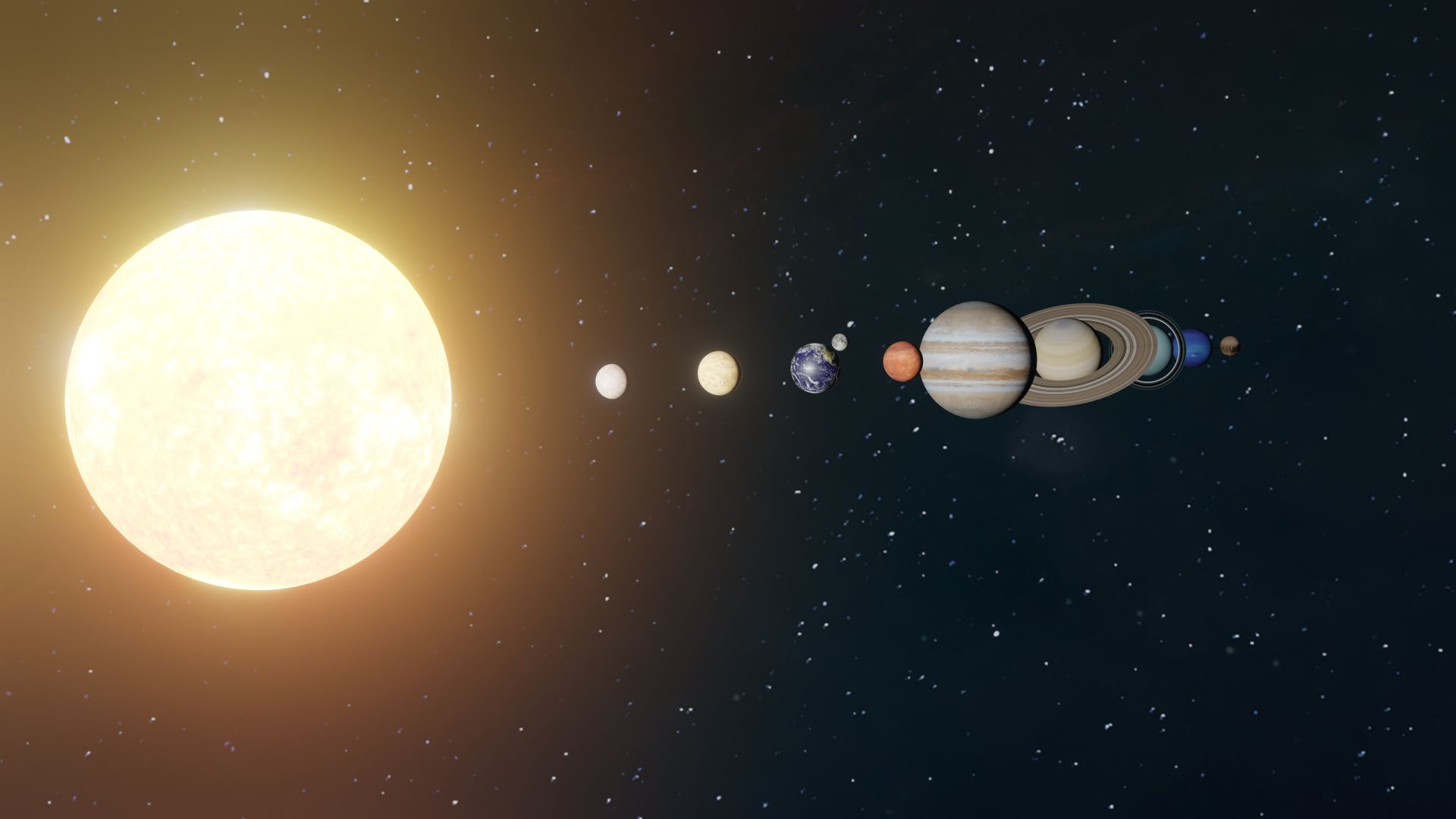
The sun and planets of the solar system in alignment, representing the nine lords of the vimshottari dasha cycle
How to Interpret Your Current Dasha
Knowing you're in a Rahu-Venus period means little until you look at what those planets are doing in your birth chart. Vedic interpretation rests on a few questions, and they're the same ones you'd ask in any chart reading.
First, what's the dasha lord's condition? A planet in its own sign or exaltation delivers its period with strength; a debilitated or heavily afflicted planet struggles. Second, which houses does it rule and occupy? A planet's dasha activates the affairs of the houses it's connected to. If Venus rules your 10th house of career and sits in your 2nd house of income, a Venus period puts money and profession on the front burner regardless of Venus's romantic reputation. Third, what aspects does it receive? A dasha lord conjunct Saturn carries Saturn's discipline and delay into its period; one aspected by Jupiter gets a protective tailwind.
Then layer the antardasha lord on top using the same questions, and watch how the two planets relate to each other in your chart. Planets in friendly signs and supportive aspects tend to produce smoother sub-periods than two planets locked in a hard square. Finally, bring in transits as the trigger layer; dasha promises often land when a major transit hits the dasha lord. If you enjoy this style of time-lord thinking but work with Western charts, annual profections and zodiacal releasing are the closest Hellenistic cousins, built on the same insight that different planets govern different chapters of a life.
The starting point for all of it is an accurate chart. Generate your free natal chart to see your planets' signs and houses, and if you want the relationship side of the story, the compatibility tools show how two people's charts, and their timelines, interact.
Frequently Asked Questions
What is vimshottari dasha in simple terms?
It's Vedic astrology's master timing system. Your life is divided into nine planetary periods totaling 120 years, each ruled by one planet whose themes dominate that era. Your Moon's position at birth determines which period you start with and how much of it remains.
How do I know which dasha I'm in?
You need your birth date, exact time, and place. Any Vedic astrology calculator will list your mahadasha and antardasha timeline from the Moon's nakshatra at birth. Because the calculation depends on the Moon's exact degree, an accurate birth time matters; even an hour's error can shift period boundaries by months.
Which mahadasha is the most difficult?
There's no universal answer; it depends on each planet's condition in your chart. That said, Saturn, Rahu, and Ketu periods have the harshest reputations because they demand discipline, amplify ambition, or dissolve attachments. A well-placed Saturn can still deliver a strongly successful 19 years.
What's the difference between mahadasha and antardasha?
The mahadasha is the major period, lasting 6 to 20 years, and sets the era's broad theme. Each mahadasha contains nine antardashas, shorter sub-periods ruled by the nine planets in sequence, which steer events within it. Astrologers read both together, like "Jupiter-Mercury."
Does Western astrology have anything like dashas?
Yes, the closest parallels are Hellenistic time-lord systems. Annual profections hand each year of life to a ruling planet, and zodiacal releasing divides life into planetary chapters. The shared idea is that specific planets are activated during specific periods, not all at once.