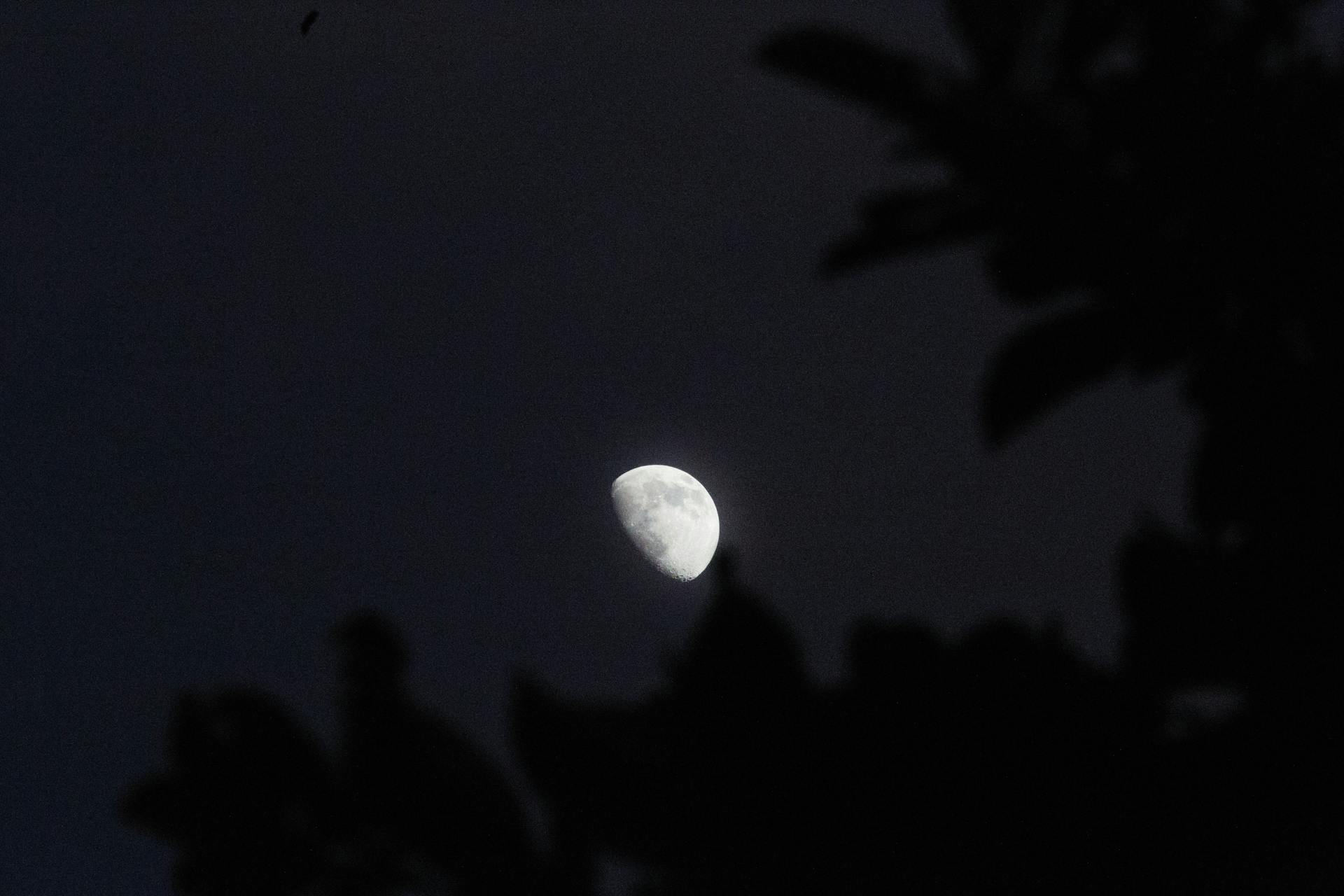
What Moon Phase Were You Born Under? Natal Lunar Phase Personality
The moon phase you were born under is the relationship between your Sun and your Moon at the exact moment you arrived, and it describes the rhythm you move through life with. Your Sun sign is your core identity and your Moon sign is your emotional nature, but the angle between them, the natal lunar phase, tells you something neither placement does alone: whether you're built to initiate, to push, to share, to release, or to dream forward into a future you can't yet see. There are eight phases in the cycle, and most people recognize themselves the moment they read their own.
This isn't the same thing as the moon being full or new on your birthday in a poetic sense. It's a precise astrological measurement that's been used since at least the work of Dane Rudhyar in the twentieth century, building on much older traditions. The phase you were born under stays with you for life, coloring how you start things, how you handle the middle, and how you let go. This guide walks through all eight natal lunar phases, shows you how to find yours, and explains what each one means for personality, relationships, and timing.
What You'll Learn
What a Natal Moon Phase Actually Is
Your natal moon phase is determined by the angular distance between your Sun and your Moon, measured forward through the zodiac from the Sun to the Moon. The whole cycle runs 360 degrees and divides into eight phases of 45 degrees each. If your Moon is right next to your Sun, you were born during the New Moon phase. If your Moon is roughly opposite your Sun, you were born during the Full Moon phase. Everything else falls somewhere along the waxing or waning arc.
The key idea, drawn from the lunation cycle tradition, is that the Sun represents the seed of conscious purpose and the Moon represents the response of feeling and instinct. The angle between them shows where in the unfolding of a complete cycle you entered. Someone born at the start of the cycle carries the energy of a fresh beginning, full of instinct and forward momentum. Someone born near the end carries the energy of completion, release, and the strange wisdom that comes from sensing an ending before it arrives.
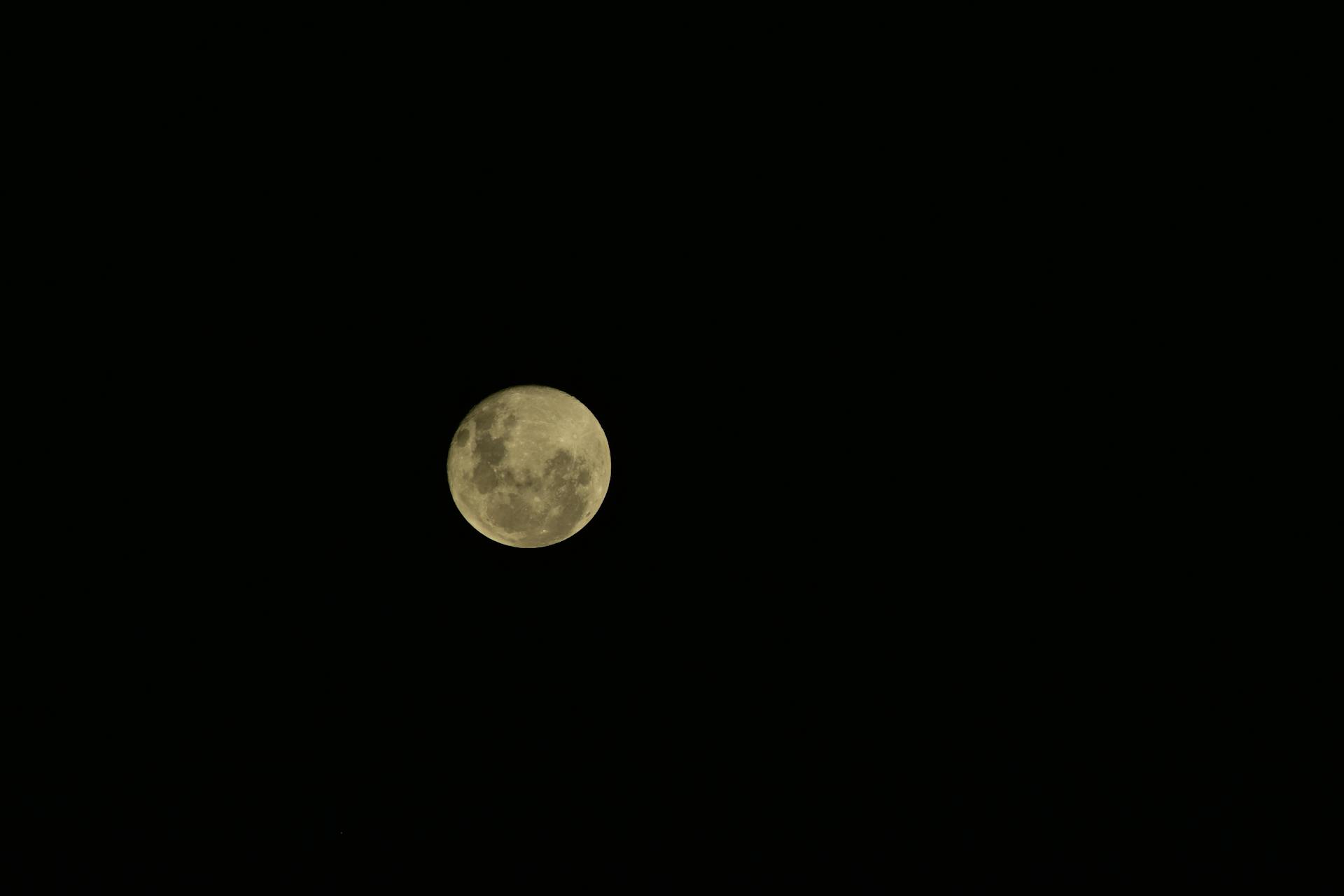
A glowing full moon rising over a dark horizon representing the peak illumination point of the natal lunar phase cycle
This is different from your Moon sign, which describes the flavor of your emotional life, and different from the Moon in the houses, which describes where your emotional energy concentrates. The phase is the dynamic between Sun and Moon, the choreography rather than the costume. Two people can both have a Cancer Moon and live completely different emotional rhythms because one was born under a New Moon and the other under a Balsamic Moon.
How to Find the Moon Phase You Were Born Under
The cleanest way is to run your birth data through a natal chart calculator, which gives you exact degrees for both your Sun and your Moon. Once you have those, you measure the distance from your Sun to your Moon, always counting forward through the zodiac in the order of the signs.
Here's the manual method. Convert both placements into degrees of the full 360-degree zodiac. Aries starts at 0, so 15 degrees Aries is 15. Taurus starts at 30, so 10 degrees Taurus is 40. Each sign adds 30 degrees: Gemini 60, Cancer 90, Leo 120, Virgo 150, Libra 180, Scorpio 210, Sagittarius 240, Capricorn 270, Aquarius 300, Pisces 330. Take your Moon's total and subtract your Sun's total. If the answer is negative, add 360. The result is your phase angle.
Then match the angle to its phase:
A quick shortcut for the rough phase: if the Moon is ahead of the Sun by less than half the circle, you're in a waxing phase (New through Gibbous). If the Moon is more than 180 degrees ahead, you're in a waning phase (Full through Balsamic). Knowing your exact birth time matters here, because the Moon moves about 12 to 13 degrees a day, so a few hours can occasionally nudge you across a phase boundary. If you're unsure of your time, the guide to finding your birth time can help you narrow it down.
The Eight Natal Lunar Phases and Their Meanings
Each phase carries a distinct temperament. The descriptions below draw on the lunation cycle as a story of birth, growth, peak, and release.
New Moon (0 to 45 degrees). You were born at the start of the cycle, and you move through life like a beginning. Instinctive, impulsive, and present-focused, New Moon people act first and understand later. There's a fresh, sometimes naive quality, a willingness to launch into things without the full map. You project yourself onto the world strongly and can be subjective, seeing situations through the lens of your own immediate experience. The gift is raw initiative. The work is learning to look before you leap.
Crescent (45 to 90 degrees). You carry the energy of struggling forward against resistance. Crescent people feel a pull between the momentum of the past and the desire to grow into something new, and that tension is productive. You're determined and forward-leaning, often having to break free of family patterns, old conditioning, or comfort zones to become yourself. The theme is mobilization. You're here to push past the gravity of what came before.
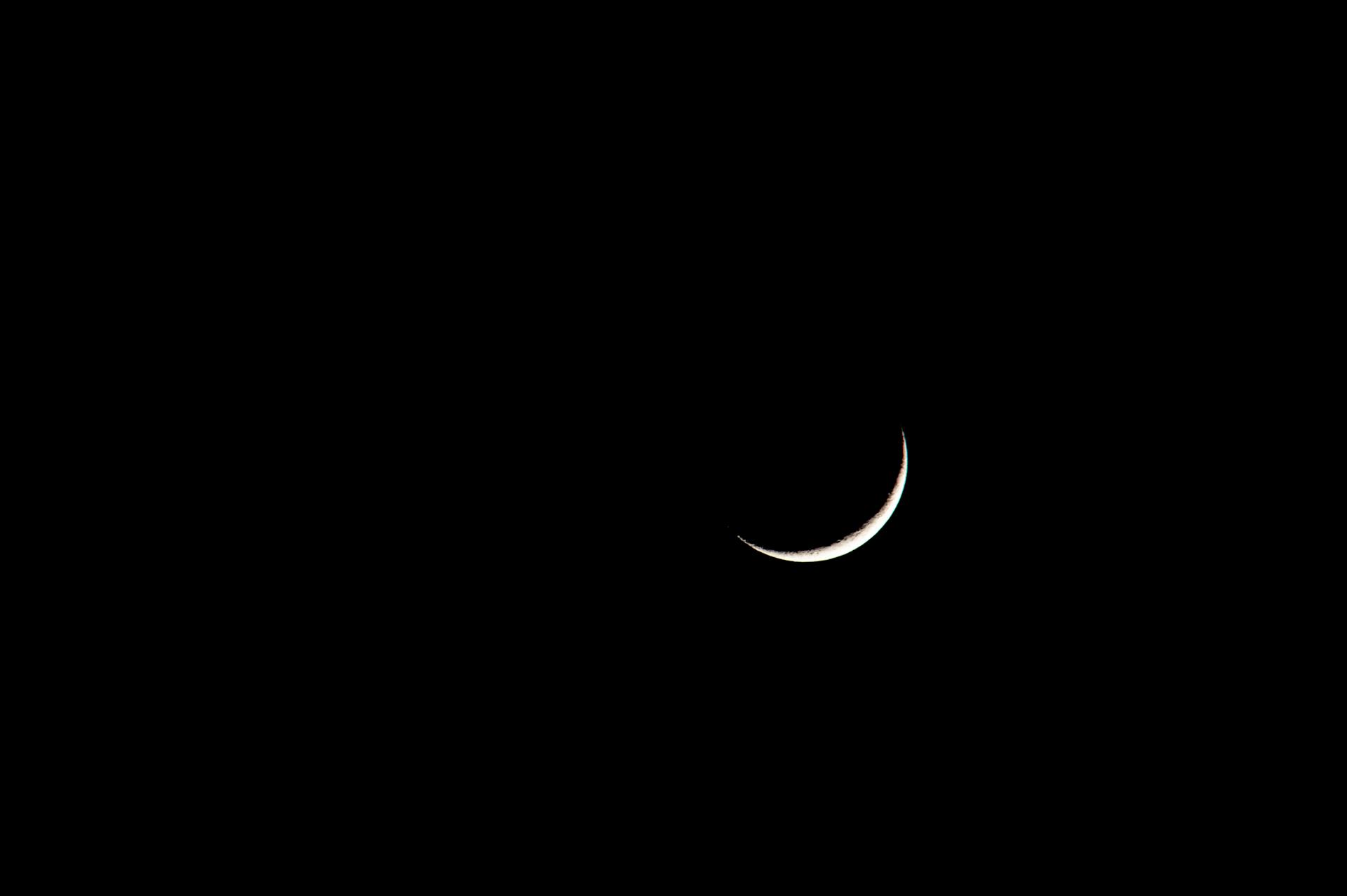
A thin crescent moon glowing against a deep dark sky representing the forward-pushing energy of the crescent natal phase
First Quarter (90 to 135 degrees). You were born at a moment of crisis and action, and you thrive on it. First Quarter people are builders and doers who make things happen through strength of will, sometimes through sheer force. There's a crusading, structure-building quality. You're comfortable with conflict because you understand that real change requires breaking old forms. The gift is the capacity to act decisively under pressure. The shadow is impatience and a tendency to bulldoze.
Gibbous (135 to 180 degrees). You're oriented toward refinement, analysis, and improvement. Gibbous people want to perfect, to understand the why, to contribute something genuinely useful. There's a strong devotion to a cause, a person, or a craft, and an underlying drive to be of service through mastery. You can be self-critical and detail-obsessed, always sensing the gap between what is and what could be. The theme is preparation for something larger than yourself.
Full Moon (180 to 225 degrees). Born under maximum illumination, you live through relationship and reflection. Full Moon people see themselves through others and reach their fullest clarity in partnership, dialogue, and contrast. There's an objectivity here that the New Moon lacks, an ability to step back and see the whole picture. You're often acutely aware of polarity, the tension between self and other, head and heart. The gift is awareness and the capacity to illuminate. The work is not losing yourself in the mirror of other people.
Disseminating (225 to 270 degrees). You're here to share what you've learned. Disseminating people are natural teachers, communicators, and transmitters of meaning. The cycle has peaked, and your role is to take the harvest and distribute it. You have strong convictions and a need to spread ideas, beliefs, or knowledge you've found valuable. The gift is the ability to give the world something digestible. The shadow is preaching or clinging too tightly to a single worldview.
Last Quarter (270 to 315 degrees). You were born at a crisis of consciousness, a turning point where old structures begin to break down to make room for the new. Last Quarter people often live with an internal contradiction, holding onto a system while quietly knowing it has to change. There's a reorienting, sometimes rebellious quality, and a tendency to live ahead of your time. The theme is transition. You're the bridge between what's ending and what hasn't been born yet.
Balsamic (315 to 360 degrees). You were born at the very end of the cycle, in the dark of the moon before the new beginning. Balsamic people carry a sense of completion, of wrapping up unfinished karmic business, of being a little out of step with the present because part of you is already oriented toward a future others can't see. There's often a prophetic or visionary quality, a feeling of being a seed for something that will sprout later. You can feel like an old soul or an outsider. The gift is wisdom and the ability to release. For more on this karmic dimension, the past life indicators guide connects directly to the Balsamic theme.
New Moon, Full Moon, and the Phases In Between
The two phases people ask about most are the New Moon and the Full Moon, because they're the ones with the strongest popular associations. If you were born under a New Moon, your Sun and Moon share roughly the same sign, which means your conscious will and your emotional nature point in the same direction. That creates a unified, instinctive, all-in personality, but it can also mean a lack of objectivity, because there's no inner contrast to reflect against.
Full Moon births are the opposite. Your Sun and Moon sit on opposite sides of the chart, often in opposing signs, which builds awareness and tension into your nature from the start. Full Moon people frequently describe feeling pulled between two poles: independence and partnership, logic and feeling, work and home. That polarity is exactly what gives them their clarity and their relational gifts. Understanding the aspects in your birth chart, especially the Sun-Moon opposition, deepens this picture considerably.
The waxing phases between New and Full (Crescent, First Quarter, Gibbous) are all about output and building. The waning phases after Full (Disseminating, Last Quarter, Balsamic) are all about meaning, sharing, and release. Knowing which half of the cycle you fall in tells you whether your fundamental orientation is toward creating new structures or toward distributing and dissolving them.
How Your Natal Phase Shapes Relationships
Lunar phase compatibility is an underused layer in synastry. Two people born in the same phase tend to share a fundamental rhythm, which can feel deeply comfortable but sometimes lacks contrast. A New Moon person paired with a Full Moon person often experiences the classic attraction of opposites, one all instinct and forward motion, the other all awareness and reflection.
A figure standing in soft moonlight gazing upward representing the way the natal lunar phase shapes how a person connects with others
The waxing and waning distinction matters in partnership too. A waxing-phase person, focused on building and initiating, can find a waning-phase partner, focused on meaning and release, either beautifully complementary or quietly frustrating depending on whether they understand the difference. The Balsamic partner who needs solitude and future-focus can read as distant to a First Quarter partner who wants to build something concrete right now.
None of this overrides the rest of the chart, but it adds a meaningful texture. If you want to see how your lunar phases interact with a partner's alongside the full picture of Sun, Moon, and Venus placements, the compatibility tool and the synastry guide cover the complete comparison. Pairing your phase reading with Moon sign compatibility gives an especially rich view of emotional fit.
Natal Phase vs Progressed Lunation Cycle
Your natal moon phase is fixed for life, but you also move through the entire eight-phase cycle in your progressed chart over roughly 29 to 30 years. This is called the progressed lunation cycle, and it runs alongside your fixed natal phase like a second clock. The progressed cycle describes the chapter you're currently in: whether you're in a personal New Moon period of fresh starts, a Full Moon period of peak visibility and relationship focus, or a Balsamic period of winding down and releasing before a new beginning.
The interplay is where it gets interesting. A natal New Moon person going through a progressed Balsamic phase is living a temporary experience of endings that runs against their core fresh-start nature, and it can feel disorienting until they understand what's happening. The fixed natal phase is who you are. The progressed phase is the season you're moving through. For the mechanics of how progressions work, see the secondary progressions explainer, which covers the day-for-a-year method that drives the progressed Moon.
How to Work With Your Lunar Phase
The practical value of knowing your natal phase is timing and self-acceptance. If you're a New Moon or First Quarter person, you're built to start and to push, so projects that demand long, patient refinement may chafe unless you bring in collaborators who fill that gap. If you're a Gibbous or Disseminating person, you do your best work improving and sharing what already exists, so pure blank-page creation might not be your strength, and that's fine.
Balsamic and Last Quarter people often spend years feeling out of sync with a culture that prizes constant forward motion, and learning that their nature is fundamentally about release, transition, and future-seeding can be a genuine relief. There's nothing wrong with being built for endings in a world obsessed with beginnings.
You can also align your personal projects with the actual lunar cycle in the sky to support your natal rhythm. The new moon manifestation guide and the full moon rituals guide walk through how to use the live phases for intention-setting and release. When you understand both your fixed inner rhythm and the moving rhythm overhead, the timing of when to start, push, share, and let go stops feeling random.
Frequently Asked Questions
How do I know what moon phase I was born under?
Run your birth date, time, and location through a natal chart calculator to get the exact degrees of your Sun and Moon. Subtract the Sun's zodiac degree from the Moon's, counting forward through the signs, and add 360 if the result is negative. Match the angle to one of the eight phases, each spanning 45 degrees.
Is the moon phase I was born under the same as the moon being full on my birthday?
Roughly, yes, but the astrological version is precise. If the moon in the sky was full the night you were born, you were likely born under the Full Moon phase astrologically. The chart method measures the exact Sun-Moon angle, which pins down your phase even when the visible moon was ambiguous or below the horizon.
What is the rarest moon phase to be born under?
No phase is genuinely rarer than another, since the Moon spends roughly equal time in each 45-degree segment over the long run. The Balsamic and Last Quarter phases feel rarer to many people only because their reflective, out-of-step temperaments are less visible in a culture that celebrates beginnings and peaks.
Does my natal moon phase change over my life?
Your natal moon phase is fixed for life. What moves is your progressed lunation cycle, a separate clock that carries you through all eight phases over about 29 to 30 years. The natal phase is your core rhythm. The progressed phase is the season you're currently passing through.
Which is more important, my moon sign or my moon phase?
They describe different things, so neither outranks the other. Your moon sign is the flavor of your emotional life. Your moon phase is the dynamic rhythm between your conscious will and your instincts. A complete reading uses both, along with the Moon's house and aspects, to build the full emotional picture.
Your natal moon phase is one of the most personal rhythms in your chart, and it doesn't change no matter how the world tries to push you into a different tempo. Whether you're built to begin, to build, to illuminate, to share, or to release, knowing your phase makes it easier to stop fighting your own nature and start working with it. Run your full natal chart to find your exact Sun-Moon phase, pair it with a tarot pull when you're deciding whether it's time to start something or let it go, and check your compatibility with the people whose rhythms you're trying to sync with. The phase you were born under has been keeping time your whole life. It helps to know which beat it's counting.