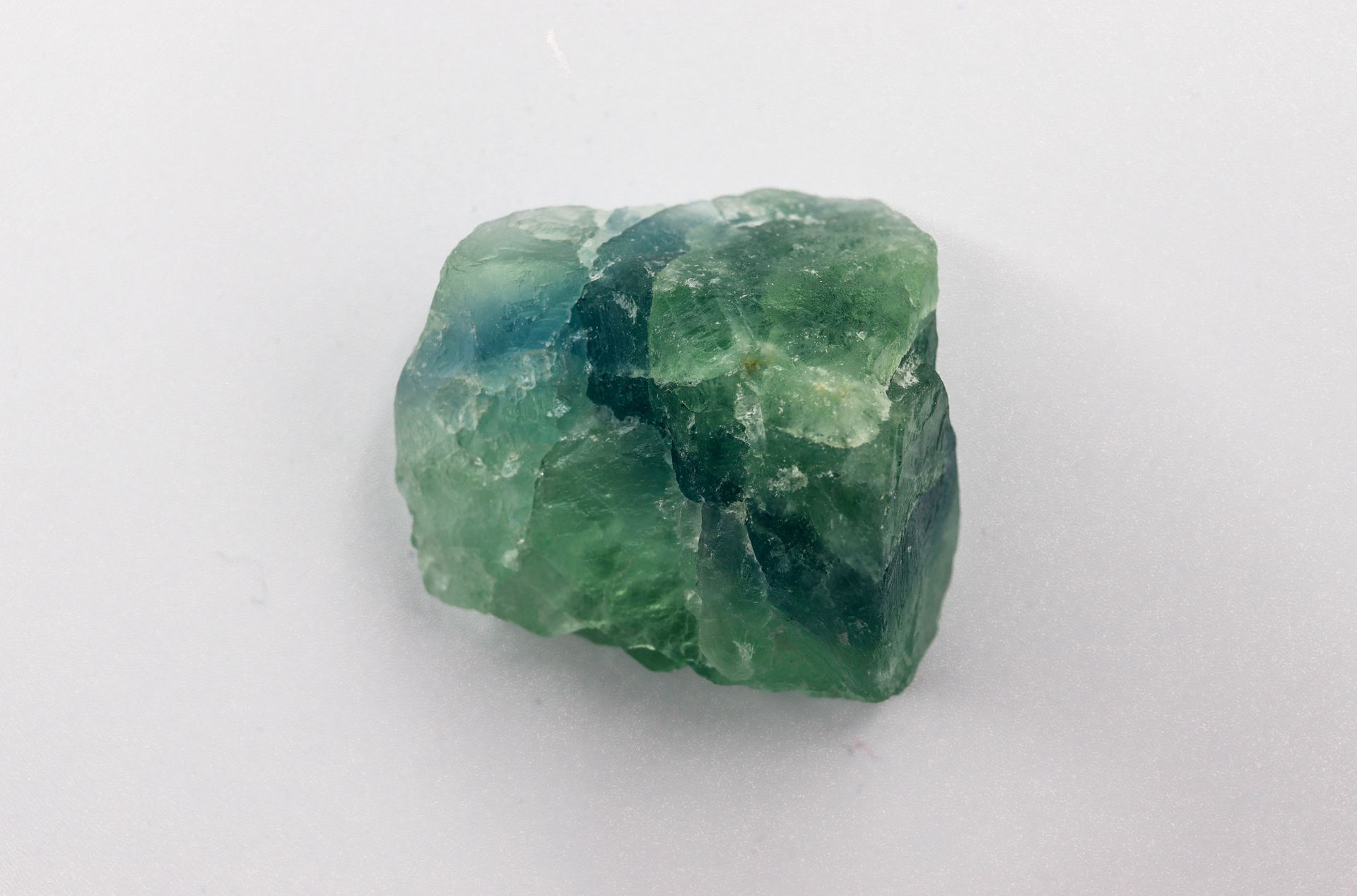
Fluorite Meaning: Healing Properties, Uses, and How to Work With It
Fluorite is the crystal people reach for when their head is a mess and they need to think straight. Its meaning centers on mental clarity, focus, and clean decision making, which is why it picked up the nickname the Genius Stone. Whether it's exams, a big choice, a scattered to-do list, or a mind that won't stop spinning, fluorite has a reputation for cutting through the noise and helping you see what actually matters. It comes in some of the most beautiful colors in the mineral world, from deep purple to glassy green to banded rainbow, and each shade carries a slightly different job.
This guide covers what fluorite means, what it's made of, its traditional healing properties, the different types and colors, which chakras and zodiac signs it suits, how to use it for focus, and the care it needs, including the two questions that trip people up most with this stone: does fluorite fade in sunlight, and can it get wet? Let's start with the meaning.
What You'll Learn
Polished fluorite crystal glowing in bands of purple and green, representing fluorite meaning and healing properties
What Does Fluorite Mean?
Fluorite means clarity. Mental clarity most of all, the kind that lets you organize chaotic thoughts, focus on one thing, and make a decision without second-guessing yourself into a corner. Practitioners call it the Genius Stone and the Stone of Discernment because it's associated with sharper thinking, better concentration, and the ability to tell what's worth your energy from what isn't. If black tourmaline is the bouncer and rose quartz is the friend, fluorite is the one that helps you actually think.
There's a tidiness to fluorite's reputation. It's the stone of the organized mind, of study and learning, of structure applied to confusion. Beyond the mental side, fluorite is also seen as a protective and stabilizing stone that clears heavy or scattered energy from a space, which is why people keep a piece on a desk, a nightstand, or anywhere the mind tends to fray. Its meaning has stayed remarkably consistent over the years: wherever there's mental fog, fluorite is the stone reached for to burn it off.
What Is Fluorite Made Of?
Fluorite is calcium fluoride, a mineral made of calcium and fluorine, and its chemistry hides a couple of great stories. First, fluorite is where we get the word fluorescent. Many fluorite specimens glow under ultraviolet light, and when scientists studied that effect in the 1800s they named the whole phenomenon fluorescence after the stone. The element fluorine is named after fluorite too, and the mineral's own name traces back to the Latin word for flow, because fluorite was used for centuries as a flux to help metal ores melt and flow during smelting.
Fluorite grows in the cubic crystal system, which means it naturally forms near-perfect cubes and octahedrons, some of the cleanest geometric shapes in all of mineralogy. It also has what geologists call octahedral cleavage, so a struck piece breaks along flat planes into little eight-sided pieces. It's soft, sitting at exactly 4 on the Mohs hardness scale. In fact fluorite is the mineral that defines a hardness of 4 on that scale, so it scratches more easily than quartz and needs gentle handling. Colors come from tiny impurities and natural radiation, which is why one deposit can produce purple, green, blue, and yellow crystals side by side. Major sources include China, Mexico, South Africa, Argentina, England, and the United States, where fluorite is the state mineral of Illinois. If fluorite is one of your first stones, our healing crystals for beginners guide covers how to choose and start working with a new piece.
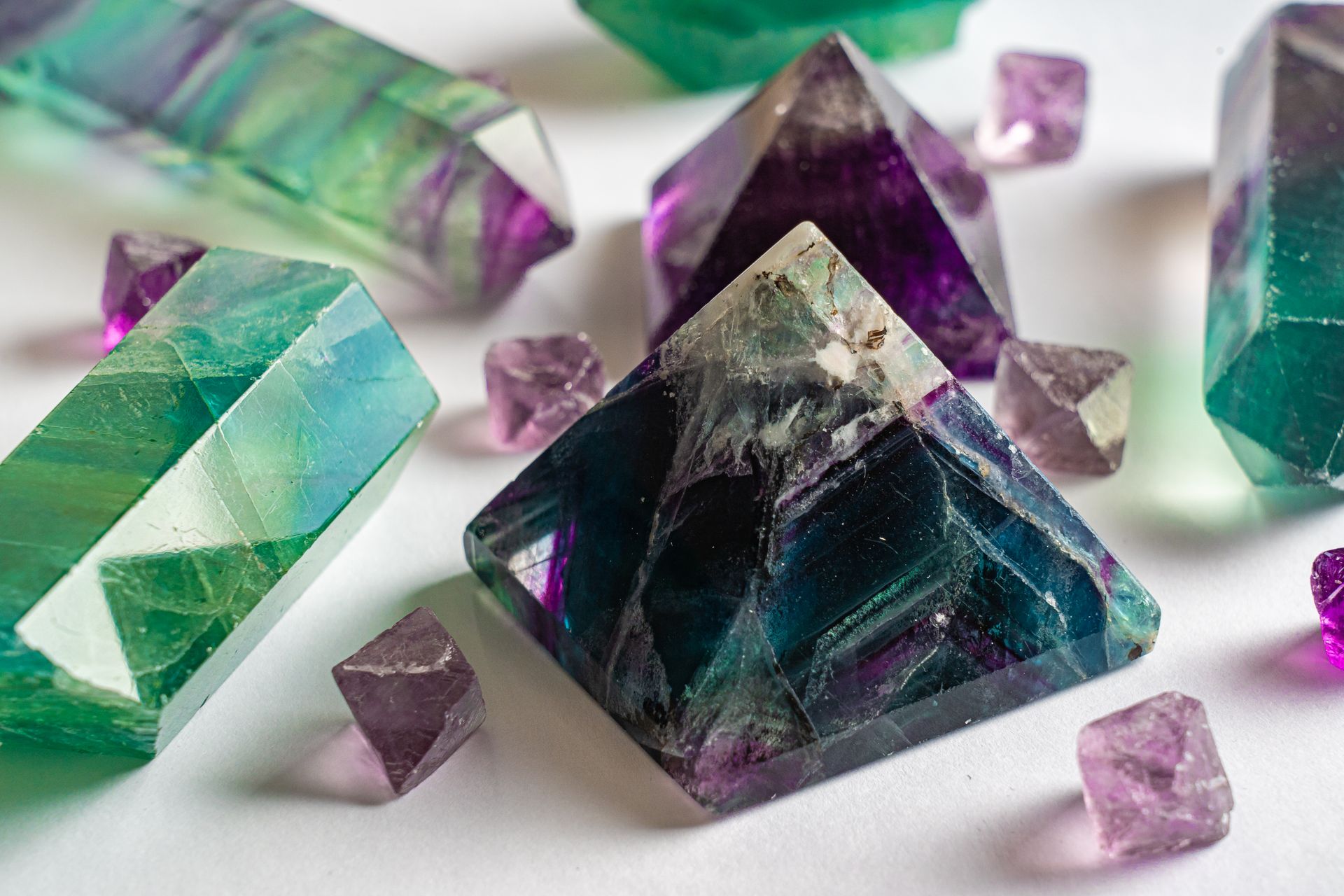
Natural fluorite cubes and clusters showing the mineral's geometric crystal shapes, representing what fluorite is made of
Fluorite Healing Properties and Benefits
Fluorite's traditional healing properties orbit the mind. None of this is medical, and crystals aren't a substitute for professional care, but here's what practitioners reach for fluorite to support.
On the physical side, folk tradition links fluorite to brain function, balance, and the immune system, though these are traditional associations rather than proven effects.
What Is Fluorite Good For Spiritually?
Spiritually, fluorite is a stone of order and protection. It's used to clear the aura of scattered or heavy energy, which earns it the informal nickname the psychic vacuum cleaner, and to build a calm, protected space for meditation. Because it's associated with the third eye, fluorite is reached for to sharpen intuition and mental focus during spiritual practice, helping you stay present instead of drifting off.
Fluorite is also seen as a chakra organizer. Its different colors are matched to different energy centers, and a piece of rainbow fluorite is often used to align and tidy the whole system at once. Many people set an intention with fluorite around discernment: asking for the clarity to see a person or situation as it really is, free of illusion or wishful thinking. If you want to pair that with an energy practice, our how to open your third eye guide walks through gentle ways to develop intuition safely.
Types of Fluorite: Purple, Green, Blue, Rainbow, and Blue John
One of fluorite's best features is its range of color, and each type carries a slightly different reputation.
One special mention is Blue John, a rare banded blue, purple, and yellow fluorite found only near Castleton in Derbyshire, England. It's been carved into bowls and ornaments for centuries and is one of the most collectible fluorites in the world.
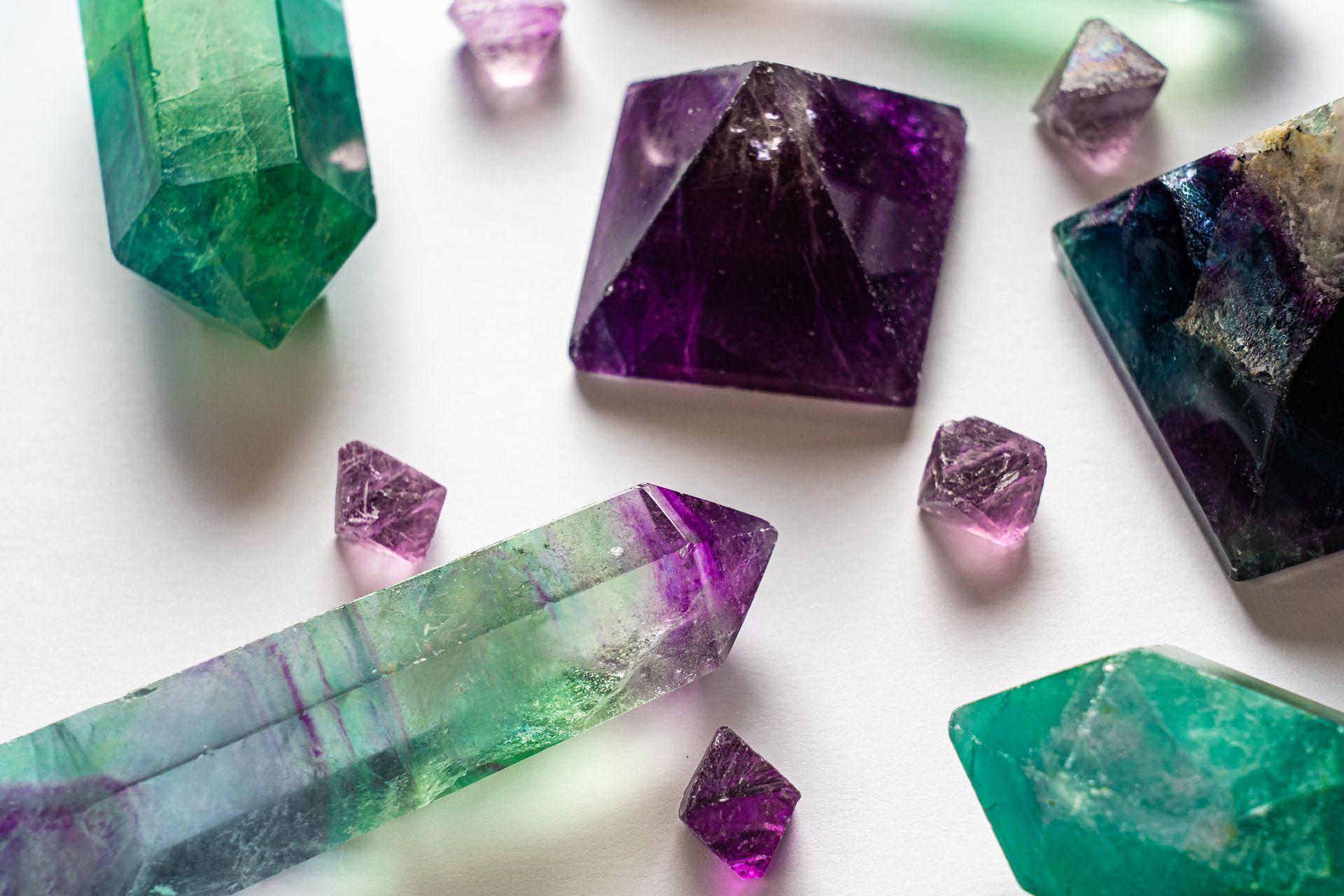
Colorful banded rainbow fluorite in shades of purple and green, showing the different types of fluorite
Fluorite and the Chakras
Fluorite works most strongly with the third eye chakra, called Ajna, the center of intuition, insight, and mental clarity that sits between the brows. That connection is the root of fluorite's reputation for clear thinking and focus. Many practitioners also pair fluorite with the heart chakra, Anahata, especially green fluorite, using it to clear emotional fog the same way it clears mental fog.
Because fluorite comes in so many colors, it's often treated as a whole-system stone. Purple works the third eye and crown, blue the throat, yellow the solar plexus, and green the heart, so a rainbow fluorite piece is used to tune several centers in one sitting. To place it, rest the stone on or near the matching center while you lie down and breathe slowly for a few minutes. If you're new to this, our seven chakras explained guide breaks down each center and what it governs.
Fluorite, the Zodiac, and Ruling Planets
Fluorite is most closely associated with Pisces and Capricorn. For Pisces, the dreamy, intuitive water sign, fluorite offers structure and mental focus, grounding all that imagination into something usable. For Capricorn, the disciplined earth sign, it supports the clear, organized thinking that ambition runs on. Some traditions also connect fluorite to Aquarius, the sign of the original thinker.
On the planetary side, fluorite resonates with Mercury, the planet of the mind, communication, learning, and logic, which fits its role as the stone of clear thought perfectly. Its elements are air and water, a blend of intellect and intuition. Fluorite isn't a traditional birthstone, so anyone can work with it regardless of their sign. To see where Mercury and your own mental style sit in your chart, generate your free natal chart and look at your Mercury placement.
How to Use Fluorite
Fluorite is one of the easiest stones to fold into everyday life, especially anywhere you need to think clearly.
Fluorite pairs naturally with intention work around focus and clear decisions. For a quick reference on its correspondences, you can also check the fluorite crystal card in our crystal library.
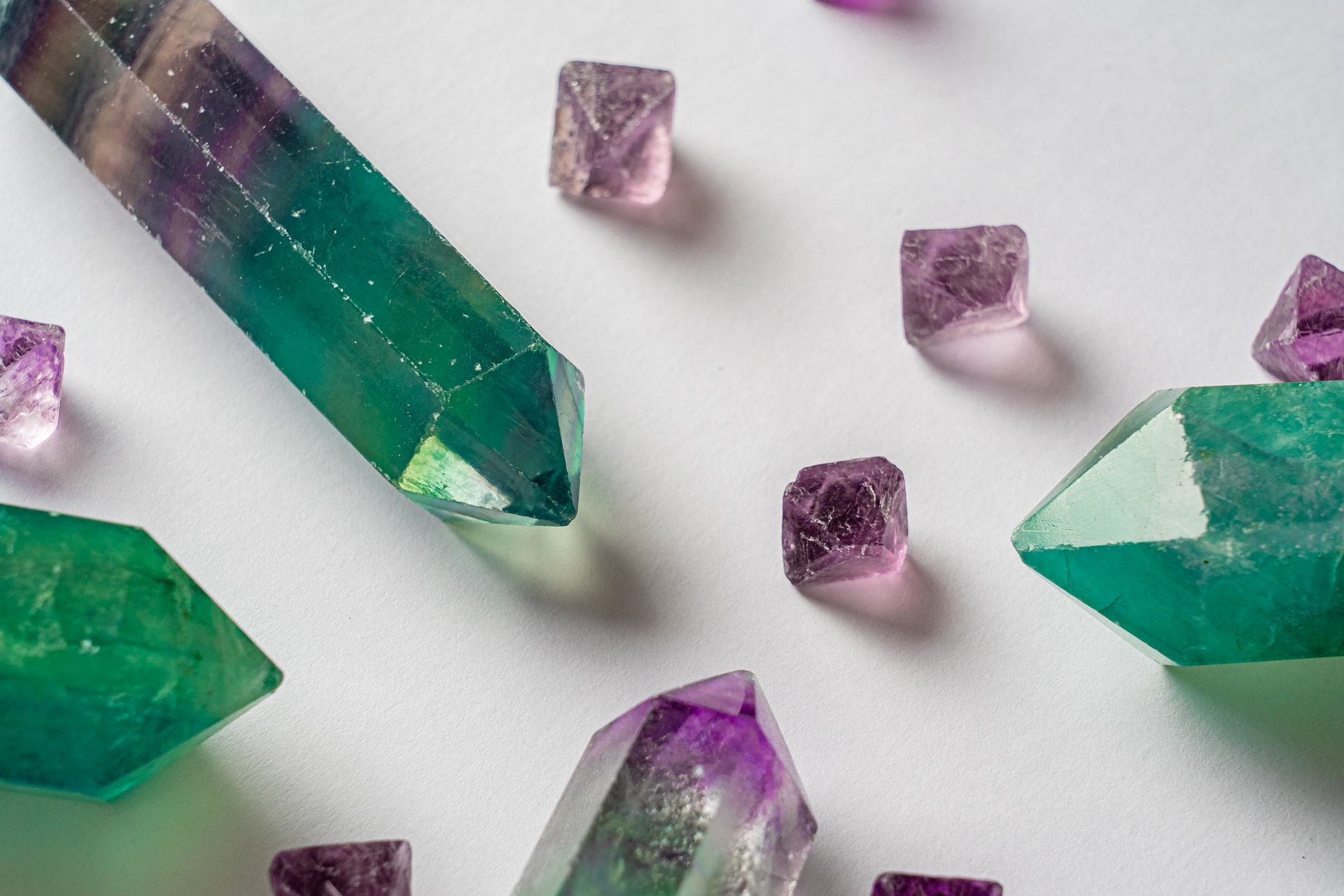
Fluorite crystal resting on a desk beside study notes, representing how to use fluorite for focus and concentration
Does Fluorite Fade in Sunlight? Care and Cleansing
Yes, fluorite can fade in sunlight, and this is the single most important thing to know about caring for it. The colors in fluorite, especially purple and blue, come from delicate color centers that prolonged ultraviolet light can bleach out. Leave a purple fluorite on a sunny windowsill for weeks and you may watch that rich color drain to pale. So keep fluorite out of long, direct sun, and never use sunlight to charge it. Moonlight is the safe, gentle alternative for recharging.
The second thing to respect is how soft fluorite is. At a hardness of 4 with easy cleavage, it chips, scratches, and cracks more readily than most crystals, so store it away from harder stones and handle jewelry with care. Water is a milder concern than it is with a copper stone like malachite: a quick rinse won't ruin fluorite, but because it's soft and slightly porous, long soaks, salt water, and hot water can dull the polish over time, so keep water contact brief and dry the stone right after.
For cleansing, dry methods are the easiest and safest. Smudge fluorite with sage or palo santo, run it through the sound of a singing bowl, or rest it on a selenite slab, which cleanses without any moisture. Our selenite meaning guide covers that self-cleansing companion stone. Because fluorite is an absorbing, clearing stone, it benefits from regular cleansing, ideally whenever your own thinking starts to feel foggy or heavy.
Real vs Fake Fluorite
Fluorite is abundant and affordable, so it's faked less often than pricier stones, but imitations still turn up, usually as dyed glass. The clearest tell is the color. Natural fluorite often shows uneven color, subtle banding, and slight internal cloudiness or tiny fractures, while glass fakes tend to be too perfect: uniform color, flawless clarity, and sometimes trapped round air bubbles. Glass also warms up quickly in your hand, where genuine fluorite stays cool longer.
Two more checks help. Because fluorite is soft, a piece that resists scratching entirely is suspect, though testing hardness can damage a real stone, so save that for a last resort. And many natural fluorites fluoresce, glowing blue or purple under a UV light, which most glass won't do. Watch out for tumbled rainbow beads with cartoonishly bright, perfectly even color sold at suspiciously low prices, which are sometimes dyed. When in doubt, buy from a seller who's clear about sourcing. Much of the finest fluorite on the market comes from China, Mexico, and the historic mines of England and Illinois.
Fluorite vs Amethyst vs Clear Quartz
These three get compared a lot because their jobs overlap around clarity and the mind, so here's how they differ. Fluorite is the focus and decision stone, tied to the third eye, mental organization, and cutting through confusion. It's the one to reach for when you need to concentrate or choose. Amethyst is more about calm, intuition, and spiritual protection; it soothes an anxious mind and deepens meditation rather than sharpening task focus. Clear quartz is the amplifier and all-rounder, a programmable master stone that boosts intention and clarity in a broad, general way rather than aiming at focus specifically.
If you want to concentrate, study, or make a clean decision, choose fluorite. If you want to calm down, sleep better, or go deeper spiritually, amethyst fits. If you want a versatile stone to amplify whatever you're working on, clear quartz is the pick. Many people keep all three, since they cover thinking, feeling, and energy work between them. Our crystal healing by zodiac sign guide can help you match stones to your chart.
Frequently Asked Questions
What is fluorite good for?
Fluorite is used mainly for mental clarity, focus, and concentration, which is why it's nicknamed the Genius Stone. People keep it near their desk for study and work, carry it for exams and big decisions, and use it to organize chaotic thoughts and clear scattered mental energy.
Which chakra is fluorite?
Fluorite works most strongly with the third eye chakra, the center of intuition and clear thinking. Because it comes in many colors, it's also used across the system: purple for the third eye and crown, green for the heart, blue for the throat, and yellow for the solar plexus, so rainbow fluorite is used to balance them all.
Can fluorite go in the sun or water?
Keep fluorite out of long, direct sunlight, since UV light can fade its color, especially purple and blue. Water is less risky than sun, but because fluorite is soft and slightly porous, keep contact brief, skip salt water and long soaks, and dry it right away. Cleanse with dry methods like smudging, sound, or selenite.
What zodiac sign is fluorite?
Fluorite is most closely tied to Pisces and Capricorn, giving structure and focus to Pisces and clear organized thinking to Capricorn. It also connects to Aquarius. On the planetary side it resonates with Mercury, the planet of the mind, which suits its role as the stone of clear thought.
Is rainbow fluorite the same as regular fluorite?
Yes, rainbow fluorite is genuine fluorite that shows bands of more than one color, usually purple and green, in a single piece. All the colors are the same mineral, just tinted by different natural impurities. It's popular because it's believed to balance several chakras at once, which makes it a great all-purpose choice.
Bringing It Together
Fluorite earns its Genius Stone reputation. It's the crystal of the clear, organized mind, reached for whenever thinking gets foggy, focus slips, or a decision feels impossible to make. Keep it on your desk, carry it into anything that demands concentration, and respect its two soft spots: shield it from long sun so the color stays rich, and handle it gently because it chips. Work with it well, and fluorite becomes a steady, quiet anchor for your attention. To go deeper into where Mercury and mental clarity live for you, generate your free natal chart and see which houses are lit up, pull a tarot reading when you need guidance on a decision, or run a compatibility report to understand the connections worth thinking clearly about.