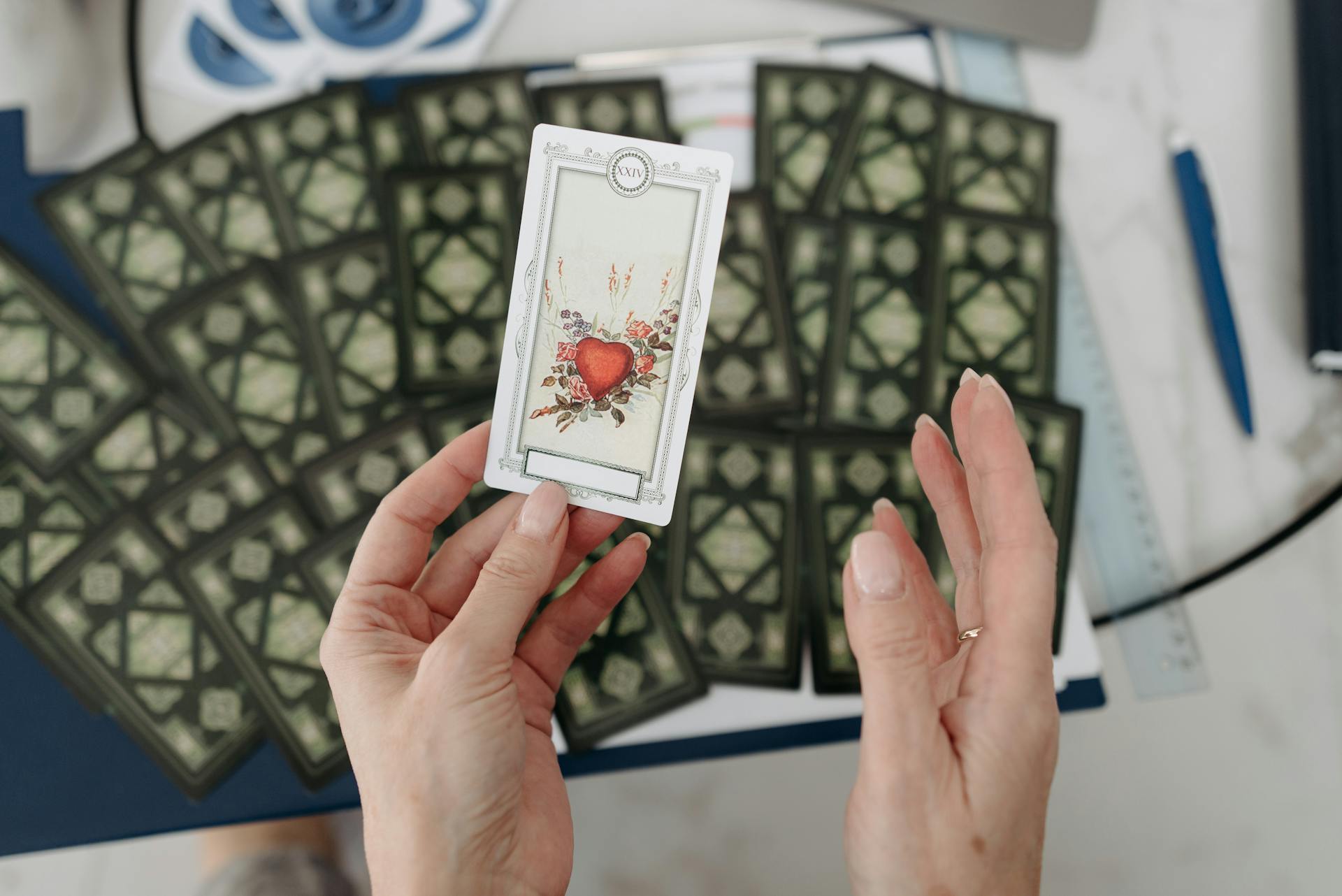
Yes or No Tarot: How to Ask and Get a Clear Answer
Yes or no tarot is the simplest way to use the cards: you ask a closed question, pull one card, and read it as a yes, a no, or a maybe. There's no twelve-card layout to interpret and no past-present-future story to piece together. You frame the question well, draw, and take the answer the card gives you. It's the fastest reading in tarot, and it's the one most people reach for when they're standing at a fork in the road and want a nudge.
The catch is that tarot wasn't built to answer yes or no, so getting a clean response takes a little technique. A vague question produces a vague card. A loaded question produces an answer you'll argue with. This guide covers how to phrase the question so the deck can actually respond, the methods readers use to turn a card into a verdict, a working list of which cards lean yes and which lean no, and the honest limits of asking the cards to decide for you.
What You'll Learn
What Yes or No Tarot Is
Yes or no tarot is a single-card reading aimed at a closed question, one that can be answered with yes or no rather than an open "what should I do." You shuffle, focus on the question, and draw one card. That card carries the answer. Some readers draw three for more nuance, but the classic form is one card, one question, one verdict.
It works because every tarot card has an emotional charge. The Sun radiates success and clarity, so it reads as a strong yes. The Tower means sudden collapse, so it reads as a hard no. Most cards sit somewhere on that spectrum, and a yes or no reading is really just a quick judgment of where the drawn card falls. If you're brand new to the deck, it helps to first get comfortable with the basics of reading tarot cards so the cards already mean something to you before you start asking them to vote.
This style of reading is best for low-stakes, time-bound questions where you mainly want a gut check. "Will I hear back about the job this week?" works. "Should I restructure my entire life?" does not. Match the weight of the question to the simplicity of the method, and the cards will serve you well.
How to Ask a Yes or No Question
The quality of your answer depends almost entirely on the quality of your question. The deck mirrors what you bring to it, so a sloppy question gives a sloppy reading. A few rules keep your questions clean.
Make it genuinely closed. "Is this relationship worth pursuing?" can be answered yes or no. "What's wrong with my relationship?" cannot, and you'll end up forcing a verdict onto a card that's trying to describe a situation. If your question starts with what, how, or why, it's an open question and belongs in a multi-card spread instead.
Keep it specific and time-bound when you can. "Will I get a second interview for the marketing role by the end of the month?" is sharper than "Will my career improve?" The more concrete the question, the easier the card is to read against it. Vague questions invite you to bend whatever card you draw to fit the hope you already had.
Avoid double questions and loaded framing. "Should I quit my job and move cities?" is two questions wearing one coat, and a single card can't cleanly answer both. Likewise, "Will he finally realize how much he's hurt me?" smuggles in a conclusion. Ask one neutral thing at a time. Finally, don't ask the same question twice hoping for a better answer. The first draw is the reading. Re-asking until you like the result isn't divination, it's negotiation.
Three Methods for Reading the Answer
There's no single official way to turn a card into a yes or no, so readers use whichever method they trust. Here are the three most common.
The first is meaning-based, and it's the most respected. You read the card's actual significance against your question and decide whether the energy supports a yes or a no. The Three of Cups in answer to "will the celebration go well" is an obvious yes. The Five of Pentacles in answer to "will this investment pay off soon" is a clear no. This method takes the most knowledge but gives the most honest reading, because you're listening to the card rather than applying a rule to it.
The second is the upright and reversed method. Here, an upright card is a yes and a reversed card is a no, regardless of which card it is. It's fast and binary, and it works if you read with reversals. The weakness is that it flattens the cards: a reversed Sun becomes a flat no even though the Sun's energy is overwhelmingly positive. If you go this route, learn how reversed cards actually work first so you're not treating every flip as a simple negation.
The third is suit and element association. In this system, Wands (fire) and Cups (water) lean yes, since they're active and emotional, while Swords (air) and Pentacles (earth) lean toward caution, delay, or no. The Major Arcana are read individually by meaning. This method is quick once memorized, but it's the bluntest of the three, so most experienced readers blend it with the card's actual meaning rather than using it alone.
Which Tarot Cards Mean Yes
Some cards are so positive that they read as yes in almost any context. These are the cards you hope to see when you're asking for a green light. They share themes of success, fulfillment, momentum, and good fortune.
The strongest yes cards are The Sun, the brightest and most unambiguous yes in the deck, along with The Star, The World, and Wheel of Fortune when the wheel is turning your way. Among the Minor Arcana, the Aces all signal a yes because they mark fresh, fertile beginnings: the Ace of Cups for emotional matters, the Ace of Pentacles for money and work, the Ace of Wands for projects and passion, and the Ace of Swords for clarity and truth.
Other reliable yes cards include the Three of Cups, the Four of Wands, the Six of Wands, the Nine of Cups (often called the wish card), the Ten of Cups, and the Ten of Pentacles. These speak of celebration, victory, satisfaction, and lasting reward. When one of them lands in answer to a clear question, you can usually take the yes at face value and move forward with confidence.
Which Tarot Cards Mean No
The no cards carry themes of loss, blockage, collapse, and endings. Seeing one isn't a disaster, since a clear no can save you time and heartache, but it's a signal to pause or change course rather than push ahead.
The hardest no in the deck is The Tower, which means sudden upheaval and the collapse of something you thought was solid. Close behind are the Three of Swords (heartbreak), the Ten of Swords (painful endings), the Five of Pentacles (loss and lack), and the Five of Cups (grief and disappointment). The Devil can read as no when the question is about freedom or healthy choices, since it points to being trapped or bound.
Several other cards lean no in a yes or no context: the Eight of Cups, which says walk away from this; the Five of Swords, which warns of hollow conflict; the Seven of Swords, which flags deception; and the Nine of Swords, which signals anxiety and dread. When a no card appears, it's worth reading what it's actually telling you, not just registering the negative. The card often names the obstacle, which is more useful than a bare no.
Cards That Mean Maybe or Not Yet
Not every draw resolves cleanly, and the cards that hover in the middle are some of the most honest answers tarot gives. They're telling you the situation hasn't settled enough for a definite verdict.
The clearest "I don't know yet" is the Two of Swords, which shows a blindfolded figure unable to decide, a card that says the answer doesn't exist yet because you're avoiding the information you need. The Seven of Cups means too many options and no clear path, while The Moon points to confusion, illusion, and things hidden from view. The Hanged Man says wait, the timing isn't right, and the Four of Swords counsels rest before any decision. The High Priestess often means the answer is there but veiled, asking you to trust your intuition rather than the cards.
When you draw a maybe card, the most useful move is to ask a follow-up about timing or about what's blocking clarity, ideally in a small three-card spread rather than another single pull. A maybe isn't a failed reading. It's the deck telling you the honest truth that some questions can't be forced into a box yet.
Common Mistakes to Avoid
The most common mistake is asking the same question over and over until a card finally says what you wanted. The first answer is the reading. Reshuffling for a better verdict trains you to ignore the cards entirely, which defeats the point of pulling them.
Another frequent error is asking yes or no questions that are really cries for reassurance, like "does he still love me?" pulled three times a day. That's a sign the question underneath is bigger than a single card, and you'd be better served by a fuller tarot spread or by sitting with what's actually driving the worry. A daily tarot practice can also build the steadiness that compulsive re-asking is trying, and failing, to find.
Finally, don't outsource real decisions to a single card. Tarot is a tool for reflection, not a substitute for judgment, and no responsible reader treats one draw as binding fate. Use the yes or no as input alongside your own reasoning, the advice of people you trust, and the practical facts in front of you. The card opens a conversation with yourself. It doesn't get the final word.
Frequently Asked Questions
How accurate is yes or no tarot?
Tarot isn't a fortune-telling machine, so accuracy isn't really the right frame. A single card reflects the energy around a question and gives you a clear prompt for reflection. Many readers find the answers strikingly apt, but the value is in the insight it triggers, not in predicting a fixed future.
Can you ask tarot the same question twice?
Avoid it. The first draw is the answer, and re-asking the same question usually means you're hoping for a different verdict rather than listening to the one you got. If a reading is genuinely unclear, change the wording or pull a small clarifying spread instead of repeating the identical question.
What's the best tarot card for a yes answer?
The Sun is widely considered the strongest yes in the deck. It signals success, clarity, and favorable timing with no hidden conditions attached. The Star, The World, and the four Aces are also reliable yes cards, each pointing to fresh starts, fulfillment, and momentum in your favor.
Do reversed cards mean no in yes or no tarot?
In the upright-and-reversed method, yes, a reversed card counts as a no. But that method is blunt and many readers prefer to weigh the card's actual meaning instead, since a reversed but deeply positive card can still lean yes. If you use reversals, learn how they shift a card's meaning rather than treating every flip as an automatic no.
How many cards should I pull for a yes or no question?
One card is the classic format and works well for simple, time-bound questions. If you want more nuance, pull three and read the overall lean, or add a card for timing and a card for what's blocking the outcome. More cards suit weightier questions, while a single pull is best for quick gut checks.
Yes or no tarot is the deck at its most direct: one clear question, one card, one honest read. Phrase the question well, pick a method you trust, and take the answer as a starting point for your own thinking rather than a verdict carved in stone. When you're ready to try it, pull a card with the free Celesian tarot reader and see what comes up. For the bigger questions a single card can't hold, your natal chart maps the deeper patterns you were born with, and the compatibility tool brings the same clarity to your relationships.