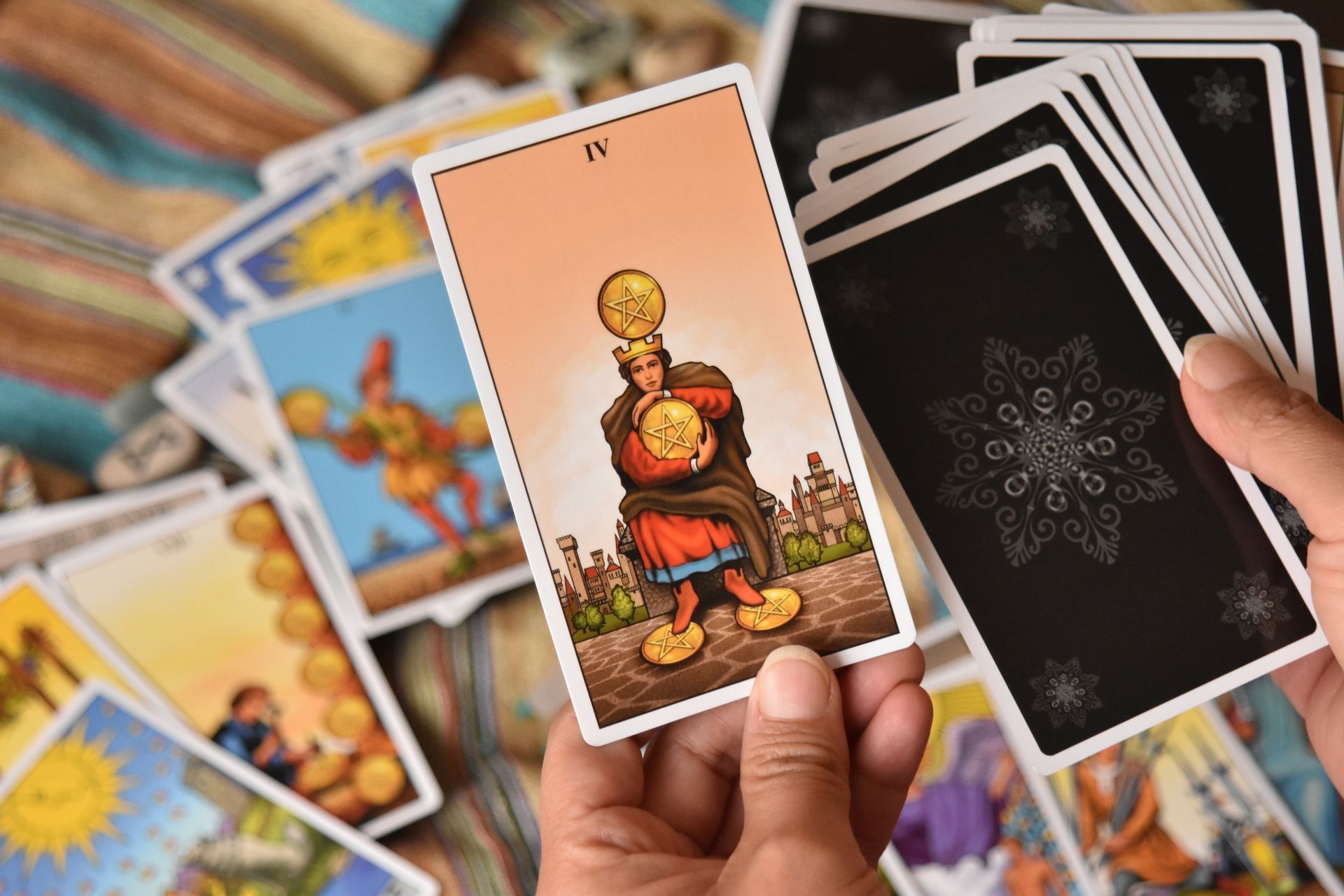
The Four Tarot Suits Explained: Cups, Wands, Swords, and Pentacles
The four tarot suits are Cups, Wands, Swords, and Pentacles, and each one rules a different corner of human life: Cups handle emotions and relationships, Wands cover passion and action, Swords govern thought and conflict, and Pentacles deal with money, work, and the physical body. Learn those four jobs and you've cracked the code to 56 of the 78 cards in a tarot deck, because every numbered and court card in the Minor Arcana belongs to one of these suits.
Most beginners pour all their energy into memorizing individual cards and never step back to learn the suits. That's backward. The suit tells you the subject of a card before you know anything else about it. The moment you see a Cup, you already know the card is about feelings. See a Sword and you're in the realm of the mind. Knowing the four suits turns the Minor Arcana from a wall of confusing pictures into a readable language, and it's the single fastest way to start trusting your own readings.
This guide breaks down what each tarot suit means, which element and zodiac signs it connects to, the personality it carries, and how the four suits work together in a spread. Whether you just unboxed your first deck or you keep blanking on the pip cards, this is the foundation that makes the rest of tarot click.
What You'll Learn
What Are the Tarot Suits?
A standard 78-card tarot deck splits into two halves. The 22 cards of the Major Arcana cover the big spiritual themes and life lessons, the cards everyone recognizes like The Tower, The Lovers, and Death. The other 56 cards make up the Minor Arcana, and that's where the four suits live.
The Minor Arcana works almost exactly like a regular deck of playing cards, which makes sense because modern playing cards descended from tarot. Each suit runs from Ace through Ten, then adds four court cards: Page, Knight, Queen, and King. So every suit has 14 cards, and four suits give you 56. The suits handle the everyday, on-the-ground details of life, while the Major Arcana handles the soul-level story arc.
Here's the quick map most readers carry in their heads. Cups are the emotional suit, tied to water. Wands are the energetic suit, tied to fire. Swords are the mental suit, tied to air. Pentacles are the material suit, tied to earth. Those four words, emotion, energy, mind, and matter, are the whole secret. Once you anchor each suit to its theme, you can make a sensible read of any Minor Arcana card even if you've never memorized it. For the full picture of how this fits into a reading, the beginner's guide to reading tarot walks through the rest of the structure.
The Suit of Cups: Emotions and Relationships
Cups are the heart of the deck. This suit rules everything you feel: love, friendship, intuition, grief, joy, connection, and the inner emotional weather that shapes your days. When Cups dominate a reading, the question is almost always about relationships, feelings, or your emotional state, not your bank account or your to-do list.
The element of Cups is water, and water is the perfect symbol for the suit. Emotions flow, they run deep, they reflect, and they can either nourish you or drown you. The zodiac signs tied to Cups are the water signs: Cancer, Scorpio, and Pisces. If you know those signs, you already know the suit's vibe: sensitive, intuitive, emotionally rich, and sometimes overwhelmed by feeling.
Cups cards tell emotional stories. The Ace of Cups is a fresh wave of love or spiritual feeling. The Two of Cups is a meeting of hearts, a partnership or deep connection. The Three of Cups is celebration and friendship, while the Five of Cups is grief and what's left after a loss. Read the suit as a whole and you can feel the arc: from the first spark of feeling all the way to emotional fulfillment or, when the cards turn, to heartbreak.

Ocean waves rolling under soft light, symbolizing the water element and emotional depth of the tarot suit of Cups
The Suit of Wands: Passion and Action
Wands are the spark plug of the deck. This suit rules energy, drive, ambition, creativity, passion, and the will to make things happen. When Wands show up, the reading is about doing: starting projects, chasing goals, taking risks, and the raw motivation that pushes you out of bed and into the world.
The element of Wands is fire, and fire captures the suit exactly. It's hot, fast, bright, and creative, but it can also burn out, scorch, or rage out of control. The fire zodiac signs carry the same energy: Aries, Leo, and Sagittarius. Bold, enthusiastic, restless, and full of momentum. Wands are about inspiration and the courage to act on it.
You can trace the Wands story through the numbers. The Ace of Wands is a burst of inspiration, a new idea or venture catching fire. The Three of Wands shows expansion and looking toward the horizon, while the Eight of Wands is fast movement and rapid progress. Wands cards rarely sit still. They want you to build, create, and chase something. When a spread fills with Wands, your situation is charged with energy and asking for action, not contemplation.
The Suit of Swords: Thought and Conflict
Swords are the suit of the mind, and they have a reputation for being the hardest cards to see in a spread. This suit rules thought, logic, communication, truth, decisions, and conflict. Swords cut, and the suit doesn't flinch from the painful side of mental life: anxiety, argument, betrayal, hard choices, and the stories we tell ourselves that keep us stuck.
The element of Swords is air, the realm of intellect and ideas. Air is invisible but powerful, just like thought, and it can clarify or it can stir up storms. The air zodiac signs match the energy: Gemini, Libra, and Aquarius. Rational, communicative, analytical, and quick. Swords ask you to think clearly and tell the truth, even when the truth is uncomfortable.
Swords carry some of the deck's most striking images. The Three of Swords is the pierced heart, heartbreak and painful truth. The Eight of Swords shows a bound figure trapped by her own thinking, while the Nine of Swords is the classic image of anxiety and sleepless nights. They look grim, but Swords aren't the enemy. They're the suit that names the problem so you can finally face it. A reading heavy with Swords is telling you the action is happening in your head, and clear thinking is the way out.
The Suit of Pentacles: Money, Work, and Body
Pentacles are the suit of the material world, sometimes called Coins or Disks in older decks. This suit rules money, career, property, health, the physical body, and everything you can touch, build, and hold. When Pentacles dominate a reading, the question is practical: finances, work, home, security, and the slow, steady results of effort over time.
The element of Pentacles is earth, and earth grounds the whole suit. It's solid, reliable, patient, and concerned with what actually grows and lasts. The earth zodiac signs share that practical nature: Taurus, Virgo, and Capricorn. Dependable, hardworking, and focused on real-world results. Pentacles reward consistency and remind you that meaningful things take time to build.
The Pentacles arc is one of growth and stability. The Ace of Pentacles is a new opportunity, often financial or career-related, a seed worth planting. The Eight of Pentacles is the diligent apprentice mastering a craft through repetition, while the Ten of Pentacles is lasting wealth, legacy, and family security. This is the suit of the long game, and when it fills your spread, the answer usually involves patience, planning, and steady work.

A tarot reading laid out by candlelight with a notebook nearby, representing steady practice with the four suits
Tarot Suits and Their Elements
The four elements are the connective tissue of the whole deck, which is why learning them is worth your time. Each suit maps to one element, and that single link ties tarot to astrology, to the seasons, and to the broader system of tarot and astrology correspondences that experienced readers lean on.
Here's the full elemental map for the four tarot suits:
Once you've memorized these four pairings, you can read the energy of a spread at a glance. A reading flooded with Cups and Swords is emotional and mental, a heart-versus-head situation. One stacked with Wands and Pentacles is about ambition meeting practical reality, big plans needing real follow-through. If you want to go deeper on what each element means on its own, the guide to the zodiac elements covers fire, earth, air, and water in detail, and it maps directly onto the suits.
How the Numbers Work Within Each Suit
Within every suit, the number on a card adds a second layer of meaning. The suit tells you the topic; the number tells you the stage. This is the trick that lets you read pip cards you've never formally studied, because numerology runs consistently across all four suits.
Aces are beginnings, the pure seed of the suit's energy. Twos are partnership, balance, and choices. Threes bring growth and early results. Fours are stability, structure, and sometimes stagnation. Fives are the conflict and challenge of the suit, the low point. Sixes offer relief, harmony, and recovery. Sevens are reflection, testing, and perseverance. Eights bring movement and mastery. Nines are near-completion, the intense final push, for better or worse. Tens are completion, the full expression of the suit, where one cycle ends and the next begins.
Layer the number onto the suit and the meaning almost writes itself. A Five is always a low point, so the Five of Cups is emotional loss, the Five of Pentacles is material hardship, and the Five of Swords is the cost of winning an argument. A Ten is always completion, so the Ten of Cups is emotional fulfillment and the Ten of Pentacles is lasting wealth. The court cards work a little differently, representing people or personality styles, and the guide to reading reversed cards covers how all of this shifts when a card lands upside down.
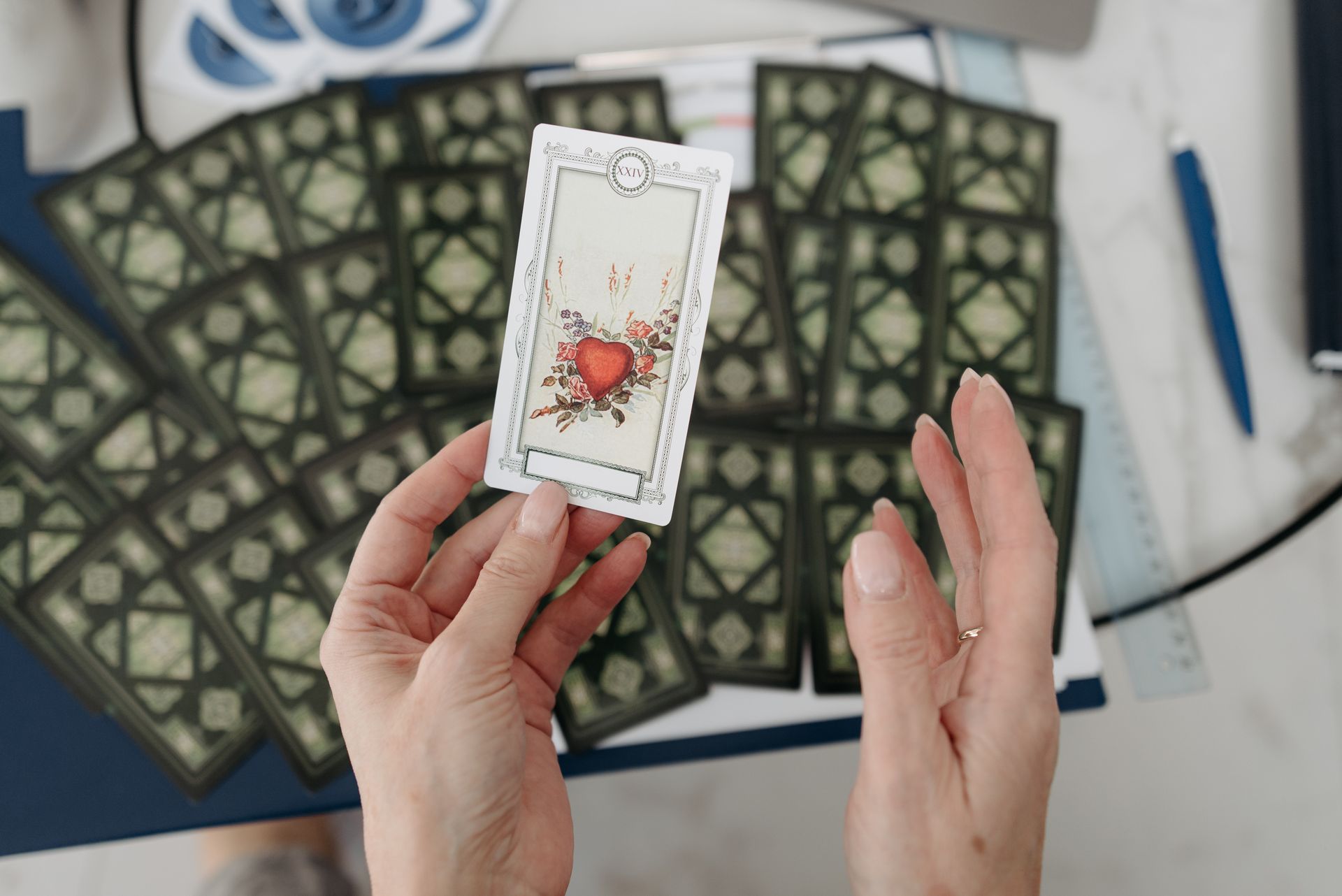
A close-up of tarot cards from the Minor Arcana fanned out on a table, showing numbered and court cards across the suits
Reading the Suits Together in a Spread
The real power of the suits shows up when you read them as a group instead of one card at a time. The balance of suits in a spread is itself a message, often the most important one. Before you interpret a single card, scan the whole layout and notice which suits are present and which are missing.
A spread dominated by one suit points straight to where the action is. All Cups means the situation is overwhelmingly emotional. A pile of Pentacles says it's about money or work. Lots of Swords warns of mental stress or conflict, and a run of Wands signals a high-energy, action-driven moment. Just as telling is what's absent. A reading about a relationship with zero Cups suggests the heart isn't really in it, no matter what the question was.
The suits also interact like the elements they represent. Water Cups and earth Pentacles support each other, feelings and security building something stable. Fire Wands and air Swords feed each other, energy and ideas, though they can also burn hot and reckless. Fire and water can clash, passion versus emotion, and so can earth and air, the practical versus the abstract. Reading these elemental relationships adds a whole layer of nuance, and it pairs naturally with tarot spreads for love, career, and self-discovery once you're ready to put it into practice.
Frequently Asked Questions
What are the four suits in tarot?
The four tarot suits are Cups, Wands, Swords, and Pentacles. Cups rule emotions and relationships, Wands rule passion and action, Swords rule thought and conflict, and Pentacles rule money, work, and the physical world. Together they make up the 56 Minor Arcana cards.
What element is each tarot suit?
Cups are water (emotion), Wands are fire (energy and action), Swords are air (thought and communication), and Pentacles are earth (money and the material world). These four elements link the suits directly to the zodiac signs and the seasons.
Which tarot suit is the most positive?
No suit is purely positive or negative, but Cups and Pentacles often feel gentler because they cover love and stability, while Swords carry the most challenging imagery. Even Swords are helpful, though, because they reveal the mental patterns and conflicts you need to face.
Do I need to memorize all 56 Minor Arcana cards?
No. Learn the four suits and the meaning of numbers one through ten, and you can interpret most Minor Arcana cards on the spot. The suit gives you the topic and the number gives you the stage, so the meaning falls into place without rote memorization.
What suit is money in tarot?
Pentacles is the suit of money, also called Coins or Disks in some decks. It governs finances, career, property, and material security, and it's tied to the earth element and the practical earth signs Taurus, Virgo, and Capricorn.
The four suits are the backbone of tarot, and once you understand Cups, Wands, Swords, and Pentacles, the Minor Arcana stops feeling like a memory test and starts reading like a story. Practice spotting the dominant suit in every spread, layer the numbers on top, and trust the elements to guide you. When you're ready to pull cards, draw a free tarot reading to see the suits in action, or explore how the cards line up with your chart through tarot and astrology correspondences.