Reversed Tarot Cards: How to Read Upside-Down Cards in Any Spread
You shuffle your deck, lay out a Celtic Cross spread, and half the cards land upside down. Your first instinct might be panic. Reversed cards have a reputation for doom and gloom, and if you learned tarot from movies or TV, you probably think an upside-down Death card means something terrible is about to happen.
It doesn't. Reversed tarot cards are one of the most misunderstood elements of a tarot practice, and learning to read them properly will transform your readings from surface-level interpretations into layered, nuanced conversations with your deck. A reversal doesn't flip a card's meaning to its opposite. It doesn't automatically signal bad news. And it's not even something every reader uses. What it does is add depth, subtlety, and a second dimension to the 78 cards you already know.
Whether you're brand new to reading tarot or you've been pulling cards for years but skipping the reversals, this guide covers everything you need to start reading upside-down cards with confidence.
What You'll Learn
What Are Reversed Tarot Cards?
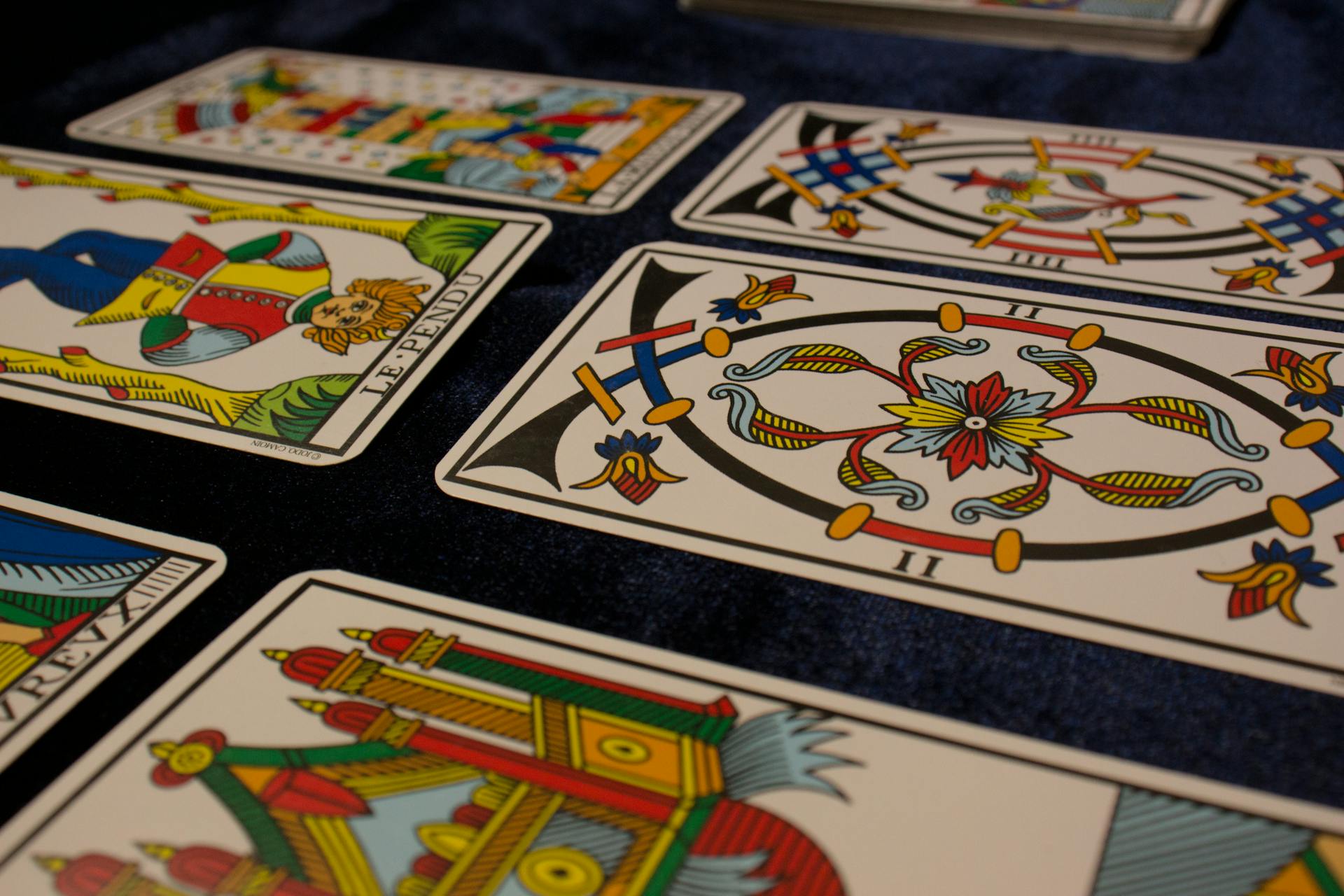
A reversed tarot card is simply a card that appears upside down in your spread. When you lay out cards during a reading, some will naturally land with the imagery facing you correctly (upright) and others will appear inverted (reversed). The orientation of the card modifies its meaning, adding a layer of interpretation that doesn't exist when you read all cards upright.
The practice of reading reversals goes back centuries, though not all tarot traditions include it. The Rider-Waite-Smith deck, published in 1909 and still the most widely used tarot deck in the English-speaking world, was designed with reversals in mind. Arthur Edward Waite included reversed meanings for every card in his companion book "The Pictorial Key to the Tarot." But earlier tarot traditions, particularly those from continental Europe, often didn't use reversals at all.
Here's what matters: reversals aren't random noise in your reading. When a card appears reversed, it's communicating something specific about how that card's energy is showing up in the situation you're asking about. The upright card represents the energy at its most direct and external. The reversed card suggests that same energy is being experienced differently, whether it's blocked, internalized, weakened, excessive, or in the process of shifting.
Think of it like volume on a stereo. The upright card is the song playing at normal volume, clear and straightforward. A reversal adjusts the volume, sometimes turning it down so the energy is muted or internal, sometimes cranking it up so the energy becomes overwhelming or distorted. The song is the same. The way you're hearing it has changed.
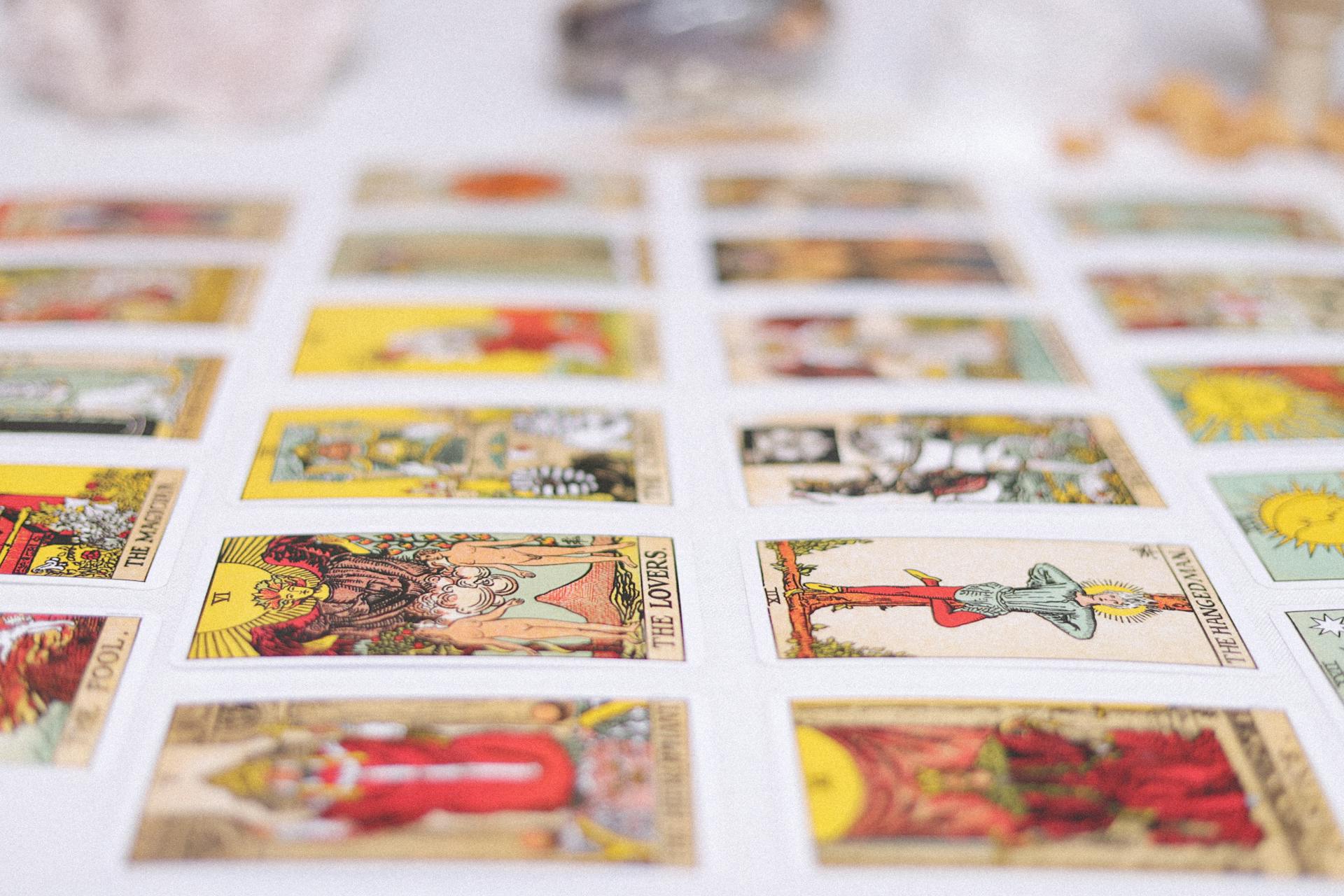
Tarot cards spread out on a surface showing various positions for an insightful reading session
Should You Read Reversed Tarot Cards?
This is genuinely a personal choice, and both approaches are valid. Some of the most respected tarot readers in the world don't use reversals. Others consider them essential. Neither camp is wrong, but there are clear trade-offs to understand before you decide.
Arguments for reading reversals:
Your deck goes from 78 possible messages to 156. That's twice the vocabulary for your readings, which allows for much more specific and nuanced answers. Without reversals, the Five of Cups always means grief and loss. With reversals, the Five of Cups upright means you're currently stuck in that grief, while reversed it suggests you're starting to move past it. That distinction matters when someone asks whether they'll recover from a breakup.
Reversals also provide a natural way to indicate timing and energy flow. An upright card suggests the energy is active and externally expressed. A reversal suggests the energy is developing, receding, or being processed internally. This gives your readings a dynamic quality that all-upright spreads sometimes lack.
Arguments against reading reversals:
The 78 upright cards already contain a full spectrum of meanings, from the most positive to the most challenging. The Ten of Swords upright is already a card of painful endings. You don't need to reverse the Ten of Cups to get a negative reading. The deck has built-in contrast.
Reversals can also overwhelm beginners. If you're still learning what the cards mean upright, adding a second layer of meaning for each card doubles the amount you need to memorize. Many experienced readers recommend spending at least six months to a year reading upright-only before introducing reversals.
The practical recommendation: If you're still within your first year of tarot practice, stick with upright readings. Build a solid relationship with each card's core meaning first. When you start feeling like your readings are missing nuance, or when you notice that a card's upright meaning doesn't quite fit the energy of a situation, that's when reversals become useful. There's no deadline and no requirement.
Five Methods for Interpreting Reversals
There's no single "correct" way to read a reversed card. Different readers use different approaches, and many experienced readers switch between methods depending on the question and the spread. Here are the five most widely used interpretation frameworks.
1. Blocked or Delayed Energy
The most common approach. When a card appears reversed, its upright energy is present but obstructed. Something is preventing the card's theme from fully manifesting. The Ace of Pentacles upright represents a new financial opportunity. Reversed, the opportunity exists, but something is blocking it: bad timing, lack of preparation, bureaucratic delays, or self-sabotage.
This method works well for practical questions about career, money, and external situations. It tells you that the desired outcome is possible, but there's a barrier to address first.
2. Internalized Energy
This approach treats reversals as energy turned inward. The upright card expresses its themes externally and visibly. The reversed card experiences the same themes privately, internally, or subconsciously. The Queen of Cups upright is emotionally nurturing toward others, openly compassionate and empathetic. Reversed, that same emotional depth turns inward: you might be processing feelings privately, struggling to express compassion outwardly, or doing deep internal emotional work that isn't visible to anyone else.
This method is powerful for questions about personal growth, relationships, and emotional states. It reveals what's happening beneath the surface.
3. Diminished or Excess Energy
Reversals can indicate that the card's energy is present but out of balance. It might be weakened (not enough of the quality) or amplified to an unhealthy degree (too much of the quality). The Emperor upright represents healthy structure, authority, and discipline. Reversed, the Emperor's energy is either too weak (chaos, lack of boundaries, inability to take charge) or too strong (rigidity, authoritarianism, controlling behavior).
Context determines which direction the imbalance tips. The surrounding cards and the nature of the question usually make it clear whether you're dealing with deficiency or excess.
4. The Shadow Side
Every card has a shadow expression, the unhealthy or unconscious version of its energy. Reversals can point directly to this shadow. The Lovers upright represents conscious choice, alignment, and authentic connection. Its shadow (reversed) might be codependency, avoidance of commitment, or making choices based on external pressure rather than genuine desire.
This method draws on psychological frameworks and works especially well for readings about personal patterns, recurring relationship dynamics, and self-awareness.
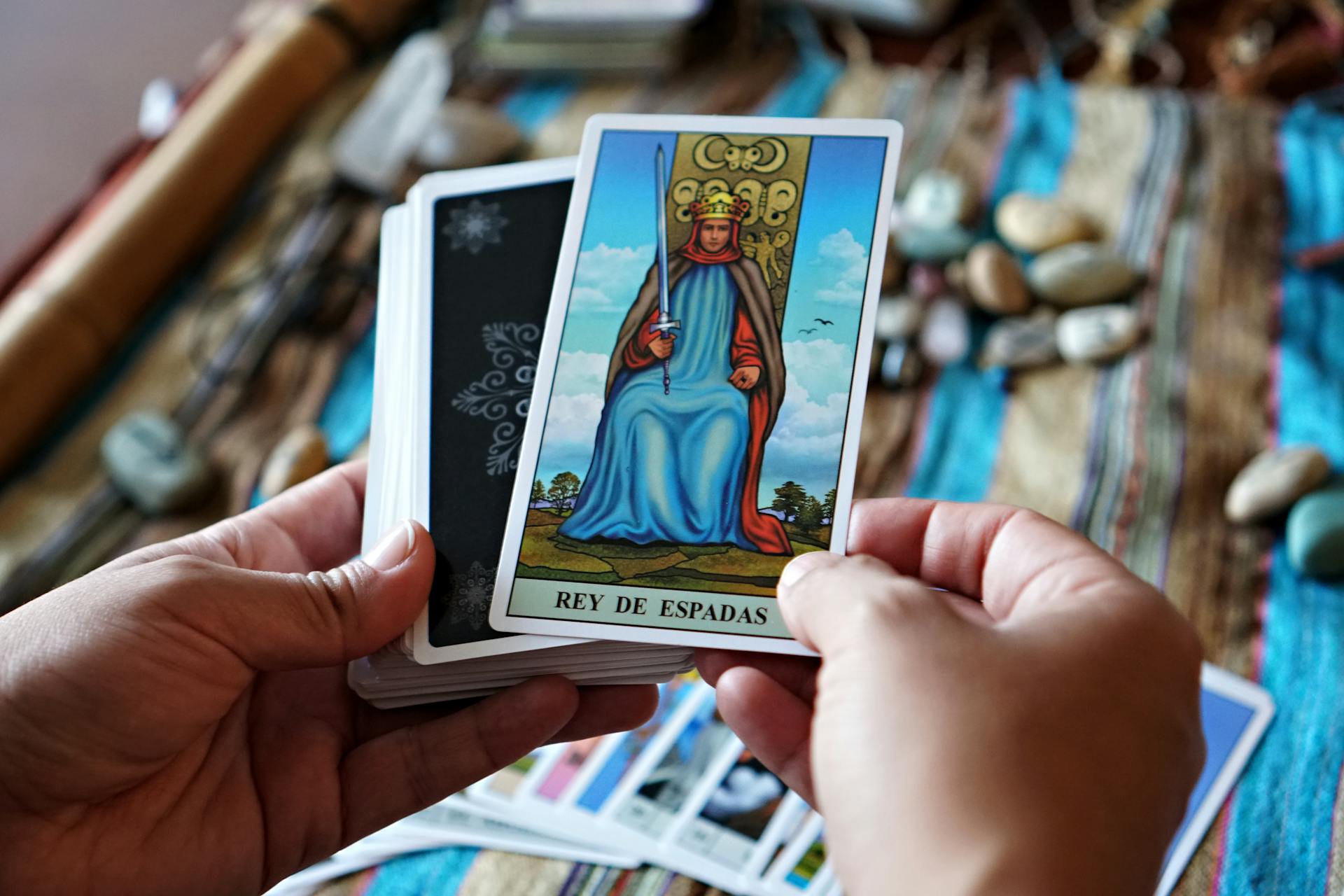
Hands holding a tarot card during a reading session with stones in the background
5. Releasing or Moving Away
Sometimes a reversal indicates that you're moving past the card's energy rather than moving into it. The upright card says "this is where you are." The reversed card says "this is where you've been, and you're leaving it behind." The Eight of Swords upright shows someone feeling trapped and helpless. Reversed, it suggests the mental prison is dissolving. You're starting to see options you couldn't see before. The restriction is lifting.
This method is particularly useful in readings about transitions, healing, and personal development. It adds a sense of direction and movement to your interpretation.
Which method should you use? Start with one and practice it consistently for a few weeks. Most readers eventually develop an intuitive sense for which method fits each card and situation. You don't have to commit to a single approach forever. The card itself, the position in the spread, and the question being asked will often tell you which interpretation framework applies.
How to Shuffle for Reversals
If you're going to read reversals, you need to shuffle in a way that actually allows cards to flip. A standard riffle shuffle (the bridge shuffle you'd use with playing cards) barely rotates any cards. Here are the shuffling methods that reliably produce reversals:
The pile method. Divide your deck into several small piles on the table, rotating some piles 180 degrees as you go. Then gather them back together in a random order. This gives you control over roughly how many reversals appear.
The wash shuffle. Spread all 78 cards face-down on a flat surface and swirl them around with both hands, mixing them thoroughly. This produces the most random distribution of reversals and is the preferred method for many professional readers.
The overhand shuffle with rotation. Do a standard overhand shuffle, but periodically rotate small packets of cards 180 degrees as you transfer them from hand to hand. This produces a moderate number of reversals.
Cut and rotate. After any shuffle method, cut the deck into two halves and rotate one half 180 degrees before restacking. This creates a roughly 50/50 split of upright and reversed cards.
The key is consistency. Pick a method and use it every time. If you only sometimes shuffle for reversals, you won't build a reliable relationship with reversed meanings because they'll appear inconsistently.
Reversed Cards in Major vs Minor Arcana
Reversals hit differently depending on whether you're reading a Major Arcana card or a Minor Arcana card, and understanding this distinction will sharpen your interpretations.
Major Arcana reversals tend to carry more weight. These 22 cards represent major life themes, archetypal energies, and significant turning points. When The Tower appears reversed, it isn't a minor adjustment. It might mean you're resisting a necessary upheaval, experiencing a slower or less dramatic form of the shake-up, or processing the aftermath of a Tower moment that's already happened. Major Arcana reversals often point to lessons that you're struggling to integrate or life phases that are taking longer than expected to complete.
Minor Arcana reversals tend to be more situational and practical. The 56 Minor Arcana cards deal with daily life: work challenges, emotional dynamics, intellectual pursuits, and material concerns. A reversed Three of Pentacles might simply mean a work project has stalled or a collaboration isn't clicking yet. The stakes feel lower because the energy is more specific and time-bound.
Court card reversals deserve special attention. Court cards (Pages, Knights, Queens, Kings) often represent people in your life or aspects of your own personality. A reversed court card might indicate a person who's expressing that card's qualities in an unhealthy way. The Knight of Wands upright is adventurous, passionate, and bold. Reversed, that same energy becomes reckless, impulsive, or unreliable. If the court card represents you, the reversal points to a quality you're underdeveloping or overexpressing.
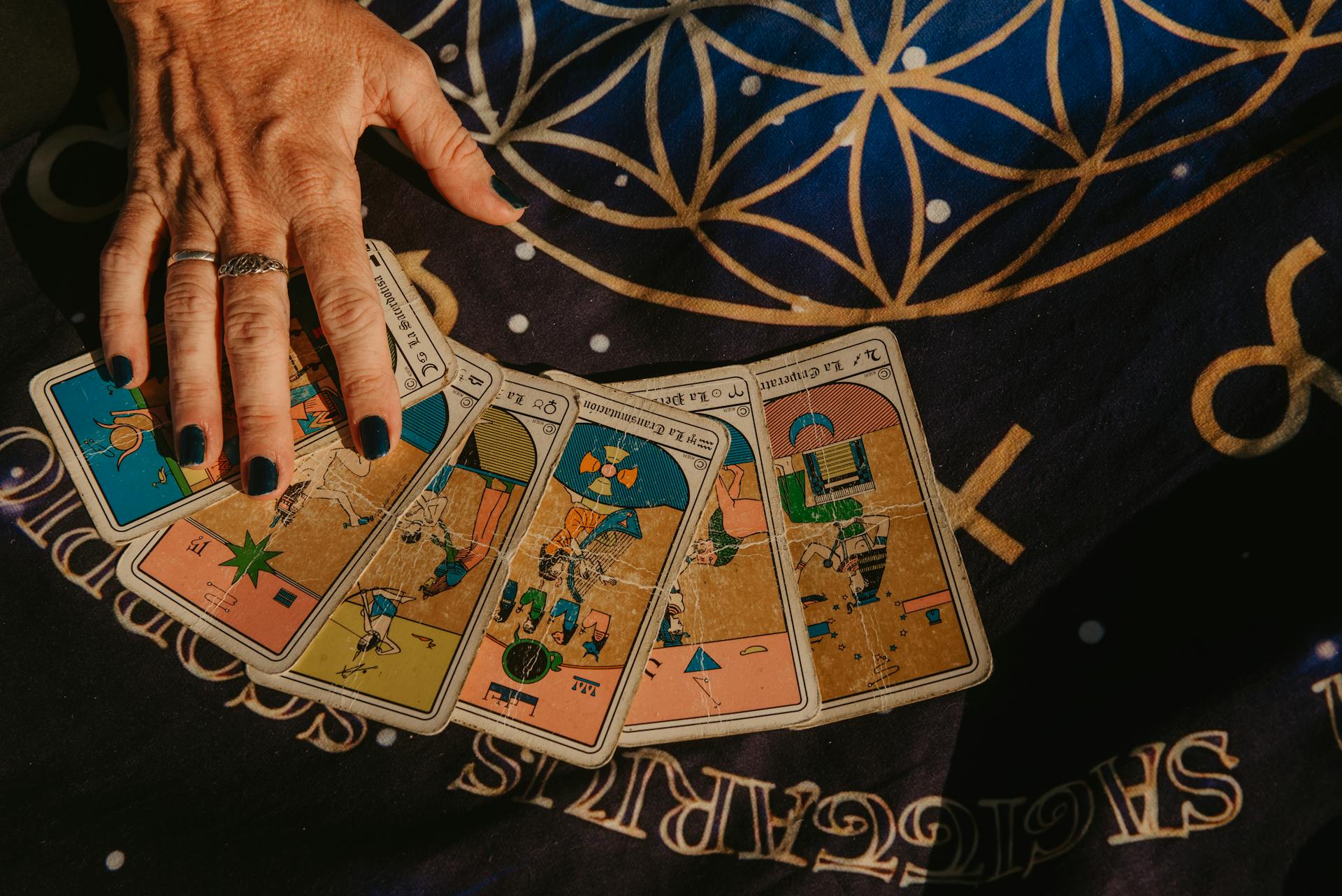
A hand arranging tarot cards on a star-studded cloth showcasing divination symbolism
Reading a Spread With Multiple Reversals
When half or more of your cards land reversed, the reading takes on a different character. Don't interpret each reversal in isolation. Look at the pattern first.
Mostly reversed readings often indicate internal processing. The querent might be going through a period of reflection, withdrawal, or behind-the-scenes work. The external world is quiet, but there's a lot happening internally. This is common during major life transitions, grief periods, or times of deliberate rest and recalibration.
Mostly upright readings suggest external action and visible manifestation. Things are moving, events are happening, and the energy is outward-facing. These readings tend to be more straightforward to interpret because the cards are expressing their themes openly.
A mix of upright and reversed is the most common scenario and the richest to read. Pay attention to which positions in the spread have reversals. In a Celtic Cross, a reversal in the "crossing" position (the obstacle) has different implications than a reversal in the "outcome" position. A reversed obstacle might mean the challenge is weakening. A reversed outcome might mean the result is still developing or will manifest in an unexpected internal way.
Look for reversal clusters. If the past positions are mostly reversed but the future positions are upright, the reading suggests you're emerging from a period of internal work into a phase of external action. If the pattern is reversed (upright past, reversed future), you might be entering a reflective period after a phase of outward momentum.
Common Reversal Meanings by Card Type
Here's a practical reference for how reversals tend to modify different categories of cards. These are general patterns, not rigid rules.
Aces reversed: New beginnings are delayed or the opportunity hasn't fully materialized yet. The seed is planted but hasn't sprouted. Check what's blocking the fresh start.
Numbered cards (2-10) reversed: The specific situation described by the card is either stalled, internalized, or expressing its shadow qualities. Use the five methods above to determine which interpretation fits.
Pages reversed: A message is delayed or a new skill isn't developing as expected. Can also indicate immaturity or naivete causing problems.
Knights reversed: Action is being misdirected, rushed, or avoided entirely. The Knight's characteristic energy is present but poorly channeled.
Queens reversed: Nurturing, mastery, or emotional intelligence in that suit's domain is blocked or being expressed in an unhealthy way. Self-care might be neglected.
Kings reversed: Authority, leadership, or maturity in that suit's domain is being misused or underdeveloped. Can indicate someone who has the title but not the wisdom.
Mistakes to Avoid When Reading Reversals
Don't default to "opposite meaning." This is the most common beginner mistake. The Sun reversed doesn't mean darkness and despair. It more likely means dimmed confidence, delayed joy, or happiness that's being experienced privately rather than publicly. Flipping to the exact opposite creates unnecessarily extreme readings.
Don't treat every reversal as negative. Some cards are challenging upright. The Ten of Swords reversed is often a welcome sight because it suggests the worst is over and recovery has begun. The Five of Pentacles reversed can indicate that a period of financial hardship is ending. Context matters more than orientation.
Don't ignore the upright meaning. The reversed meaning is built on top of the upright meaning, not separate from it. You need to understand what the card means right-side-up before you can meaningfully interpret it upside-down. If you can't articulate the upright meaning clearly, don't attempt the reversal.
Don't over-interpret. Sometimes a card is reversed because it fell that way during shuffling and the upright meaning, slightly adjusted, is all you need. Not every reversal carries a profound hidden message. Trust your intuition about when a reversal is significant and when the card is simply saying "yes, but with a slight caveat."
Don't mix methods randomly within a single reading. If you start a reading using the "blocked energy" framework, stick with it for the entire spread. Switching between methods mid-reading creates inconsistent interpretations and confuses both you and anyone you're reading for.
Frequently Asked Questions
Do reversed tarot cards always mean something bad?
No. Reversals modify a card's energy, but the modification isn't inherently negative. Challenging cards like the Tower, Death, or Ten of Swords often improve when reversed, suggesting the difficult energy is weakening or resolving. Even positive cards aren't "ruined" by a reversal. They're simply expressed differently, often internally rather than externally.
Can I choose not to read reversals?
Absolutely. Many professional tarot readers work exclusively with upright cards and produce deeply accurate, nuanced readings. The 78-card deck already contains cards for every shade of human experience, from the most joyful to the most painful. Reversals add an optional layer of complexity, but they're not required. If reading reversals feels forced or confusing, skip them until you're ready.
How many reversed cards in a reading is normal?
With a thorough shuffle that allows for reversals, you'll typically see roughly 30-50% of cards landing reversed. If you consistently get very few or very many reversals, your shuffle technique might not be rotating cards enough. The wash shuffle (spreading cards on a table and swirling them) produces the most random distribution.
Should beginners start with reversed tarot card meanings?
Most experienced readers recommend learning upright meanings first. Spend at least several months getting comfortable with what each card means at face value. Once you can look at any card and immediately articulate its core themes, you're ready to add the nuance of reversals. Trying to learn 156 meanings at once (78 upright plus 78 reversed) is overwhelming and often leads to confusion.
What if every card in my reading is reversed?
An all-reversed reading is rare but meaningful. It usually indicates a period of deep internal work, withdrawal from external activity, or a situation where everything is happening beneath the surface. Don't panic. Read each card using your preferred reversal method and pay attention to the overall theme. The reading is likely telling you to look inward rather than outward for answers.
Reversed tarot cards aren't something to fear. They're tools for reading with greater precision, offering your practice a vocabulary for the subtle, internal, and in-between states that upright cards alone sometimes can't capture. Start with one interpretation method, practice it consistently, and let your comfort with reversals grow naturally over time. When you're ready to put your reversal skills to work, try a tarot reading and pay attention to which cards appear inverted and what they're telling you about the energy beneath the surface.