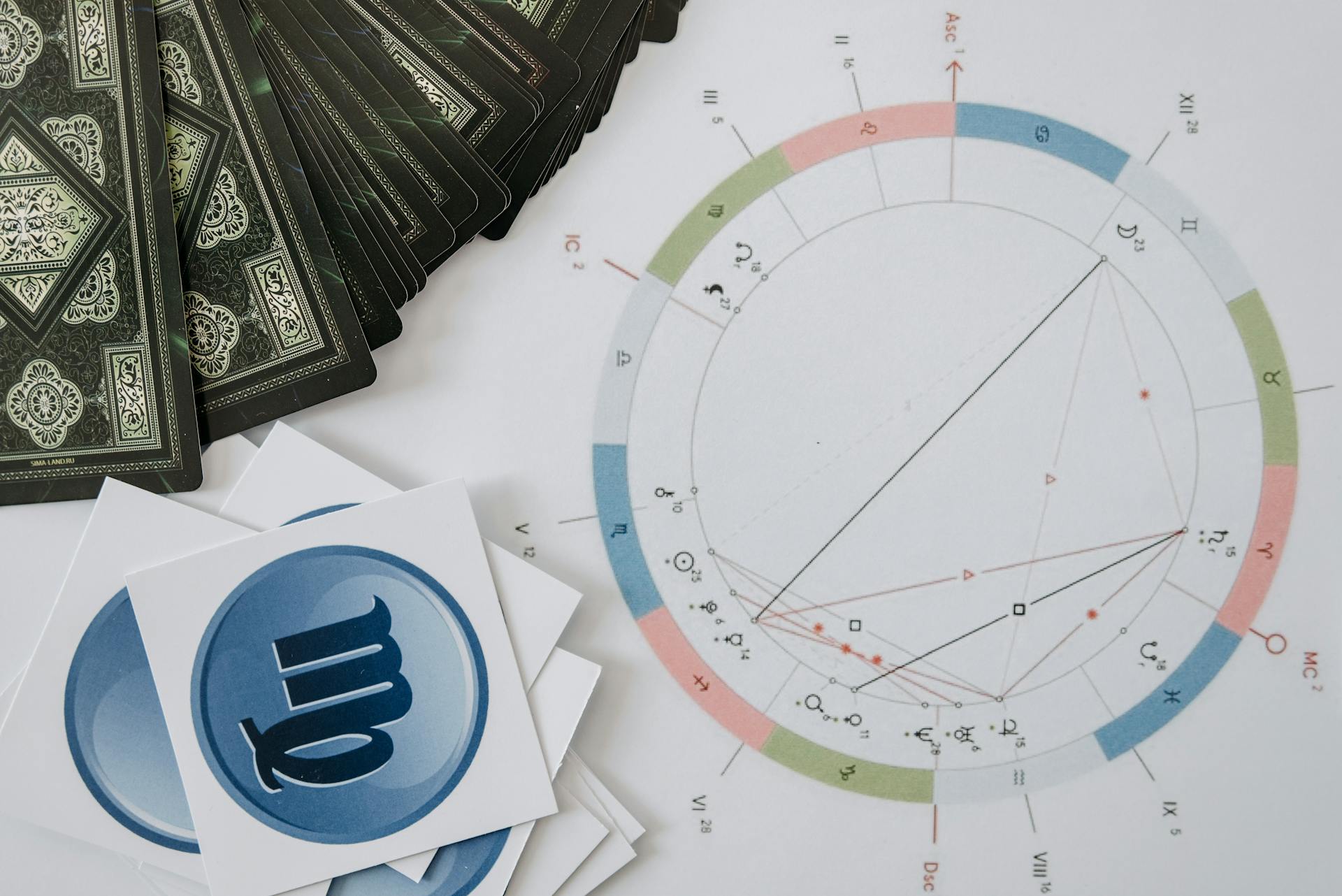
Tarot and Astrology Correspondences: How the Two Systems Connect
Tarot and astrology aren't separate disciplines that happen to coexist in the same metaphysical space. They're two languages describing the same underlying reality. Every card in a tarot deck has an astrological assignment, a zodiac sign, a planet, an element, or a specific slice of the zodiac wheel that defines its meaning. When you understand these correspondences, tarot readings stop being isolated snapshots and start plugging directly into the living, moving framework of your natal chart.
The system of correspondences most readers use today comes from the Hermetic Order of the Golden Dawn, a late 19th-century esoteric society whose members included occultists like A.E. Waite and Aleister Crowley. The Golden Dawn didn't invent the connections between tarot and astrology. Earlier writers had made associations going back centuries. But they did systematize those connections into a coherent framework that mapped every single card to a specific astrological reference point. That system became the backbone of the Rider-Waite-Smith deck and, through it, nearly every modern tarot deck in circulation.
If you've ever pulled The Emperor and felt its Aries energy, or noticed that The Moon card captures the same anxiety and illusion that Pisces season brings, you've already been reading tarot through its astrological correspondences. This guide makes those connections explicit so you can use them intentionally.
What You'll Learn
Why Tarot and Astrology Are Connected
Tarot and astrology share a common foundation: the classical elements, the seven traditional planets, and the twelve zodiac signs. These building blocks form the architecture of both systems. A tarot deck with 78 cards and an astrological chart with its twelve houses, ten planets, and twelve signs are both attempting to map the full range of human experience using the same symbolic vocabulary.
The connection isn't arbitrary. Both systems grew out of the Western esoteric tradition, which treated all symbolic systems as reflections of one unified truth. Astrology provided the celestial framework, the planets and signs as cosmic principles. Tarot provided the narrative framework, the archetypes and situations those principles create in daily life. Layering one onto the other makes both systems richer.
From a practical standpoint, knowing the astrological correspondence of a tarot card gives you instant access to additional layers of meaning. When The Chariot appears in a reading and you know it corresponds to Cancer, you understand that this isn't just about willpower and forward motion. It's about emotional determination. The protective shell. The drive that comes from defending something you love. The astrology doesn't replace the tarot symbolism; it deepens it.
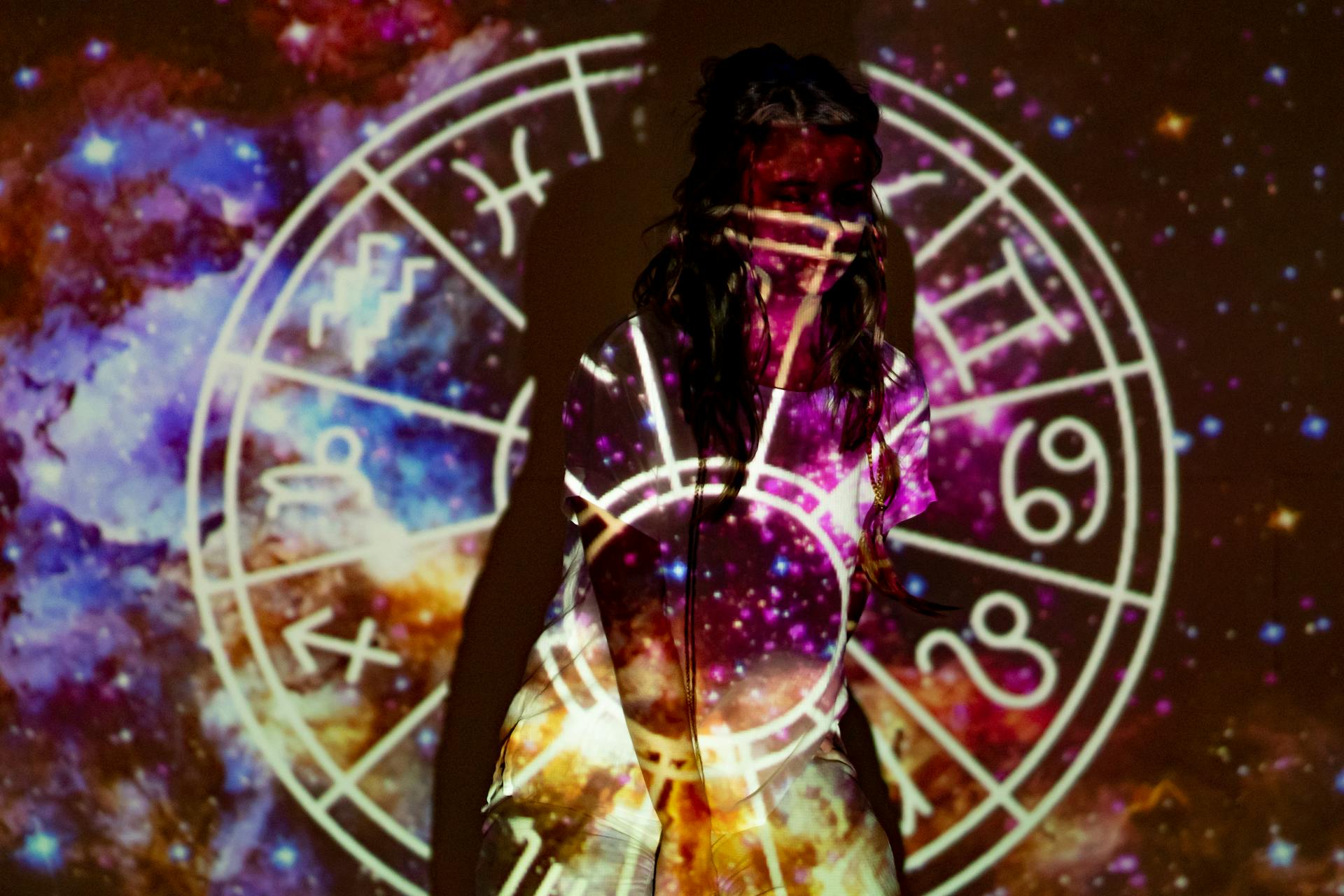
Zodiac wheel with star signs arranged in a circle against a dark celestial background
The Major Arcana and Their Zodiac Sign Correspondences
Twelve of the 22 Major Arcana cards correspond directly to the twelve zodiac signs. These assignments follow the Golden Dawn system and have remained remarkably consistent across schools of thought for over a century.
The Emperor = Aries. Cardinal fire energy. Authority, structure, initiative, and the drive to build something from raw ambition. The Emperor doesn't ask permission. He acts, just like Aries.
The Hierophant = Taurus. Fixed earth energy. Tradition, institutions, values that endure, and the comfort of established systems. Taurus wants stability and meaning; the Hierophant provides both through structure and teaching.
The Lovers = Gemini. Mutable air energy. Choice, duality, communication, and the merging of opposites. Gemini's twin nature shows up perfectly in the card's central theme of two paths or two people finding connection.
The Chariot = Cancer. Cardinal water energy. Emotional willpower, protection, tenacity, and the kind of determination that comes from the gut rather than the head. The Chariot's hard exterior mirrors Cancer's shell.
Strength = Leo. Fixed fire energy. The lion on the card makes this one literal. Courage, heart, creative power, and the quiet confidence that tames chaos through gentleness rather than force.
The Hermit = Virgo. Mutable earth energy. Analysis, solitude, discernment, and the pursuit of truth through careful observation. Virgo's need to understand before acting becomes the Hermit's lantern in the dark.
Justice = Libra. Cardinal air energy. Balance, fairness, cause and effect, and the weighing of evidence before decisions. Libra's scales are literally in the card's imagery.
Death = Scorpio. Fixed water energy. Transformation, endings that make way for beginnings, and the refusal to let anything remain stagnant. Scorpio's reputation for intensity lives in this card.
Temperance = Sagittarius. Mutable fire energy. Synthesis, higher purpose, patience with a grand vision, and the blending of opposites into something greater. The angel mixing water between cups reflects Sagittarius's quest for meaning.
The Devil = Capricorn. Cardinal earth energy. Material attachment, ambition's shadow side, structures that imprison rather than support. Capricorn's drive for worldly achievement has a price, and The Devil shows what it costs.
The Star = Aquarius. Fixed air energy. Hope, humanitarian vision, innovation, and the clarity that comes after crisis. Aquarius pours knowledge out for everyone; The Star pours water in the same generous, detached way.
The Moon = Pisces. Mutable water energy. Illusion, intuition, the subconscious, and the thin line between imagination and deception. Pisces lives in the dreamworld that The Moon card depicts.
The Major Arcana and Their Planetary Correspondences
The remaining ten Major Arcana cards correspond to planets and luminaries rather than zodiac signs. These assignments connect each card to a planetary principle that operates across the entire zodiac.
The Fool = Uranus. Some traditions assign The Fool to the element of Air itself, but the Golden Dawn's later developments and many modern readers link it to Uranus: sudden leaps, unconventional beginnings, and the willingness to step off the cliff without a plan.
The Magician = Mercury. Communication, skill, intellect, and the ability to translate intention into action. Mercury rules the tools on The Magician's table and the mental agility required to use them.
The High Priestess = The Moon. Intuition, the subconscious, hidden knowledge, and the cyclical nature of insight. Don't confuse this with The Moon card itself, which corresponds to Pisces. The High Priestess embodies the lunar principle directly.
The Empress = Venus. Fertility, beauty, pleasure, abundance, and the creative force of nature. Venus rules love and aesthetics; The Empress is that energy made manifest in the physical world.
The Wheel of Fortune = Jupiter. Expansion, luck, cycles, and the turning of fate. Jupiter's role as the great benefic aligns with the Wheel's message that fortune is always in motion.
The Hanged Man = Neptune. Surrender, altered perspective, sacrifice, and spiritual dissolution. Neptune dissolves boundaries, and The Hanged Man lets go of the need to control.
The Tower = Mars. Sudden destruction, conflict, breakthrough, and the force that tears down what's become unstable. Mars doesn't build; it breaks through.
The Sun = The Sun. Vitality, clarity, joy, success, and the life force itself. The most straightforward correspondence in the deck.
Judgement = Pluto. Rebirth, reckoning, transformation at the deepest level, and the call to step into your purpose. Pluto's energy of death and regeneration resonates through this card.
The World = Saturn. Completion, mastery, earned achievement, and the structure that holds everything together. Saturn's lessons culminate in The World's sense of wholeness.
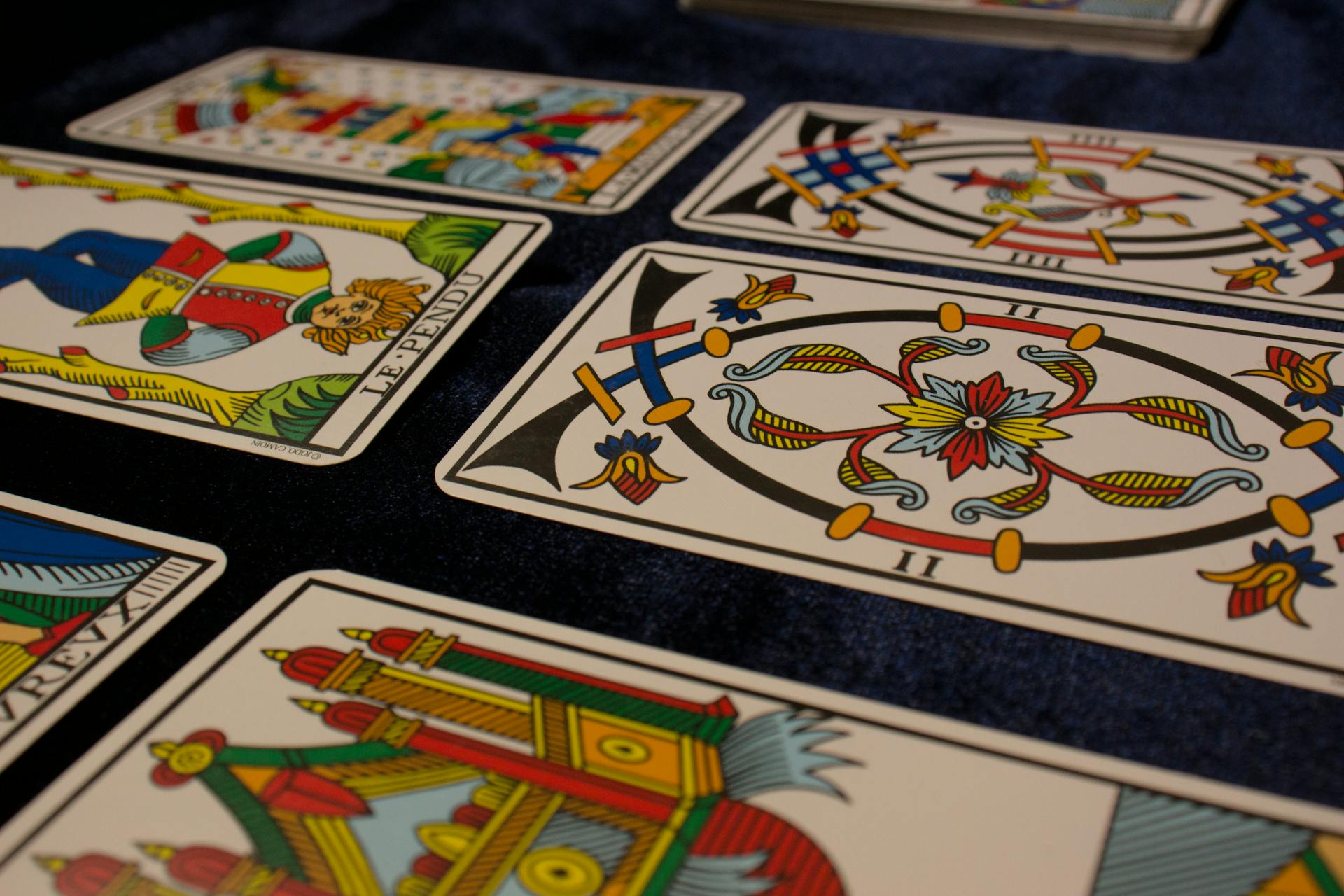
Tarot cards arranged in a spread on a table with candles and crystals nearby
The Minor Arcana Suits and the Four Elements
The four suits of the Minor Arcana correspond to the four classical elements, which also organize the twelve zodiac signs into groups of three.
Wands = Fire (Aries, Leo, Sagittarius). Action, passion, creativity, ambition, and the spark that starts things. When Wands dominate a reading, you're dealing with energy, drive, and the will to make something happen. The fire signs share this initiative and enthusiasm.
Cups = Water (Cancer, Scorpio, Pisces). Emotions, relationships, intuition, and the inner life. A Cups-heavy reading points to matters of the heart, emotional processing, and the connections that give life meaning. Water signs navigate the same territory.
Swords = Air (Gemini, Libra, Aquarius). Thought, communication, conflict, and truth. Swords cut through confusion but can also create it through overthinking and mental spirals. Air signs live in the realm of ideas, and Swords reflect both the clarity and the turbulence that comes with it.
Pentacles = Earth (Taurus, Virgo, Capricorn). Material reality, money, health, work, and the physical world. Pentacles readings ground you in what's tangible and measurable. Earth signs build, maintain, and value what's real and lasting.
This elemental framework means that a reading full of Cups is automatically telling you something about water sign themes in your life, even before you look at the specific card meanings. If you know your chart is heavy in water placements, a Cups-dominated spread will feel familiar. If your chart lacks water, those same cards might be pointing to emotional territory you tend to avoid.
The Minor Arcana Pip Cards and the Zodiac Decans
This is where the correspondence system gets precise. Each zodiac sign spans 30 degrees of the ecliptic, and those 30 degrees divide into three decans of 10 degrees each. The numbered pip cards (2 through 10) of each suit map to these decans, assigning every pip card a specific planetary ruler and zodiac slice.
The system works like this: the Aces represent pure elemental energy and don't get a decan assignment. Starting with the Twos, each card takes the next decan in zodiacal order within its element.
Wands (Fire):
Cups (Water):
Swords (Air):
Pentacles (Earth):
This decan system is enormously useful. If you pull the Seven of Cups and know it's Venus in Scorpio, you understand the card is about desire, obsession, and fantasies that feel intoxicating but might not be real. Venus in Scorpio doesn't do casual attraction. That astrological assignment adds a specificity to the card's meaning that the imagery alone doesn't convey.
Planets aligned against the starry night sky representing celestial forces in astrology
Court Cards and Zodiac Signs
The 16 court cards (Page, Knight, Queen, King) correspond to zodiac signs through a combination of elemental assignment and decanate rulership. The system is slightly more complex than the pip cards because each court card blends two elements: the element of its suit and the element of its rank.
The ranks carry their own elemental energy:
Under the Golden Dawn system, the court cards map to zodiac signs as follows:
Wands (Fire):
Cups (Water):
Swords (Air):
Pentacles (Earth):
The Pages don't correspond to specific zodiac signs in most systems. They represent the pure, undeveloped potential of their element, more like the Aces than the other court cards.
When a court card appears in a reading, its zodiac correspondence can point to a specific person (someone with strong placements in that sign), a time of year (when the Sun passes through that sign), or a mode of behavior you're being called to embody. If you're a Cancer Sun and the Queen of Cups keeps showing up, the deck might be telling you to lean into your natural emotional intelligence rather than fighting it.
How to Use Correspondences in Your Readings
Knowing the correspondences is one thing. Using them effectively is another. Here's how to integrate astrology into your tarot practice without overcomplicating things.
Layer, don't replace. The astrological correspondence adds a dimension to the card's meaning; it doesn't override the visual symbolism, your intuitive hit, or the card's position in the spread. Think of it as a second opinion that either confirms or nuances your initial read.
Use correspondences for timing. If you're asking "when will this happen?" and pull the Three of Wands (Sun in Aries), consider Aries season (late March to mid-April) as a potential timeframe. This works best with specific, time-bound questions.
Connect cards to your natal chart. When a card's astrological assignment hits a sensitive point in your birth chart, pay extra attention. The Five of Cups (Mars in Scorpio) will land differently for someone with natal Mars in Scorpio than for someone with no Scorpio placements. If you don't know your chart yet, generate your natal chart to find out where these connections live.
Watch for elemental imbalances. After a reading, notice which elements dominate. A spread full of Swords and Wands (Air and Fire) with no Cups or Pentacles (Water and Earth) suggests you're operating in your head and your ambitions while neglecting emotions and practical reality. Your natal chart's elemental balance can help you understand why certain imbalances keep appearing.
Use planetary transits to predict which cards might show up. During Mercury retrograde, don't be surprised if The Magician appears reversed or Swords cards dominate. When Venus is transiting your 7th house, Cups cards and The Empress tend to surface. This isn't magic; it's two systems reflecting the same cosmic weather.
Try an astrological tarot spread. Lay twelve cards in a circle, one for each house. The card in the first house position describes your identity and self-expression right now. The seventh house card describes your relationships. The tenth house card describes your career. It's a natal chart in tarot form, and it's one of the most revealing tarot spreads you can do.
Four elements represented through natural imagery symbolizing the elemental foundations of both tarot and astrology
Frequently Asked Questions
Do all tarot decks use the same astrological correspondences?
Most modern decks follow the Golden Dawn system described in this article, since the Rider-Waite-Smith deck popularized it. However, some decks use alternative systems. The Thoth deck (Aleister Crowley's design) uses the same decan assignments but swaps Strength and Justice in the Major Arcana numbering. Marseille-tradition decks predate the Golden Dawn and don't formally assign astrological correspondences at all. If you're unsure, check your deck's companion book for its specific system.
Can I use tarot correspondences if I don't know astrology?
Yes. Start with the elemental connections since they're the most intuitive. Fire (Wands) is about action and passion. Water (Cups) is about emotions. Air (Swords) is about thoughts. Earth (Pentacles) is about material life. Even that basic framework will deepen your readings. As you learn more astrology, the zodiac and planetary layers will click into place naturally. Generating your natal chart is a great first step since it shows you which elements and signs dominate your personal chart.
How do tarot correspondences work with compatibility readings?
When doing a relationship reading, notice which zodiac signs the cards represent and check whether those signs are compatible. If your "you" card is the Queen of Swords (Libra) and the "partner" card is the King of Wands (Leo), you're looking at a Libra-Leo dynamic with its strengths (social charm, mutual admiration) and challenges (decisiveness vs. compromise). Run a compatibility check alongside your reading for the full picture.
Why is The Fool assigned to Uranus if Uranus wasn't known in ancient times?
The original Golden Dawn assigned The Fool to the element of Air rather than a specific planet, since only the seven traditional planets were used. The Uranus association developed later as modern astrologers incorporated the outer planets into the correspondence system. Uranus fits The Fool's symbolism well: both represent sudden breaks from convention, leaps into the unknown, and the kind of radical freedom that doesn't follow rules. Some traditional tarot readers still prefer the Air attribution, and both approaches are valid.
Can I pull my zodiac sign's tarot card for daily guidance?
Absolutely. If you're a Scorpio, pulling Death as a daily meditation card can help you connect with your sign's core themes of transformation and renewal. Try pulling your Sun sign card alongside a random daily tarot card to see how your natal energy interacts with the day's message. You can also pull the card for your rising sign or Moon sign for a fuller picture.