Tarot Card Combinations: How to Read Two Cards Together
Tarot card combinations are what happen when you stop reading cards one at a time and start reading them as a sentence. A single card gives you a word. Two or three cards sitting next to each other give you a phrase, and that phrase almost always means something more specific than any card on its own. The Tower next to the Sun isn't just "sudden upheaval" plus "joy." Read together, it points to a shake-up that clears the way for relief. That blending is the difference between a flat reading and one that actually answers the question.
Most beginners memorize 78 separate meanings and then freeze the moment two cards interact. The good news is that reading combinations is a skill, not a second deck of definitions to learn. Once you understand how cards modify each other, you can read pairings you've never seen before. This guide walks through what combinations are, the four-step method for blending any two cards, how the major and minor arcana behave together, and a set of common pairings with their meanings. If you're brand new, start with our beginner's guide to reading tarot cards first, then come back here.
What You'll Learn
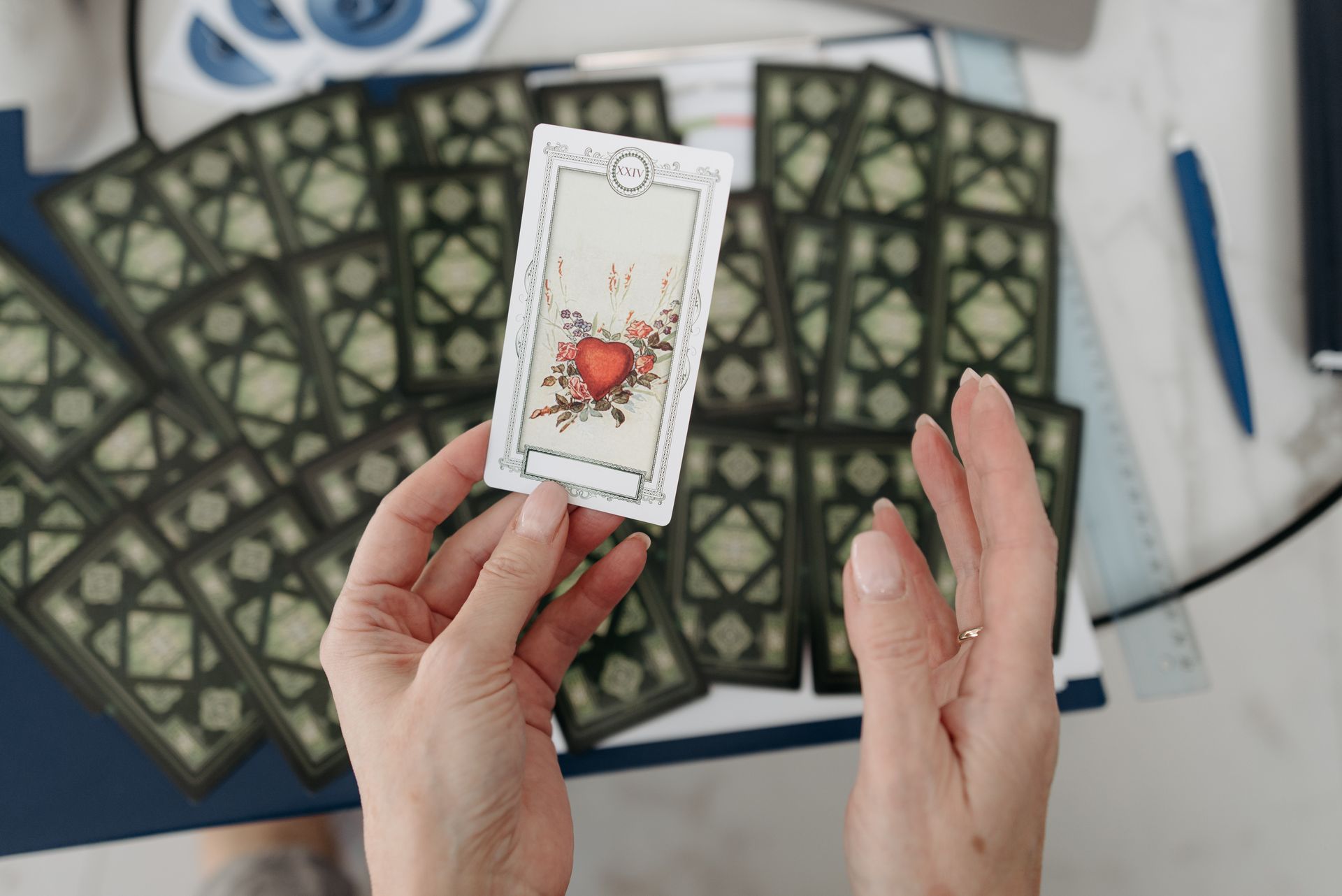
Several tarot cards laid out side by side on a dark surface, showing how tarot card combinations form a single story
What are tarot card combinations?
A tarot card combination is any group of two or more cards read in relation to each other rather than in isolation. The cards don't change their core meaning, but they color and qualify one another the same way adjectives change a noun. Think of each card as carrying a theme, an energy, and a direction. When you place two together, you're asking how those themes interact. Do they reinforce each other, soften each other, or pull in opposite directions?
This matters because tarot answers questions in context. Pull the Three of Swords alone and you've got heartbreak. Pair it with the Six of Swords and the message shifts to moving on from heartbreak, leaving the pain behind. The grief is still there, but now it has a trajectory. That trajectory is the whole point of reading combinations, and it's why experienced readers rarely interpret a card without glancing at its neighbors.
How do you read two tarot cards together?
Start by reading each card's meaning on its own, then ask one question: how does the second card change the first? You're looking for the relationship between them. Some pairs amplify a shared theme, like two cups cards both pointing to emotion. Some create tension, like a fiery Wands card next to a slow, grounded Pentacles card. And some tell a clear before-and-after story when one card shows a problem and the other shows the response.
The most reliable habit is to read left to right, treating the first card as the setup and the second as the development or outcome. If you drew the cards as a pair without positions, you can still impose this order. The cards become a tiny narrative: this, therefore that. If you're still shaky on the individual meanings, our introduction to tarot covers the full 78-card structure so the combinations have something solid to stand on.
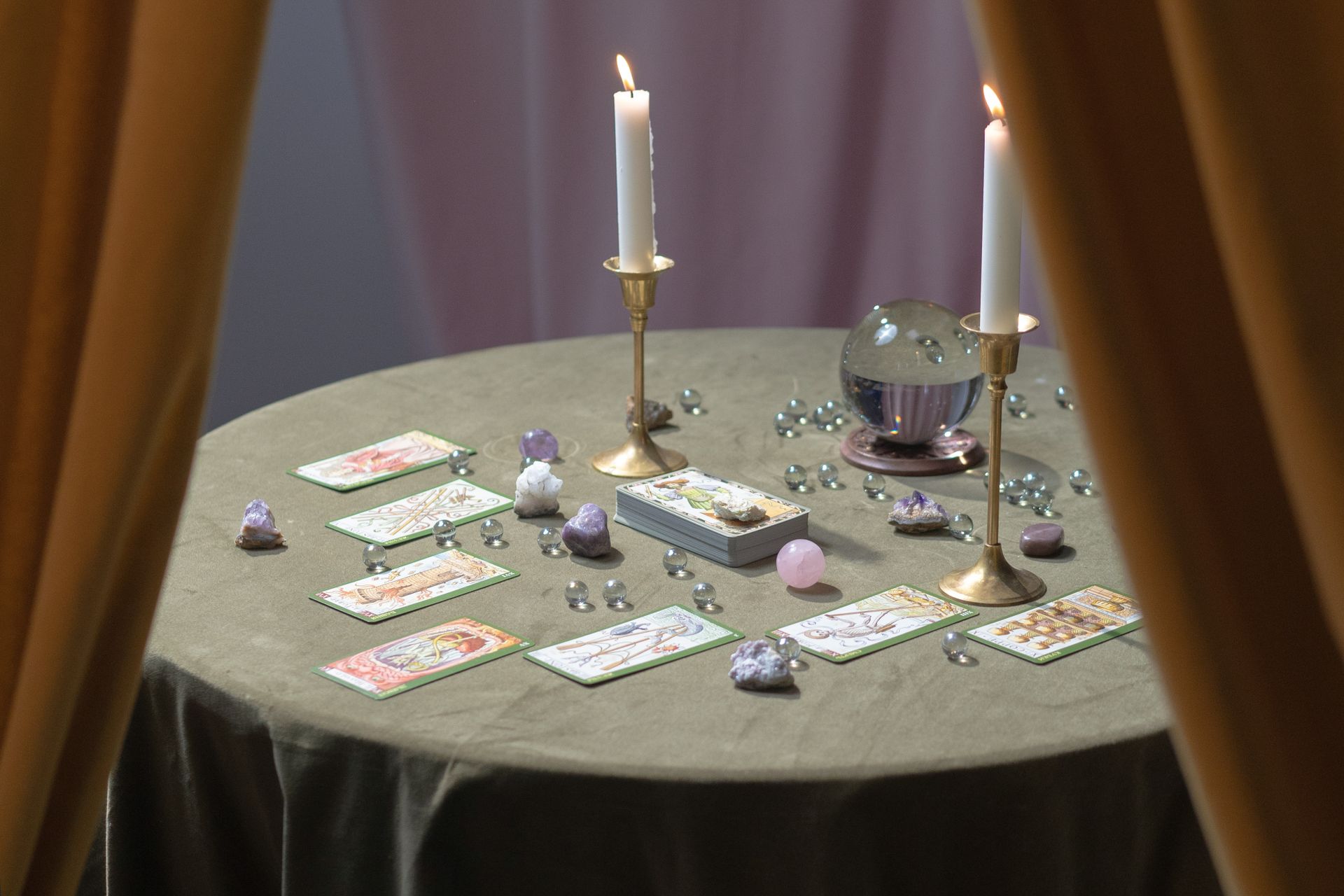
Hands turning over tarot cards on a cloth-covered reading table by soft light
The four steps to blend any pair
You can read any combination, even one you've never encountered, with a repeatable four-step method. This beats memorizing pairings because the deck holds thousands of possible two-card combinations, and far more once you add a third card.
Step one: name each card's core theme in one word. The Empress might be "nurture." The Five of Pentacles might be "lack." Strip each card down to its essence so you're working with clean ideas, not paragraphs.
Step two: check the suits and arcana. Two cards from the same suit double down on that suit's element. A major and a minor together usually mean a big life theme expressing through a specific everyday situation. Knowing your tarot suits and their elements makes this step almost automatic.
Step three: decide if they agree or clash. Agreement intensifies the message. Clash creates nuance, often a "yes, but" or a tension the querent is living through. Neither is good or bad. Conflict in the cards frequently mirrors real conflict in the question.
Step four: build the sentence. Combine the themes into a single statement that answers the question. "Nurture" plus "lack" might read as caring for yourself during a lean time, or needing support you're not currently receiving. The question itself tells you which reading fits.
How major and minor arcana combine
The arcana you draw changes the weight of the message. Major arcana cards represent large, fated, soul-level forces, while minor arcana cards describe the daily, practical, changeable details of life. When you read them together, the mix tells you the scale of what's happening.
Several major arcana cards in one combination signal that a major life chapter is in motion, the kind of thing you don't fully control. A reading dominated by minor arcana points to ordinary circumstances you can influence through choices and effort. The most common and useful situation is a blend: one major card naming the big theme, surrounded by minors showing how it plays out in your week, your job, or your relationship.
For example, the Wheel of Fortune (major, meaning a turning point) next to the Eight of Pentacles (minor, meaning diligent work) suggests a fated shift arriving precisely because you've been putting in the effort. The major sets the stage, the minor shows your part in it. If you want to layer in timing and energy, our guide to tarot and astrology correspondences shows how each card ties to a sign or planet, which adds another dimension to any pairing.
A mystical tarot deck fanned out near dried flowers and crystals on a wooden surface
Common tarot card combinations and their meanings
These pairings come up often enough that learning them gives you a head start. Treat them as examples of the method, not fixed definitions, since position and question always adjust the meaning.
The Lovers and the Two of Cups. A classic love confirmation. The Lovers brings a meaningful choice and deep alignment, while the Two of Cups brings mutual attraction and a budding partnership. Together they're one of the strongest connection signals in the deck. See the full nuance in our Lovers card meaning.
The Tower and the Sun. Sudden disruption followed by clarity and relief. The Tower tears something down, the Sun reveals that what's left is healthier and brighter. This pairing often shows a painful change that turns out to be a blessing. Our Tower card guide explains why this card scares people more than it should.
Three of Swords and Six of Swords. Heartbreak giving way to recovery. The grief of the Three softens as the Six carries you toward calmer water. It's a hopeful combination despite the sad imagery. Read more in our Three of Swords meaning.
The Devil and the Eight of Cups. Recognizing an unhealthy attachment and choosing to walk away from it. The Devil names the bondage, addiction, or toxic pattern, and the Eight of Cups is the decision to leave. A powerful liberation message.
Ace of Pentacles and the Empress. New material abundance meeting fertility and growth. This pairing can point to a financial opportunity blossoming, a thriving creative project, or in some contexts pregnancy. The Ace plants the seed and the Empress makes it grow.
Death and the Star. Endings followed by renewal and hope. Death clears away what's finished, and the Star brings healing, faith, and a fresh sense of direction. One of the most reassuring transformation combinations you can draw.
Reading combinations inside a spread
In a multi-card spread, combinations get an extra layer of meaning from position. A card means one thing in the "past" position and another in the "outcome" position, so the combination of card and slot matters as much as the combination of card and card. The skill is reading both at once.
Look first at adjacent cards, since neighbors influence each other most. Then scan for clusters, like three court cards together suggesting several people involved, or a run of same-suit cards flagging where your energy is concentrated. In a larger layout such as the Celtic Cross spread, the dialogue between the "challenge" card and the "outcome" card often carries the heart of the reading. If you're choosing a layout, our overview of tarot spreads for love, career, and self-discovery helps you match the spread to your question.
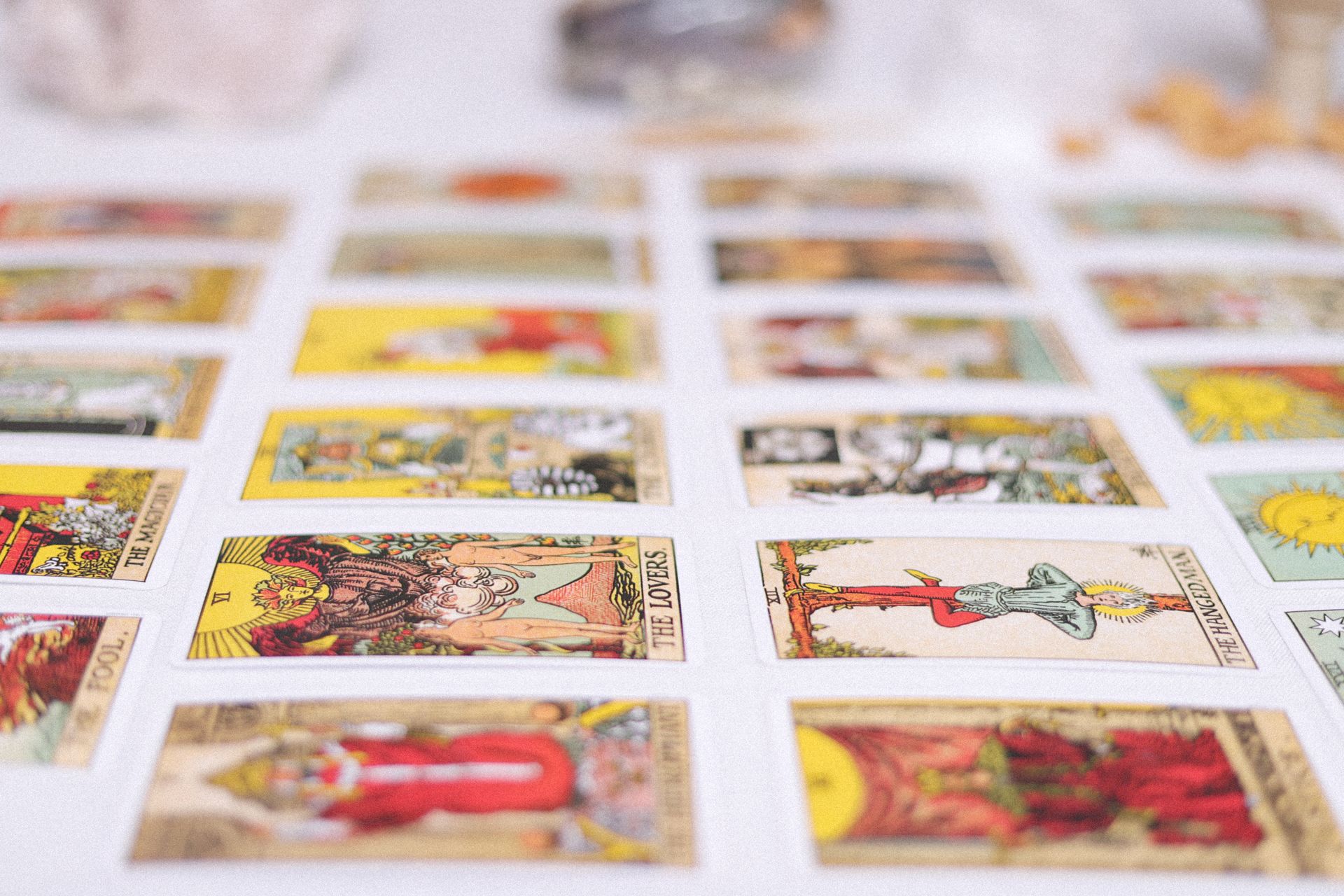
Tarot cards arranged in a structured spread layout on a dark cloth
How reversals change a combination
A reversed card in a combination usually weakens, blocks, or internalizes the energy it would normally bring. That shift ripples through the whole pairing. The Sun reversed next to the Tower, for instance, dims the relief the upright Sun would promise, suggesting the clarity after upheaval is delayed or only partial.
Reversals can also flip a combination's direction. An upright pairing that reads as "moving toward" something may, when reversed, read as "moving away" or "stuck." Don't overcomplicate it. Read the upright combination first, then ask how the reversal mutes, delays, or turns it. Our full guide to reading reversed tarot cards breaks down the main approaches so you can pick one and stay consistent.
Mistakes to avoid
The biggest mistake is reading cards in total isolation and then stapling the meanings together without looking for the relationship between them. "Heartbreak and a journey" is not the same as "leaving heartbreak behind," and only the relationship reveals which one the cards mean.
Another common error is forcing a memorized pairing onto a question it doesn't fit. The combinations above are starting points, not rules. Always let the actual question steer the interpretation. Finally, beginners often try to read too many cards at once and lose the thread. Start with two-card pulls until blending feels natural, then build up to three and beyond. A daily two-card draw is the fastest way to train this muscle.
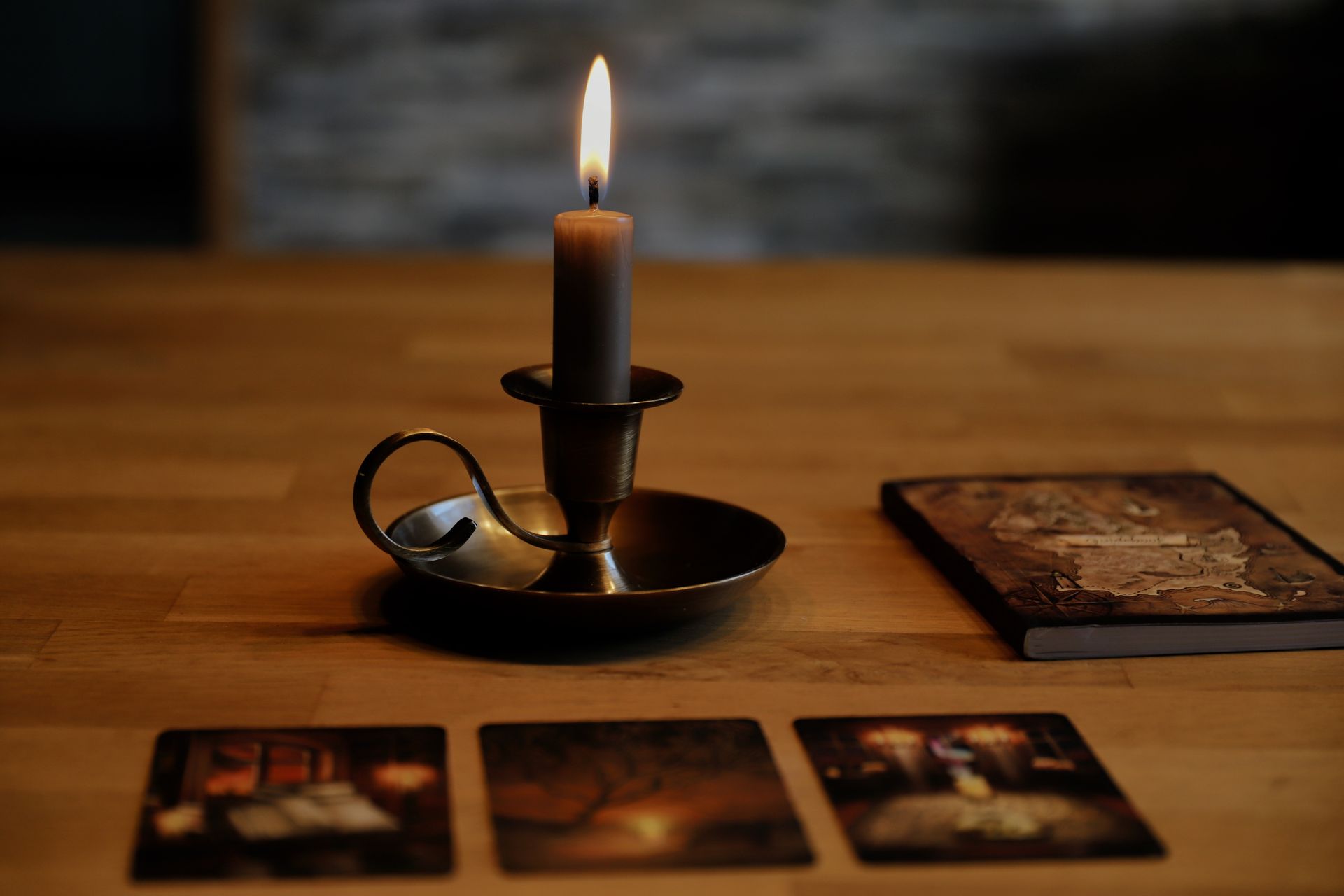
Tarot cards beside a glowing candle, creating an intimate reading atmosphere
Frequently Asked Questions
How many tarot cards should I read together?
Start with two cards until blending feels natural, then move to three. Two-card pulls teach you the relationship between cards without overwhelming you. Most everyday questions are answered well with two or three cards, while full spreads suit bigger life questions.
Do tarot card combinations have fixed meanings?
No. Combinations have reliable themes, but the final meaning always depends on the question, the positions, and any reversals. The pairings readers share are starting points that you adjust to context, not rigid definitions to memorize.
How do I read a major and minor arcana card together?
Treat the major arcana card as the big life theme and the minor arcana card as the everyday situation it's playing out through. The major tells you the scale and significance, the minor tells you the practical details and your role in it.
What's the easiest way to practice card combinations?
Pull two cards each morning and write one sentence blending them into a message for your day. Doing this daily trains you to see relationships between cards quickly, which is the core skill behind reading any combination.
Reading tarot combinations comes down to one habit: always ask how the cards relate, not just what each one says alone. Name each theme, check the suits and arcana, decide whether they agree or clash, then build a single sentence that answers the question. Ready to practice on a real spread? Pull a free tarot reading and try blending the first two cards using the four-step method above.