Turquoise Meaning: Healing Properties, Uses, and How to Work With It
Turquoise is the stone people reach for when they want protection and a clear voice at the same time. Its meaning centers on safe passage, honest communication, and a grounded calm that has made it one of the most treasured stones on earth for thousands of years. That famous sky-blue-to-green color has been set into pharaohs' burial masks, Persian daggers, and Navajo silver, always for the same reasons: people believed it guarded the wearer from harm and carried a piece of the sky with them. If you want a crystal with the longest track record of all, turquoise is it.
This guide covers what turquoise means, what it's actually made of, its healing properties, and how it connects to the chakras and the zodiac. It also tackles the questions that trip buyers up most with this stone: why so much of what's sold as turquoise is dyed howlite, why a blue piece can slowly turn green on your finger, and how to care for something this soft without ruining it. Start with the meaning.
What You'll Learn
What Does Turquoise Mean?
Turquoise is best known as a stone of protection and a stone of communication. For most of its history the two ideas were linked: warriors, travelers, and traders carried it to guard against accidents and misfortune, and healers used it to help people speak honestly and be understood. Its meaning is about moving through the world safely while staying true to yourself, which is why it's tied so closely to journeys, spoken truth, and the sense of being watched over.
There's a wisdom side to the meaning too. Turquoise is often called a master healer and a stone of wholeness, because that blend of blue and green is thought to bridge the mind and the heart, the sky and the earth. The idea is that it settles scattered nerves and anxious thoughts into steady, grounded confidence, so you can say what you mean without bracing for a fight. Older traditions even read the stone itself as a kind of mood ring for its owner, believing it would fade or darken when the wearer was unwell or in danger. Put simply, turquoise's meaning is protection you can wear, paired with the calm to speak your truth.
What Is Turquoise?
Turquoise is a hydrated phosphate of copper and aluminum, which is a fancy way of saying it's a fairly soft, porous mineral built around water and copper. That copper is the key to its color: copper turns it sky blue, while iron and zinc pull it toward green and yellow-green. It's soft for a gemstone, around 5 to 6 on the Mohs scale, and because it's porous it soaks up oils and liquids, a trait that matters a lot when you get to caring for it later.
Most turquoise runs through a host rock, and the leftover veins of that rock show up as the brown, tan, or black webbing called matrix. Fine, even webbing is prized as spiderweb turquoise. The color itself ranges from the pure robin's-egg blue of top Persian and Sleeping Beauty material to the earthy greens of much Nevada and Tibetan stone, and none of those is more real than another.
The name is a clue to how it traveled. Turquoise comes from the French for Turkish stone, even though little of it came from Turkey. The prized blue stones of the ancient world were mined in Persia, modern Iran, and reached Europe through Turkish trade routes, so the label stuck. The oldest mines are in the Sinai, worked by the Egyptians who tied the stone to the goddess Hathor, and near Nishapur in Iran. In North America the famous sources are Arizona mines like Kingman and Bisbee, the now-closed Sleeping Beauty mine, Nevada's many small mines, and the old Cerrillos workings in New Mexico. Turquoise shares its copper roots with malachite, which is part of why the two get grouped together as protective, heart-linked stones.
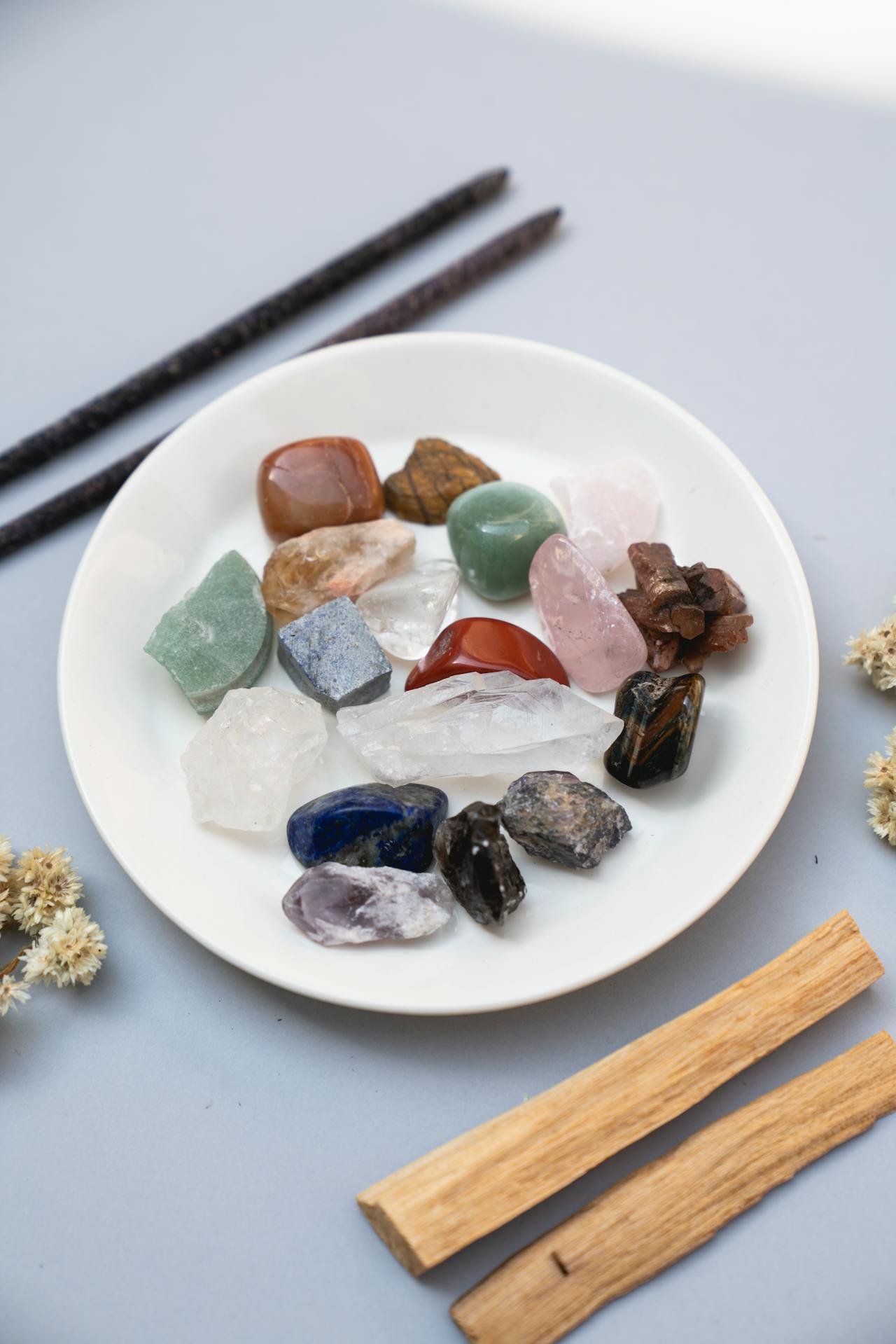
A collection of tumbled healing crystals arranged for study, representing turquoise and other protective stones
Turquoise Healing Properties and Benefits
In crystal healing, turquoise is treated as an all-rounder, which is where its old nickname of master healer comes from. The classic uses cluster around three ideas: protection, communication, and calm. People carry it to feel shielded and steadier in stressful moments, to speak up without freezing, and to take the sharp edge off anxiety, exhaustion, and mental overwhelm.
On the emotional side, turquoise has a reputation for stabilizing mood swings and quieting the kind of self-criticism that keeps you silent. It's a common choice for people who dread public speaking, hard conversations, or being put on the spot, because the tradition says it helps you find calm, honest words instead of blurting or shutting down. Many also reach for it after burnout, using it as a symbolic reminder to slow down and refill before giving more.
Physically, folk tradition has long linked turquoise to the throat, the lungs, and general recovery, which lines up with its throat-chakra reputation. None of that replaces medical care, and it shouldn't. The honest way to hold these properties is as supports for intention and focus: turquoise gives you something steady to come back to when you're setting a boundary, calming your nerves, or reminding yourself that you're allowed to take up space. If you're new to working with stones this way, the healing crystals for beginners guide covers how it's meant to fit into a practice.
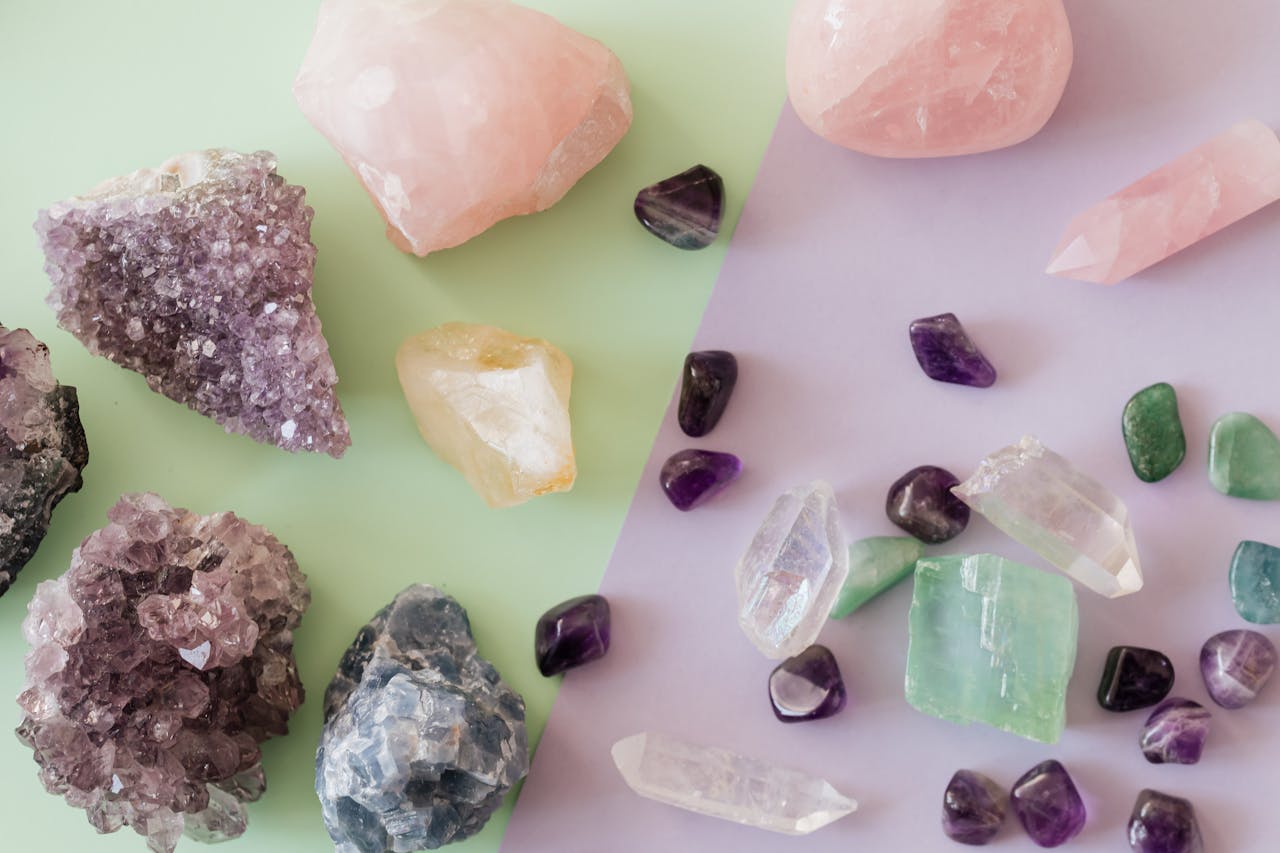
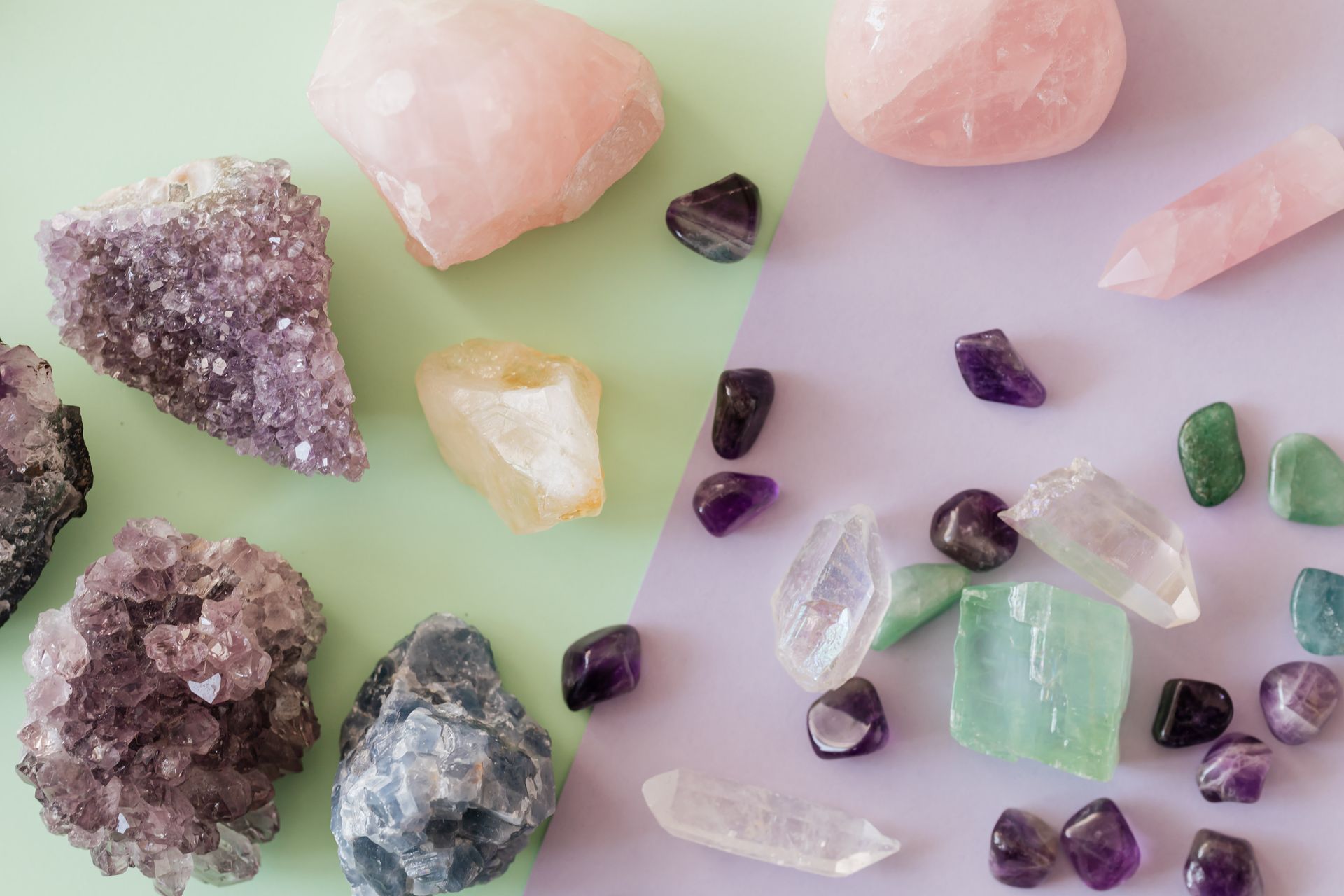
Blue and green healing crystals laid out for a zodiac crystal practice, representing turquoise healing benefits
Turquoise Spiritual Meaning
Spiritually, turquoise is a bridge stone. That mix of sky blue and earthy green has led cultures all over the world to read it as a link between heaven and earth, spirit and body, the higher self and the daily grind. In many traditions it was a stone of safe passage, set into amulets, saddles, and doorways to protect travelers and homes, and that thread runs through Egyptian, Persian, Tibetan, and Native American use alike.
It also carries a strong theme of wholeness and truth. Because it was believed to respond to its wearer, turquoise became a symbol of authenticity, the idea that the stone reflects your real state back to you and asks you to live in step with it. Spiritually minded readers use it to clear the space between the throat and the heart so that what you feel and what you say line up. It pairs naturally with other blue communication stones like lapis lazuli and the softer blue-green amazonite, which share its focus on honest speech.
Turquoise and the Chakras
Turquoise is first and foremost a throat chakra stone. The throat chakra governs communication, self-expression, and speaking your truth, and turquoise's blue-green color and its whole reputation for honest, calm speech point straight at it. If you tend to swallow your words, over-explain, or freeze when it's your turn to talk, this is the stone most often suggested for that block. You can read how these energy centers work in the seven chakras beginner's guide.
Because turquoise straddles blue and green, it also touches two neighboring centers. The green in it links to the heart chakra, the seat of compassion and self-acceptance, which is why turquoise is described as helping you speak from the heart rather than from defensiveness. The deeper blue leans toward the third eye, the center of intuition and clear seeing, so some practitioners use turquoise to connect calm insight with the words to express it. Laid on the throat during meditation, or simply worn as a necklace at throat height, it's meant to keep that whole upper channel open and unhurried.
A row of crystals used to balance the seven chakras, representing turquoise as a throat chakra stone
Turquoise Zodiac Signs and Birthstone
Turquoise is the traditional birthstone for December, sharing the month in modern lists with tanzanite, zircon, and blue topaz. That December tie makes it a natural fit for Sagittarius, the adventurous, truth-telling traveler of the zodiac, and it suits the sign's love of journeys and blunt honesty almost too well. Capricorn, which also claims part of December, is sometimes given turquoise for grounding and protection.
Beyond the birthstone link, crystal tradition hands turquoise to a few other signs. Scorpio is often paired with it for emotional protection and truth-telling, Aquarius for clear, humane communication, and Pisces for calming an overactive imagination. None of these are hard rules; they're associations, and the best test is whether the stone's themes of protection and honest speech match what you're working on. If you want to match stones to your own chart rather than just your Sun sign, the crystal healing by zodiac sign guide and the wider birthstones and their astrological connections breakdown go deeper.
How to Use Turquoise
The simplest way to work with turquoise is to wear it, which is exactly how people have used it for millennia. A pendant or necklace sits near the throat chakra, earrings and rings keep it in your energy field through the day, and because the stone reads as protective, many people like to have a piece on before travel, big meetings, or any moment that makes them nervous. Just keep in mind that skin oils and lotions affect it, which is covered below.
Away from jewelry, a tumbled turquoise stone in your pocket or bag works as a touchstone: hold it and take a slow breath before you speak up or make a decision. On an altar or desk it acts as a calm, protective anchor, and some people set a piece where they do focused work or difficult phone calls. For intention work, you can hold turquoise while you name what you want to say or the boundary you want to keep, letting the stone stand in as a reminder. It also fits nicely into a small carry kit alongside grounding and heart stones when you want protection and openness together.
Does Turquoise Change Color? Care and Cleansing
Yes, turquoise can change color, and this trips up a lot of new owners. Because it's soft and porous, natural turquoise slowly absorbs oils, lotions, perfume, sweat, and water, and it reacts to heat and sunlight by drying out. Over months and years that can turn a bright sky-blue stone greener or darker. Some people love this as a sign the stone has lived a life with them; if you want to keep the original color, you have to protect it.
The care rules follow from how fragile it is. Keep turquoise away from harsh chemicals, household cleaners, and cosmetics, take rings off before washing your hands or swimming, and never put it in an ultrasonic cleaner. To clean it, wipe it gently with a soft, dry or barely damp cloth, then dry it right away. Store it apart from harder stones so it doesn't get scratched.
Cleansing it energetically calls for the same gentleness. Don't use water baths or salt, which can damage the surface and seep into the pores. Safer options are sound, a quick pass through incense or herb smoke, a night of moonlight on a windowsill, or resting it on or beside a selenite plate. If you like charging stones under the moon, the moon water and moon charging guide walks through the timing, and moonlight is one of the few methods that's completely safe for a stone this delicate.
Real vs Fake Turquoise
Turquoise is one of the most faked stones on the market, so it pays to know what you're looking at. A lot of cheap turquoise is actually dyed howlite or dyed magnesite, both naturally white stones with gray veining that take blue dye easily. Others are reconstituted or block turquoise, which is turquoise powder or plastic pressed with dye and resin into a solid, uniform slab with no natural variation.
Then there are the honest treatments that aren't quite fakes. Most turquoise on the market is stabilized, meaning real but soft stone gets impregnated with clear resin to harden it and lock the color so it won't shift on your finger. Stabilized turquoise is real turquoise and a fair, durable choice as long as it's sold as such. The one to watch for is anything passed off as untreated at a natural-turquoise price.
A few honest checks help. Natural turquoise feels cool to the touch and slightly waxy, the matrix looks irregular and organic rather than perfectly even, and the price is usually higher than a whole strand of bright beads for a few dollars would suggest. Uniform, too-perfect color across a big cheap strand is a red flag. A cautious acetone test on a hidden spot can reveal wiped-off dye, though it won't tell you much on stabilized stone. When color, price, and story all sound too good, they usually are. If you're building a collection, amazonite is a genuine blue-green stone that often gets confused with turquoise and is worth learning to recognize by sight.
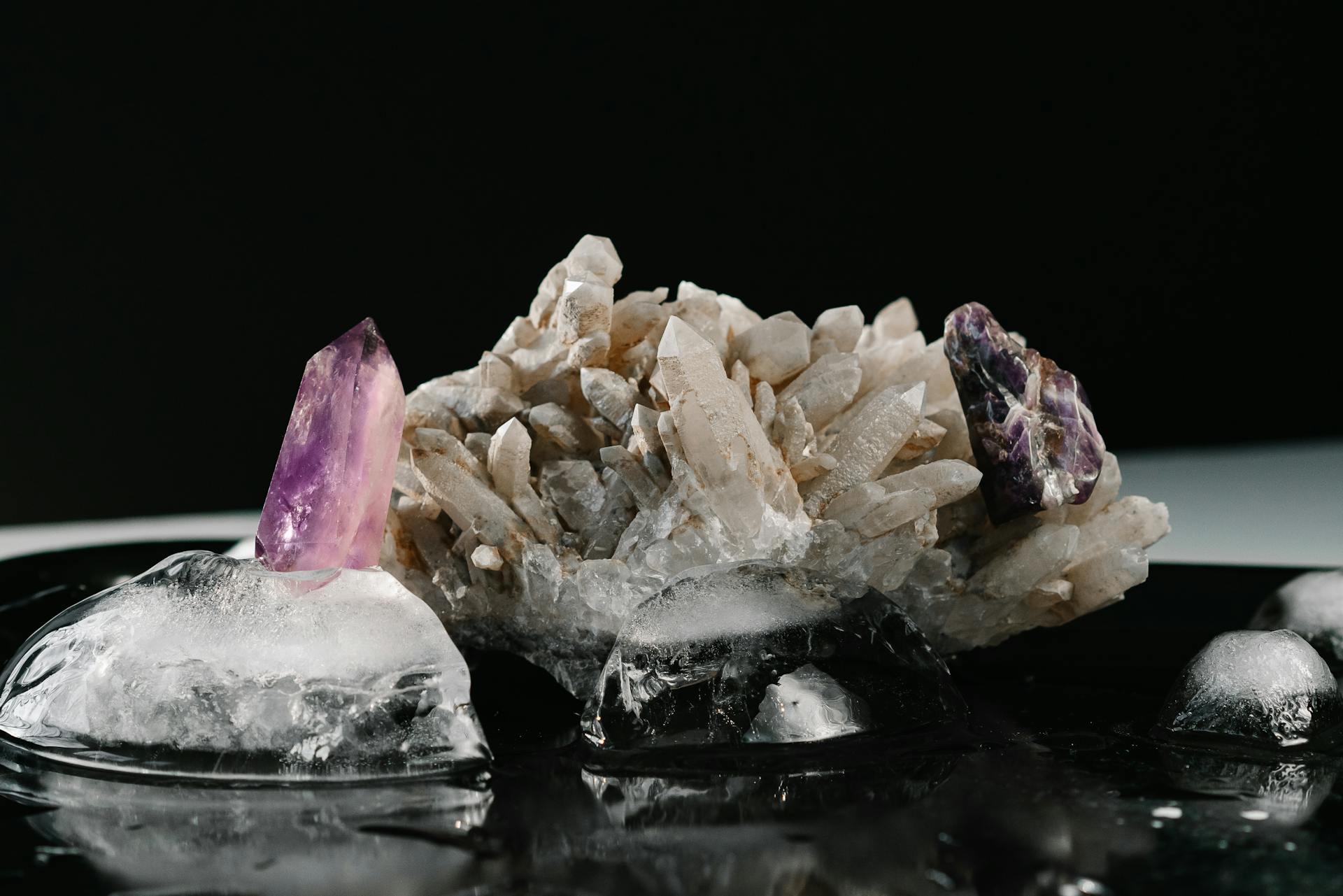
A moody arrangement of birthstone crystals on a dark surface, representing real versus fake turquoise
Frequently Asked Questions
What is turquoise good for?
Turquoise is used mainly for protection, calm communication, and emotional balance. People carry or wear it to feel steadier and safer, to speak honestly without freezing up, and to ease anxiety and burnout. As a throat chakra stone, it's a favorite for public speaking and hard conversations.
Is turquoise a birthstone?
Yes. Turquoise is the traditional birthstone for December, alongside tanzanite, zircon, and blue topaz in modern lists. That makes it a natural match for Sagittarius, and crystal tradition also links it to Scorpio, Aquarius, and Pisces for protection and honest self-expression.
Why does turquoise turn green?
Turquoise turns green because it's soft and porous, so it slowly absorbs skin oils, lotion, perfume, sweat, and water, and it dries out with heat and sunlight. Those changes shift blue stones toward green over time. Protecting it from chemicals and moisture keeps the original color longer.
How can you tell if turquoise is real?
Real turquoise feels cool and slightly waxy, has irregular, organic matrix rather than perfectly even veining, and rarely comes as a cheap strand of flawless bright-blue beads. Much fake turquoise is dyed howlite or magnesite. Most affordable real turquoise is stabilized with resin, which is genuine as long as it's labeled honestly.
Can turquoise go in water?
It's best not to. Turquoise is porous and soft, so soaking or cleansing it in water can dull the surface, loosen any resin treatment, and let liquid seep into the pores and change the color. Cleanse it with sound, smoke, moonlight, or selenite instead of water or salt.
Bringing It Together
Turquoise has stayed treasured for thousands of years for a simple reason: it pairs protection with a clear, honest voice, and it looks like a piece of sky you can carry. Work with it when you need to feel shielded, speak your truth, and steady your nerves, and handle it gently, because that beauty comes with a soft, porous surface.
Curious which stones and energies your own chart leans toward? Run your free natal chart to see your placements, pull a tarot reading when you need honest words for a decision, or check how your communication styles mesh with someone using the compatibility tool.