
Peridot Meaning: Healing Properties, Uses, and How to Cleanse It
Peridot is a bright olive-to-lime green stone that has been tied to the sun and to new beginnings for thousands of years. If you've picked up a piece and wondered what it's for, the short answer is that people reach for it when they want to feel lighter, shake off resentment or envy, and open themselves to warmth, friendship, and a fresh start. Its glowing yellow-green color is a big part of why so many cultures have linked it to sunlight and growth.
This guide covers what peridot means, its traditional healing properties, how it connects to your chakras and zodiac sign, the types you'll come across, and the simple ways to cleanse, charge, and use it so it keeps working for you.
What You'll Learn
A sunlit green woodland in full summer, its layered shades of green echoing peridot's fresh olive-green color
What Does Peridot Mean?
Peridot is the gem-quality form of the mineral olivine, and its meaning centers on warmth, renewal, and lightness of heart. Most gems get their color from a stray trace of some other element, but peridot is different: the green comes from the iron that's built into the mineral itself, so every stone is some shade of green. That's why you'll never find a blue or pink peridot. The color runs from a soft yellow-green to a deep olive, and the best pieces seem to glow from inside.
Peridot ranks about 6.5 to 7 on the Mohs hardness scale, which is softer than quartz and worth keeping in mind when you wear it. It forms deep in the earth's mantle and gets carried up to the surface by volcanic activity, which is why you'll find it in old lava flows. Some of it arrives from much farther away: peridot has turned up inside pallasite meteorites, making it one of the few gemstones that falls to earth from space. There's even a beach in Hawaii, Papakolea, whose sand is tinted green by tiny grains of olivine.
The stone has one of the longest track records of any gem. It was mined on the Egyptian island of Zabargad in the Red Sea for more than three thousand years, and the ancient Egyptians called it the gem of the sun, believing it caught and held sunlight. Some historians think a number of Cleopatra's famous emeralds were actually peridot, since the two were easy to confuse before modern gemology. In medieval Europe it was set into church treasures and carried to guard against night terrors and dark spirits, with the belief that its power grew stronger in a gold setting. That long thread points the same direction: peridot is the stone you reach for when you want light to come back in. If you're just starting a collection, our beginner's guide to healing crystals walks through how to choose and work with your first few stones.
Peridot Healing Properties and Benefits
Peridot is best known as a stone of renewal and release. In crystal healing traditions, it's used to clear out heavy feelings like envy, jealousy, resentment, and old anger, and to make room for warmth and optimism in their place. People reach for it when they're starting something new, mending a friendship, or trying to let go of a grudge that's been sitting too long. None of this replaces therapy, rest, or honest conversation, but the habit of holding a bright, warm-colored stone while you decide to let something go is a genuine way to mark the shift.
The properties people most often tie to peridot are:
Because peridot carries both a heart-opening green and a sunny warmth, it pairs naturally with stones meant for drawing in good fortune. Our guide to crystals for money and abundance covers the stones people most often keep alongside it for growth and prosperity.
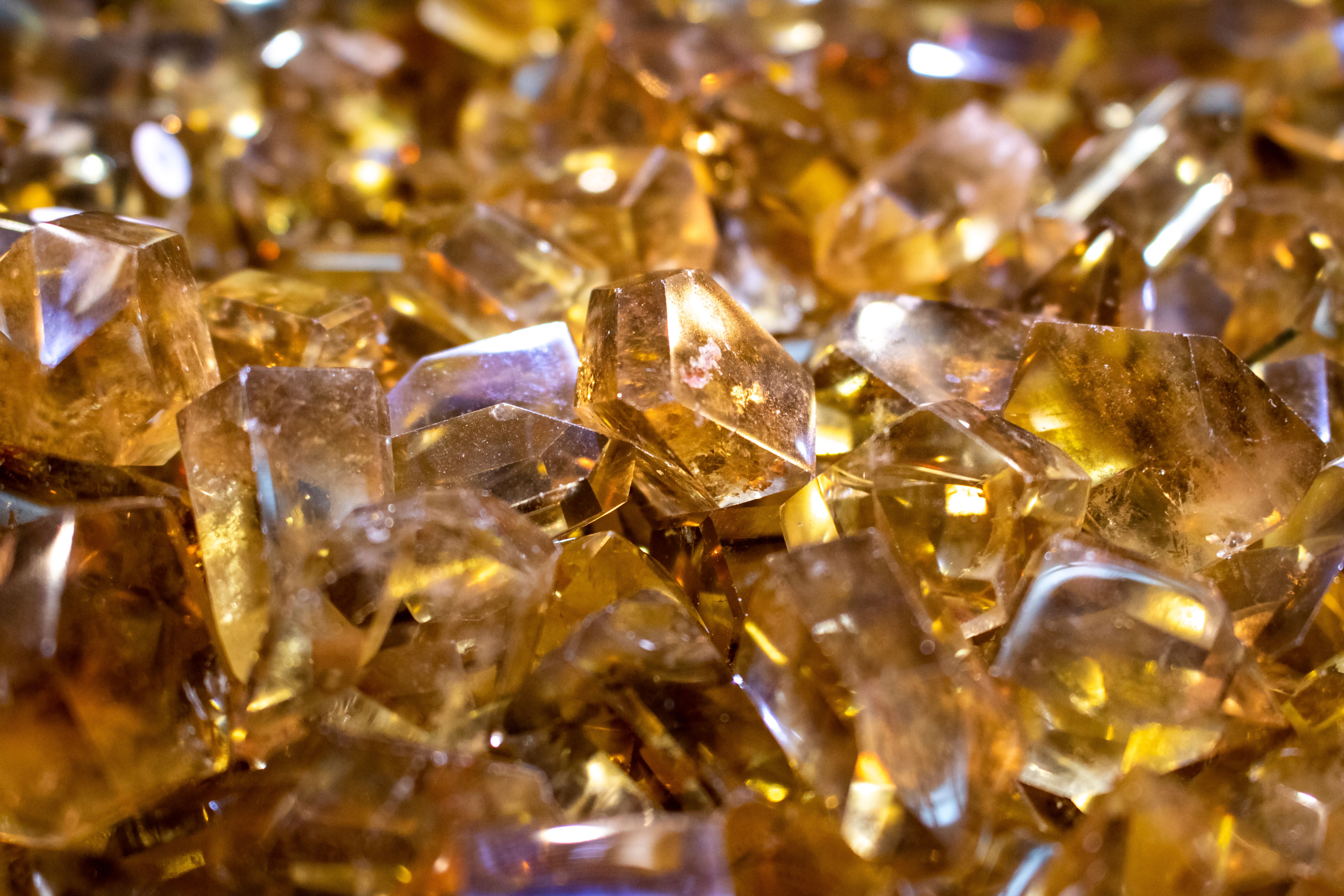
A cluster of glowing golden-yellow crystals catching the light, echoing peridot's warm yellow-green tone
What Is Peridot Good For Spiritually?
Spiritually, peridot is the stone of warmth returning. Its whole symbolism is built around light, so people use it to lift a low mood, clear emotional fog, and feel open again after a stretch of being closed off. If you've been stewing on an old hurt or guarding yourself against new people, peridot is meant to thaw that out.
A lot of its spiritual reputation comes down to release. The old traditions treat it as a stone that won't let darkness settle, which is why it was once worn against nightmares and ill will. In modern practice people carry it when they want to forgive someone, including themselves, or when they're ready to stop carrying something they've outgrown. It's often called a study stone and a stone of friendship, used to keep the mind clear and relationships warm.
Peridot also has a reputation as a protective stone, though the protection is gentle rather than fierce. Instead of building a wall the way a dark grounding stone might, it's said to crowd out negativity by filling the space with light. If you want a stone for warmth and connection rather than hard boundaries, it sits well beside the options in our guide to crystals for love.
Peridot and the Chakras
Peridot works mainly with two energy centers, and that's part of what makes it feel so balanced. Its green links it to the heart chakra, the center of love, compassion, and forgiveness, while its yellow undertone ties it to the solar plexus chakra, the seat of confidence and personal power. A stone that touches both is said to connect what you want with the courage to go after it.
When people feel stuck in old resentment or closed off from others, that's often described as a blocked heart chakra. Peridot is used to ease that block, clearing the way for forgiveness and warmth. You can learn more about the signs and the balancing work in our guide to the heart chakra.
On the solar plexus side, peridot is used to steady self-worth and quiet the kind of comparison that turns into envy. If you tend to measure yourself against everyone else, that center is often the one that needs attention, and our guide to the solar plexus chakra walks through how to work with it. To use peridot this way, many people lie down and rest the stone over the heart or just above the navel during meditation, breathing slowly until the area feels settled.
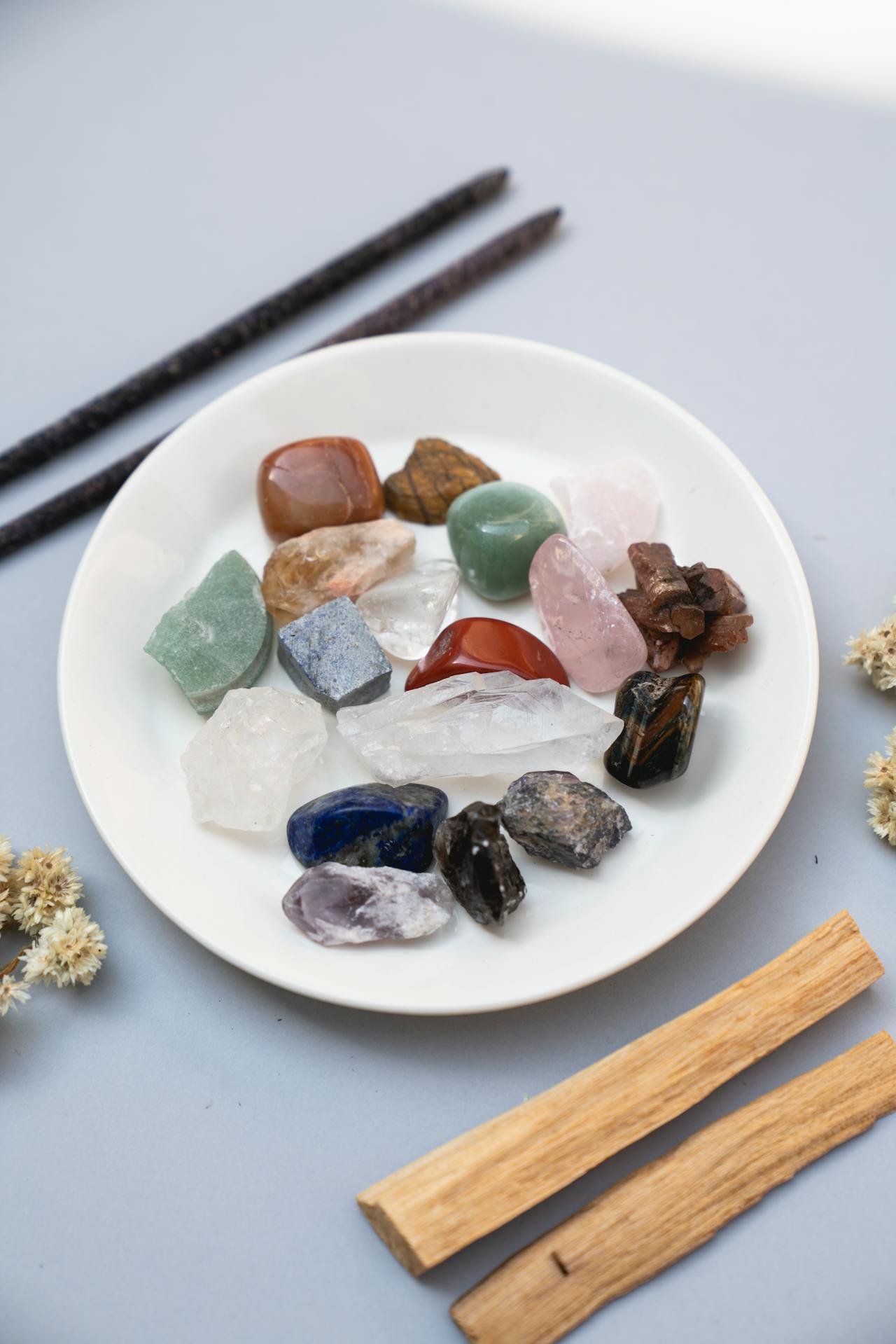
Polished and raw crystals gathered on a cloth for meditation, the kind of collection a tumbled peridot fits into
Peridot, the Zodiac, and Birthstones
Peridot is the modern birthstone for August, which it shares with spinel and, in older lists, sardonyx. That makes it the natural stone for anyone born between late July and late August, and it's traditionally linked to the sign of Leo. Leo is ruled by the sun, so a gem the Egyptians called the gem of the sun fits the sign almost too neatly: both are about warmth, generosity, and shining without apology. If you want to see how the sign's traits play out, our guide to the Leo zodiac sign breaks them down.
Some crystal traditions also connect peridot to Virgo, since the sign overlaps with late August, and a few extend it to Libra for its heart-centered, harmony-seeking side. These associations aren't fixed rules, so the better test is which stone you actually feel drawn to. For a fuller picture of how gems line up with the signs, see our guides to birthstones and their astrological connections and to crystal healing by zodiac sign.
You don't have to be an August baby to work with peridot. Birthstone links are a starting point, not a limit, and plenty of people choose a stone for what it's meant to do rather than for the month they were born.
Types and Colors of Peridot
Because its color is built into the mineral, peridot doesn't come in the wide range you see with quartz or jasper. What changes is the shade and the quality. The most prized stones are a pure grassy green with little or no brown, sometimes called olivine green, and the yellow-green and olive tones are more common. A brownish or muddy cast usually means a lower grade and a lower price.
A few things worth knowing as you shop:
Peridot is usually sold as faceted gems for jewelry or as small tumbled stones for crystal work. Rough crystals tend to be small, so if you want a large single piece, expect to pay for it. For everyday carrying and grids, an affordable tumbled stone does the job just as well as a polished gem.
How to Use Peridot
Peridot is easy to fold into a daily routine. The most common way to work with it is to simply keep it on you, since a stone meant to lift your mood only helps when it's within reach. Here are the ways people use it most:
There's no single correct method here. The point is to keep the stone somewhere it reminds you to let go of what's weighing on you and make room for something lighter. If you're new to this, our beginner's guide to healing crystals covers the basics of setting an intention and building a simple practice.
How to Cleanse and Charge Peridot
Peridot takes a little more care than a tough stone like quartz, mostly because it's softer and sensitive to acids and sudden temperature changes. Cleanse it when you first bring it home and whenever it feels like it's been working hard, but skip the harsh methods.
Safe ways to cleanse peridot:
To charge it, moonlight is the safest choice. Set it out overnight under a full moon and bring it in by morning. Short, soft daylight is fine too, since peridot's color is stable and won't fade, but avoid long stretches of hot sun or a sunny windowsill, because the real risk is thermal shock, not fading. Skip salt water entirely, since salt can scratch the surface and the minerals can attack the stone over time. Avoid ultrasonic cleaners, steam, and household chemicals for the same reason. For a fuller walkthrough of each method, see our guide on how to cleanse and charge crystals.
How to Tell If Peridot Is Real
Peridot is often imitated by green glass and sometimes confused with other green stones, so a few checks help. The most reliable sign is something called doubling. Peridot bends light strongly, so when you look through a faceted stone with a loupe, the back facet edges appear to double, almost like a faint echo. Glass won't do this, and most other green gems show it far less. If you see tiny round bubbles inside instead, you're probably looking at glass.
A few more things to check:
When in doubt, buy from a seller who names the source and is clear about whether a stone is natural. A reputable shop won't mind the question, and the answer tells you a lot.
Frequently Asked Questions
What is peridot good for?
Peridot is used to release resentment, envy, and old anger, and to invite warmth, optimism, and fresh starts in their place. It's linked to the heart and solar plexus, so people reach for it to open up emotionally, steady their confidence, and draw in abundance.
Who should wear peridot?
Peridot suits anyone drawn to its warmth, and it's the birthstone for August, which ties it to Leo. People working on forgiveness, letting go of jealousy, or starting something new tend to gravitate to it, whatever their birth month.
Can peridot go in water?
A quick rinse under cool water is fine because peridot is hard enough to handle it, but dry it right away and don't let it soak. Skip salt water entirely, since salt can scratch the surface and slowly damage the stone.
Is peridot a rare or expensive stone?
Peridot is fairly affordable in small sizes, since material from Arizona and Pakistan is widely available. Large stones with deep, pure green color are much rarer and cost more, as does gem-quality peridot from meteorites.
What is the difference between peridot and emerald?
Both are green, but peridot is olivine and gets its yellow-green from iron, while emerald is beryl colored by chromium and tends toward a cooler, deeper green. Emerald is harder, rarer, and far more expensive, and the two were often confused before modern gemology.
Bringing It Together
Peridot earns its old name as the gem of the sun. It's the stone for letting light back in, the one that reminds you to set down envy and resentment and make room for warmth, friendship, and a fresh start. Wear it near your heart, carry a tumbled piece for the hard moments, keep it clear of harsh chemicals and hot sun, and let its glowing green lift your mood when things feel heavy. For a gentler green heart stone to pair it with, see our guide to green aventurine. To connect its energy to your own chart, generate your free natal chart to see the sun and heart-linked placements that shape your warmth and generosity, pull a tarot reading when you want clarity on what to release, or run a compatibility report to understand the connections worth opening your heart to.