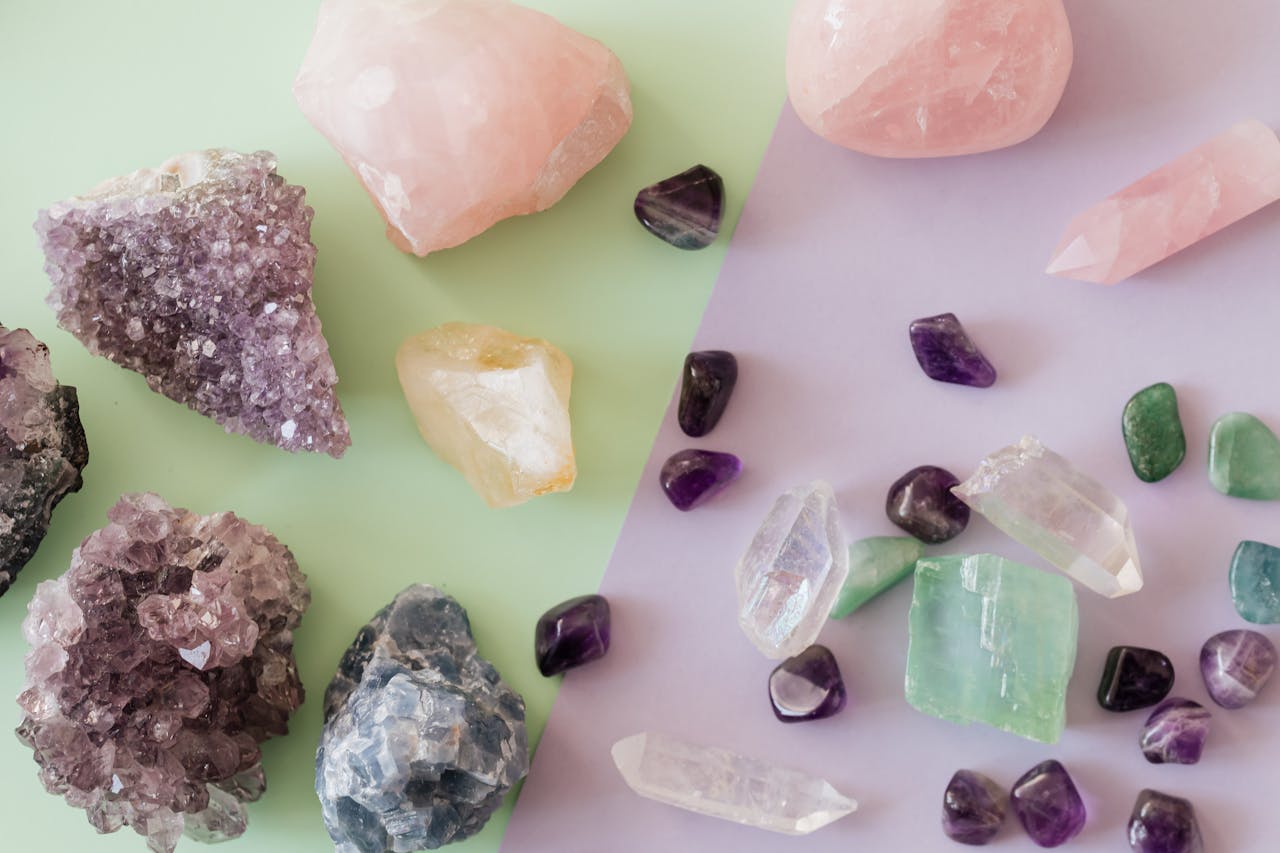
Apatite Meaning: Healing Properties, Uses, and the Stone Named for Deceit
Apatite is one of the great pretenders of the mineral world, and that's not an insult, it's literally where its name comes from. Its meaning centers on motivation, manifestation, and clear self-expression, and most people meet it as a vivid blue or neon blue-green stone that looks almost too electric to be natural. People reach for apatite when they've lost their drive, when a goal feels stuck, or when they need to line up what they want with what they're actually doing about it.
It also carries two facts almost no other crystal can claim. Its name comes from a Greek word meaning "to deceive," because it fooled miners and gem cutters into thinking it was something more valuable for centuries. And a close chemical cousin of apatite is the mineral your own teeth and bones are built from. Here's what apatite actually means, how people use it, how it links to the throat and third eye chakras and to Gemini in astrology, and the honest truth about the weight-loss claims that follow it around.
What You'll Learn
What Is Apatite?
Apatite is a group of phosphate minerals, calcium phosphate with the general formula Ca5(PO4)3(F,Cl,OH). Rather than a single mineral, it's really three closely related ones, fluorapatite, chlorapatite, and hydroxylapatite, named for whichever element fills that last slot, and fluorapatite is by far the most common. It grows in a wide range of colors, blue, green, teal, golden yellow, violet, brown, and colorless, with the vivid blues and blue-greens being the ones the crystal world prizes most.
Its name is where things get interesting. The mineralogist Abraham Werner named it in 1786 from the Greek word "apate," meaning deceit or trickery, because apatite was constantly mistaken for more valuable stones. Its colors let it masquerade as aquamarine, emerald, tourmaline, peridot, and amethyst, and it fooled enough experienced eyes that "the deceiver" stuck as its name. Few stones wear their reputation for disguise quite so openly.
On the Mohs hardness scale, apatite is the reference point for level 5, the exact mineral Friedrich Mohs chose to define that step. Major sources include Madagascar, famous for electric neon blue-green material, along with Brazil, Mexico, and Myanmar. Apatite is also mined on an industrial scale as the world's main source of phosphorus for fertilizer, a reminder that the pretty blue tumble in a shop and the rock feeding global agriculture are the same mineral.
What Does Apatite Mean?
At its core, apatite means motivation and manifestation. It's called a stone of ambition, drive, and getting unstuck, and its central idea is turning intention into action. Where a calming stone helps you slow down, apatite is the one people reach for when they need to light a fire under a stalled goal or push through apathy and low energy.
Blue apatite in particular is known as a manifestation stone, tied to setting clear intentions and connecting your personal will to what you actually want out of life. It's associated with clarity of purpose, honest self-expression, and the kind of focused ambition that turns a vague wish into a plan. That's why it shows up so often in goal-setting and manifestation work, and why people keep a piece on the desk or the vision board where they'll see it every day.
Apatite Healing Properties
In crystal-healing practice, apatite sits among the motivation and communication stones. It's worth being clear up front, as always: these are traditional and folk associations, not medical claims, and there's no scientific evidence that any crystal treats a physical or mental condition. Here's how people describe working with it.
Mentally, apatite is used to sharpen focus, cut through mental fog, and restore drive when motivation has drained away. It's a popular study and work stone for that reason, kept nearby to push through procrastination and stay on task. Practitioners also associate it with learning, memory, and creative problem-solving.
Emotionally, apatite is linked to confidence and honest self-expression, helping you say what you mean and pursue what you want without second-guessing. On the energetic side, its signature reputation is for connecting the higher mind with everyday action, which is why so much of its use centers on the throat and third eye. It's often paired with grounding stones so the ideas it's said to spark actually get followed through rather than left as daydreams.
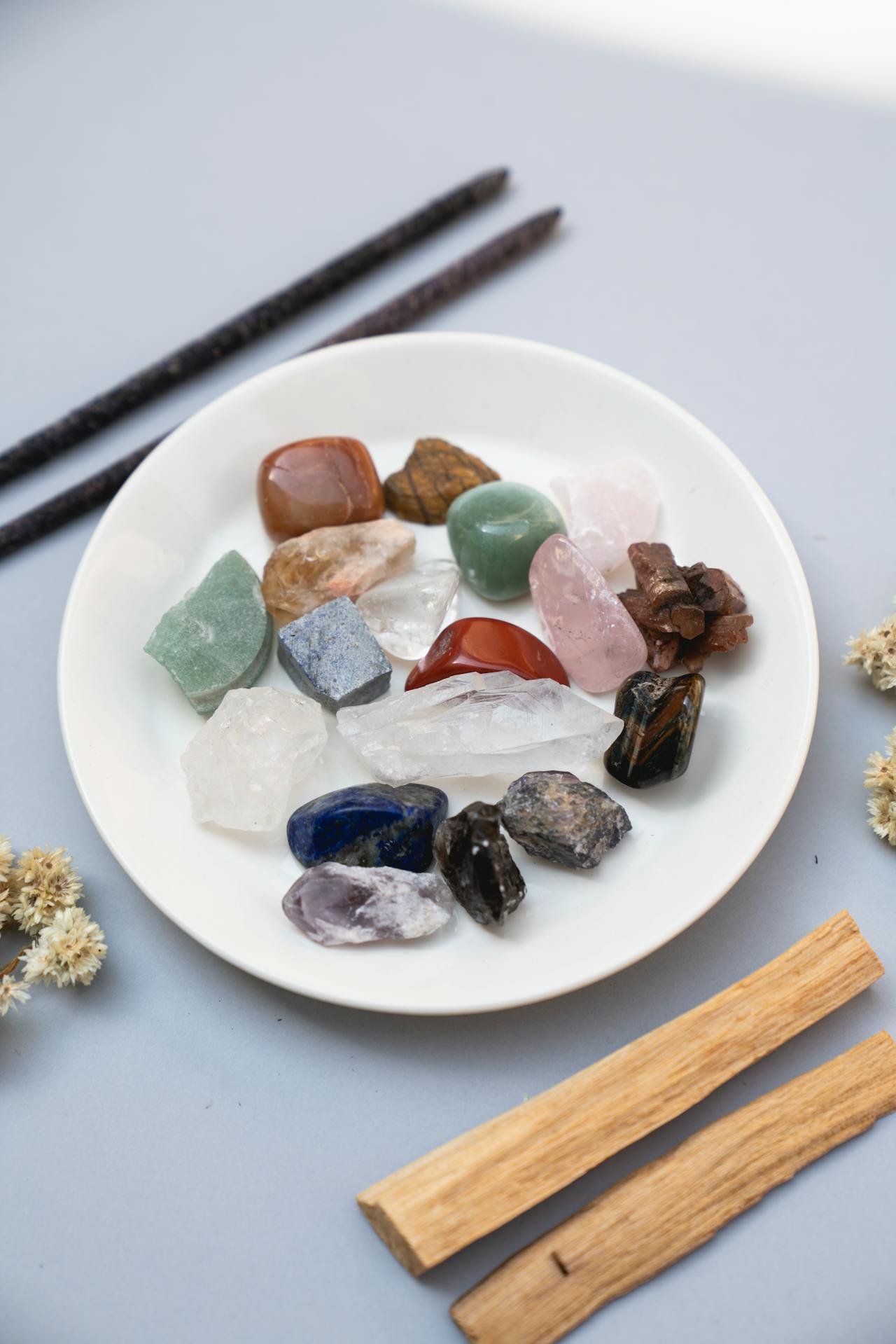
A calm collection of tumbled healing crystals, reflecting the focusing, motivating energy at the heart of apatite meaning
Apatite and the Throat and Third Eye Chakras
Blue apatite is one of the classic stones that works two centers at once, the throat chakra and the third eye chakra. The throat chakra, Vishuddha, governs communication and honest self-expression, so a blue stone associated with speaking your truth is a natural fit. The third eye, Ajna, governs intuition, insight, and vision, which ties to apatite's reputation for clarity of purpose and seeing a goal clearly before you chase it.
That pairing is the heart of why apatite is called a manifestation stone: the third eye pictures what you want, and the throat speaks it into a plan and a commitment. Practitioners place blue apatite on the brow or the throat during lying-down meditation, or wear it as a pendant, to support that link between vision and voice.
The other colors map elsewhere. Green apatite connects to the heart chakra and heartfelt goals, while golden-yellow apatite is tied to the solar plexus chakra, the center of personal power and willpower, which fits the stone's motivation theme perfectly. Our guide to the seven chakras walks through each center in order if you want the full map.
A serene blue-toned meditation scene, echoing apatite's link to the throat and third eye chakras
Apatite Zodiac Signs and Astrology
Apatite is most often tied to Gemini, and the match makes sense. Gemini is the communicator of the zodiac, mentally quick, curious, and endlessly expressive, and apatite's links to clear speech, learning, and mental focus line up with that airy, word-driven energy. Gemini can also scatter its attention across too many interests at once, and apatite's reputation for focus and follow-through is a useful counterweight.
Because its gifts are mental and communicative, apatite's associations lean toward Mercury, the planet of the mind, speech, and learning, in the same way the throat and third eye tie it to expression and insight. There's no single firm ruling planet for it in the older tradition, and some readers also connect it to Aquarius for its forward-looking, goal-focused streak.
Apatite is not a traditional birthstone, but you can still match it to your chart the way you would any stone. Our crystal healing by zodiac sign guide lines up stones with all twelve signs, and the zodiac and chakras piece connects the signs to your energy centers.

The Gemini symbol against an open sky, the communicative air sign most often paired with apatite
Is Apatite Really in Your Teeth and Bones?
Yes, and this is apatite's most surprising fact. The hard mineral that makes up your tooth enamel and the rigid part of your bones is a form of apatite called hydroxylapatite, or biological apatite. Tooth enamel is the most heavily mineralized tissue in the body and is almost entirely this material, and bone is roughly two-thirds mineral by weight, most of it the same apatite family. When you read that enamel is the hardest substance your body makes, you're reading about apatite.
There's a neat twist that connects this to everyday life. When fluoride from toothpaste or water reaches your enamel, some of the hydroxylapatite converts to fluorapatite, the fluorine-bearing member of the group, which resists the acids that cause decay better. That's a real, well-understood piece of chemistry, and it's the same fluorapatite that turns up as blue crystals in a mineral shop.
To be clear, none of this means holding a polished stone does anything for your teeth or bones; the connection is chemical, not therapeutic. But it's a genuine and fascinating link, and it makes apatite one of the very few crystals with a literal presence inside your own body.
Does Apatite Suppress Appetite?
This is the claim that follows apatite everywhere, so it's worth being honest about. Blue apatite is widely marketed as an appetite suppressant and a weight-loss aid, and you'll see it sold specifically for dieting. Almost all of that rests on a coincidence: "apatite" and "appetite" sound nearly identical. They aren't related. Apatite's name traces to the Greek word for deceit, while appetite comes from a Latin root meaning to strive after. The near-rhyme is an accident of language, nothing more.
There's no scientific evidence that carrying, wearing, or meditating with any stone reduces hunger or causes weight loss. A crystal cannot change your metabolism or your calorie balance. If a piece of apatite helps at all, it does so the way any small ritual can, as a cue. Setting a stone by your plate as a reminder to eat slowly and mindfully, or using it as an anchor for a health intention, can support a habit you're already building. The stone is a prompt for your own attention, not a substitute for how you actually eat and move.
Blue, Green, Yellow, and Neon Apatite
Blue is the color most people picture, and it ranges from soft sky tones to deep denim, carrying the throat and third eye associations. The showstopper, though, is neon blue-green apatite, an electric teal-to-Caribbean-blue material largely from Madagascar that's so vivid it's sometimes called "Paraiba" apatite after the famous neon tourmaline it resembles.
Green apatite runs from grassy to deep forest and links to the heart, while golden-yellow apatite, sometimes sold as "asparagus stone" for its color, ties to personal power and the solar plexus. You'll also find violet, brown, and colorless apatite, plus rare cat's-eye stones that show a moving band of light when cut as smooth cabochons.
One honest note on color: much of the most intense blue and neon material has been heat-treated to deepen or brighten it. That's a standard, stable, widely accepted practice, the same kind of treatment behind most aquamarine and citrine on the market, so it doesn't make the stone fake. It's simply worth knowing that a color that looks impossibly electric may owe some of its punch to heat, and a fair seller will say so.
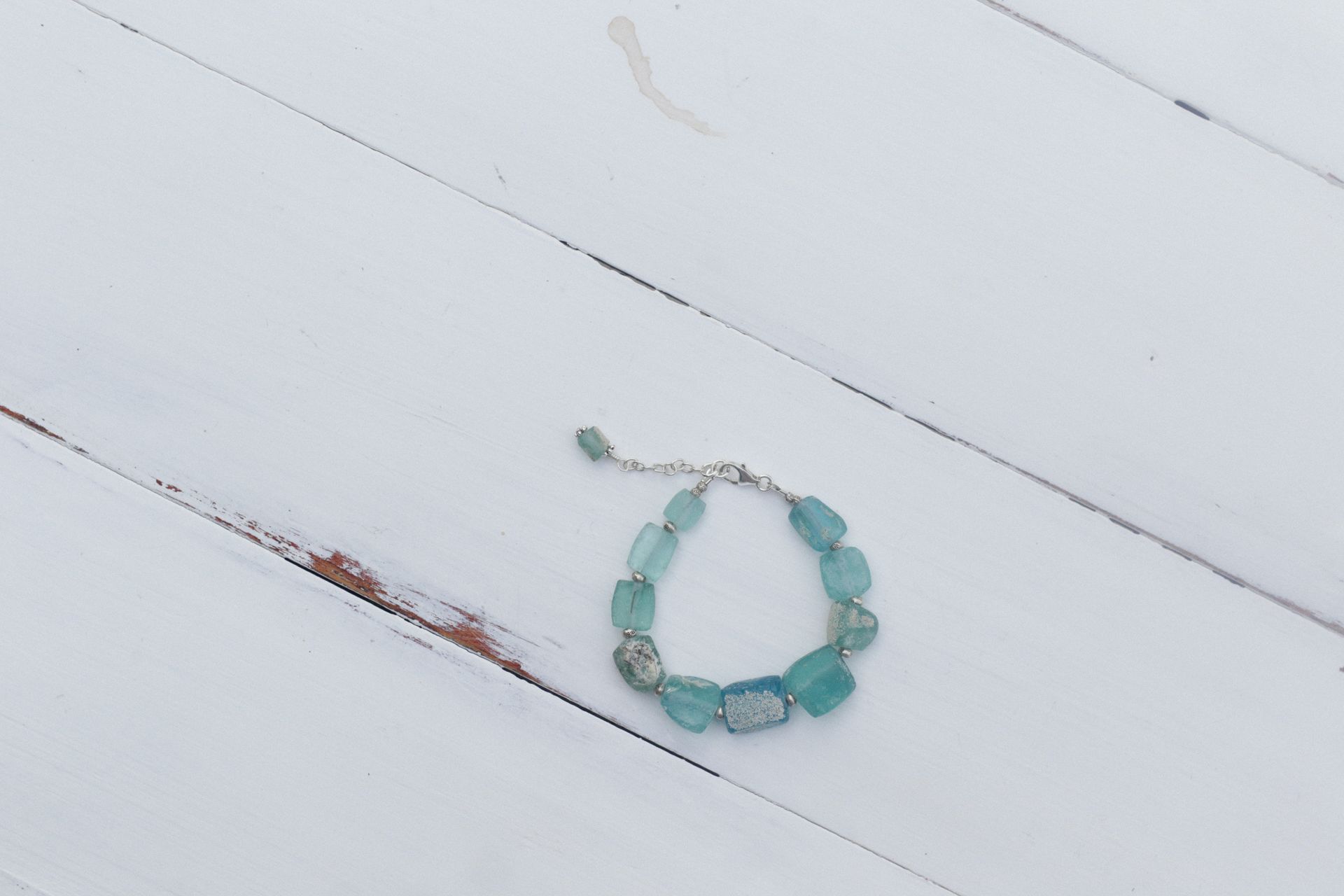
A blue-green beaded bracelet whose vivid teal color resembles the neon blue apatite from Madagascar
How to Tell Real Apatite From Fakes and Look-Alikes
There's a nice irony here: the stone named for deception now gets imitated itself. Because vivid blue-green apatite looks so much like far pricier stones, the confusion runs both ways. Neon apatite is regularly mistaken for Paraiba tourmaline, aquamarine, or blue topaz, while plain glass is sometimes sold as apatite outright.
The most reliable tell is hardness. Apatite is a 5 on the Mohs scale, which is genuinely soft for a gemstone, softer than quartz, aquamarine, tourmaline, and topaz. A blue stone that scratches easily and chips at the edges is behaving like apatite, not like the harder gems it mimics; one that shrugs off scratches is probably something tougher and pricier. Apatite is also fairly brittle, so worn facet edges are common on genuine pieces. Glass imitations tend to warm quickly in the hand, show tiny bubbles under magnification, and look too flawlessly colored.
As always, buy from a seller who names and prices the material honestly. Apatite is affordable, so a stone sold at high gemstone prices under a vague name deserves a second look. If you want to understand how blue stones line up with the calendar, our birthstones guide covers the traditional gems by month.
Does Apatite Actually Work?
Here's the honest answer this site always gives. There's no scientific evidence that apatite, or any crystal, emits a measurable energy, boosts your motivation, sharpens your focus, or curbs your appetite. If you're fighting procrastination, a stalled goal, or low drive, apatite is not a replacement for the ordinary things that actually move the needle: a clear plan, a first small action, and, where it's needed, real support.
What apatite genuinely offers is a focus object and a cue. Keeping a bright blue stone on your desk, or holding one while you write down a goal, can act as a small physical anchor for an intention, a repeated nudge to get started. That nudge is real, and for a lot of people it's the missing piece between wanting something and doing it. The motivation doesn't live in the mineral; it comes from the intention and the habit the stone helps you attach to. Used that way, as a prompt rather than a power, apatite earns its place.
How to Use and Care for Apatite
For motivation and manifestation, keep blue apatite somewhere you'll see it while you work, or hold a piece while you set a specific, written goal. For communication and clarity, wear it as a pendant near the throat or place it on the brow during meditation. It also works well in a crystal grid built around a goal, and many people pair it with a grounding stone so the drive it's said to spark turns into follow-through.
Care matters more with apatite than with most stones, because at a Mohs 5 it's soft and brittle. Store it away from harder crystals so it doesn't get scratched, keep it out of ultrasonic cleaners, and handle it gently to protect the facet edges. Keep water contact brief and avoid salt water entirely, since the stone is relatively soft and porous, and remember that heat-treated blues can lose color with prolonged heat, so skip hot water and long sun exposure.
For cleansing and charging, gentle dry methods are best: pass it through smoke, rest it on selenite, use sound, or set it out under the new moon rather than in strong sunlight. Moonlight suits apatite especially well, since it protects the color while pairing naturally with the fresh-start, goal-setting energy the stone is known for. The same gentle care keeps a piece looking bright for years, and it works nicely alongside cleansing your other tools, like your tarot deck.
Frequently Asked Questions
What is apatite good for?
Apatite is best known as a stone of motivation and manifestation, used to restore drive, sharpen focus, and turn goals into action. Blue apatite is also linked to the throat and third eye chakras for clear communication and intuition. These are traditional associations, not proven effects.
Does apatite really help with weight loss?
No. The idea rests on the coincidence that "apatite" sounds like "appetite," but the words are unrelated and no stone can change your metabolism or appetite. Apatite can only work as a mindfulness cue, a reminder to eat slowly, not as an actual weight-loss aid.
What chakra is apatite?
Blue apatite is tied to both the throat chakra, for honest communication, and the third eye chakra, for intuition and vision. Green apatite links to the heart chakra, and golden-yellow apatite to the solar plexus, the center of personal power and willpower.
Can apatite go in water?
Brief contact is usually fine, but it's best kept mostly dry. At a Mohs hardness of 5, apatite is soft, brittle, and somewhat porous, and much blue apatite is heat-treated, so salt water, hot water, and long soaks can damage it or dull its color.
Is apatite the same mineral as teeth and bones?
Very nearly. Your tooth enamel and bone are built from hydroxylapatite, a member of the apatite group. It's the same mineral family as the blue crystals, though holding a stone has no effect on your teeth or bones; the link is chemical, not medical.
Bringing It Together
Apatite is the motivator of the crystal kit, the deceptively named blue stone valued for drive, manifestation, and clear self-expression, and tied to the throat and third eye chakras and to Gemini. Its two claims to fame make it stand out: a name that literally means deceit, earned by centuries of masquerading as costlier gems, and a chemical cousin that builds your own teeth and bones. Used honestly, as a cue to turn intention into action rather than a magic charm for motivation or weight loss, and handled with the care its soft, brittle crystals deserve, it earns a bright and useful place in a collection.
Curious where your own drive and voice sit in your chart? Build your free natal chart to find your Mars and Mercury placements, pull a tarot reading when you need clarity on a goal, or check your compatibility with someone you're building something with.