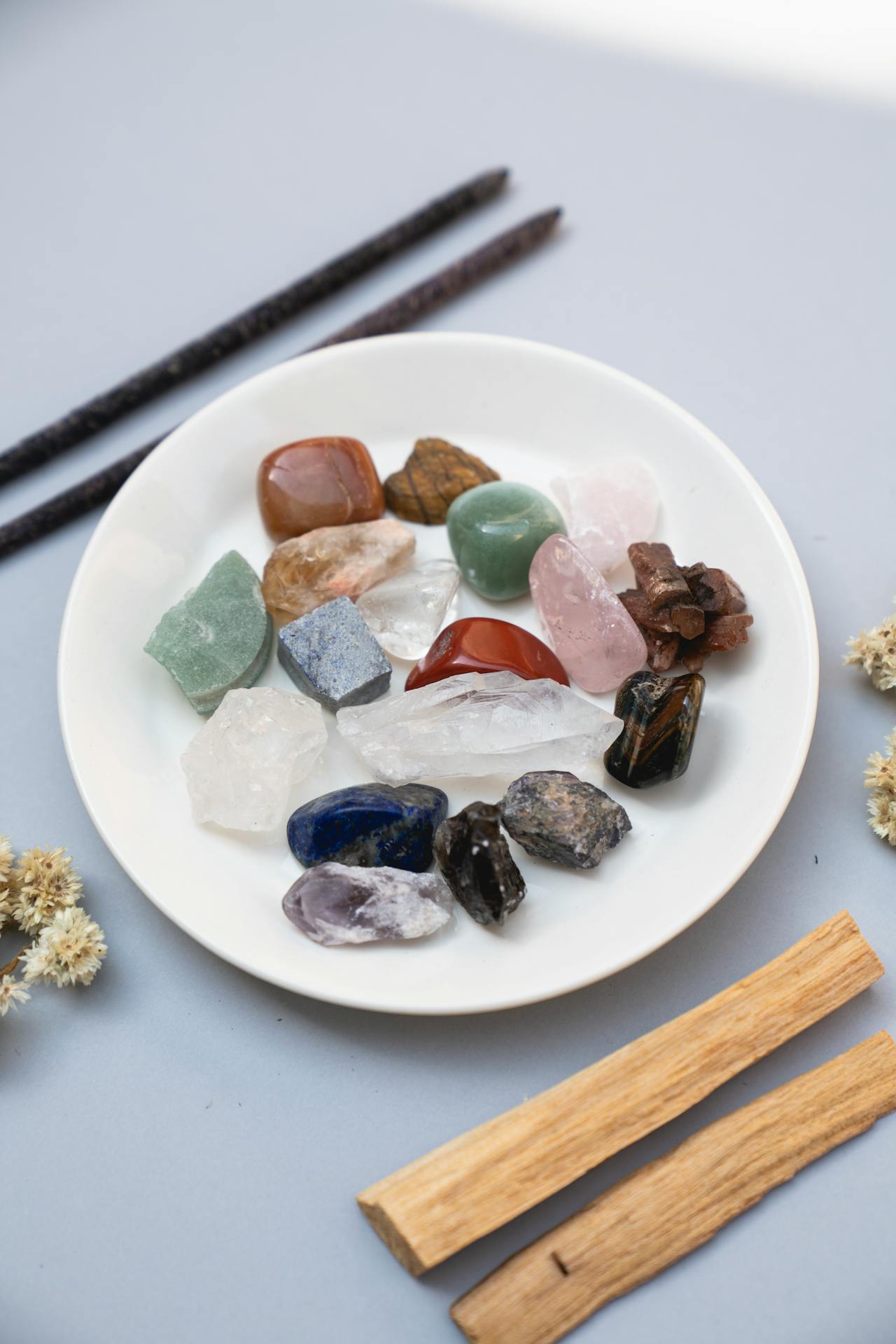
Bloodstone Meaning, Healing Properties, and Uses
Bloodstone is a deep green stone flecked with spots of red, and in crystal practice it's the warrior's stone: the one tied to courage, stamina, and getting through a hard stretch without losing your footing. The green is chalcedony, a form of quartz, and the red spots are iron oxide caught inside it. That red-on-green look is where the whole meaning comes from. For centuries people read the spots as drops of blood, and the stone picked up a reputation for vitality, circulation, and physical strength that it still carries today.
It's also one of the two birthstones for March, the grounded, earthier alternative to aquamarine. Below is what bloodstone means, where that meaning comes from, what it's traditionally used for, how to tell it apart from the stones it gets confused with, and an honest look at whether any of it holds up.
What You'll Learn
What Does Bloodstone Mean?
Bloodstone's older name is heliotrope, from the Greek words for sun and turning. The ancient Greeks told stories about the stone reddening the reflection of the sun when it was dropped into water, which is how it earned the sun-turner name. Pliny the Elder wrote it up in the first century, and engraved heliotrope gems survive from the Roman world, so people have valued this stone for a very long time.
The bloodstone name came later, and it stuck because of the red spots. In medieval Europe a Christian legend grew up around them. The story went that the stone formed when drops of Christ's blood fell onto green jasper at the foot of the cross. From then on bloodstone was the martyr's stone, carved into scenes of the crucifixion and treated as a holy object. Underneath the legend is plain mineralogy, since the red comes from iron oxide, the same stuff that makes rust. But the link to blood shaped everything the stone came to mean.
So bloodstone's meaning runs in two directions at once. There's the vitality side, all blood and circulation and physical energy, and there's the courage side, the stone soldiers and athletes once carried to stay brave and steady. Put together, it's a stone about showing up strong when things get physical or frightening.
Bloodstone Healing Properties
Bloodstone's traditional uses cluster around energy, courage, and the body. These are metaphysical associations rather than medical facts, but they stay fairly consistent across crystal practice:
The common thread is force applied well. Where a soft heart stone is about opening up, bloodstone is about pulling yourself together and moving. That makes it a popular pick for anyone facing a challenge that needs nerve more than comfort.
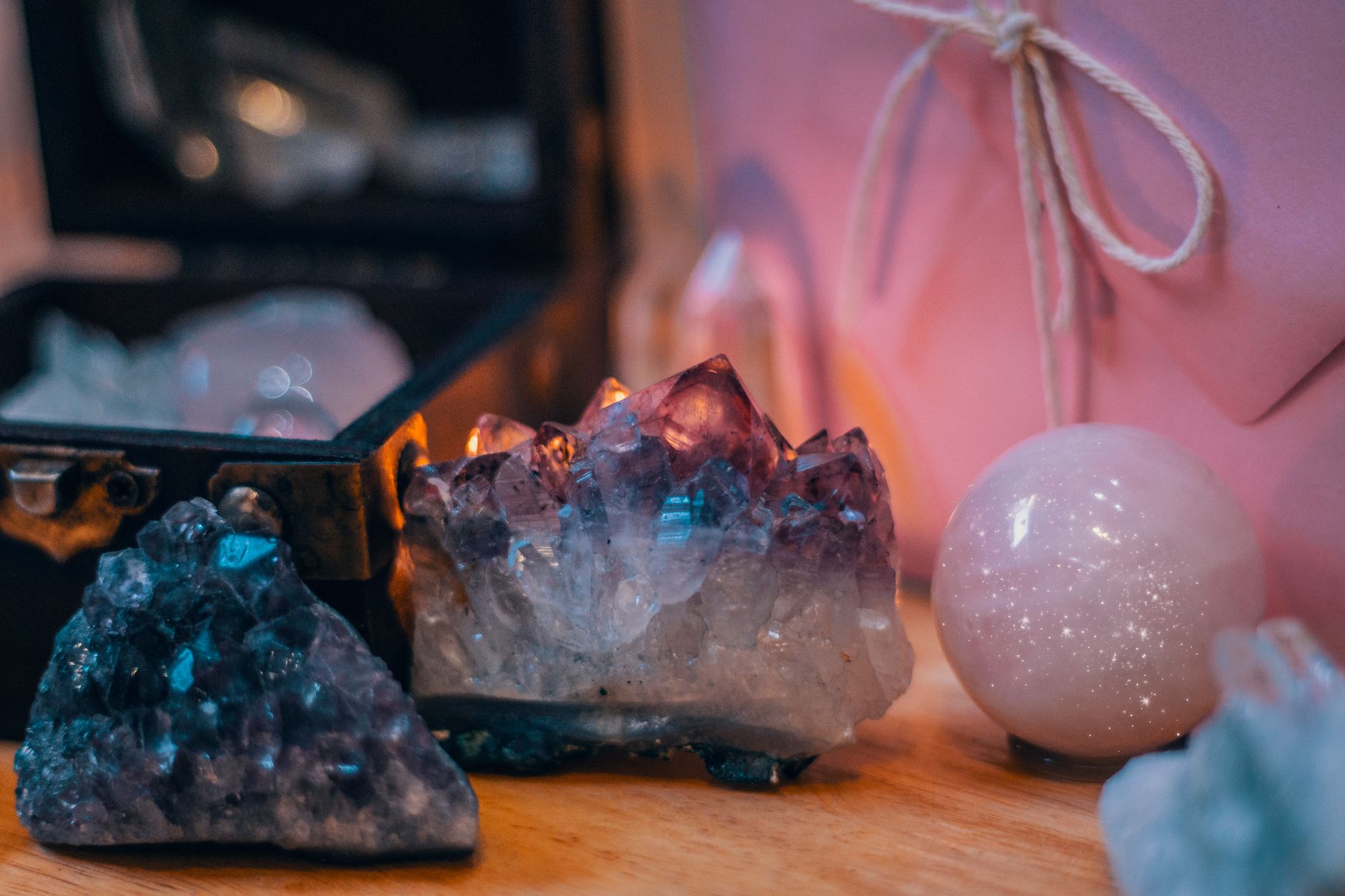
Healing crystals arranged in a row in the colors of the seven chakras, from red through to violet
Bloodstone and the Chakras
Bloodstone's colors point to two energy centers, and crystal sources don't fully agree on which one leads. Most put it first at the root chakra, or Muladhara, which sits at the base of the spine and governs safety, the body, and the will to survive. The red spots and the blood symbolism fit that center almost on their own, and the grounding, steadying feel people describe is classic root-chakra language.
The green body of the stone points to the heart chakra, the center for love, courage, and emotional balance, and some practitioners lead with that one instead. You don't have to pick a side. The useful way to read bloodstone is as a stone that links the two: physical vitality at the root feeding the courage and heart at the center of the chest. If you want a stone that connects feeling to action, that pairing is the reason bloodstone gets suggested.
Bloodstone vs Red Jasper vs Green Jasper vs Dragon's Blood Stone
A few green or red stones get mixed up with bloodstone, so here's how to keep them apart.
Bloodstone vs red jasper. Both are Mars-flavored stones of energy and grounding, and both belong to the chalcedony family, but they look nothing alike. Red jasper is solid brick-red through and through. Bloodstone is green first, with red only in spots. If you want steady physical energy without the green, red jasper is the plainer version. If you want the green-and-red mix, bloodstone is the one.
Bloodstone vs green jasper. Plain green jasper is the same chalcedony family without the red inclusions. The medieval legend even treats bloodstone as green jasper that caught the drops of blood, which is a decent way to remember the difference: no red spots, and you've just got green jasper.
Bloodstone vs dragon's blood stone. This one trips people up because the names rhyme in spirit. Dragon's blood stone, also sold as dragon's blood jasper, is usually a green-and-red rock made of epidote and piemontite, a trade name rather than a true jasper. It tends to show large blocky zones of green and red, where bloodstone keeps its red to small freckles on a darker green ground. If the red comes in big swathes, it's probably dragon's blood, not bloodstone.
Zodiac Signs and Birthstone
Bloodstone is one of the two birthstones for March, alongside aquamarine. Aquamarine is the softer, watery one most March lists name first, and bloodstone is the grounded, physical counterpart, which makes the pair a nice study in contrast for one month.
On the zodiac side, sources disagree, so it's worth being honest about that. The most common match is Aries, the Mars-ruled fire sign of drive, courage, and the will to start things, which lines up with bloodstone's warrior reputation. You'll also see it tied to Libra, Pisces, and Aquarius in different traditions, usually for other reasons, so don't treat any single pairing as fixed. Because the strongest thread runs through Mars, bloodstone suits anyone doing work around courage, energy, and action regardless of sun sign. To see where that drive sits in your own chart, you can find your Mars sign and read it next to the stone. For the wider picture, the guide to crystal healing by zodiac sign matches stones to placements.
How to Use Bloodstone
Nothing here needs to be complicated. Some common ways people use it:
If you're building a kit for nerve and steadiness, bloodstone also fits alongside crystals for protection. New to all this? The beginner's guide to healing crystals covers the groundwork first.
How to Cleanse and Charge Bloodstone
Bloodstone is tougher than a lot of popular stones. At roughly 6.5 to 7 on the Mohs scale it's hard enough to handle water, so a quick rinse under cool running water is a fine way to cleanse it, and it won't dissolve or flake the way softer stones can. Even so, there's no need to leave it soaking for hours, and very hot water or sudden temperature changes are worth avoiding.
Other ways to cleanse it work just as well:
To recharge it, moonlight is the usual choice, and bloodstone also takes sunlight better than pale stones like amethyst or rose quartz, which can fade, though there's no need to bake it all day. Set it on a quartz cluster for a few hours if you prefer. The full routine for most stones is in how to cleanse and charge crystals. Cleanse a new piece when it arrives, and again after it's carried you through something heavy.
Real vs Fake Bloodstone
Bloodstone gets faked the same way other mid-priced stones do, usually with dyed material, glass, or plastic. A few checks help:
You'll also see the streak test recommended, rubbing the stone on unglazed porcelain to look for a red mark. It's widely repeated but comes mostly from low-authority sites, so treat it as a rough hint rather than proof. If a stone matters to you, buying from a seller who knows their material beats any single home test.
Does Bloodstone Actually Work?
Here's the honest part. There's no scientific evidence that bloodstone, or any crystal, cleans your blood, improves your circulation, or hands you courage. The healing properties above are cultural and spiritual traditions, not tested facts, and the old medical claims in particular, that it stops bleeding or purifies the organs, are folklore. If anyone sells it as a treatment for a real condition, that's where to walk away.
What bloodstone can honestly do is work as a focal point. Holding a specific stone tied to a specific intention, something like "I can do the hard thing," gives your attention and your nerves somewhere to settle. That's a real effect, closer to a lucky charm an athlete carries or a coin a soldier keeps than to medicine. Small rituals help people steady themselves before a challenge, and a stone in your pocket is a cheap, portable version of that.
Used as a prompt for courage rather than a cure for anything, bloodstone earns its place. Keep real support in the picture too, a doctor for anything physical and your own preparation for anything daunting. The stone can ride along with that. It can't replace it. If you're drawn to it for the energy side, pairing it with your Mars sign tends to tell you more about how you actually push forward than the stone does alone.
Frequently Asked Questions
What is bloodstone good for?
Bloodstone is traditionally used for courage, physical energy, and grounding under stress. It's the stone people carry before something that takes nerve, and in old folklore it was tied to the blood and circulation. Those medical uses are tradition, not medicine, but as a focus for courage it's a steady companion.
Is bloodstone a birthstone?
Yes. Bloodstone is one of the two birthstones for March, alongside aquamarine. Aquamarine is the primary, lighter choice on most lists, and bloodstone is the grounded, earthier alternative for the same month.
Which zodiac sign is bloodstone for?
Most often Aries, the Mars-ruled sign of courage and drive, which fits the stone's warrior reputation. Some traditions also link it to Libra, Pisces, or Aquarius, so the pairing isn't fixed. The strongest thread runs through Mars and the theme of action.
Can bloodstone go in water?
Yes, briefly. At about 6.5 to 7 on the Mohs scale it's hard enough for a quick rinse under cool water. Skip long soaks, salt water, and sudden temperature changes to keep the polish in good shape.
What's the difference between bloodstone and red jasper?
Both are Mars-type grounding stones from the chalcedony family, but red jasper is solid red throughout, while bloodstone is green with red spots. Red jasper is the plain energy stone, and bloodstone adds the green heart-and-vitality layer on top.
Bringing It Together
Bloodstone is the stone for moments that take nerve. The green steadies you, the red spots carry centuries of meaning about blood, vitality, and courage, and together they make a stone people reach for before the hard thing rather than after it. Keep your expectations honest, use it as a focus for courage rather than a cure, and it's a grounded, useful companion.
To go deeper, generate your free natal chart to see where Mars and your drive sit, pull a tarot reading when you're weighing a bold move, or run a compatibility report to read the energy between you and someone else.